
You approve the sample.
The fabric feels right.
The fit looks good.
The print position is correct.
The wash effect is exactly what you wanted.
Then bulk production arrives—and something looks slightly different.
Maybe the color is a little darker.
Maybe the garment feels slightly softer.
Maybe the wash effect is not identical on every piece.
Or some measurements are a few millimeters different from the approved sample.
For clothing brands, this can be confusing.
But an approved sample and a bulk production run are produced under very different conditions.
The sample establishes the production standard, but producing 100, 500, or 1,000 garments introduces variables that do not exist when making only one sample.
The goal of good manufacturing is not to pretend these variables do not exist.
The goal is to control them within the approved specification and agreed tolerances.
Table of Contents
- Why Sample-to-Bulk Differences Happen
- 1. Bulk Fabric May Come From a Different Production Lot
- 2. Fabric Shrinkage Can Change Measurements
- 3. Sewing Has Normal Production Tolerances
- 4. Printing, Embroidery and Washing Are Not Always Identical
- 5. A Sample Room Is Different From a Production Line
- 6. Trims and Accessories Can Have Small Batch Differences
- What Is an Acceptable Difference?
- How We Reduce Sample-to-Bulk Variation
- Frequently Asked Questions
- Final Recommendation
Why Sample-to-Bulk Differences Happen
An approved sample is usually one garment or a very small number of garments.
Bulk production is different.
A bulk order may involve:
- Multiple fabric rolls
- Hundreds of cut panels
- Several sewing operators
- Larger printing or embroidery runs
- Repeated washing or finishing cycles
- Different garment sizes
- Multiple quality-control checkpoints
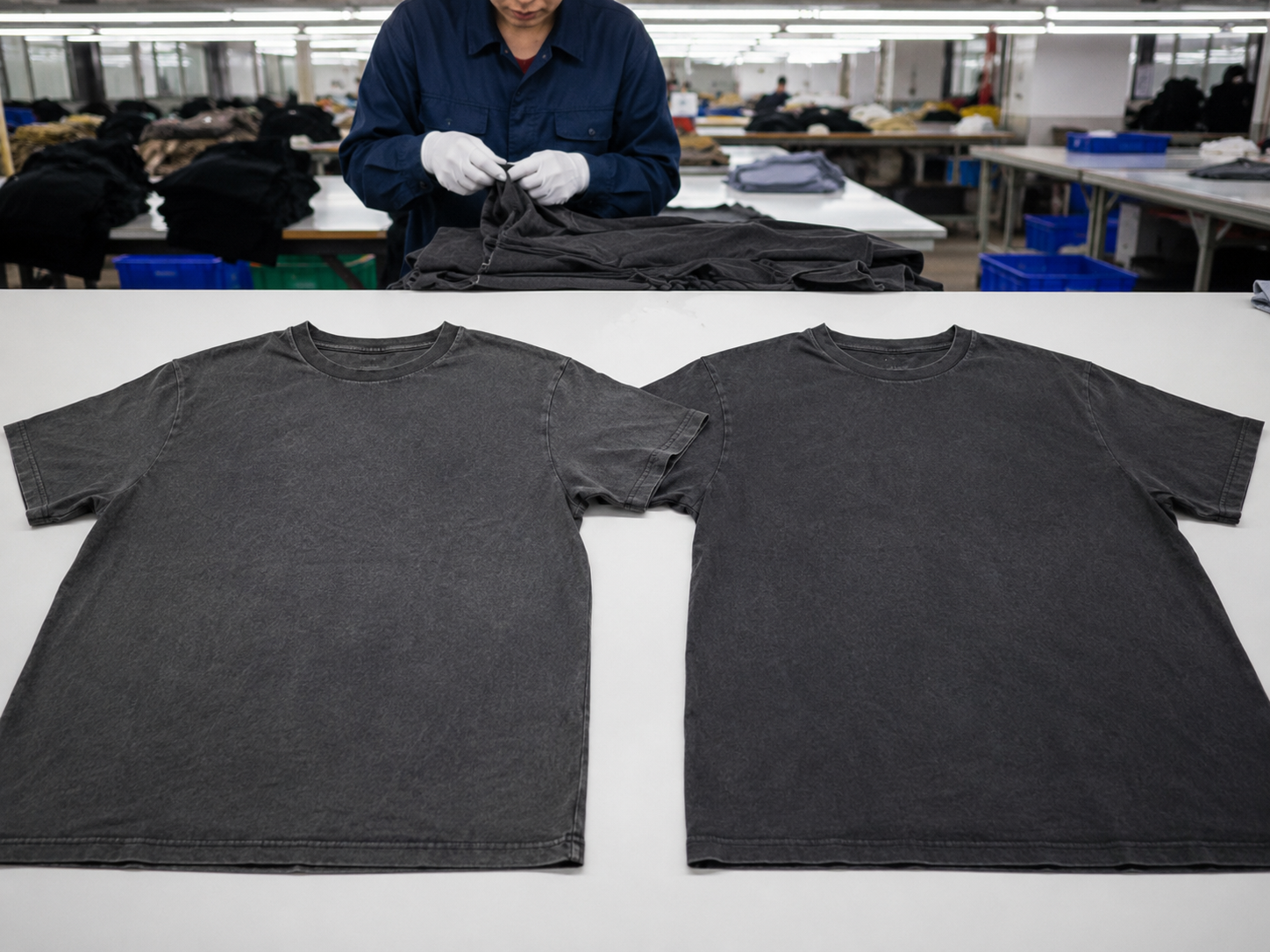
This means the factory is no longer making one garment.
It is trying to reproduce the approved standard hundreds of times.
That difference in scale is one reason why a pre-production sample should represent bulk production as closely as possible.
If you are still developing your first sample, read our guide:
How to Check Streetwear Sample Quality
1. Bulk Fabric May Come From a Different Production Lot
Fabric is one of the biggest reasons a bulk garment can look slightly different from an earlier sample.
During sampling, a factory may use a small amount of available fabric.
For bulk production, much more fabric is required.
Sometimes new fabric must be knitted, dyed, or finished.
Even when the specification is the same, different production lots can show small variations in:
- Shade
- GSM
- Surface texture
- Hand feel
- Stretch
- Shrinkage
- Fabric width
Color is especially sensitive.
Two fabric lots using the same Pantone reference and dye formula can still show a small shade difference because textile dyeing is a physical and chemical process rather than digital printing.
This is why custom colors are normally controlled through:
Lab Dip → Color Approval → Bulk Fabric → Bulk Shade Check
For brands developing custom fabrics, we explain this process further here:
How to Source Streetwear Fabrics
2. Fabric Shrinkage Can Change Measurements
Fabric does not always remain exactly the same size throughout production.
Knitted fabrics in particular can relax, shrink, or change dimensions after:
- Washing
- Steaming
- Heat pressing
- Garment dyeing
- Drying
- Finishing
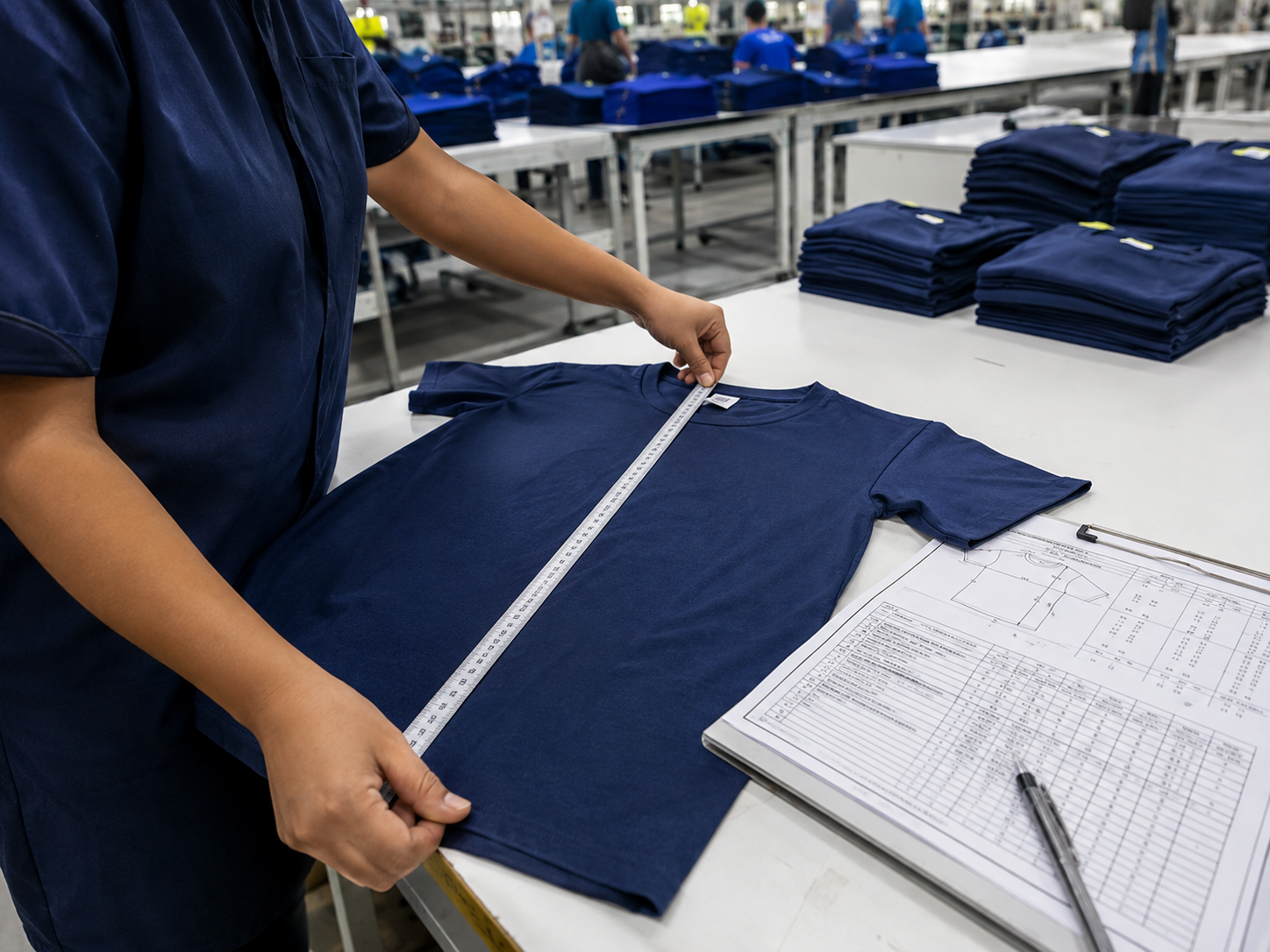
For example, imagine an approved T-shirt has a body length of:
72 cm
If the bulk fabric has slightly different shrinkage behavior from the sample fabric, the finished measurement can change after washing.
This does not mean factories should ignore shrinkage.
Shrinkage should be tested before bulk cutting whenever it is important to the product.
Organizations such as AATCC publish standardized methods for evaluating dimensional changes in fabrics and garments after laundering.
External reference:
AATCC TM135 covers dimensional changes in fabrics after home laundering, while TM150 covers dimensional changes in finished garments.
This is one reason we recommend checking shrinkage before finalizing bulk patterns, especially for:
- Cotton T-shirts
- Hoodies
- Sweatshirts
- Jersey fabrics
- Garment-washed products
3. Sewing Has Normal Production Tolerances
A garment is not manufactured in the same way as a metal part produced by a CNC machine.
Fabric is flexible.
Operators handle and feed the material through sewing machines manually.
During bulk production, very small differences can occur in:
- Seam allowance
- Sleeve attachment
- Neck rib placement
- Pocket position
- Stitch tension
- Hem width
- Finished measurements
For example, it is unrealistic to expect 500 oversized T-shirts to measure exactly 72.00 cm in body length.
Instead, production normally works with an agreed measurement tolerance.
A tech pack might specify:
Body Length: 72 cm
together with an acceptable tolerance.
The exact tolerance should be agreed between the brand and manufacturer because it depends on the garment, measurement point, fabric, construction, and buyer requirements.
The important issue is not whether every garment is mathematically identical.
The important issue is whether bulk production remains inside the approved specification.
4. Printing, Embroidery and Washing Are Not Always Identical
Streetwear often uses manufacturing processes that naturally create more variation than basic sewing.
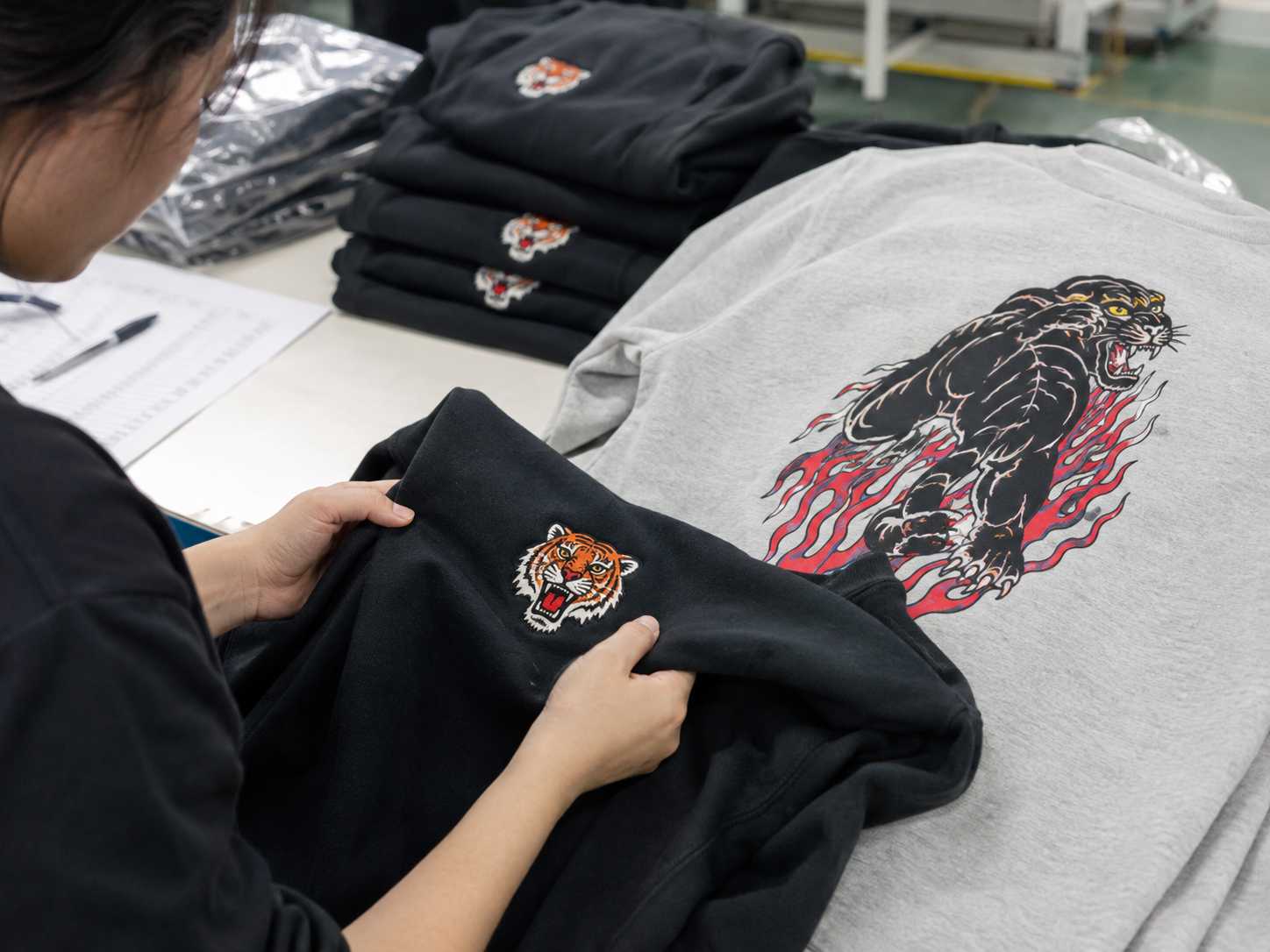
Examples include:
- Screen printing
- Puff printing
- Embroidery
- Acid washing
- Enzyme washing
- Pigment dyeing
- Spray effects
- Distressing
- Hand finishing
Screen Printing
Ink viscosity, screen pressure, curing temperature, and fabric surface can influence the final appearance.
Embroidery
Fabric stability, thread tension, stitch density, and hooping can affect how the finished embroidery sits on the garment.
Garment Washing
Washing is particularly difficult to reproduce exactly.
Two garments can go through the same wash process but develop slightly different fading because fabric position, friction, moisture, temperature, and garment movement affect the result.
This is especially noticeable with:
- Vintage washes
- Mineral washes
- Pigment washes
- Faded effects
- Distressed streetwear
For these products, the approved sample should be treated as a visual standard and acceptable range, rather than expecting every garment to have exactly the same fade marks.
5. A Sample Room Is Different From a Production Line
This is something many new clothing brands do not realize.
Samples are normally made in a sample room.
A sample maker may spend much more time on one garment because the purpose is to develop and verify the product.
Bulk production works differently.
Instead of one person making the entire garment, production is usually divided into operations.
For example:
Operator 1 → Shoulder Seam
Operator 2 → Neck Rib
Operator 3 → Sleeve
Operator 4 → Side Seam
Operator 5 → Hem
This increases production efficiency, but it also means the factory must establish clear standards before production starts.
That is why the approved sample, tech pack, measurement chart, artwork placement, and construction instructions are important.
You can see how these stages connect in our:
Streetwear Manufacturing Guide
6. Trims and Accessories Can Have Small Batch Differences
Fabric is not the only material that can change between sampling and bulk production.
A streetwear garment may also contain:
- Rib
- Zippers
- Drawcords
- Snaps
- Woven labels
- Silicone labels
- Metal hardware
- Elastic
- Rhinestones
- Embroidery thread
If the exact sample material is unavailable in sufficient quantity, a new production lot may be required.
This is why important trims should be confirmed before bulk production.
For custom components, brands should pay particular attention to:
Color + Size + Material + Finish + Logo + Placement
Changing even one of these after sample approval can change the appearance of the finished garment.
What Is an Acceptable Difference?
Not every difference should automatically be classified as a defect.
But not every difference is acceptable either.
There is an important distinction.
Usually Controlled by Tolerance
Examples may include:
- Small measurement differences
- Minor sewing position variation
- Slight wash-effect variation
- Small differences in handmade distressing
Usually Requires Investigation
Examples include:
- Wrong fabric
- Clearly incorrect color
- Incorrect logo
- Major measurement deviation
- Missing construction details
- Incorrect printing technique
- Large shade differences within the same garment
- Poor workmanship
The approved sample should therefore work together with the:
Tech Pack + Measurement Chart + Artwork + Material Approval + Production Tolerances
A sample alone cannot communicate every production requirement.
How We Reduce Sample-to-Bulk Variation
It is impossible to remove every production variable.
But a factory can reduce unnecessary variation through proper preparation and quality control.
For a typical streetwear order, our preferred workflow is:
Approved Development Sample
↓
Final Tech Pack
↓
Bulk Fabric Approval
↓
Pre-Production Sample
↓
Bulk Cutting
↓
In-Line Inspection
↓
Finishing & Measurement Check
↓
Final Inspection
Before bulk production, we normally focus on several important points.
1. Use the Final Fabric for the Pre-Production Sample
Whenever possible, the pre-production sample should use the same fabric intended for bulk production.
2. Confirm the Measurement Chart
All important measurement points and tolerances should be clear before cutting.
3. Approve Printing and Embroidery Standards
Print size, position, color, embroidery density, and other decoration details should be confirmed.
4. Test Wash Effects
For washed streetwear, bulk washing parameters should be based on approved development results.
5. Inspect During Production
Waiting until all garments are finished is risky.
Problems are easier to correct when they are discovered during production.
6. Compare Bulk Garments With the Approved Sample
The approved sample should remain available as a physical production reference.
Our detailed quality-control process is explained here:
How Does Fuki Apparel Control Product Quality?
Frequently Asked Questions
Should bulk production look exactly the same as the approved sample?
Bulk production should follow the approved sample closely, but minor variations can occur because fabric, sewing, printing, washing, and other manufacturing processes have production tolerances.
The important point is whether the garments remain within the approved specification.
Why can the bulk fabric feel different from the sample?
The bulk fabric may come from a new knitting, dyeing, or finishing lot.
GSM, finishing, shrinkage, and fabric relaxation can slightly affect hand feel.
Why is the bulk color slightly different?
Different dye lots can produce small shade variations.
For custom colors, bulk fabric should normally be compared against the approved color standard before cutting.
Can washed garments all look exactly identical?
Usually not.
Processes such as pigment washing, vintage washing, distressing, and other washed effects naturally create some garment-to-garment variation.
The goal is to maintain the garments within an approved visual range.
What is the purpose of a pre-production sample?
A pre-production sample helps confirm the final fabric, pattern, measurements, trims, decoration, labels, wash, and construction before bulk production begins.
What should I check before approving bulk production?
At minimum, confirm:
- Fabric
- Color
- Measurements
- Fit
- Construction
- Printing or embroidery
- Wash effect
- Labels
- Trims
- Packaging requirements
Final Recommendation
An approved sample is extremely important.
But it should not be viewed as a promise that every bulk garment will be a microscopic clone of one sample.
A better production standard is:
Approved Sample + Clear Tech Pack + Approved Materials + Defined Tolerances + In-Line QC
This gives both the brand and factory a much clearer reference for judging bulk production.
From our experience, many sample-to-bulk problems can be prevented before cutting begins.
The more clearly the fabric, measurements, decoration, washing, and tolerances are confirmed during sampling, the easier it is to maintain consistency during bulk production.
If you are developing custom T-shirts, hoodies, jackets, pants, or other streetwear products, Fuki Apparel can help manage sampling, pre-production approval, bulk production, and quality control.