
A clothing factory tells you production will take 30 days.
Then 30 days becomes 40.
A fabric is late.
A sample needs another revision.
The print color is not approved.
A zipper suddenly has to be reordered.
And the original launch date starts getting uncomfortable.
For clothing brands, production delays are frustrating because the final problem usually appears as one simple sentence:
"The order is delayed."
But in reality, custom clothing production is a chain of connected processes.
If one important step is delayed, every step after it can also move.
From our production experience, most delays come from a few repeatable areas:
Approval + Materials + Sampling + Decoration + Production + Quality Control + Logistics
Understanding these points before placing an order can help brands build more realistic timelines and reduce avoidable delays.
Table of Contents
- Why Custom Clothing Production Gets Delayed
- 1. Fabric Is Not Ready When Production Needs It
- 2. Custom Colors Take Longer Than Stock Colors
- 3. Sample Revisions Delay the Start of Bulk Production
- 4. Slow Approvals Can Stop the Entire Production Process
- 5. Custom Trims and Accessories Have Their Own Lead Times
- 6. Printing and Embroidery Can Require Rework
- 7. Garment Washing Can Add Extra Development Time
- 8. Production Capacity and Factory Scheduling Matter
- 9. Quality Problems Can Delay Final Shipment
- 10. Shipping Time Is Different From Production Time
- Which Delays Can Brands Help Prevent?
- How We Build a More Realistic Production Timeline
- Frequently Asked Questions
- Final Recommendation
Why Custom Clothing Production Gets Delayed
Custom clothing production is not one process.
It is a sequence.
A typical order may look like this:
Design
↓
Tech Pack
↓
Fabric & Trim Sourcing
↓
Sample Development
↓
Sample Approval
↓
Bulk Material Preparation
↓
Cutting
↓
Printing / Embroidery
↓
Sewing
↓
Garment Washing
↓
Finishing
↓
Quality Inspection
↓
Packing
↓
Shipping
The important point is that many of these steps depend on the previous step being completed.
For example:
If the fabric is five days late, cutting may also start five days late.
If printing cannot begin before cutting is completed, printing also moves.
Then sewing moves.
Then finishing moves.
This is why a five-day material delay can sometimes create more than a five-day shipment delay.
You can see the complete development process here:
How Is Custom Streetwear Made?
1. Fabric Is Not Ready When Production Needs It
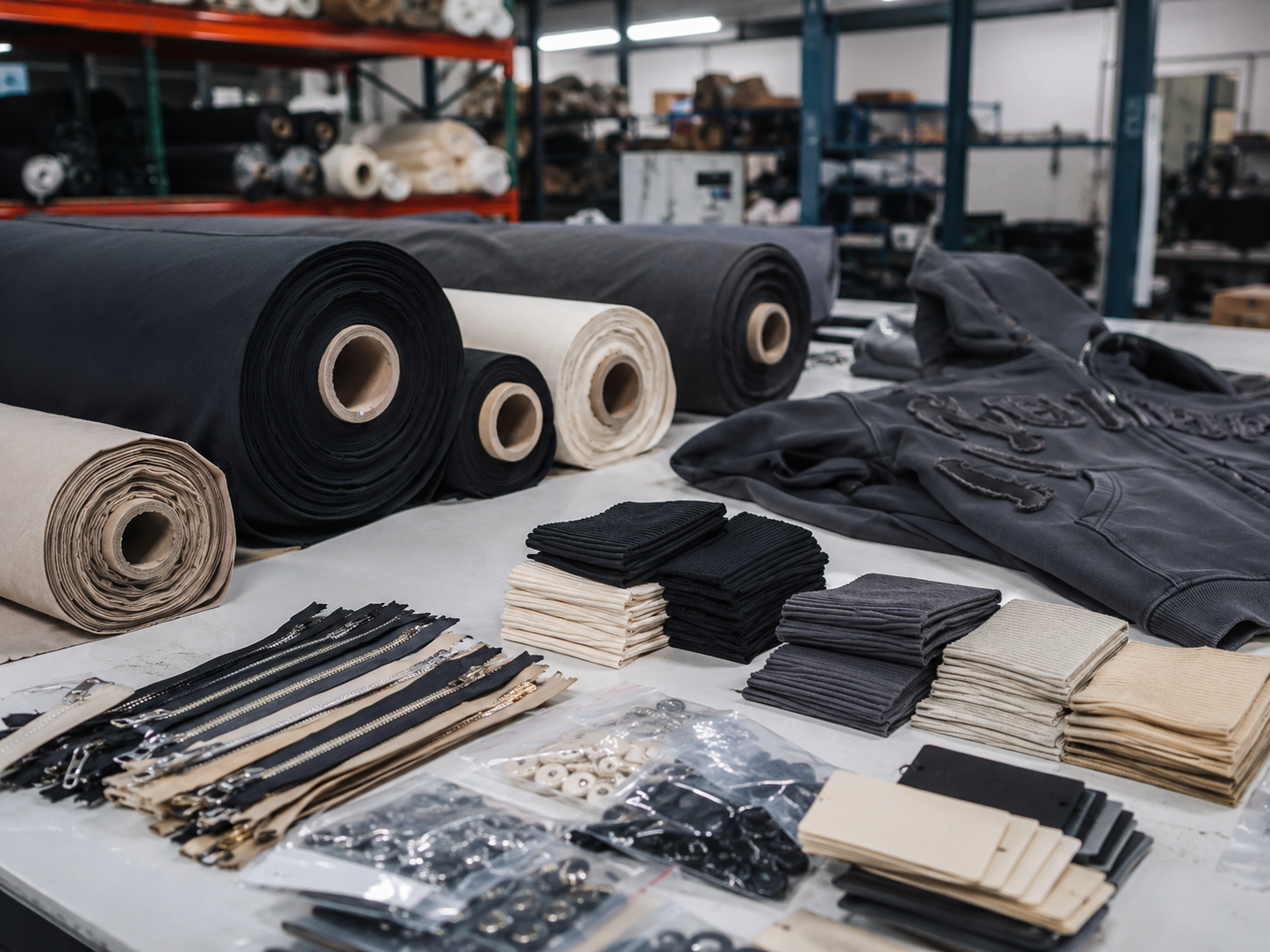
Fabric is one of the most common causes of production delays.
Many brands assume that once a fabric has been used for a sample, the same fabric will automatically be available for bulk production.
That is not always true.
During sampling, a factory may only need:
2–5 meters
of fabric.
For bulk production, the order may require:
Hundreds or thousands of meters
The exact fabric may no longer have enough stock.
In that case, the fabric may need to be:
- Knitted
- Dyed
- Finished
- Compacted
- Washed
- Inspected
before garment production can begin.
This can add significant lead time.
For example:
Stock Fabric
May be available immediately.
Custom-Knitted or Custom-Dyed Fabric
May require several weeks depending on the mill, quantity, color, and finishing.
This is why we recommend confirming bulk fabric availability, not only sample fabric availability.
For more information:
How to Source Streetwear Fabrics
2. Custom Colors Take Longer Than Stock Colors
A custom Pantone color usually requires more development than choosing an existing stock fabric.
The process may include:
Color Standard
↓
Lab Dip
↓
Customer Review
↓
Color Adjustment
↓
Second Lab Dip
↓
Approval
↓
Bulk Dyeing
If the first lab dip is approved, the process moves quickly.
But if the brand requests:
"Slightly darker."
then:
"More blue."
then:
"Less saturated."
the fabric cannot move into bulk dyeing until the final color is approved.
This is not necessarily a factory production delay.
It is part of the development process.
For time-sensitive launches, brands should decide early whether a custom color is really necessary.
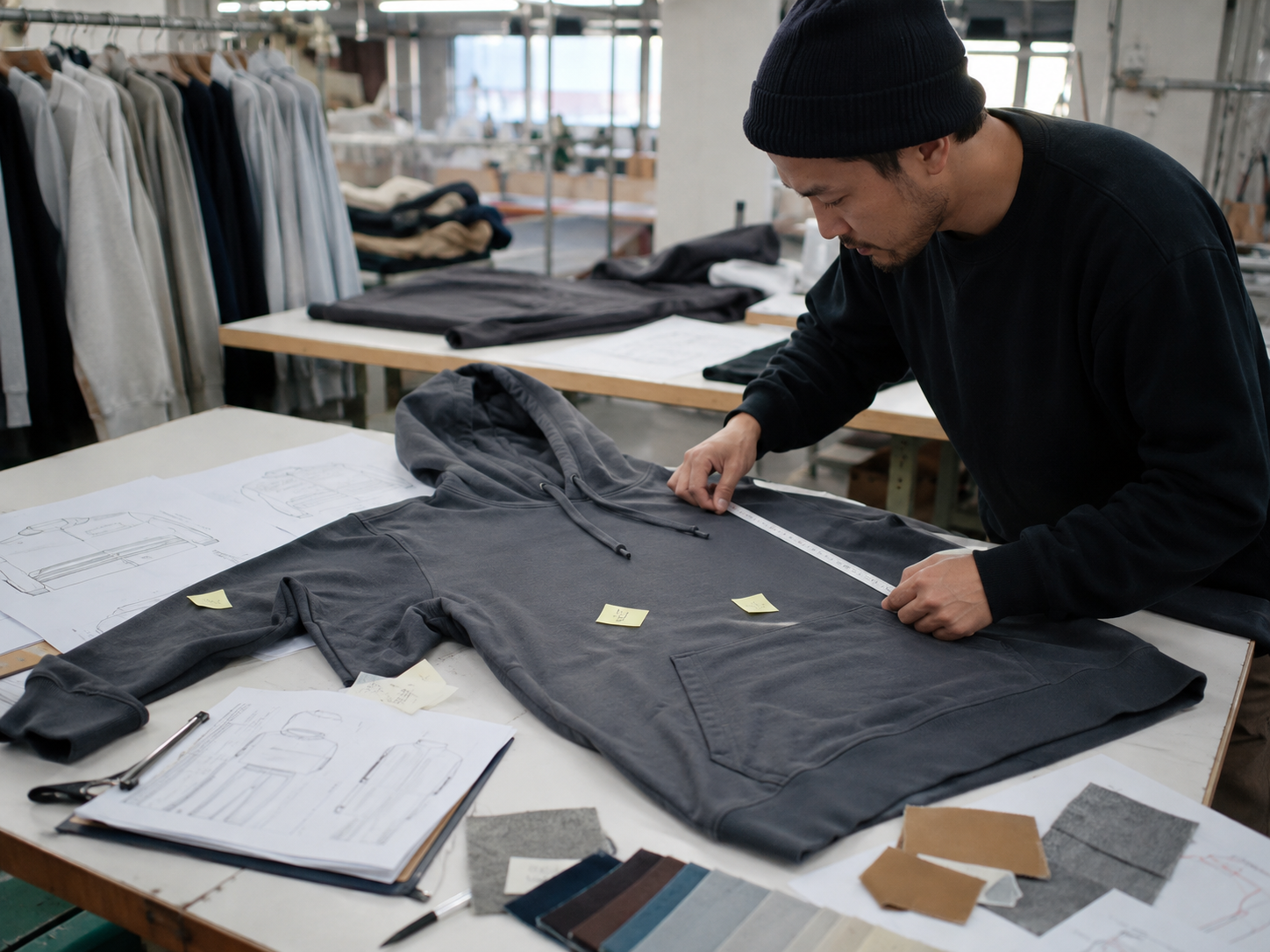
Sometimes using a high-quality stock color can save several weeks.
3. Sample Revisions Delay the Start of Bulk Production
Sampling is another major part of the timeline.
A first sample is rarely perfect.
Common revisions include:
- Body length
- Chest width
- Shoulder width
- Sleeve shape
- Hood size
- Neck opening
- Pocket position
- Fabric weight
- Print size
- Embroidery placement
For example:
Sample 1
↓
Fit Comments
↓
Sample 2
↓
Artwork Adjustment
↓
Sample 3
↓
Final Approval
Every additional sample round adds:
Sample Production Time + Shipping Time + Customer Review Time
This can easily add one or two weeks per revision cycle.
That is why a clear tech pack can reduce development time significantly.
The better the information provided before sampling, the fewer unnecessary revisions are usually required.
4. Slow Approvals Can Stop the Entire Production Process
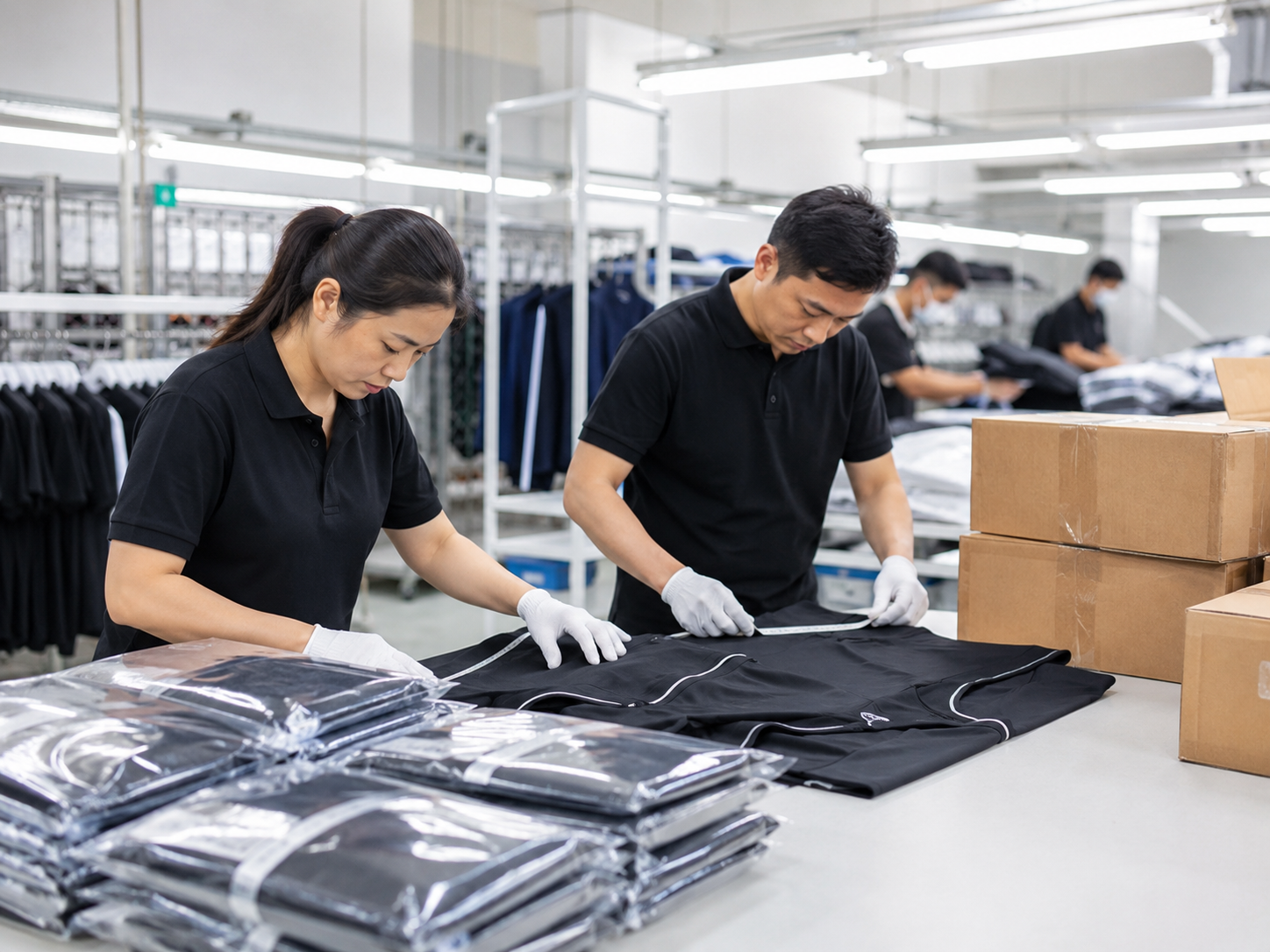
One of the most overlooked causes of production delay is approval time.
A factory may be waiting for approval on:
- Fabric
- Lab dip
- Size set
- Print strike-off
- Embroidery sample
- Wash effect
- Label
- Packaging
- Pre-production sample
If the customer takes four days to reply, those four days normally become part of the total project timeline.
For example:
Monday
Factory sends print sample.
Friday
Brand approves it.
The factory may not have been able to move forward during those four days.
This becomes especially important when several approvals are required.
A custom order can involve dozens of small decisions.
For urgent launches, having one person responsible for approvals can significantly reduce communication delays.
5. Custom Trims and Accessories Have Their Own Lead Times
Clothing production is not only about fabric.
A custom hoodie may also require:
- Drawcord
- Zipper
- Snap button
- Metal hardware
- Rib
- Woven label
- Silicone label
- Care label
- Hangtag
- Custom polybag
Each supplier has its own production schedule.
For example, the hoodie body fabric may already be ready.
But if the custom zipper pull needs another 10 days, final assembly may still have to wait.
This is especially common with:
- Custom metal hardware
- Custom zipper pulls
- Special-color rib
- Branded drawcord tips
- Custom silicone patches
If delivery speed is more important than uniqueness, brands can sometimes reduce risk by using standard trims with custom branding added elsewhere.
6. Printing and Embroidery Can Require Rework
Streetwear often uses complex decoration.
Examples include:
- Screen printing
- Puff printing
- High-density printing
- Embroidery
- Appliqué
- Heat transfer
- Rhinestones
- Multi-layer graphics
These processes sometimes require testing before bulk production.
For example, puff print may need adjustment to:
- Ink thickness
- Puff additive
- Mesh count
- Curing temperature
Embroidery may need adjustment to:
- Stitch density
- Backing
- Thread tension
- Digitizing
If the first test does not meet the approved standard, the decoration may need to be remade.
That adds time.
The safest workflow is:
Test Decoration → Approve → Bulk Production
rather than printing hundreds of garments before confirming the final effect.
You can see more options here:
Custom Streetwear Printing Services
7. Garment Washing Can Add Extra Development Time
Washed streetwear usually requires more production time than basic unwashed garments.
Examples include:
- Vintage wash
- Pigment wash
- Acid wash
- Enzyme wash
- Mineral wash
- Garment dye
- Distressing
Why?
Because washing is another production stage.
The garment may need to be:
Sewn
↓
Washed
↓
Dried
↓
Relaxed
↓
Measured
↓
Inspected
The wash effect may also require adjustment.
For example, the first wash trial may be:
Too dark
or
Too aggressive
The wash recipe then has to be changed.
Garment washing can also affect:
- Measurements
- Fabric hand feel
- Print appearance
- Color
- Seam appearance
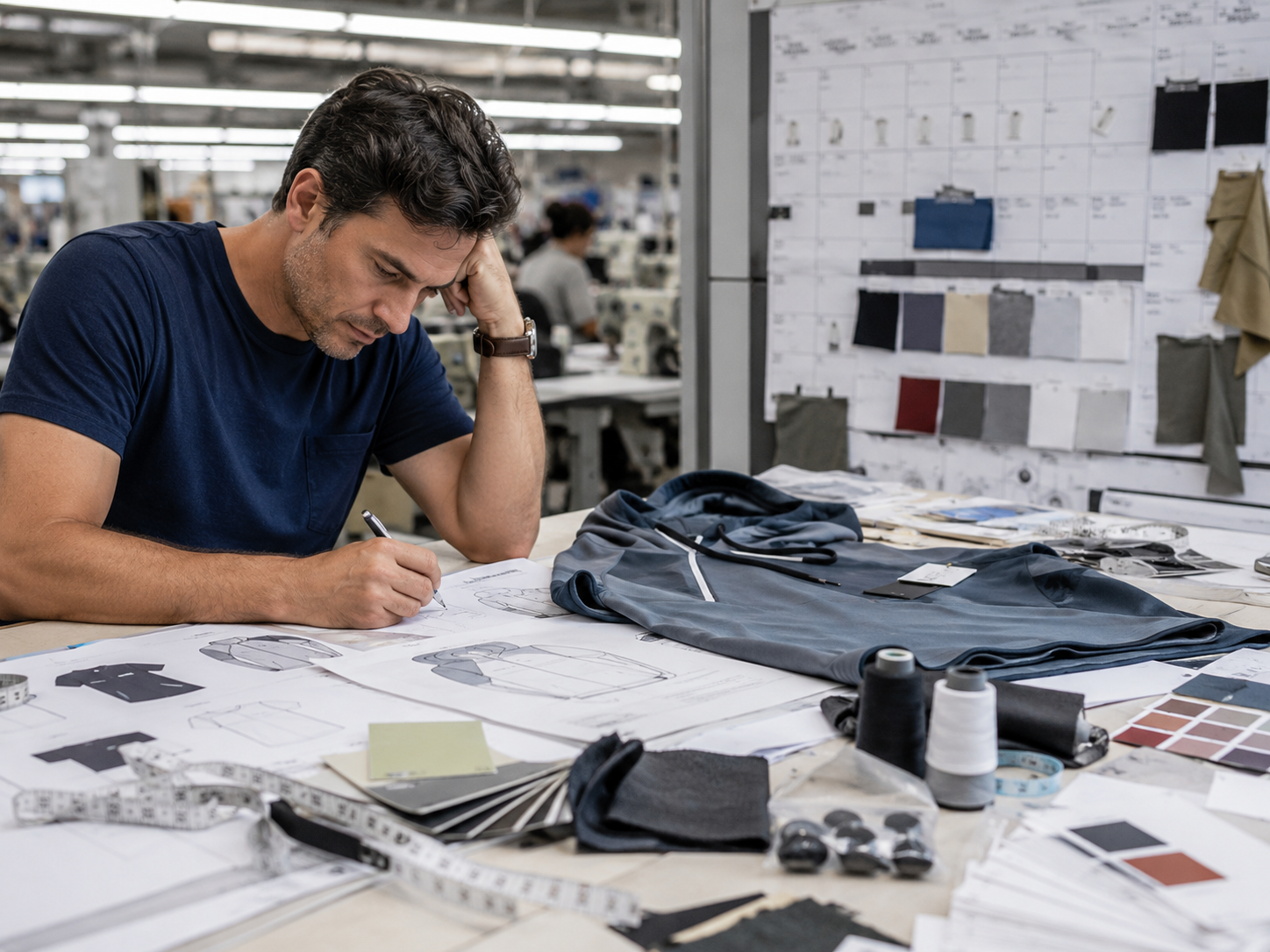
This is why washed garments usually need more testing than basic solid-color garments.
8. Production Capacity and Factory Scheduling Matter
A factory does not normally make only one order at a time.
Production lines are scheduled according to:
- Material arrival
- Customer approvals
- Order quantity
- Delivery date
- Production complexity
- Existing orders
Imagine your fabric was originally expected to arrive on Monday.
The factory reserves production capacity for Tuesday.
But the fabric arrives one week late.
By then, another confirmed order may already be using that production line.
This means your order may need to wait for the next available production window.
This is why delays before sewing can sometimes create larger delays later.
Factory scheduling works best when:
Materials + Approvals + Production Capacity
are ready at approximately the same time.
9. Quality Problems Can Delay Final Shipment
Quality inspection is not only about rejecting garments.
It can also affect delivery time.
During inspection, problems may be found such as:
- Incorrect measurements
- Loose threads
- Poor embroidery
- Print defects
- Stains
- Incorrect labels
- Broken zippers
- Sewing defects
- Uneven washing
If the problem is small, garments may only need minor repair.
If the problem affects many pieces, rework may be required.
For example:
200 garments need embroidery repair
This means the garments need to:
Leave finishing
↓
Return to embroidery
↓
Be repaired
↓
Return to finishing
↓
Be inspected again
That takes time.
A good factory should not ship obviously defective garments simply to protect the original delivery date.
In some cases, a short production delay is better than shipping a quality problem to the customer.
10. Shipping Time Is Different From Production Time
Another common misunderstanding is the difference between:
Production Completion Date
and
Customer Delivery Date
If a factory says:
"Production finishes September 1."
that does not necessarily mean the customer receives the goods on September 1.
After production, the order may still need:
- Final inspection
- Packing
- Export documents
- Pickup
- Customs clearance
- Air or sea transportation
- Import customs clearance
- Final delivery
Air shipping may take several days.
Sea freight may take several weeks depending on the destination.
Customs delays can also happen.
Brands should therefore separate:
Factory Lead Time
from
Shipping Lead Time
when planning a launch.
Which Delays Can Brands Help Prevent?
Not every delay can be prevented.
But some are easier to reduce than others.
Brand-Controlled or Shared Factors
- Slow sample approval
- Late artwork
- Frequent design changes
- Late color approval
- Incomplete tech packs
- Packaging changes
- Changing fabric after approval
- Adding new trims during production
Factory / Supplier Factors
- Material production delay
- Machine breakdown
- Production capacity
- Printing rework
- Quality problems
- Supplier delay
External Factors
- Public holidays
- Customs inspection
- Port congestion
- Weather
- Transportation disruption
The best production planning does not assume that nothing will go wrong.
It builds enough time for normal production variation.
How We Build a More Realistic Production Timeline
For custom streetwear, we prefer breaking the project into several stages instead of giving one simple number.
A typical timeline may include:
| Stage | Typical Activity |
|---|---|
| Development | Tech pack, sourcing, sample |
| Approval | Fit, color, artwork, wash |
| Material Preparation | Fabric and trims |
| Bulk Production | Cutting, printing, sewing |
| Finishing | Washing, trimming, pressing |
| QC | Measurement and workmanship check |
| Packing | Labels, hangtags, polybags |
| Shipping | Air / sea / courier |
The exact timing depends on the product.
A basic T-shirt using stock fabric can move much faster than:
Custom Heavyweight Fabric + Pantone Dye + Embroidery + Vintage Wash + Custom Hardware
That is why lead time should be based on the actual product construction, not only on order quantity.
Our preferred workflow is:
Confirm Product
↓
Confirm Materials
↓
Approve Sample
↓
Confirm Production Schedule
↓
Bulk Production
↓
In-Line QC
↓
Final Inspection
↓
Shipment
For more planning details, see:
Streetwear Production Timeline
Frequently Asked Questions
What is the most common cause of custom clothing production delays?
There is no single cause, but fabric availability, sample revisions, approval delays, and custom trims are among the most common issues.
Does bulk production start immediately after I place the order?
Not always.
Bulk production normally begins after important materials, samples, specifications, and approvals are confirmed.
Can using stock fabric reduce lead time?
Yes.
If suitable stock fabric is available in sufficient quantity, it can remove the knitting or dyeing lead time required for custom fabric.
Why does changing a design after sample approval cause delays?
Because patterns, artwork, materials, or production instructions may need to be updated.
The factory may also need to make another sample.
Does embroidery take longer than screen printing?
It depends on the artwork, stitch count, quantity, and factory capacity.
Complex embroidery can take significantly longer than a simple print.
Do washed hoodies take longer to produce?
Usually yes.
Garment washing adds another production step and may require wash testing before bulk production.
Can a factory guarantee there will never be a production delay?
No responsible manufacturer can guarantee that every variable will always remain unchanged.
The better approach is to provide realistic lead times, identify risks early, and communicate quickly if something changes.
How can I reduce the risk of missing my launch date?
Confirm your design early, approve samples quickly, avoid late changes, choose realistic materials, and leave additional buffer time between factory completion and your launch date.
Final Recommendation
Most custom clothing delays are not caused by one dramatic problem.
They are usually caused by several smaller delays happening along the production chain.
The most important points to control are:
Fabric + Approvals + Samples + Trims + Decoration + Production + QC + Shipping
For brands, the safest approach is not to plan around the shortest possible lead time.
Plan around a realistic production timeline with enough room for approvals, testing, and unexpected adjustments.
From our experience, the best way to protect a launch date is:
Finalize Early → Approve Quickly → Confirm Materials → Avoid Late Changes → Inspect During Production → Leave Shipping Buffer
If you are developing custom T-shirts, hoodies, jackets, pants, or other streetwear products, Fuki Apparel can help manage fabric sourcing, sampling, custom decoration, bulk production, quality control, and shipping.