
A hoodie or T-shirt may measure correctly before washing.
Then after garment washing, the body becomes shorter, the chest changes, or the sleeves no longer measure exactly the same.
Why?
Because fabric is not completely stable before washing.
During knitting, dyeing, finishing, spreading, cutting, and sewing, tension can remain inside the fabric structure.
When the finished garment is exposed to:
- Water
- Heat
- Mechanical movement
- Drying
the fabric can relax and move toward a more stable condition.
From our experience producing custom streetwear, garment shrinkage is usually affected by:
Fiber + Knit Structure + Fabric Tension + Finishing + Washing + Drying
This is why shrinkage should be tested before bulk production instead of being estimated only from fabric GSM or composition.
Table of Contents
- What Does Fabric Shrinkage Actually Mean?
- 1. Fabric Releases Tension During Washing
- 2. Cotton Fibers React to Water and Drying
- 3. Knit Structure Affects Shrinkage
- 4. Heat and Tumble Drying Can Increase Dimensional Change
- 5. Fabric Finishing Changes Dimensional Stability
- 6. Garment Washing Adds More Mechanical Action
- 7. Fabric Can Shrink Differently in Length and Width
- Can Pre-Shrunk Fabric Still Shrink?
- How We Test Shrinkage Before Bulk Production
- Frequently Asked Questions
- Final Recommendation
What Does Fabric Shrinkage Actually Mean?
Shrinkage means the dimensions of the fabric or garment become smaller after a defined process.
For example:
Before Washing
Body Length: 72 cm
After Washing
Body Length: 70.5 cm
The garment has experienced dimensional change.
However, shrinkage does not always happen equally in every direction.
A fabric may become:
- Shorter
- Narrower
- Slightly wider
- More compact
depending on its construction and finishing.
This is why professional shrinkage testing normally checks both length and width.
If you are developing washed streetwear, also read:
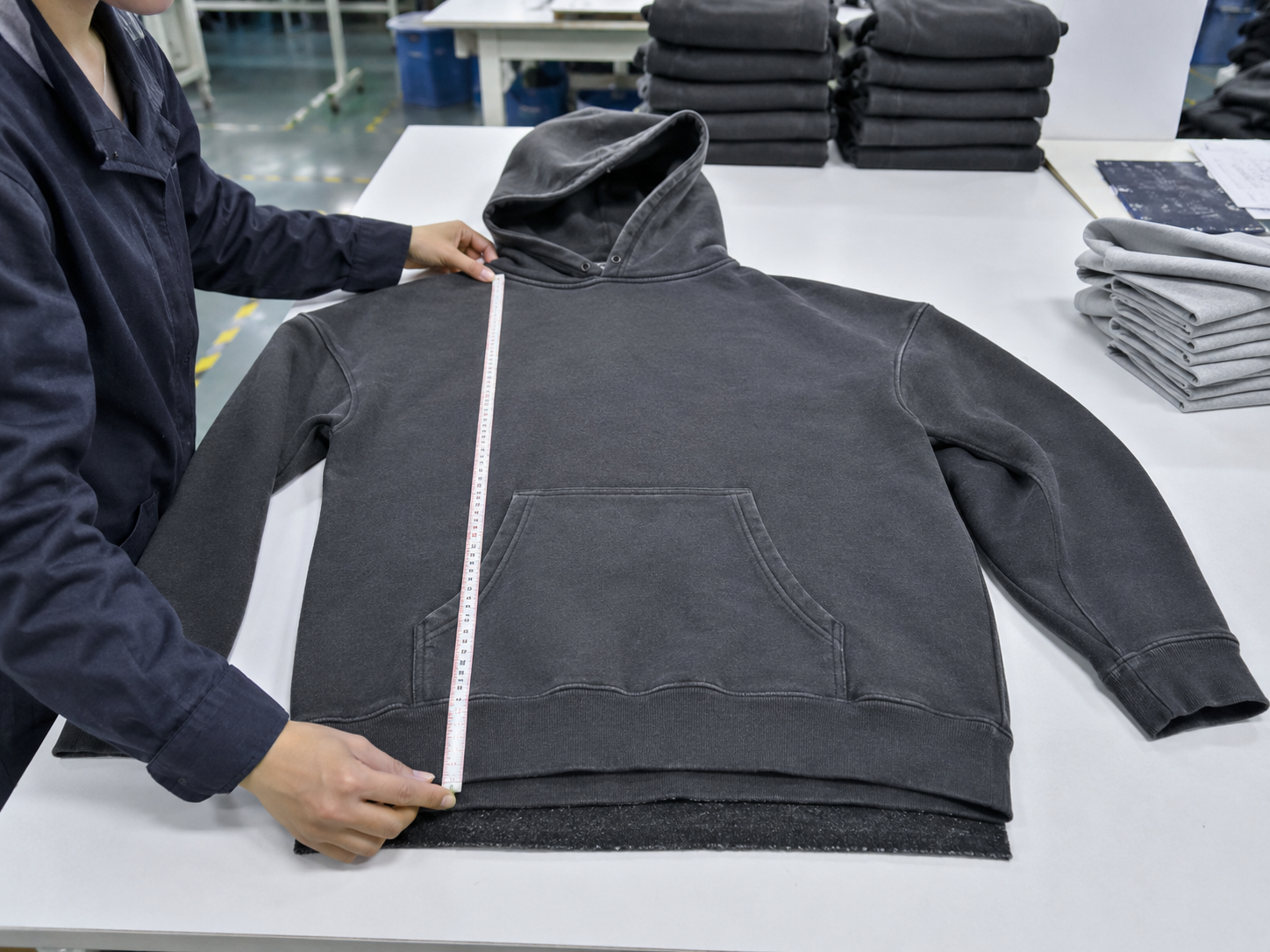
Why Does Garment Washing Change Hoodie Measurements?
1. Fabric Releases Tension During Washing
One of the main reasons fabric shrinks is relaxation.
Fabric goes through many production stages before becoming a garment.
These may include:
- Knitting
- Dyeing
- Finishing
- Compacting
- Rolling
- Spreading
- Cutting
During these processes, the fabric can be stretched or held under tension.
Some of that tension may remain inside the fabric.
When the garment is washed, the yarns and knitted loops gain more freedom to move.
The fabric then relaxes toward a more stable structure.
This can make the finished garment smaller than it was before washing.
That is why shrinkage is not always caused by poor sewing.
The fabric itself may simply be changing dimensions.
2. Cotton Fibers React to Water and Drying
Cotton is widely used in streetwear because it provides:
- Natural hand feel
- Breathability
- Good printing surface
- Comfortable wear
But cotton fabrics can also show dimensional change after laundering.
When cotton becomes wet, the textile structure changes.
Then during drying, the yarns and loops can settle into a more compact arrangement.
This is one reason cotton-rich fabrics often require shrinkage testing.
However:
100% Cotton does not always mean the same shrinkage.
The final result also depends on:
- Yarn
- Knit density
- Finishing
- Compacting
- Wash conditions
Two 100% cotton fabrics can behave very differently.
For more information about fabric sourcing:
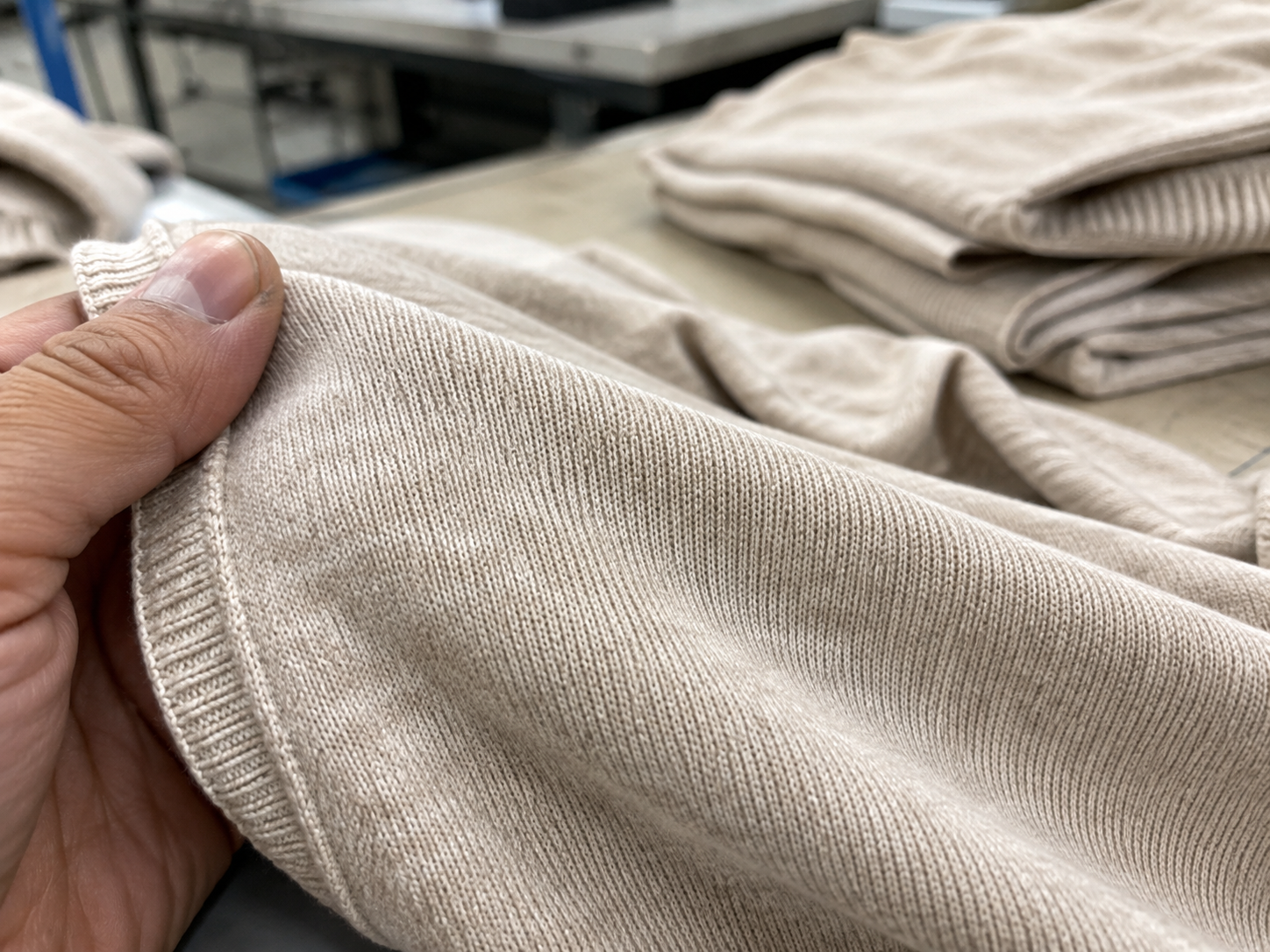
How to Source Streetwear Fabrics
3. Knit Structure Affects Shrinkage
Fabric construction has a major effect on dimensional stability.
Common streetwear fabrics include:
- Single jersey
- French Terry
- Fleece
- Rib
- Interlock
Each structure is built differently.
For example, a loose knit may have more room to relax after washing.
A dense compact fabric may behave differently.
This means two fabrics with the same:
GSM + Cotton Content
can still have different shrinkage results.
For example:
220 GSM Jersey A
may shrink more in length.
While:
220 GSM Jersey B
may remain more stable because of different knitting and finishing.
This is why GSM alone cannot predict shrinkage.
4. Heat and Tumble Drying Can Increase Dimensional Change
Washing is only one part of the process.
Drying conditions also matter.
Compare:
Cold Wash + Air Dry
with
Wash + High-Heat Tumble Dry
The second process usually puts more heat and mechanical movement into the fabric.
This can increase relaxation and dimensional change.
That is why shrinkage testing should always define:
- Wash temperature
- Wash cycle
- Drying method
- Number of cycles
Simply saying:
"We tested the fabric after washing."
is not enough if the test conditions are different each time.
For consistent results, the same method should be used for sample and bulk testing.
5. Fabric Finishing Changes Dimensional Stability
Before fabric reaches the garment factory, it usually goes through finishing.
These processes may include:
- Compacting
- Heat setting
- Softening
- Brushing
- Washing
- Surface finishing
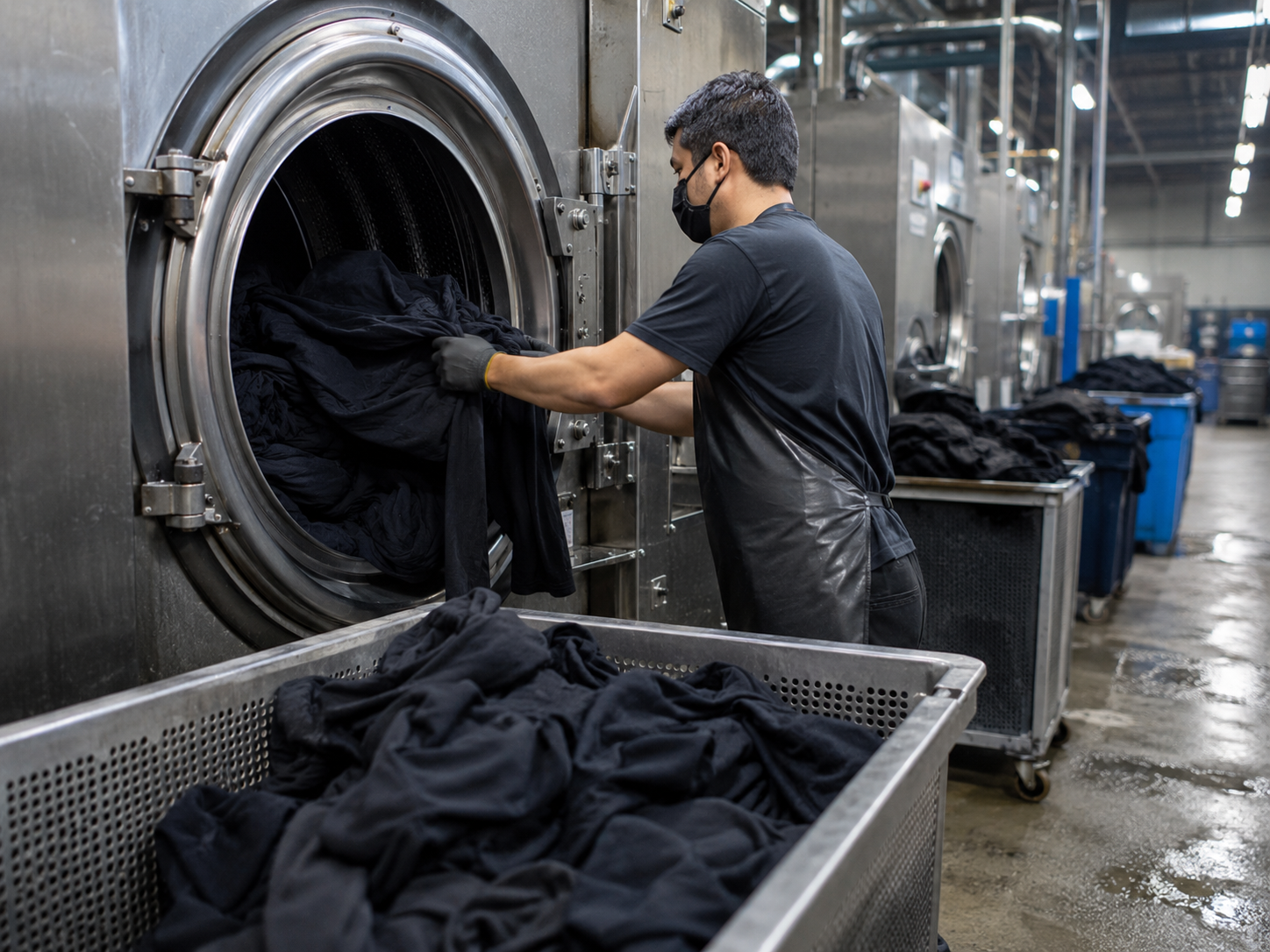
Compacting is especially important for knitted cotton fabrics.
The purpose is to reduce some of the dimensional change before the fabric is made into garments.
A well-finished fabric can usually provide better stability than an uncontrolled unfinished fabric.
However, finishing does not mean:
Zero Shrinkage
It only helps control the amount of dimensional change.
This is why fabric should still be tested after finishing.
6. Garment Washing Adds More Mechanical Action
Streetwear garments often use additional washing processes.
Examples include:
- Enzyme wash
- Pigment wash
- Vintage wash
- Acid wash
- Stone wash
- Garment dye
These treatments can involve:
- Water
- Temperature
- Chemicals
- Tumbling
- Drying
All of these can influence the final dimensions.
For example, a washed oversized T-shirt may become:
- Slightly shorter
- Slightly narrower
- Softer
- More relaxed
after the final wash.
This is why the correct sequence is usually:
Sew → Wash → Dry → Relax → Measure
If the product is sold as a garment-washed item, the post-wash measurement is normally more important than the pre-wash measurement.
7. Fabric Can Shrink Differently in Length and Width
A common mistake is saying:
"This fabric shrinks 5%."
without specifying the direction.
Fabric can behave differently in:
Length
and
Width
For example:
| Direction | Possible Result |
|---|---|
| Length | -5% |
| Width | -2% |
This difference can affect the final fit.
If body length shrinks more than chest width, the garment may become:
- Shorter
- More boxy
If width changes more, the silhouette may feel tighter.
This is especially important for oversized streetwear where proportion is a major part of the design.
Can Pre-Shrunk Fabric Still Shrink?
Yes.
"Pre-shrunk" does not mean the fabric will never change again.
It usually means the fabric has gone through a process intended to improve dimensional stability before garment production.
The final garment can still change because of:
- Washing temperature
- Drying method
- Fiber content
- Knit structure
- Garment wash
- Fabric batch
A better question is not:
"Is this fabric pre-shrunk?"
A better question is:
"What is the tested dimensional change after the agreed wash method?"
That gives the brand a measurable production standard.
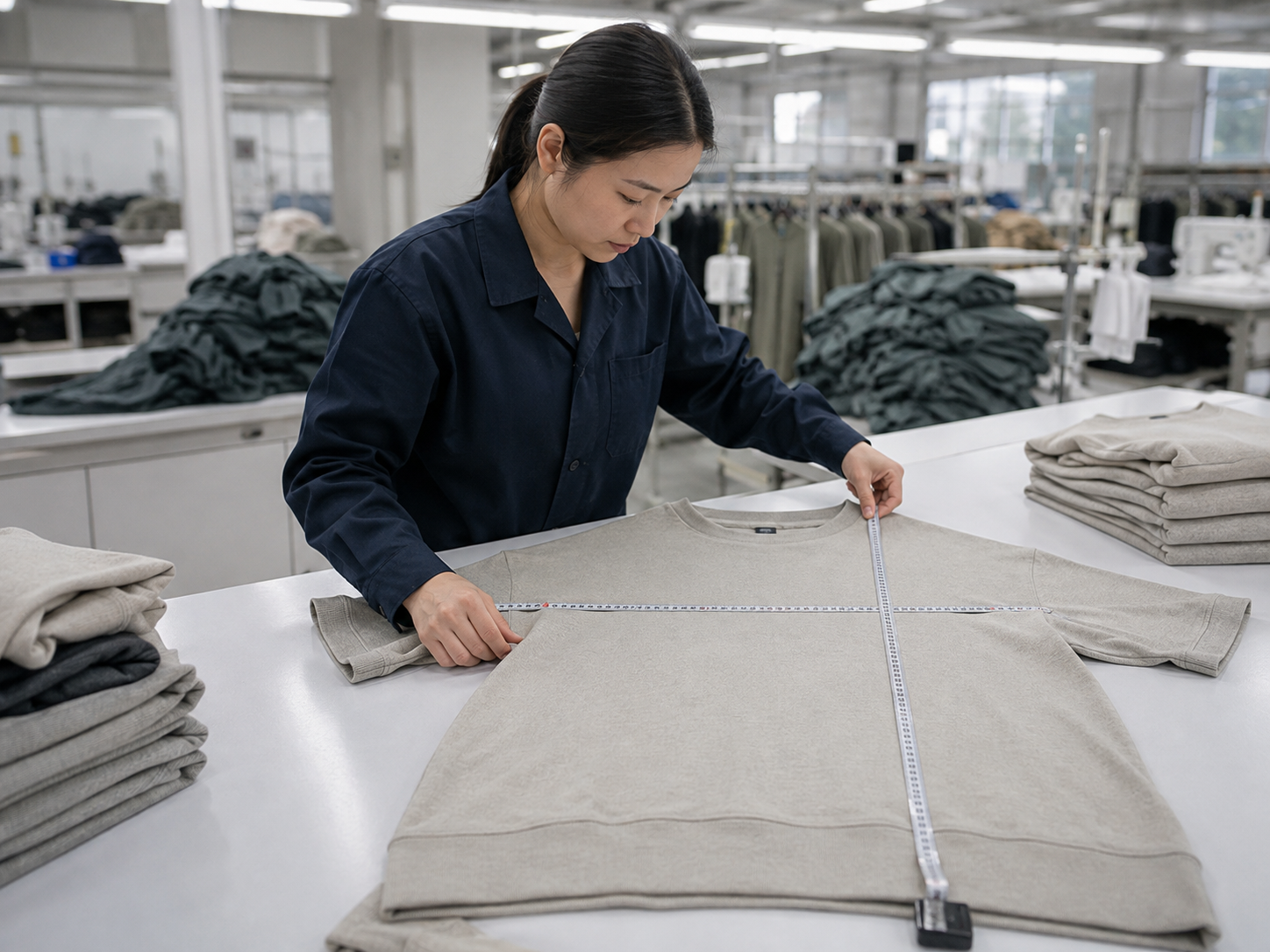
How We Test Shrinkage Before Bulk Production
For custom streetwear, we prefer testing the actual production fabric before cutting the full order.
A typical process is:
Bulk Fabric
↓
Measure Test Sample
↓
Wash Under Defined Conditions
↓
Dry
↓
Relax
↓
Measure Again
↓
Calculate Shrinkage
↓
Adjust Pattern if Required
↓
Approve
↓
Bulk Cutting
During development, we may also make a full garment sample and check:
- Body length
- Chest width
- Shoulder
- Sleeve length
- Bottom opening
- Hood dimensions
This is important because fabric shrinkage and finished garment behavior are related but not always identical.
If the product includes garment washing, the final wash should also be included in the sample approval process.
Frequently Asked Questions
Why does cotton shrink after washing?
Cotton fabric can relax after being exposed to water, movement, and drying.
The yarn and knit structure may become more compact.
Does heavyweight fabric shrink less?
Not necessarily.
GSM does not directly determine shrinkage.
A heavyweight fabric can still shrink if its knit structure and finishing are unstable.
Does cold washing prevent all shrinkage?
No.
Lower temperatures may reduce some dimensional change, but the fabric can still relax during washing.
Can a factory compensate for shrinkage?
Yes.
If the shrinkage behavior is known and consistent, the pattern can sometimes be adjusted so the finished post-wash garment reaches the target measurements.
Does garment washing cause more shrinkage?
It can.
Garment washing often adds more water, tumbling, chemicals, and drying compared with an unwashed garment.
Should shrinkage be tested before bulk production?
Yes.
Shrinkage testing is especially important for cotton T-shirts, hoodies, fleece, French Terry, and garment-washed streetwear.
Why does one fabric shrink more in length than width?
Knitted fabrics can relax differently in different directions because of yarn tension, knit structure, and finishing.
Final Recommendation
Fabric shrinkage after garment washing is usually caused by a combination of:
Fiber + Knit Structure + Production Tension + Finishing + Washing + Drying
The safest approach is not to assume the fabric will remain unchanged.
Instead:
Test → Measure → Wash → Measure Again → Adjust → Approve
For washed streetwear, the final garment should be evaluated after the intended production wash process.
This helps control:
- Fit
- Measurements
- Size consistency
- Bulk production quality
If you are developing custom T-shirts, hoodies, washed garments, or heavyweight streetwear, Fuki Apparel can help with fabric sourcing, shrinkage testing, sample development, garment washing, and bulk production.