
You approve a print color on one T-shirt.
Then the same artwork and ink are printed on another fabric—and suddenly the color looks darker, duller, warmer, or less saturated.
Why?
Because printed color is not determined by the ink alone.
The final appearance is affected by the fabric color, fiber composition, surface texture, underbase, ink deposit, curing conditions, and garment finishing.
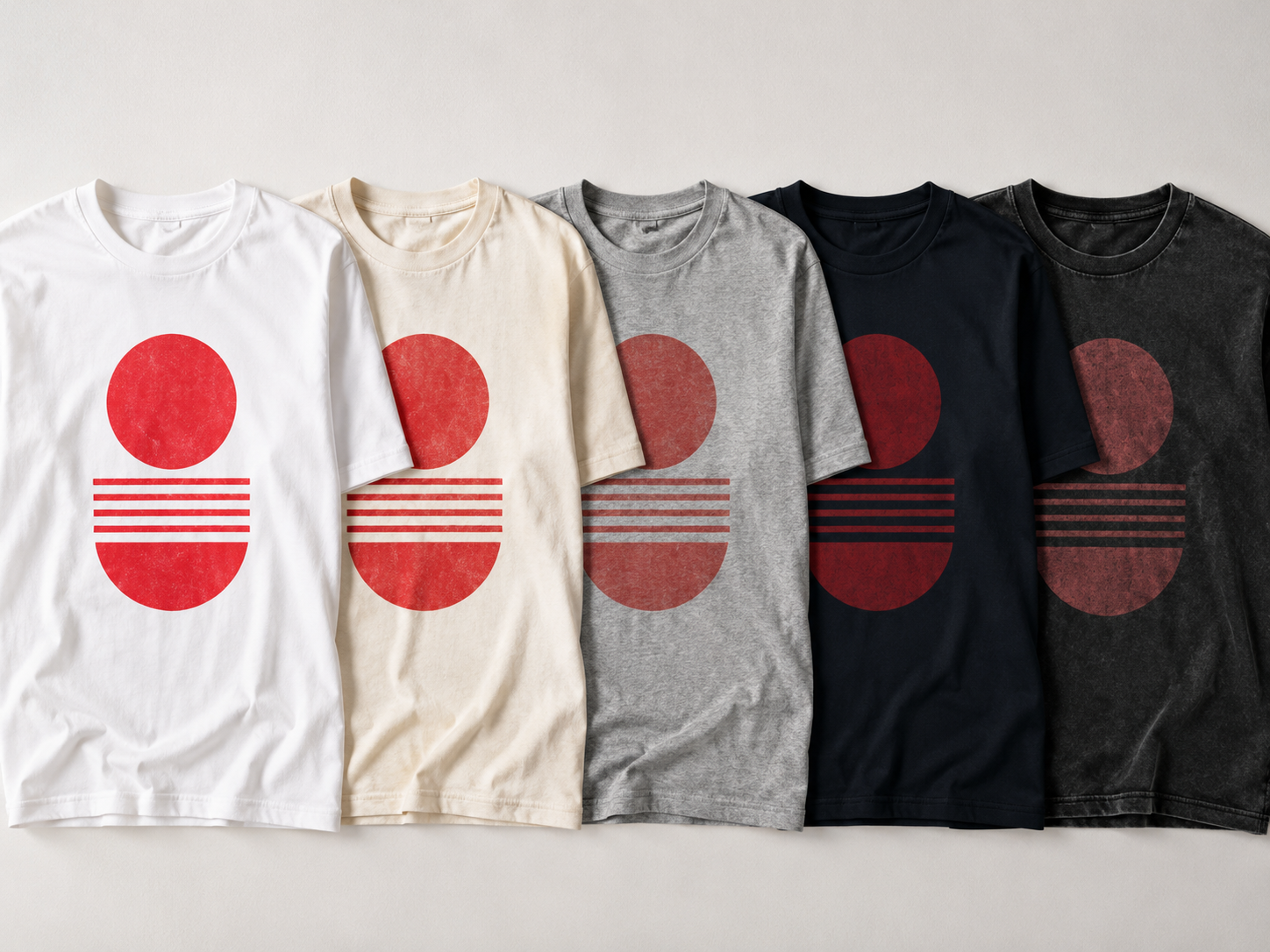
From our experience developing custom streetwear, the same print formula can look noticeably different on white cotton, black cotton, washed jersey, cotton-polyester blends, and synthetic fabrics.
That is why print color should ideally be approved on the actual production fabric, not only from a digital artwork or a sample printed on another material.
Table of Contents
- Why Fabric Changes Printed Color
- 1. The Base Fabric Color Affects the Print
- 2. Cotton and Polyester Do Not Print the Same Way
- 3. Fabric Texture Changes How Ink Sits on the Surface
- 4. The Underbase Can Change Color Appearance
- 5. Polyester Dye Migration Can Change Light Print Colors
- 6. Ink Deposit and Curing Affect Color Strength
- 7. Garment Washing Can Change the Final Appearance
- How We Test Printed Colors Before Bulk Production
- How Should Brands Approve Print Color?
- Frequently Asked Questions
- Final Recommendation
Why Fabric Changes Printed Color
When you look at a printed graphic, you are not seeing only ink.
You are seeing the interaction between:
Ink + Fabric + Light + Surface Texture
For example, the same red ink may appear bright on a smooth white T-shirt but slightly darker on an off-white garment.
The same print on black fabric may require a white underbase to achieve similar brightness.
On washed or textured fabrics, the surface itself can also make the print look less uniform.
This is why fabric selection and printing should not be treated as two completely separate decisions.
If you are still selecting materials for your collection, read:
How to Source Streetwear Fabrics
1. The Base Fabric Color Affects the Print
This is usually the most obvious reason.
Printing yellow ink onto a white T-shirt is very different from printing the same yellow onto a black T-shirt.
The darker fabric underneath can influence how the printed color appears, especially when the ink is not completely opaque.
For example:
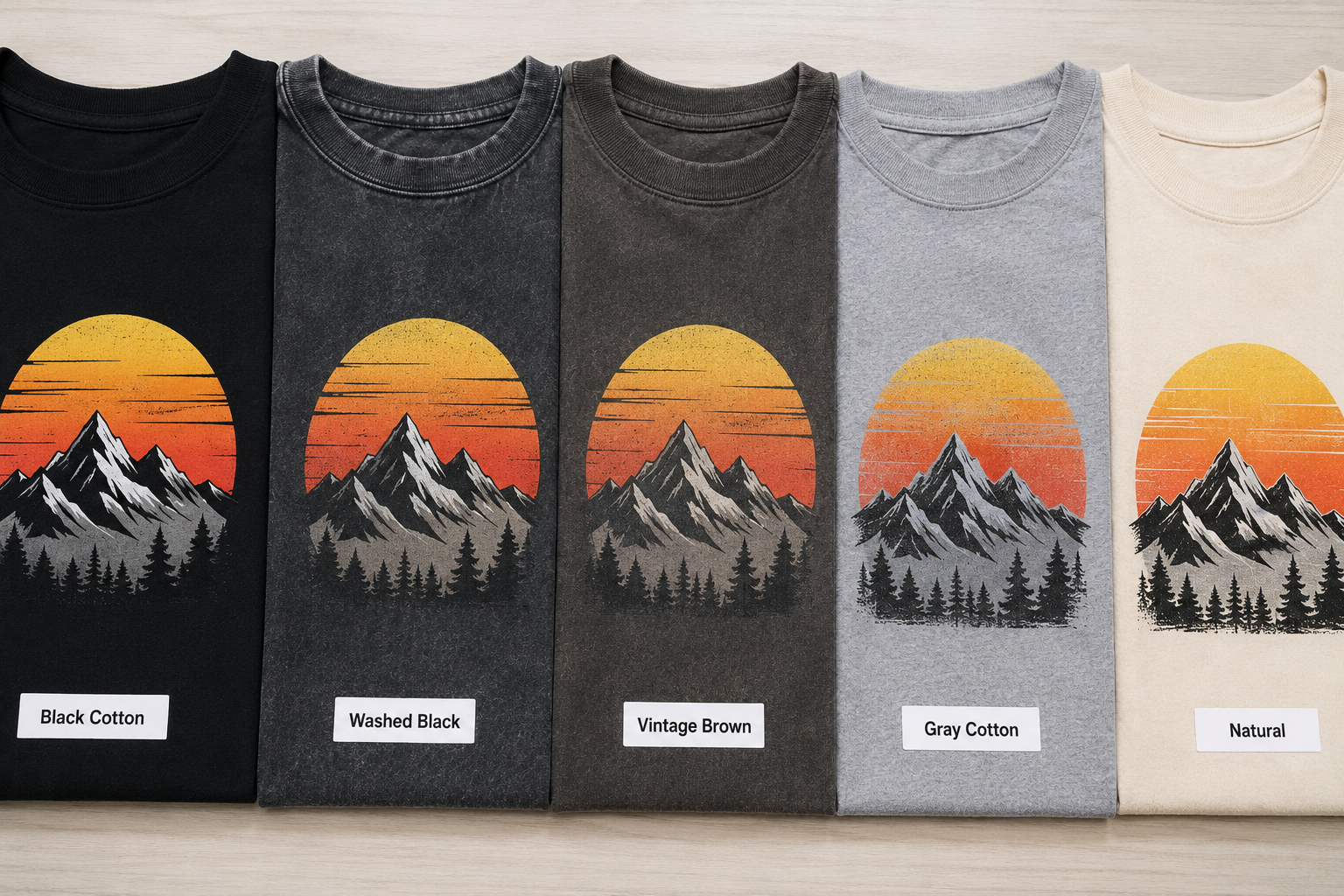
| Fabric | Possible Print Appearance |
|---|---|
| White Cotton | Brighter and cleaner |
| Natural / Cream | Slightly warmer |
| Gray | Slightly muted |
| Black | Usually needs stronger opacity or underbase |
| Washed Black | Can create a softer vintage appearance |
This is especially important for streetwear brands using:
- Black heavyweight T-shirts
- Vintage washed garments
- Pigment-dyed fabrics
- Dark hoodies
- Colored jersey
A Pantone reference can help define the target color.
But a Pantone number alone does not guarantee that every fabric will produce exactly the same visual result.
The physical substrate still matters.
2. Cotton and Polyester Do Not Print the Same Way
Fiber composition also affects printing.
A 100% cotton T-shirt and a 100% polyester jersey may have the same visual fabric color but behave very differently during printing and curing.
Cotton
Cotton is commonly used for streetwear screen printing because it generally provides a suitable surface for many standard textile ink systems.
However, the final result can still vary depending on:
- Fabric finish
- Knit structure
- Surface fuzz
- Fabric color
- Garment wash
Polyester
Polyester requires more attention because heat can cause dyes in the fabric to migrate into the printed ink.
This is particularly important when printing:
- White
- Cream
- Yellow
- Light gray
- Other light colors
on dark polyester garments.
For this reason, printing methods and ink systems should be selected according to the actual fiber content rather than assuming that one formula works for every garment.
You can compare common printing methods here:
Best Printing for Streetwear: How to Choose
3. Fabric Texture Changes How Ink Sits on the Surface
Two fabrics can have the same color and fiber composition but still produce different print results.
Why?
Because their surfaces are different.
Compare:
Smooth Combed Cotton
with
Textured Heavyweight Jersey
or
Brushed / Washed Fabric
A smoother fabric normally creates a flatter printing surface.
A rougher fabric contains more visible fibers and uneven areas.
The ink must sit across that surface.
This can influence:
- Edge sharpness
- Ink coverage
- Surface smoothness
- Color saturation
- Small artwork details
Heavyweight streetwear fabrics can sometimes have more noticeable surface texture than lightweight jersey.
This does not mean heavyweight fabric is bad for printing.
It simply means the printing parameters may need to be adjusted.
For example, the printer may review:
- Mesh count
- Squeegee pressure
- Ink viscosity
- Number of passes
- Underbase
- Flashing
instead of using exactly the same setup for every fabric.
4. The Underbase Can Change Color Appearance
When printing bright colors on dark garments, a white underbase is often used.
Think of it like preparing a lighter foundation before applying the final color.
Without an underbase:
Red Ink + Black Fabric
may appear darker or less saturated.
With a suitable underbase:
White Base + Red Ink
can produce a brighter and more consistent red.
However, the underbase itself also affects the final result.
If it is:
- Too thin
- Too thick
- Uneven
- Not properly flashed
- Poorly registered
the top color may look different.
This is why matching a print color on dark garments is not only about mixing the correct ink.
The complete print construction matters.
For custom printing options, see:
Custom Streetwear Printing Services
5. Polyester Dye Migration Can Change Light Print Colors
This is one of the most important problems when printing on polyester.
Dye migration happens when dyes from the polyester fabric move into the printed ink layer.
For example:
A white print is applied to a dark red polyester garment.
Immediately after printing, the logo may look white.
After curing or after some time, it may develop a pink or reddish tone.
The printing ink itself did not necessarily start with the wrong color.
The fabric dye moved into the ink layer.
Avient's technical guidance describes dye migration as substrate dye moving into the printed ink and recommends specialized low-bleed ink systems and barrier underbases for difficult polyester fabrics.
External reference:
Avient – Screen Printing Dye Migration Guide
For difficult polyester garments, printers may consider:
- Low-bleed inks
- Lower curing temperatures
- Barrier underbases
- Dye-blocking layers
- Testing before bulk production
This is especially important for:
- Polyester jerseys
- Sportswear
- Sublimated fabrics
- Polyester blends
- Dark synthetic garments
6. Ink Deposit and Curing Affect Color Strength
Even on the same fabric, changing the amount of ink can change how the color looks.
A thin ink layer may allow more of the fabric underneath to influence the color.
A heavier deposit may appear more opaque and saturated.
Ink deposit can be affected by:
- Screen mesh
- Stencil thickness
- Squeegee pressure
- Number of print passes
- Ink viscosity
This is why two factories can mix a similar ink color but produce slightly different visual results.
The printing setup may be different.
Curing also matters.
Textile inks need to be cured according to the requirements of the specific ink system.
The goal is not simply to apply maximum heat.
The printer needs to balance:
Ink Type + Fabric + Temperature + Time
This becomes even more important with polyester because excessive heat can increase the risk of dye migration.
7. Garment Washing Can Change the Final Appearance
Streetwear garments are often washed after printing or use fabrics that already have washed effects.
Examples include:
- Pigment wash
- Vintage wash
- Mineral wash
- Acid wash
- Enzyme wash
- Garment dye
These finishes change the visual character of the garment.
They can also affect how the printed artwork is perceived.
For example, a very clean bright print on a heavily vintage-washed T-shirt may create strong contrast.
A softer print may blend more naturally into the washed garment.
The production sequence also matters.
There is a difference between:
Wash Garment → Print
and
Print Garment → Wash
because the print may experience the wash process differently.
For washed streetwear projects, the sample should therefore reproduce the intended production sequence whenever possible.
You can see examples of washed streetwear production here:
How We Test Printed Colors Before Bulk Production
For a custom print, we prefer checking the color on the actual production fabric before bulk production.
A typical process is:
Final Artwork
↓
Final Fabric
↓
Ink Color Preparation
↓
Test Print
↓
Underbase Adjustment if Needed
↓
Curing
↓
Color & Surface Check
↓
Sample Approval
↓
Bulk Production
During testing, we normally review:
- Print color
- Opacity
- Surface texture
- Artwork edges
- Fabric show-through
- Underbase coverage
- Dye migration risk
- Print hand feel
- Wash durability
For some projects, one test may not be enough.
For example, if a brand wants the same cream graphic on:
- Black cotton
- Gray cotton
- Red polyester
- Vintage washed brown
the printing setup may need to be adjusted for each material.
The goal is to make the finished garments visually consistent—not necessarily to force every fabric through exactly the same printing process.
How Should Brands Approve Print Color?
One common mistake is approving print color only from a computer screen.
Screens use light to display color.
Fabric printing uses physical ink on a textured textile surface.
They are not the same environment.
For custom streetwear, we recommend approving:
Actual Fabric + Actual Ink + Actual Print Method
whenever color accuracy is important.
A good approval process may include:
1. Confirm the Target Color
Provide a Pantone reference or physical color reference when possible.
2. Confirm the Final Fabric
Do not approve a print on white cotton and automatically assume it will look identical on washed black cotton.
3. Make a Print Strike-Off or Sample
Test the actual print construction.
4. Check Under Normal Lighting
Very warm or very cool lighting can change how colors are perceived.
5. Keep the Approved Sample
The approved sample should remain as a physical reference for bulk production.
This is especially useful when producing multiple colors or repeat orders.
Frequently Asked Questions
Why does the same ink look different on black and white T-shirts?
The base fabric color influences the final appearance of the print.
Dark fabrics often require an underbase or higher-opacity ink to achieve similar brightness.
Do I need a white underbase on every dark T-shirt?
Not always.
It depends on the artwork, ink system, desired appearance, fabric, and printing technique.
Some vintage designs intentionally allow the fabric color to influence the print.
Why does white printing turn pink on red polyester?
One possible reason is dye migration.
Dyes from the polyester fabric can move into the printed ink during or after curing.
Low-bleed inks and barrier systems may be required.
Does heavyweight cotton change print color?
Fabric weight alone does not determine color.
However, heavyweight fabrics can have different knit structures and surface textures, which can influence ink coverage and appearance.
Why does print color look different on washed T-shirts?
Washed garments have different base shades and surface characteristics.
Vintage or pigment washing can make the same print appear brighter, darker, softer, or more contrasted.
Can the exact same Pantone color be achieved on every fabric?
A Pantone reference provides a target, but different fabrics, underbases, ink systems, and surface textures can create visual differences.
The safest method is to approve a physical print on the final material.
Should every colorway have a print sample?
If the fabrics are significantly different—especially dark cotton, washed fabrics, polyester, or synthetic blends—we recommend testing important colorways before bulk production.
Final Recommendation
If a printed color looks different on another fabric, do not immediately assume the ink formula is wrong.
Check the complete system:
Fabric Color + Fiber Content + Surface Texture + Underbase + Ink Deposit + Curing + Garment Finish
From our production experience, print consistency comes from matching the printing process to the actual material.
The safest workflow is:
Approve Fabric → Test Print → Adjust Ink / Underbase → Cure → Review → Approve Sample → Bulk Production
This is especially important when one collection uses multiple fabrics or colorways.
If you are developing custom graphic T-shirts, hoodies, jerseys, or washed streetwear, Fuki Apparel can help with fabric sourcing, screen printing, puff printing, print testing, sampling, and bulk production.