
Acid wash and vintage wash are both popular in streetwear.
They can make a new T-shirt or hoodie look:
- Faded
- Worn-in
- Aged
- More textured
But they are not the same thing.
The biggest difference is:
Acid Wash = A More Specific High-Contrast Wash Effect
while:
Vintage Wash = A Broader Aged or Faded Appearance
A vintage-washed T-shirt may look soft and naturally faded.
An acid-washed T-shirt usually has stronger contrast, irregular light areas, and a more obvious washed pattern.
From our production experience, the right choice depends on:
Brand Style + Fabric + Base Color + Desired Contrast + Wash Control
Table of Contents
- What Is Acid Wash?
- What Is Vintage Wash?
- 1. Acid Wash Usually Creates Stronger Contrast
- 2. Vintage Wash Usually Looks More Natural
- 3. The Two Washes Affect Fabric Surface Differently
- 4. Black Garments React Differently to Each Wash
- 5. Acid Wash Has More Visible Garment-to-Garment Variation
- 6. Both Washes Can Change Hand Feel
- 7. Both Washes Can Affect Measurements
- 8. Which Wash Works Better for Streetwear?
- How We Develop Washed Garments Before Bulk Production
- Frequently Asked Questions
- Final Recommendation
What Is Acid Wash?
Acid wash is a wash effect designed to create strong, irregular fading.
Despite the name, traditional acid-wash effects are not necessarily created by literally washing garments in acid.
Historically, strong bleaching or oxidation effects have been used to remove color unevenly from the fabric surface.
The result often includes:
- High-contrast fading
- Cloud-like patterns
- Light and dark areas
- Strong seam character
- More aggressive vintage appearance
Acid wash is especially common on:
- Black T-shirts
- Hoodies
- Denim
- Sweatshirts
- Streetwear sets
A black garment may become:
Black + Charcoal + Gray
instead of simply fading evenly.
This gives acid wash a much stronger visual identity.
What Is Vintage Wash?
Vintage wash is a broader term.
It usually describes a garment that has been washed to look and feel aged.
The final appearance may include:
- Softer black
- Washed gray
- Muted color
- Faded seams
- Broken-in hand feel
Vintage wash can be created through different combinations of:
- Garment washing
- Enzyme treatment
- Pigment washing
- Softening
- Controlled fading
- Mechanical action
This means there is no single universal vintage-wash recipe.
Two factories may use different processes to create a similar vintage appearance.
You can read more here:
How Vintage Wash Changes T-Shirt Color and Feel
1. Acid Wash Usually Creates Stronger Contrast
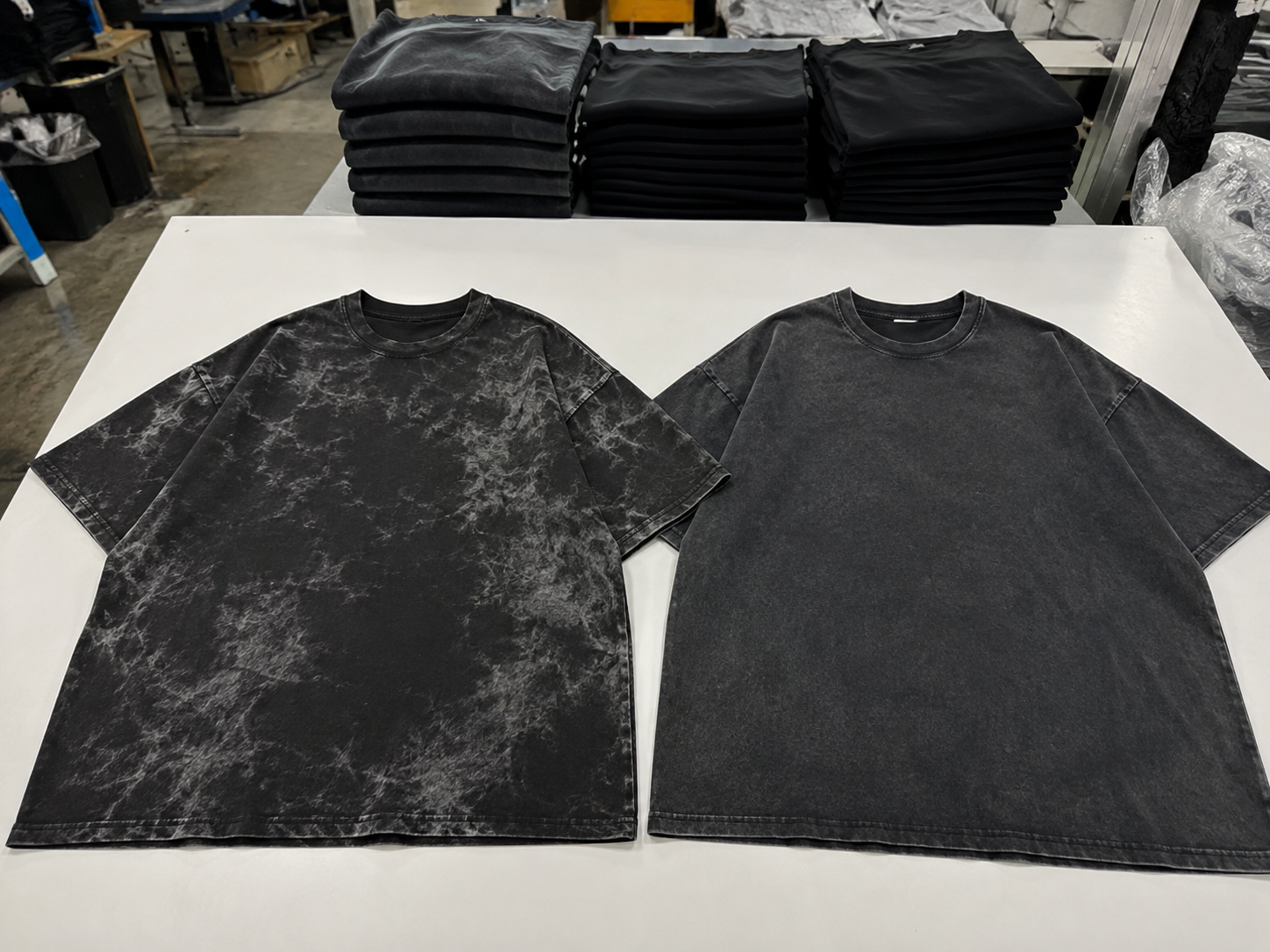
The biggest visual difference is contrast.
Acid Wash
Usually creates:
- Strong light and dark areas
- Irregular fading
- More dramatic surface variation
Vintage Wash
Usually creates:
- Softer overall fading
- More even aging
- Less aggressive contrast
For example:
A black vintage-washed T-shirt may become:
Soft Charcoal Black
while an acid-washed T-shirt may contain:
Dark Black + Gray + Light Faded Areas
This makes acid wash more suitable when the wash itself is part of the graphic identity of the garment.
2. Vintage Wash Usually Looks More Natural
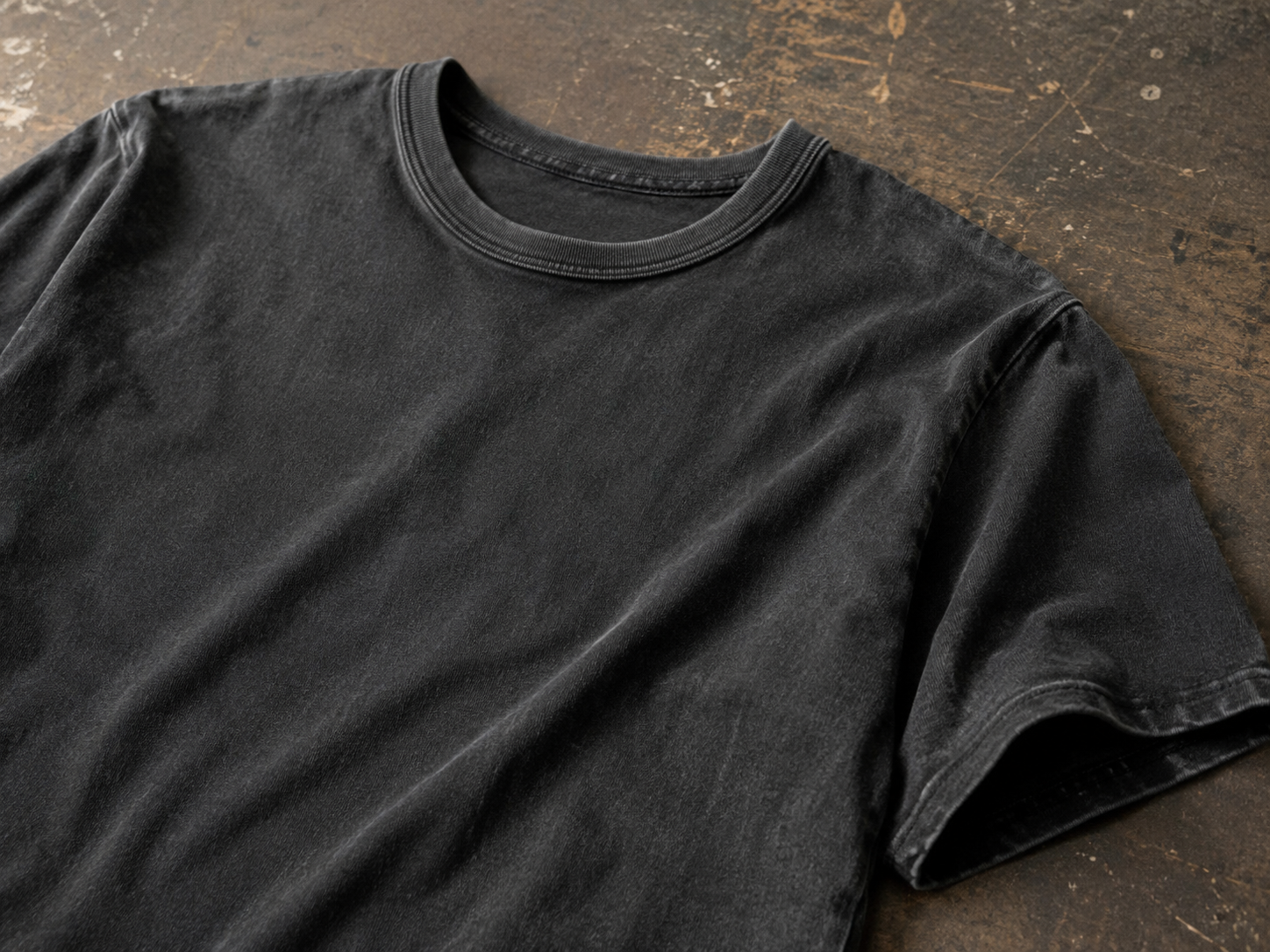
Vintage wash is often designed to imitate the look of a garment that has been worn and washed many times.
The result may look:
- Softer
- More subtle
- Less artificial
- More evenly aged
This works well for brands that want:
- Minimal streetwear
- Premium basics
- Retro graphic tees
- Washed oversized T-shirts
Acid wash usually makes a stronger statement.
The garment looks intentionally treated rather than naturally aged.
Neither effect is better.
They simply create different visual directions.
3. The Two Washes Affect Fabric Surface Differently
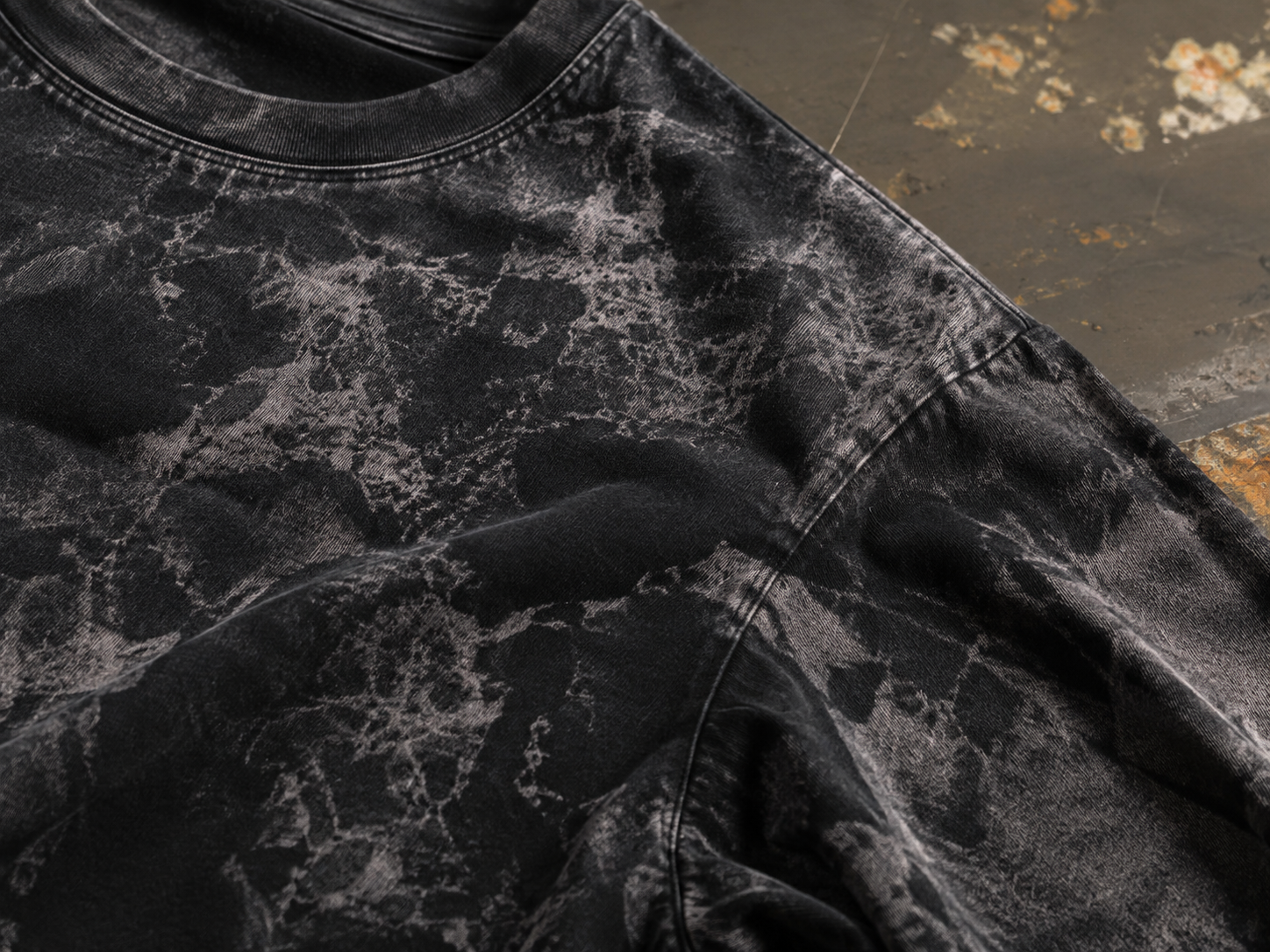
Washing affects more than color.
It can also change the surface of the fabric.
A vintage wash may create:
- Softer texture
- More relaxed surface
- Slight seam fading
Acid wash may create:
- Stronger surface contrast
- More visible abrasion
- More dramatic washed areas
The final effect depends on:
- Cotton content
- Dye method
- GSM
- Knit density
- Wash chemistry
- Treatment time
This is why the same wash recipe can look different on two different T-shirts.
4. Black Garments React Differently to Each Wash
Black is one of the most common colors for washed streetwear.
But black fabric can develop different undertones after washing.
Possible results include:
- Gray-black
- Blue-gray
- Brown-black
- Charcoal
Vintage Wash on Black
Usually aims for:
Controlled Overall Fading
Acid Wash on Black
Usually aims for:
High-Contrast Uneven Fading
The original black dye has a major influence on the final result.
This is why a brand should not approve washed black only from a Pantone reference.
A physical washed sample is much more useful.
For more information:
Why Can Two Black Fabrics Look Different Under the Same Light?
5. Acid Wash Has More Visible Garment-to-Garment Variation
One important production issue is consistency.
Vintage wash can also vary from garment to garment.
But acid wash often has more visible variation because the effect is intentionally irregular.
For example:
One T-shirt may have more fading around:
- Chest
- Shoulder
- Sleeves
while another may have slightly different washed areas.
This can be acceptable for streetwear.
In fact, some brands want every piece to look slightly different.
However, bulk production still needs an approved range.
The factory should confirm:
- Too light
- Too dark
- Acceptable contrast
- Acceptable pattern variation
before bulk production begins.
The goal is not:
Every garment looks identical
but:
Every garment stays within the approved wash direction
6. Both Washes Can Change Hand Feel
Both acid wash and vintage wash can change the way a T-shirt feels.
After washing, cotton garments may become:
- Softer
- More relaxed
- Less rigid
- More broken-in
However, the result depends on the full wash process.
A strong wash treatment can also make the fabric surface feel:
- Drier
- Rougher
- More textured
if the process is not properly balanced.
That is why brands should review both:
Color
and:
Hand Feel
during sample approval.
A wash that looks perfect but feels uncomfortable may not be suitable for the final product.
7. Both Washes Can Affect Measurements
Garment washing can change dimensions.
Possible changes include:
- Body length
- Chest width
- Shoulder width
- Sleeve length
- Hem opening
This happens because the garment is exposed to:
- Water
- Mechanical action
- Temperature
- Drying
The fabric may relax or shrink during the process.
For washed streetwear, the final size specification should usually be checked after the intended wash.
You can read more here:
Why Does Fabric Shrink After Garment Washing?
For example:
If a finished T-shirt needs to measure:
72 cm body length after washing
the pre-wash pattern may need to allow for expected shrinkage.
8. Which Wash Works Better for Streetwear?
The answer depends on the brand direction.
Choose Acid Wash If You Want:
- Strong visual contrast
- Aggressive washed effect
- Statement streetwear
- More individual-looking garments
- High-impact black and gray effects
Choose Vintage Wash If You Want:
- Softer fading
- Natural worn-in appearance
- Premium basics
- Retro streetwear
- More subtle aging
For example:
Minimal Oversized Tee
→ Vintage Wash
Graphic Y2K / Grunge Tee
→ Acid Wash
Premium Washed Hoodie
→ Vintage Wash
High-Contrast Statement Hoodie
→ Acid Wash
These are not fixed rules.
The final decision should come from the actual sample.
How We Develop Washed Garments Before Bulk Production
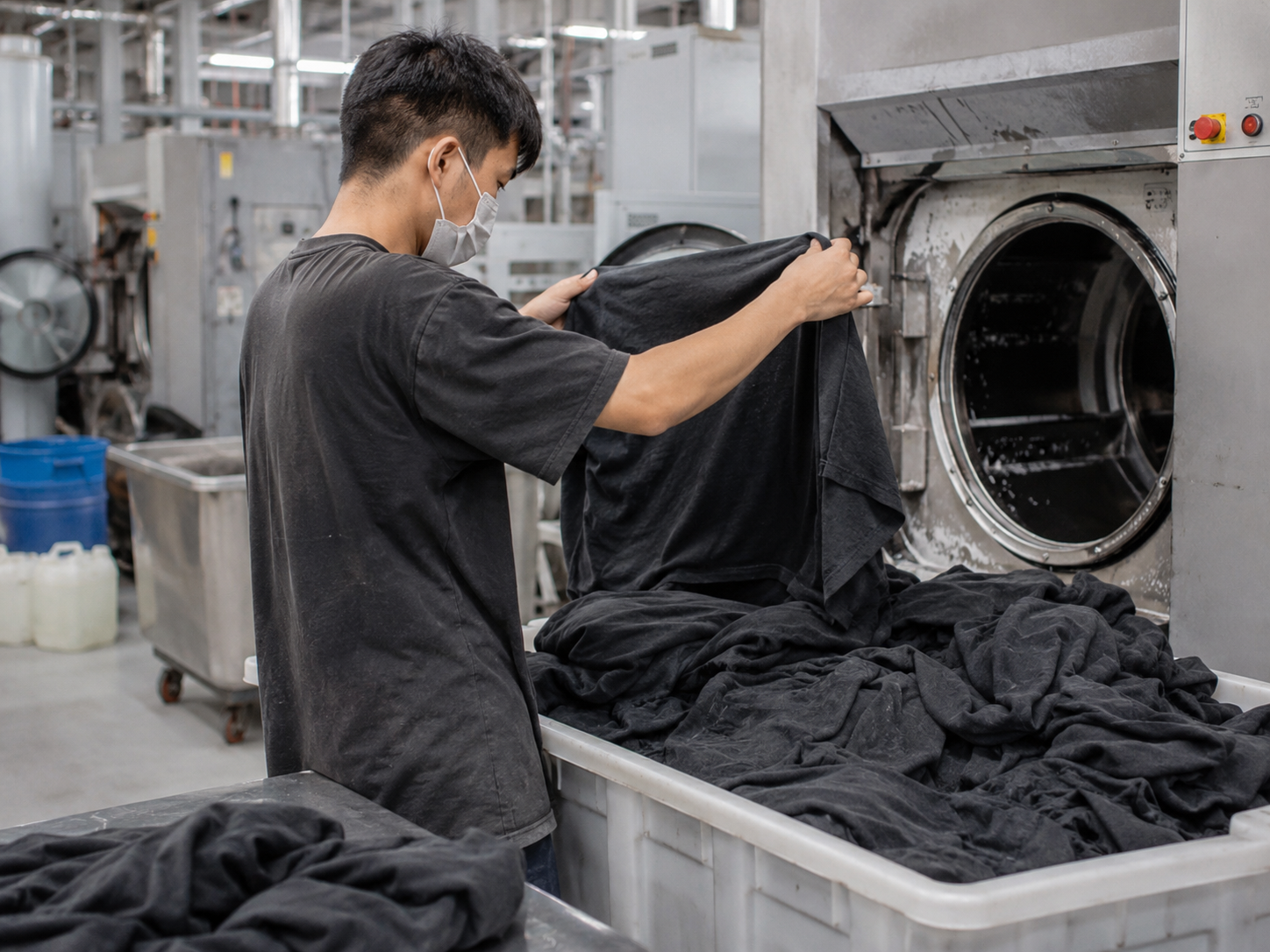
For washed streetwear, we prefer developing the wash on the actual production garment.
A typical process is:
Choose Fabric
↓
Confirm Base Color
↓
Make Garment Sample
↓
Create Wash Test
↓
Dry and Relax
↓
Check Color
↓
Check Surface
↓
Check Hand Feel
↓
Measure Garment
↓
Adjust Wash if Required
↓
Approve Standard
↓
Bulk Production
During development, we normally review:
- Overall fading
- Contrast level
- Seam fading
- Surface texture
- Hand feel
- Shrinkage
- Measurements
- Garment-to-garment variation
The approved washed sample should become the reference for bulk production.
Photos are useful, but a physical sample is usually more reliable because washed colors can look different under different lighting and screens.
Frequently Asked Questions
Is acid wash the same as vintage wash?
No.
Acid wash is generally a more specific high-contrast fading effect, while vintage wash is a broader category of aged or faded garment appearance.
Is acid wash more faded than vintage wash?
Usually it creates stronger and more irregular contrast.
Vintage wash is often softer and more evenly aged.
Which wash is better for black T-shirts?
Both can work.
Vintage wash creates a softer washed black, while acid wash creates stronger gray and black contrast.
Does acid wash damage fabric?
Strong washing or bleaching processes can affect fabric if they are not properly controlled.
Testing is important before bulk production.
Does vintage wash make a T-shirt softer?
It often can, depending on the fabric and wash process.
Can heavyweight T-shirts be acid washed?
Yes.
Heavyweight cotton T-shirts are commonly used for acid-washed streetwear, but the actual fabric should be tested first.
Will every acid-washed garment look the same?
No.
Natural variation is normal, especially with irregular wash effects.
The factory should control production within an approved appearance range.
Can washing change the final garment size?
Yes.
Both acid wash and vintage wash can affect measurements through water, mechanical action, heat, and drying.
Final Recommendation
Acid wash and vintage wash create different streetwear identities.
Choose Acid Wash when you want:
High Contrast + Irregular Fading + Strong Visual Impact
Choose Vintage Wash when you want:
Soft Fading + Worn-In Feel + More Natural Aging
The most important point is that neither result should be judged only from the name of the wash.
The safest development process is:
Final Fabric → Garment Sample → Wash Test → Check Color → Check Hand Feel → Measure → Approve → Bulk Production
For custom oversized T-shirts, washed hoodies, acid wash, vintage wash, and faded streetwear collections, Fuki Apparel can help with fabric selection, wash development, sample testing, measurement control, and bulk production.