
Embroidery can look clean and premium on a heavyweight hoodie, but the same design may create wrinkles when stitched onto a lightweight T-shirt.
This problem is called embroidery puckering.
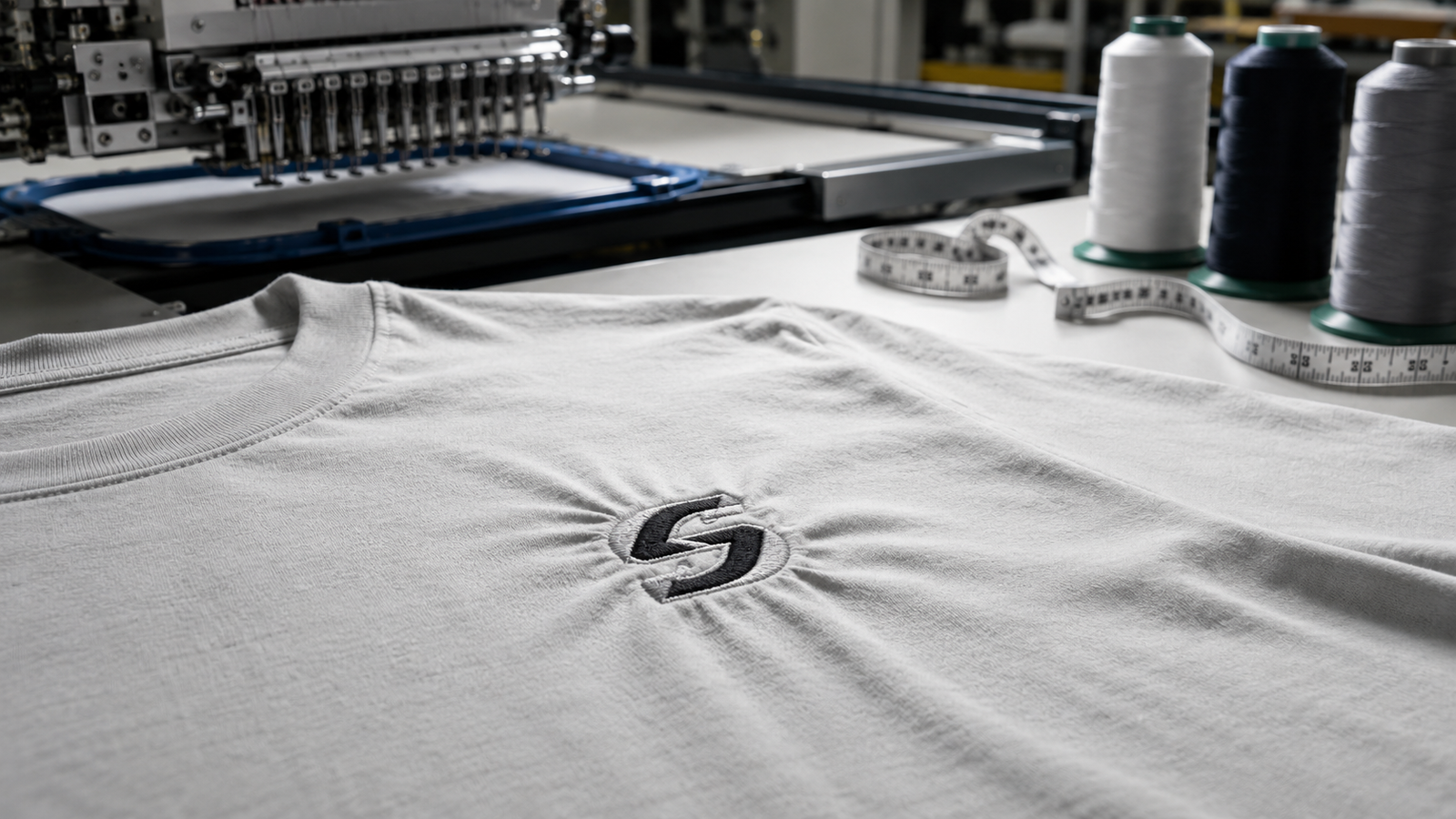
It usually happens when the fabric cannot fully support the pulling force created by the embroidery stitches.
From our experience developing custom streetwear, lightweight jersey, stretch knits, and soft T-shirt fabrics are more sensitive to embroidery than heavier fleece, denim, or twill.
The problem is usually not caused by one single factor.
Stitch density, backing, thread tension, hooping, digitizing, and the fabric itself all affect the final result.
Table of Contents
- Why Lightweight Fabric Puckers More Easily
- 1. Embroidery Density Is Too High
- 2. The Wrong Backing Is Used
- 3. Thread Tension Is Too Tight
- 4. The Fabric Is Stretched During Hooping
- 5. The Design Was Not Digitized for the Fabric
- Can Embroidery Puckering Be Completely Avoided?
- How We Test Embroidery Before Bulk Production
- Embroidery or Printing for Lightweight Streetwear?
- Frequently Asked Questions
- Final Recommendation
Why Lightweight Fabric Puckers More Easily
Lightweight fabric has less structure than heavyweight fabric.
For example, a soft cotton jersey T-shirt stretches and moves much more easily than a heavyweight fleece hoodie.
When thousands of embroidery stitches are concentrated in one area, that section of fabric becomes much more rigid.
The surrounding fabric remains soft.
This difference can cause the fabric around the embroidery to pull inward and create small waves or wrinkles.
That is why we normally consider the decoration method when selecting fabric for a streetwear project.
If you are still selecting your material, you can also read our How to Source Streetwear Fabrics guide.
1. Embroidery Density Is Too High
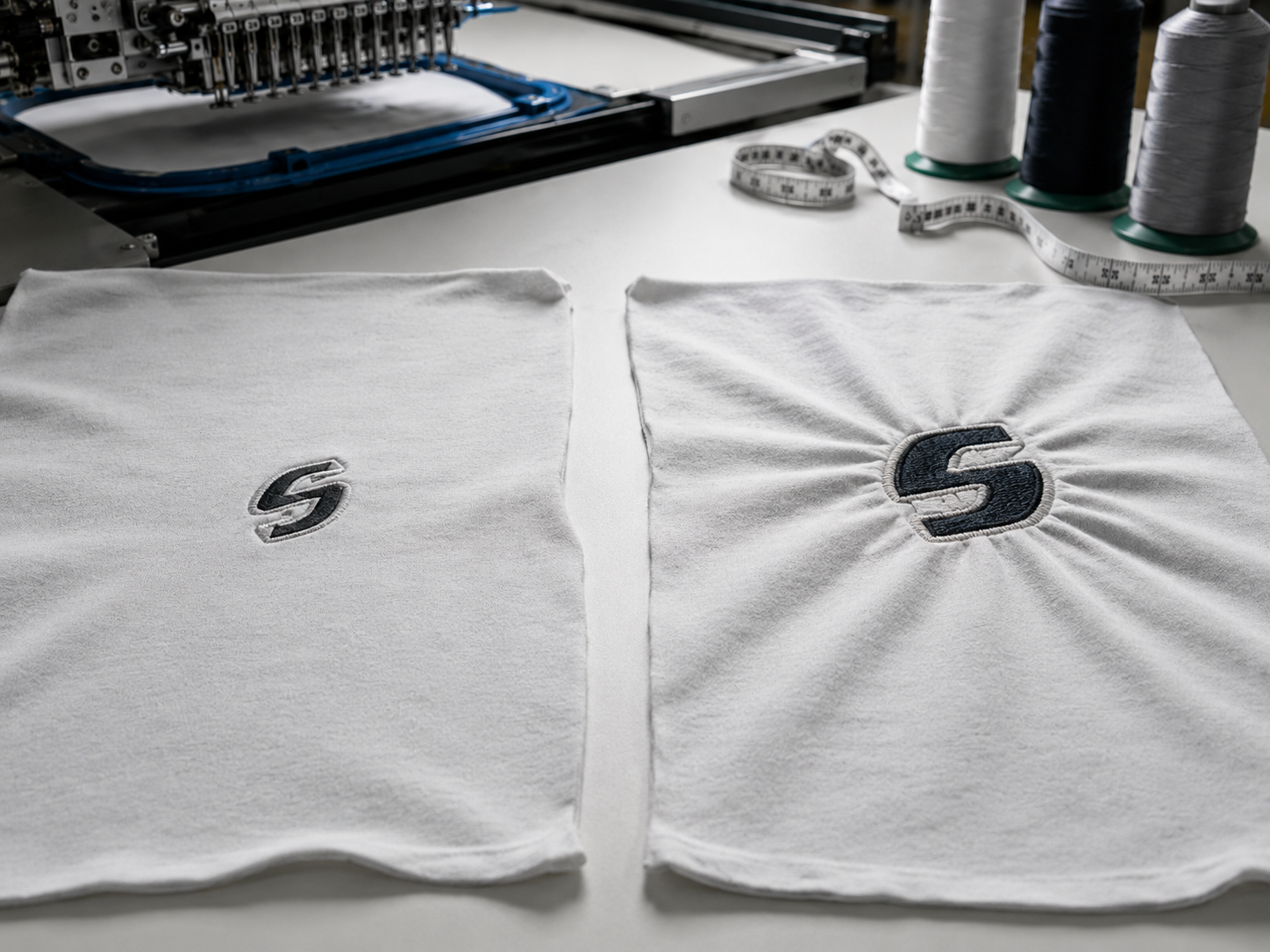
One of the most common reasons for embroidery puckering is too many stitches in a small area.
This often happens with:
- Large solid logos
- Thick lettering
- Fully filled graphics
- Multiple embroidery layers
- Designs with very little negative space
A dense embroidery design may work perfectly on a 400 GSM hoodie.
But putting exactly the same embroidery file onto a lightweight T-shirt can produce a very different result.
The fabric may simply be too soft to support the stitch count.
In this situation, we may adjust the embroidery by:
- Reducing unnecessary stitch density
- Changing some filled areas into outlines
- Adding more negative space
- Changing stitch direction
- Adjusting the underlay
- Reducing overlapping stitches
More stitches do not automatically mean better quality.
For lightweight streetwear, good digitizing is usually more important than simply increasing stitch count.
2. The Wrong Backing Is Used
Backing, also called a stabilizer, is placed behind the fabric during embroidery.
Its purpose is to help keep the fabric stable while the needle is stitching.
This is especially important for lightweight and stretchy fabrics.
According to Madeira, cut-away backing is commonly used for unstable fabrics such as T-shirts, sweatshirts, polos, and other stretchy knits.
External reference:
However, thicker backing is not automatically better.
If the backing is too heavy, the embroidered area can become stiff and may even show through a lightweight garment.
The correct backing depends on:
- Fabric weight
- Fabric stretch
- Embroidery size
- Stitch count
- Garment construction
This is why we normally test the actual embroidery on the actual production fabric rather than choosing backing only from the artwork.
3. Thread Tension Is Too Tight
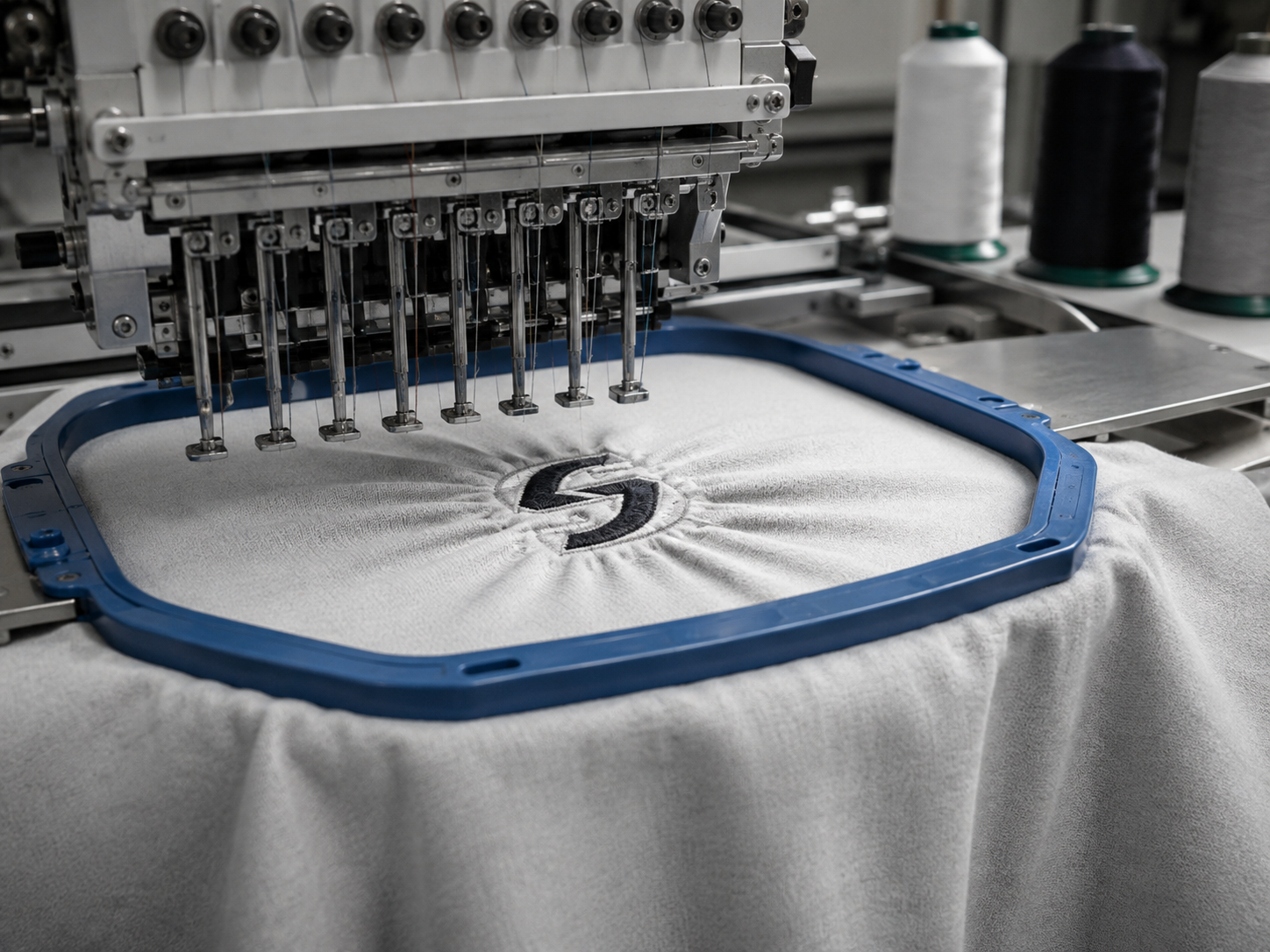
Embroidery thread needs tension to create clean stitches.
But when the tension is too tight, the thread can pull the fabric toward the center of the embroidery.
This effect is much easier to notice on lightweight fabric.
A heavyweight hoodie may hide a small amount of pulling.
A thin jersey T-shirt will not.
During sampling, machine settings sometimes need to be adjusted according to the fabric instead of using exactly the same settings for every garment.
The goal is not maximum tension.
The goal is enough tension to create a clean stitch without unnecessarily pulling the fabric.
4. The Fabric Is Stretched During Hooping
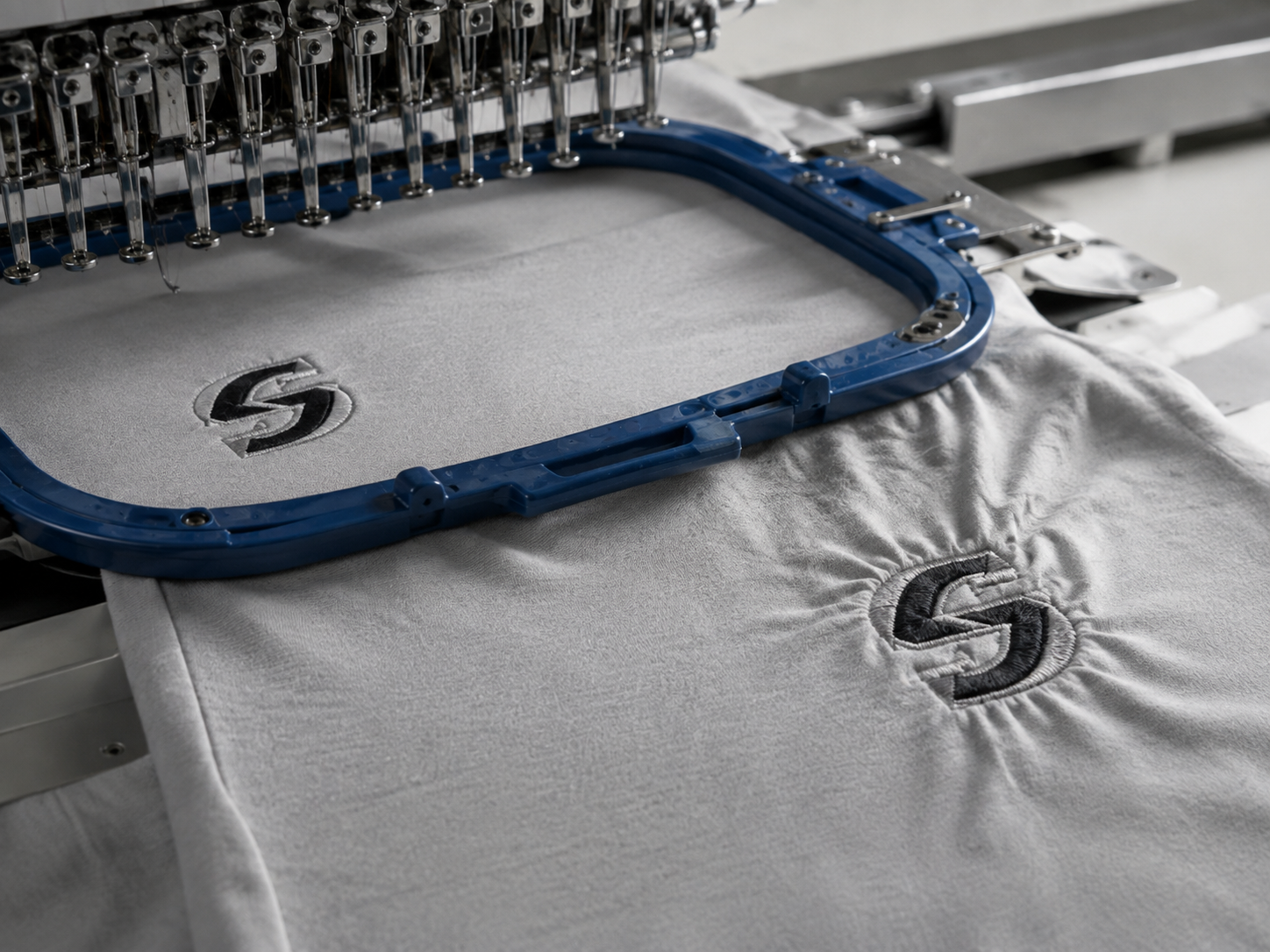
Hooping is another common source of puckering.
The fabric must be held securely while the embroidery machine is running.
But there is an important difference between:
Keeping the fabric flat
and
stretching the fabric tight
If a stretchy T-shirt is pulled too tightly before embroidery, it may look perfectly flat while it is inside the hoop.
After embroidery, the garment is removed from the hoop.
The fabric then tries to return to its original shape, while the embroidered area cannot move in the same way.
The result can be wrinkles around the logo.
Madeira recommends keeping fabric taut during hooping without excessively stretching it.
External reference:
Madeira – Machine Embroidery for Beginners
5. The Design Was Not Digitized for the Fabric
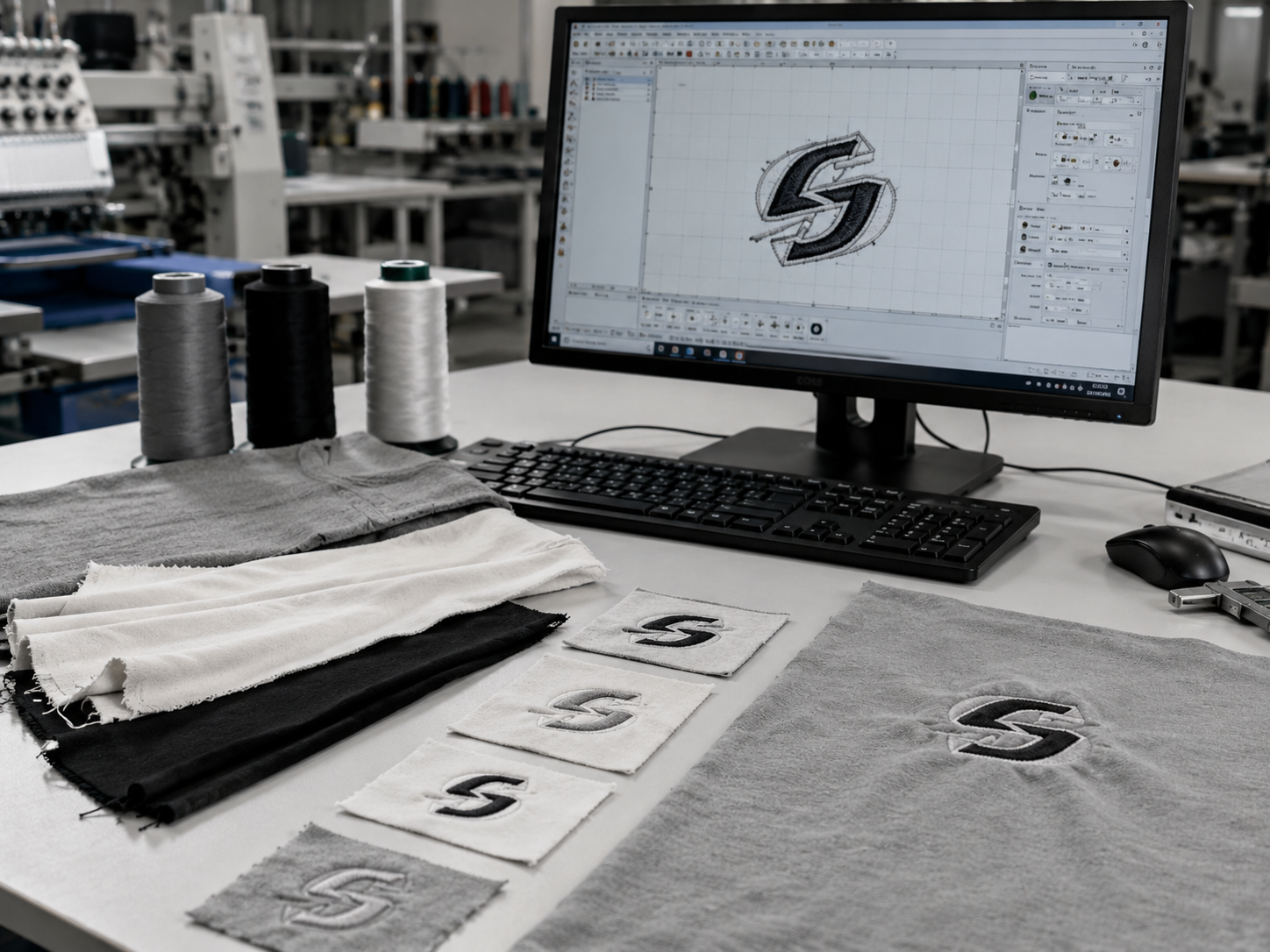
An embroidery machine cannot simply use a JPG, PNG, or AI logo file directly.
The artwork first needs to be converted into an embroidery file through a process called digitizing.
Digitizing controls things such as:
- Stitch direction
- Stitch density
- Underlay
- Stitch sequence
- Fill areas
- Edge compensation
This means one embroidery file is not always suitable for every fabric.
For example, a logo digitized for heavyweight fleece may need adjustments before being used on lightweight cotton jersey.
This is particularly important for large back embroidery.
If you want to understand the complete embroidery development process, see our guide:
How Are Custom Embroidered Hoodies Made?
Can Embroidery Puckering Be Completely Avoided?
Not always.
This is important for clothing brands to understand.
If you combine:
Very lightweight fabric + very large embroidery + very high stitch density
there will naturally be a higher risk of puckering.
Even with correct machine settings and suitable backing, the fabric still has physical limitations.
In production, the better approach is usually to find a balance between:
- Design appearance
- Fabric softness
- Embroidery density
- Garment comfort
- Production stability
Sometimes reducing the embroidery density solves the problem.
Sometimes the design should be slightly changed.
In other cases, using a heavier fabric or another decoration method may produce a better result.
How We Test Embroidery Before Bulk Production
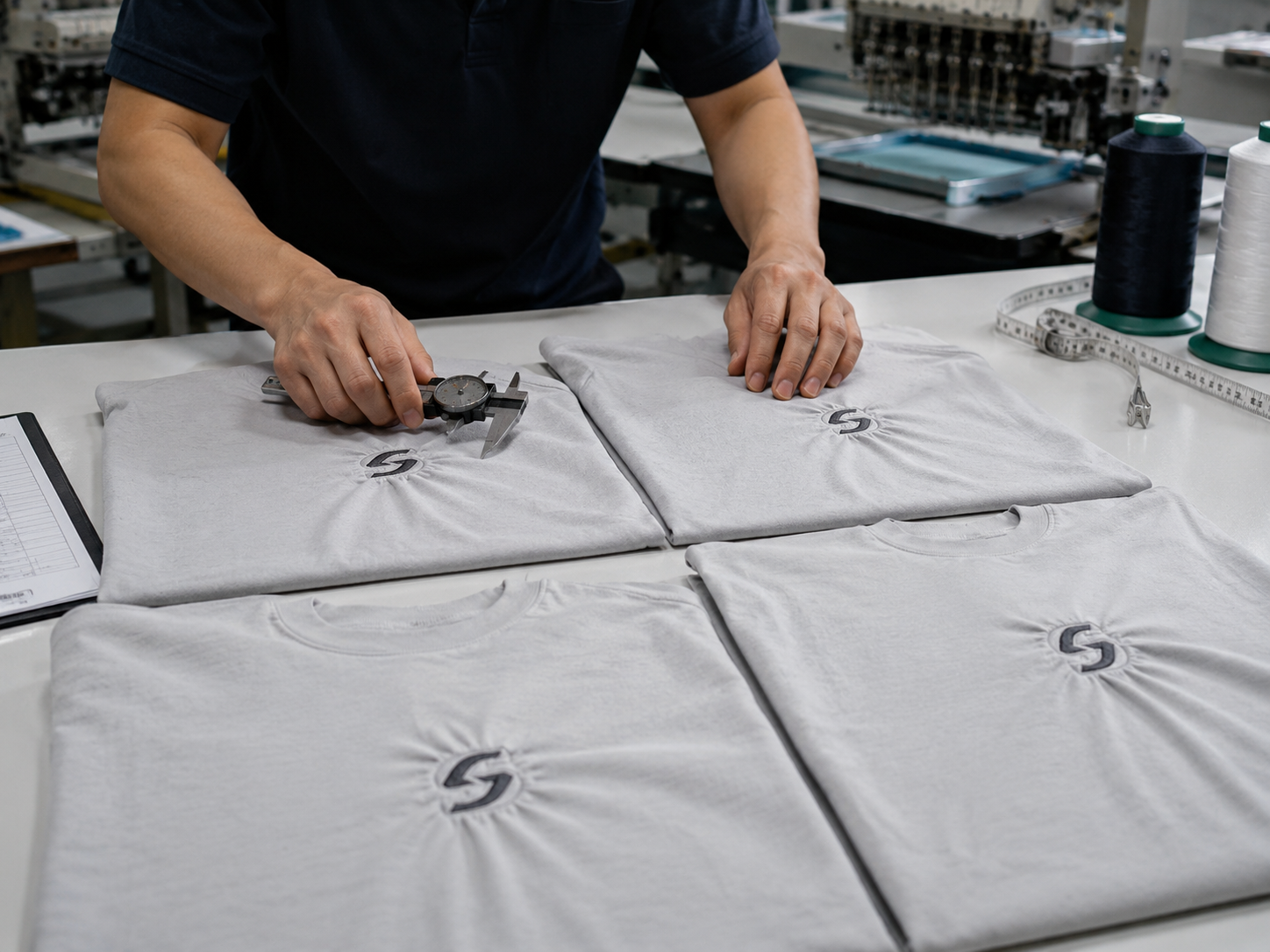
For a new streetwear style, we prefer testing embroidery before moving directly into bulk production.
A typical process is:
Artwork → Digitizing → Test Embroidery → Review → Adjustment → Sample Approval → Bulk Production
During the sample stage, we normally look at:
- Puckering around the embroidery
- Logo shape
- Small lettering
- Stitch coverage
- Fabric distortion
- Backing visibility
- Embroidery stiffness
- Overall appearance after the fabric relaxes
For some lightweight or stretchy fabrics, one embroidery test may not be enough.
We may need to adjust the digitizing, backing, or machine settings and run another test.
This is much easier to correct during sampling than after hundreds of garments have already been embroidered.
Embroidery or Printing for Lightweight Streetwear?
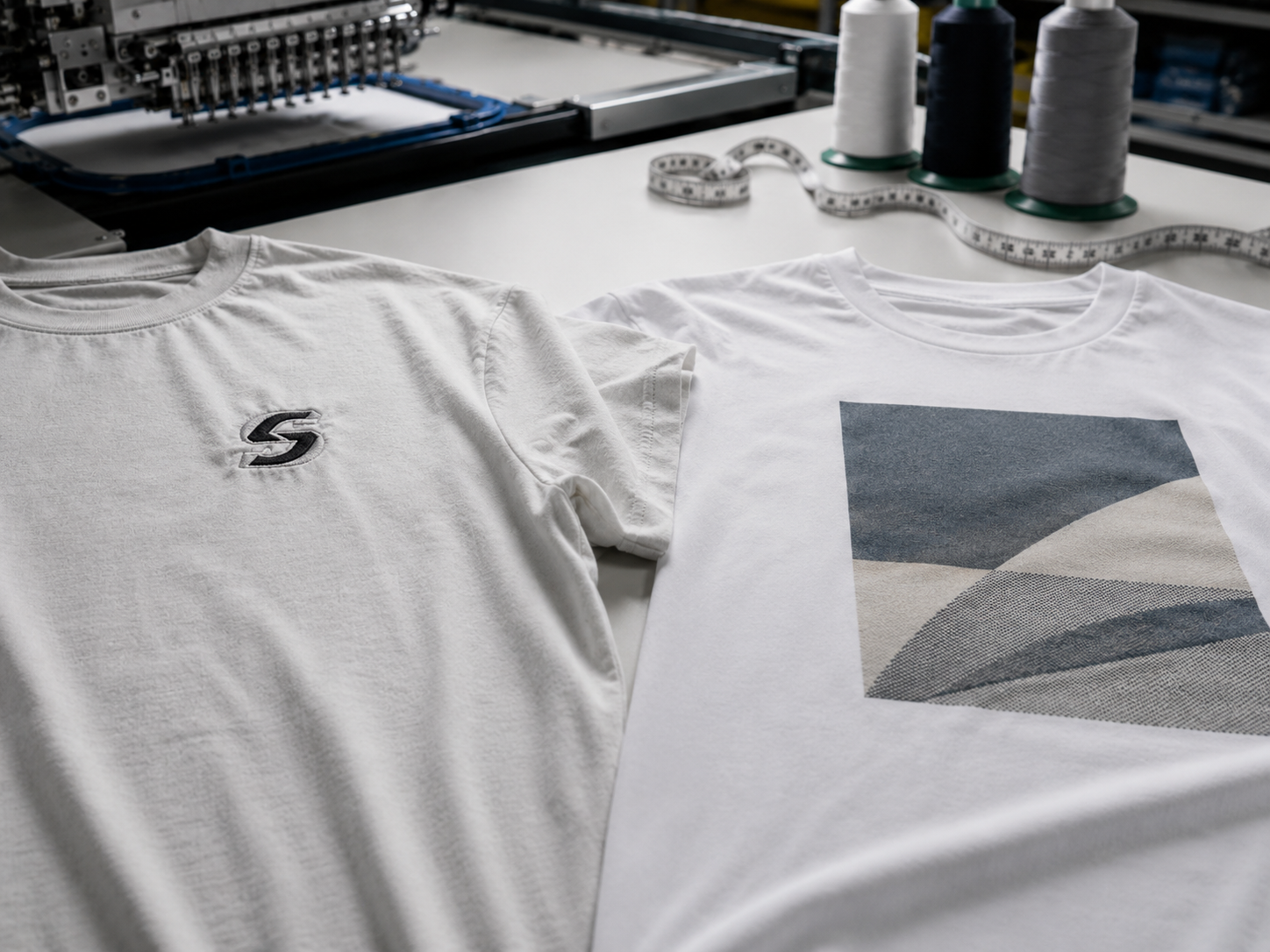
Embroidery is not always the best decoration method for every design.
For a small chest logo, embroidery can work very well on a lightweight T-shirt.
For a very large back graphic, printing may sometimes be more suitable because it adds much less concentrated thread weight to the fabric.
A simple guideline is:
| Design | Usually Better Option |
|---|---|
| Small chest logo | Embroidery |
| Small sleeve logo | Embroidery |
| Large solid back logo | Printing or optimized embroidery |
| Detailed multi-color artwork | Screen Print / DTG |
| Premium small branding | Embroidery |
| Oversized graphic | Printing |
This does not mean large embroidery cannot be produced.
It simply needs more testing and better coordination between the fabric and embroidery construction.
You can compare the two methods in our guide:
Embroidery vs Puff Print for Streetwear
Or explore our:
Custom Streetwear Printing Services
Frequently Asked Questions
Does embroidery always pucker on lightweight fabric?
No.
Small and properly digitized embroidery can work very well on lightweight fabrics. The risk increases when the fabric is stretchy, the embroidery is large, or the stitch density is too high.
What backing is best for lightweight T-shirts?
A lightweight cut-away or no-show style stabilizer is commonly used for stretchy knit fabrics, but the exact backing should be tested according to the fabric and embroidery design.
Does heavier backing prevent puckering?
Not necessarily.
Backing that is too heavy can make a lightweight garment stiff or create a visible outline around the embroidered area.
Why does embroidery look good in the hoop but wrinkle afterward?
One possible reason is that the fabric was stretched too much during hooping. When it is removed from the hoop, the fabric relaxes while the embroidered area stays relatively fixed.
Can I use a large embroidered logo on a lightweight T-shirt?
Yes, but it normally requires more development.
The stitch density, underlay, backing, and design structure may need to be adjusted. For some very large graphics, printing may be a better option.
Should embroidery be tested before bulk production?
Yes.
We recommend testing embroidery on the actual production fabric before approval, especially for lightweight, stretchy, or unusual materials.
Final Recommendation
If embroidery puckers on lightweight fabric, do not look at only one factor.
Check the complete combination:
Fabric + Stitch Density + Backing + Thread Tension + Hooping + Digitizing
From our experience, the best result usually comes from adjusting the embroidery construction to suit the garment instead of forcing the same embroidery file onto every fabric.
For a streetwear brand, this is exactly why sampling matters.
A good sample allows you to identify embroidery problems before bulk production and decide whether the design, fabric, or decoration method needs to be adjusted.
If you are developing custom embroidered T-shirts, hoodies, jackets, or other streetwear products, Fuki Apparel can help with fabric sourcing, embroidery sampling, customization, and bulk production.