
I hear this question a lot, especially from buyers who are new to cultural streetwear:
“Why do Denim Tears jeans cost so much? They look simple.”
I understand the reaction. At first glance, Denim Tears jeans do not rely on flashy hardware, oversized logos, or obvious luxury signals. They can look understated compared with other premium streetwear pieces.
But after years of working with apparel production and brand positioning, I can tell you this clearly: Denim Tears jeans are not priced only for how they look. They are priced for what they represent, how they are produced, and who they are made for.
Let’s break that down in a practical way.
Table of Contents
- Quick Answer
- What You’re Really Paying For
- Denim Tears Jeans vs Regular Jeans
- Are They Worth the Price?
- FAQ
- Conclusion
- Internal Reference
- SEO Configuration
Quick Answer
Denim Tears jeans are expensive because they combine:
- Cultural and historical storytelling
- Small-batch, controlled production
- Premium denim and more demanding wash development
- Strong brand positioning
- Resale demand and collector value
You are not just paying for denim pants. You are paying for meaning, scarcity, and cultural weight.
What You’re Really Paying For
When people compare Denim Tears jeans with ordinary jeans, they often focus only on visible construction. But pricing in fashion is rarely based on fabric alone.
With Denim Tears, the price usually comes from a mix of story, production scale, brand power, and market demand.
Cultural Storytelling
Denim Tears is built on narrative, not just trend cycles.
Its visual language often connects denim, cotton symbolism, Black American history, labor, and identity. That means the product is not only designed to look good. It is also designed to communicate something deeper.
This matters because strong storytelling creates emotional and cultural value that generic denim does not have. In practical terms, buyers are not only purchasing a garment. They are buying into a point of view.
That kind of value is hard to copy, even when someone copies the appearance.
Low-Volume Production
From a manufacturing perspective, Denim Tears does not operate like a mass-market denim brand.
That usually means:
- Smaller production runs
- Higher cost per unit
- Less efficiency than volume-driven brands
- Tighter control over limited releases
Large denim labels can lower pricing by producing huge volumes across standardized programs. A brand like Denim Tears keeps its drops more selective, which naturally drives unit cost up.
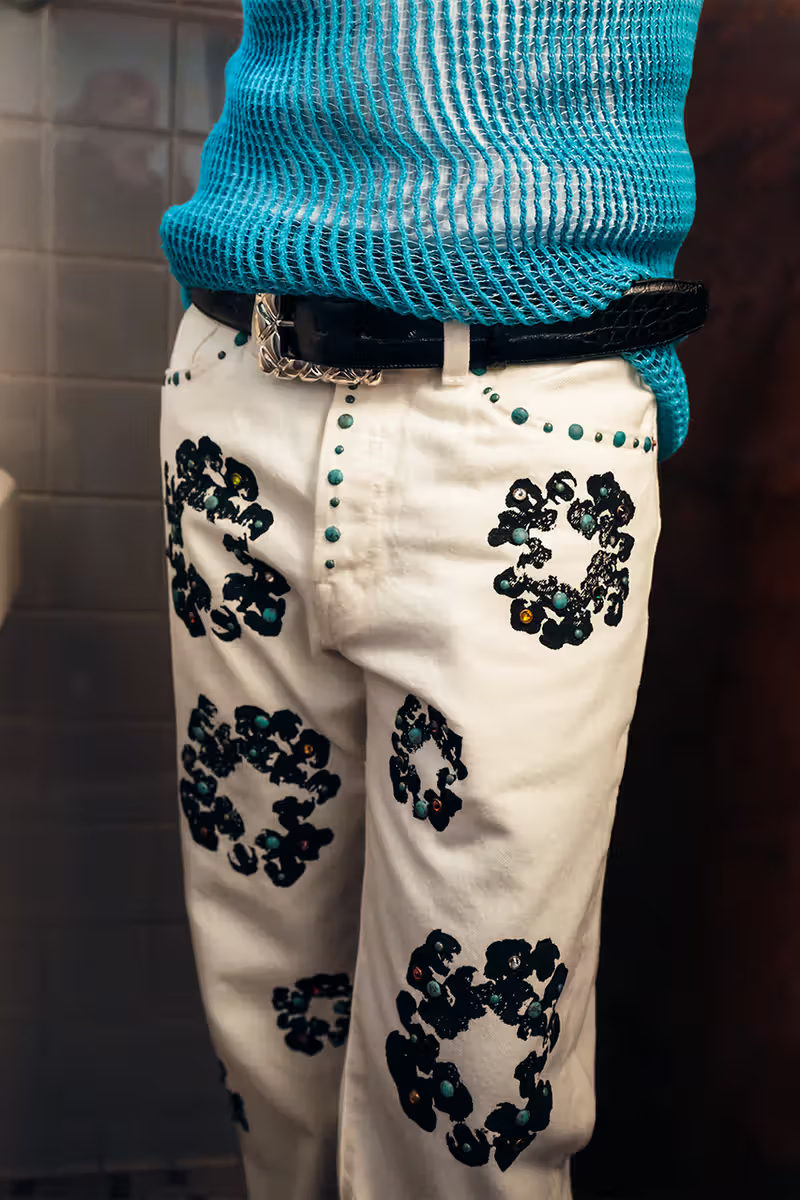
From my perspective, scarcity here is not just a side effect. It is part of the strategy.
Material and Wash Quality
Another reason Denim Tears jeans cost more is the development behind the fabric and finish.
Many pairs use:
- Heavier-weight denim
- Vintage-inspired wash effects
- Distressing or fading with more character
- Pigment, garment, or specialty finishing processes
In denim production, wash complexity adds cost very quickly.
Why? Because better washes usually require:
- More development time
- More wash cycles
- More technician input
- More inconsistency risk
- Higher rejection rates during QC
That means even jeans that look simple can be expensive to execute correctly.
Brand Positioning, Not Mass Market
Denim Tears is not trying to compete with basic jeans brands.
It is positioned closer to:
- Cultural luxury
- Story-driven streetwear
- Collectible fashion
- Limited, identity-based product
That positioning changes how price works. A brand in this category is not asking, “How cheap can we make this?” It is asking, “How do we preserve meaning, brand value, and exclusivity?”
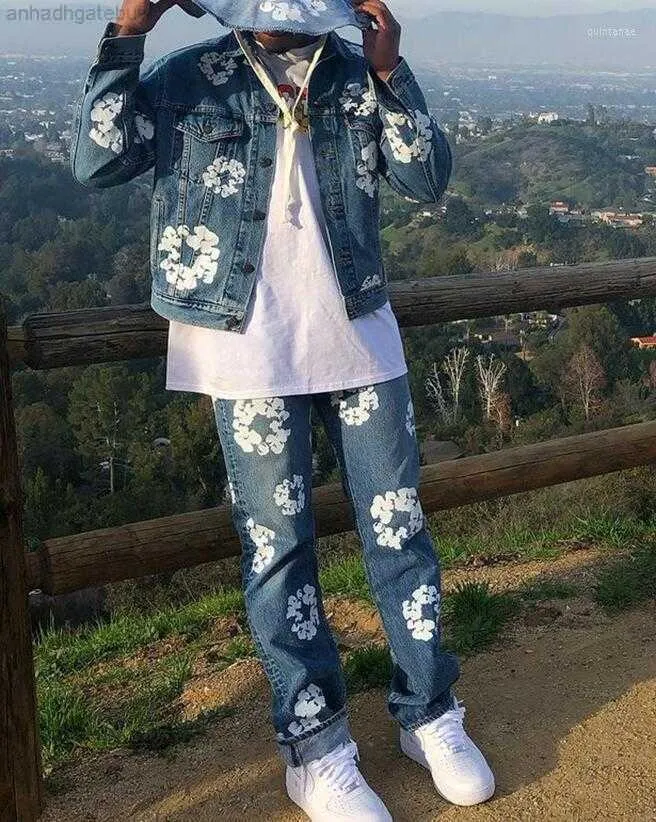
Once a brand successfully builds that kind of identity, higher pricing becomes part of the expectation.
Resale and Collector Value
The resale market is another important piece of the puzzle.
Denim Tears jeans often hold attention because:
- Some releases sell out quickly
- Certain drops gain value over time
- Older pieces become harder to find
- Collectors treat some releases like archive items
A brand cannot keep prices high unless demand supports it. Denim Tears benefits from the fact that buyers are often willing to pay both retail and resale prices.
That resale support helps reinforce the original pricing structure.
Denim Tears Jeans vs Regular Jeans
| Feature | Regular Jeans | Denim Tears Jeans |
|---|---|---|
| Production Volume | Very high | Very limited |
| Storytelling | Minimal | Central to the product |
| Fabric Weight | Standard | Often heavier and more premium-feeling |
| Wash Complexity | Usually simple | Often more developed |
| Cultural Value | Low | High |
| Resale Potential | Usually none | Often strong |
These products are not really competing in the same category.
Regular jeans are usually about utility, price, and availability.
Denim Tears jeans are about symbolism, identity, scarcity, and brand meaning.
Are They Worth the Price?
In my view, Denim Tears jeans are worth the price if you:
- Care about cultural meaning in fashion
- Value limited production
- Collect streetwear with long-term relevance
- See clothing as expression, not just function
They may not be worth the price if you:
- Only want basic everyday jeans
- Care more about pure utility than story
- Do not place value on limited drops
- Prefer cost efficiency over collectibility
There is no universal answer here. It depends on what kind of buyer you are.
If your goal is simply to own durable denim, many cheaper options make sense.
If your goal is to own a product with narrative, rarity, and cultural significance, then the higher price becomes easier to understand.
FAQ
Are Denim Tears jeans luxury denim?
They usually sit somewhere between premium denim and cultural luxury. They are not traditional luxury in the old-fashioned sense, but they are priced and positioned above standard premium jeans.
Are Denim Tears jeans handmade?
Not fully. But many stages, especially washing, finishing, and approval standards, can be labor-intensive.
Why are replicas so common?
Because demand is high and some visual elements are easy to imitate. But copying the look is much easier than reproducing the meaning, brand context, and collector value.
Are you paying more for branding than for fabric?
Partly, yes. But that is true for many strong brands. In this case, you are also paying for concept, positioning, limited availability, and the cultural layer behind the product.
Conclusion
Denim Tears jeans are expensive because they are not meant to function as ordinary jeans.
They represent:
- History
- Identity
- Scarcity
- Cultural relevance
- Brand storytelling
In a market full of disposable denim, Denim Tears offers something more intentional.
That intention costs more.
For the right buyer, that higher price makes sense. For the wrong buyer, it will always feel unnecessary. The key is understanding that Denim Tears is selling more than fabric.
Internal Reference
If you are building your own denim brand and want to create premium jeans with stronger storytelling, better wash development, and more focused product positioning, you can explore how narrative-driven apparel is developed at 👉 Fuki Apparel
Great pricing does not come from fabric alone.
It comes from purpose, positioning, and product meaning.
