
For most streetwear T-shirts, 220–260 GSM is the best range.
From my experience developing custom T-shirts for streetwear brands, 240 GSM is usually the safest starting point. It feels substantial, supports oversized shapes, works well with most printing methods, and is still comfortable enough for regular wear.
However, the best GSM depends on more than weight. Your target fit, selling climate, wash treatment, printing method, and retail positioning should all influence the final decision.
Table of Contents
- Quick Answer
- What Does GSM Mean?
- Best GSM for Streetwear T-Shirts
- Streetwear T-Shirt GSM Comparison
- How to Choose the Right GSM
- Is Higher GSM Always Better?
- What Else Determines T-Shirt Quality?
- How to Specify GSM to a Manufacturer
- Common GSM Selection Mistakes
- Useful Fabric Resources
- Frequently Asked Questions
- Final Recommendation
Quick Answer
The best GSM for most premium streetwear T-shirts is 220–260 GSM.
Here is my simple recommendation:
| T-Shirt Purpose | Recommended GSM |
|---|---|
| Summer streetwear tee | 180–210 GSM |
| Everyday premium tee | 200–230 GSM |
| Oversized graphic tee | 220–260 GSM |
| Heavyweight boxy tee | 260–300 GSM |
| Ultra-heavy statement tee | 300+ GSM |
Best all-around choice: Start with a 240 GSM cotton jersey if you want a premium streetwear T-shirt that feels structured without becoming too stiff or hot.
A new brand does not need to choose the heaviest fabric available. The goal is to choose a fabric that supports the intended fit and customer experience.
What Does GSM Mean?
GSM stands for grams per square meter. It measures how much one square meter of fabric weighs.
For example:
- 180 GSM fabric weighs about 180 grams per square meter.
- 240 GSM fabric weighs about 240 grams per square meter.
- 300 GSM fabric weighs about 300 grams per square meter.
A higher GSM normally means a heavier fabric, but it does not automatically mean the fabric is softer, stronger, or better.
Two 240 GSM fabrics can feel completely different because of differences in:
- Cotton fiber quality
- Yarn thickness
- Knitting density
- Fabric finishing
- Dyeing method
- Washing treatment
- Compaction
- Surface texture

Fabric weight can be checked using recognized testing methods such as ASTM D3776/D3776M.
When reviewing a fabric, I recommend checking the finished fabric rather than relying only on the weight of untreated greige fabric.
Best GSM for Streetwear T-Shirts
There is no single GSM that works for every streetwear T-shirt. The correct choice depends on the design.
180–210 GSM: Best for Lightweight Streetwear
This range is suitable for:
- Summer collections
- Hot climates
- Layering T-shirts
- Lower retail price points
- Lightweight merchandise
A good-quality 200 GSM tee can still feel premium when it uses dense knitting, combed cotton, clean stitching, and a well-developed pattern.
The main limitation is structure. Lightweight fabric may drape against the body instead of holding a strong boxy shape.
220–240 GSM: Best for Versatile Premium T-Shirts
This is the most flexible range for independent streetwear brands.
It works well for:
- Relaxed fits
- Oversized fits
- Front and back graphics
- Screen printing
- Puff printing
- Light garment washing
- Year-round collections
I often recommend 240 GSM for first samples because it balances structure, comfort, decoration support, and production cost.
Brands developing custom silhouettes can explore our Custom T-Shirt Manufacturer services.
250–280 GSM: Best for Heavyweight Oversized T-Shirts
This range creates a firmer and more substantial garment.
It is ideal for:
- Drop-shoulder T-shirts
- Wide boxy bodies
- Premium capsule collections
- Large graphic applications
- Dense embroidery
- Vintage-washed heavyweight tees
A heavier fabric helps an oversized pattern maintain its intended shape. However, the pattern must still be developed correctly. Simply increasing the size of a regular T-shirt will not create a balanced oversized fit.
For custom drop shoulders, sleeve shapes, and body proportions, see our Oversized T-Shirt Manufacturer page.
290–320 GSM: Best for Statement Pieces
A 290–320 GSM tee can create a strong luxury or ultra-heavyweight appearance.
It works best for:
- Short boxy silhouettes
- Minimal luxury streetwear
- Fall and winter drops
- High retail price positioning
- Limited statement collections
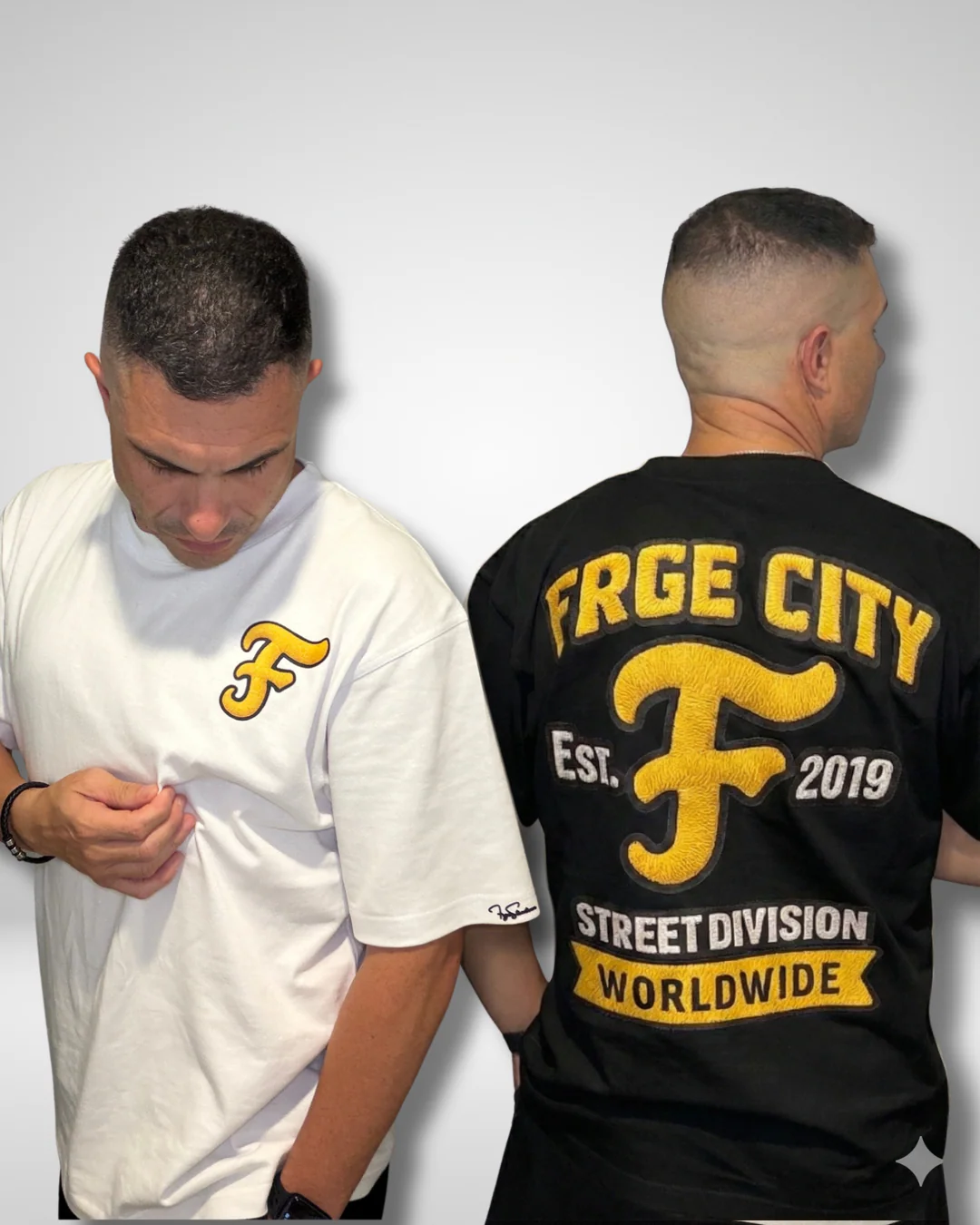
The disadvantages are higher material cost, greater shipping weight, lower breathability, and a stiffer hand feel.
I would not choose this range for every product in a collection. It is better used when extreme weight is part of the design concept.
Streetwear T-Shirt GSM Comparison
| GSM | Feel | Structure | Best Use | Main Risk |
|---|---|---|---|---|
| 180 GSM | Light and breathable | Low | Summer and layering | May feel too thin |
| 200 GSM | Comfortable and flexible | Medium-low | Everyday streetwear | Limited boxy structure |
| 220 GSM | Balanced and premium | Medium | Relaxed and oversized tees | Less impact than heavyweight fabric |
| 240 GSM | Substantial but wearable | Medium-high | Most premium streetwear | Slightly warm in hot climates |
| 260 GSM | Heavy and structured | High | Boxy oversized T-shirts | Higher cost and weight |
| 280 GSM | Firm and substantial | Very high | Premium heavyweight drops | Can feel stiff |
| 300+ GSM | Extremely heavy | Very high | Niche statement pieces | Hot, expensive, and less versatile |
My Practical GSM Rule
- Choose 180–210 GSM when breathability is the priority.
- Choose 220–240 GSM when versatility is the priority.
- Choose 250–280 GSM when structure is the priority.
- Choose 300+ GSM only when extreme weight is part of the product identity.
How to Choose the Right GSM
I use three main questions when helping a brand select T-shirt fabric.
1. What Fit Are You Creating?
The silhouette should guide the fabric choice.
| Fit | Recommended GSM |
|---|---|
| Slim or regular fit | 180–220 GSM |
| Relaxed fit | 200–240 GSM |
| Oversized fit | 220–280 GSM |
| Cropped boxy fit | 240–300 GSM |
A soft 220 GSM jersey can create a relaxed oversized drape. A dense 280 GSM jersey will hold the body and sleeves farther away from the wearer.
Neither result is automatically better. They create different visual effects.
2. Where Will the T-Shirt Be Sold?
Climate matters more than many brands expect.
For hot locations, such as Florida, Texas, Dubai, or Southeast Asia, 180–220 GSM may be more comfortable.
For broad year-round selling, 220–240 GSM is usually safer.
For cooler markets or fall collections, 250–300 GSM can provide a stronger heavyweight identity.
A fabric should feel premium to the target customer, not uncomfortable.
3. What Decoration Will Be Added?
Printing and embroidery place different demands on the fabric.
| Decoration Method | Suggested GSM |
|---|---|
| DTG printing | 180–240 GSM |
| Screen printing | 200–260 GSM |
| Puff printing | 220–280 GSM |
| High-density printing | 220–280 GSM |
| Small embroidery | 220–260 GSM |
| Large or dense embroidery | 240–300 GSM |
Surface quality is also important. A smooth 220 GSM combed cotton fabric may produce a cleaner print than a rough 280 GSM fabric.
For washed and faded effects, 220–280 GSM is a useful starting range. Brands can review available treatments through our Washed T-Shirts Manufacturer page.
Is Higher GSM Always Better?
No. GSM is a fabric-weight measurement, not a complete quality score.
A well-made 220 GSM T-shirt can outperform a poorly made 300 GSM T-shirt.
Higher GSM may provide:
- More structure
- Better opacity
- A heavier hand feel
- Greater support for decoration
- Stronger premium positioning
However, it can also create:
- Lower breathability
- Higher fabric cost
- Higher shipping cost
- More stiffness
- Longer drying time
- Less comfort in warm climates
I have seen brands request the highest GSM because they believe customers will automatically view it as better. After sampling, they sometimes realize the garment is too rigid or too hot for their market.
The best GSM is the one that matches the product—not the largest number available.
What Else Determines T-Shirt Quality?
GSM should always be reviewed together with the following factors.
Cotton and Yarn Quality
Combed ring-spun cotton normally provides a smoother and cleaner surface. Open-end cotton often creates a drier and more rugged vintage feel.
The right yarn depends on the desired product identity.
Knitting Density
A dense knit can improve:
- Opacity
- Shape retention
- Print stability
- Surface smoothness
- Overall structure
A loosely knitted fabric may feel less substantial even when its GSM is relatively high.
Shrinkage and Skewing
Cotton jersey can shrink or twist after washing. Before bulk production, I recommend testing:
- Body length shrinkage
- Chest width shrinkage
- Side-seam twisting
- Sleeve twisting
- Collar shape
- Print appearance
- Color change
The CottonWorks Shrinkage and Skewing Guide provides additional technical information about dimensional changes in cotton fabrics.
Collar Construction
The neckline is one of the most visible quality details on a heavyweight T-shirt.
A good collar specification should consider:
- Rib weight
- Rib composition
- Stretch recovery
- Collar width
- Neck opening
- Topstitching
- Neck tape
A thin collar can make a 280 GSM T-shirt look unbalanced.
Pattern Development
Heavy fabric cannot repair a poor pattern.
An oversized T-shirt should control:
- Shoulder width
- Sleeve length
- Sleeve opening
- Armhole depth
- Chest width
- Body length
- Neckline size
Fabric and pattern should be approved together.
How to Specify GSM to a Manufacturer
Avoid writing only “240 GSM cotton” in your tech pack.
That description leaves too many variables open.
A clearer specification would be:
100% cotton single jersey, target finished weight 240 GSM, combed yarn, smooth printing surface, low hairiness, controlled shrinkage, and suitable for the approved garment wash.
Your fabric specification should include:
- Fiber composition
- Knit construction
- Target finished GSM
- Acceptable GSM tolerance
- Yarn type
- Color reference
- Wash treatment
- Shrinkage requirement
- Skewing requirement
- Pilling requirement
- Desired hand feel
- Approved fabric swatch
Always ask whether the quoted GSM refers to greige, dyed, finished, or washed fabric.
The final approval should be based on a physical sample made with the correct fabric, fit, color, print, and wash treatment.
Common GSM Selection Mistakes
Choosing Weight Before Choosing Fit
Decide whether the T-shirt should drape softly or hold a firm shape before selecting the GSM.
Believing 300 GSM Is Automatically Premium
Customers also judge softness, comfort, stitching, fit, collar recovery, and wash performance.
Ignoring the Selling Climate
A heavyweight T-shirt may look impressive but perform poorly during a hot-weather launch.
Approving Only a Small Fabric Swatch
A swatch does not show how the fabric behaves across a complete oversized garment.
Approve a finished sample.
Ignoring Wash Treatments
Enzyme, pigment, acid, and stone washing can change the fabric’s color, dimensions, softness, and structure.
Forgetting Shipping Weight
Increasing from 220 GSM to 300 GSM can noticeably increase the total shipment weight, especially for large bulk orders.
Useful Fabric Resources
For brands that want to understand fabric standards, cotton performance, and responsible sourcing, these resources are useful:
- ASTM International Textile Standards
- CottonWorks Textile Resources
- Textile Exchange
- Global Organic Textile Standard
These references can help with fabric testing, fiber selection, sourcing claims, and material certification. Certification should always be confirmed for the actual supplier, fabric, and production scope.
Frequently Asked Questions
Is 240 GSM good for streetwear T-shirts?
Yes. A 240 GSM cotton jersey offers a strong balance of structure, comfort, opacity, and print support. It is suitable for many relaxed and oversized streetwear designs.
Is 180 GSM too thin for streetwear?
Not always. It can work well for summer collections, layering, merchandise, and hot climates. It is less suitable for a firm heavyweight boxy silhouette.
Is 220 GSM considered heavyweight?
It is generally better described as medium-heavy. It feels more substantial than a basic lightweight tee but remains comfortable for regular wear.
Is 260 GSM too heavy for a T-shirt?
No. It is a popular weight for premium oversized and boxy streetwear T-shirts. However, it may feel warm in hot climates.
What GSM is best for an oversized T-shirt?
Most oversized T-shirts work well between 220 and 280 GSM. Choose 220–240 GSM for softer drape and 250–280 GSM for stronger structure.
What GSM is best for puff printing?
A stable fabric between 220 and 280 GSM is a practical starting point. The final result also depends on the ink, artwork, curing process, and fabric surface.
What GSM is best for vintage-washed T-shirts?
Most vintage-washed streetwear tees use approximately 220–280 GSM. The final choice depends on how soft, faded, or structured the garment should feel after washing.
Does higher GSM mean better durability?
Not automatically. Durability also depends on fiber quality, knitting density, stitching, finishing, shrinkage control, and care conditions.
Final Recommendation
For most streetwear brands, I recommend choosing between 220 and 260 GSM.
Use this final shortcut:
- 180–210 GSM: Summer and lightweight streetwear
- 220–230 GSM: Everyday premium T-shirts
- 240 GSM: Best all-around starting point
- 250–280 GSM: Heavyweight oversized and boxy fits
- 300+ GSM: Specialized statement pieces
For a first collection, I would normally start with 240 GSM combed cotton, develop the correct pattern, and then test the complete garment after printing and washing.
This approach is safer than choosing fabric based only on the highest GSM number.
FuKi Apparel supports custom fabric sourcing, oversized pattern development, printing, garment washing, private labels, packaging, and bulk production. Visit FuKi Apparel or explore our Custom T-Shirt Manufacturing Services to begin your streetwear T-shirt project.
