
Vintage wash and acid wash both create a worn streetwear appearance, but they are not the same finish.
Vintage wash is a broad style of garment finishing designed to make clothing look softer, faded, and naturally aged. Acid wash is a more specific color-removal treatment that creates stronger contrast, irregular marks, and a marbled appearance.
From my experience developing washed T-shirts and hoodies, I normally recommend vintage wash for versatile core products and acid wash for statement pieces that need a more dramatic visual identity.
Quick answer: Choose vintage wash for a soft, controlled, lived-in look. Choose acid wash for high contrast, irregular patterns, and a stronger retro effect. Vintage wash is usually easier to style and reorder, while acid wash naturally creates more variation between garments.
Table of Contents
- Quick Comparison
- What Is Vintage Wash?
- What Is Acid Wash?
- How the Visual Results Differ
- Which Fabrics Work Best?
- Best Wash by Product Type
- How Washing Affects Fit and Measurements
- Printing Before or After Washing
- Cost, MOQ, and Repeatability
- How to Approve a Wash Sample
- Which Wash Should Your Brand Choose?
- Common Wash Development Mistakes
- Frequently Asked Questions
- Final Recommendation
Quick Comparison
| Feature | Vintage Wash | Acid Wash |
|---|---|---|
| Overall appearance | Soft, faded, and naturally aged | High-contrast, irregular, and marbled |
| Color effect | Usually gradual and controlled | Strong light-and-dark variation |
| Garment-to-garment variation | Moderate | Usually higher |
| Best brand style | Minimal, vintage, premium basics | Bold, retro, graphic streetwear |
| Best colors | Black, charcoal, navy, brown, muted colors | Black, dark gray, indigo, deep colors |
| Fabric hand feel | Often soft and broken-in | Depends on the complete wash process |
| Reorder consistency | Generally easier to control | More difficult to match exactly |
| Main production risk | Uneven fading or shrinkage | Excessive color removal or fabric damage |
| Best use | Core collections | Statement drops |
Choose Vintage Wash When
- You want a soft and wearable faded appearance.
- The garment will remain in your core collection.
- Fit and color consistency are important.
- You need a finish that works with many graphics.
- Your customers prefer understated streetwear.
Choose Acid Wash When
- The wash itself is a main design feature.
- You want strong light-and-dark contrast.
- Natural variation is acceptable.
- The collection has a bold retro direction.
- You are developing a limited or statement product.
What Is Vintage Wash?
Vintage wash is not one single standardized process. It is a general term used for finishes that make a new garment look and feel aged.
The effect may be created through a combination of:
- Garment dyeing
- Pigment dyeing
- Enzyme washing
- Stone washing
- Softening
- Controlled fading
- Abrasion
- Multiple wash stages
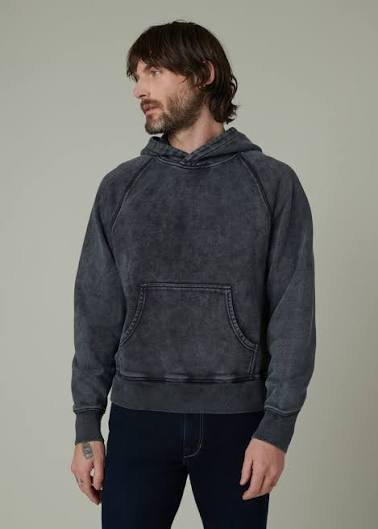
The exact process depends on the desired color, softness, surface texture, and level of fading.
What Does Vintage Wash Look Like?
A typical vintage-washed garment may have:
- A muted color
- Softer seams and edges
- Light fading around raised areas
- A broken-in hand feel
- Less visual contrast than acid wash
- A naturally aged appearance
Vintage wash is especially useful for brands that want the garment to feel familiar and comfortable from the first wear.
I often recommend it for:
- Oversized T-shirts
- Heavyweight basics
- Hoodies
- Sweatshirts
- Sweatpants
- Workwear-inspired jackets
Brands can explore wash, fabric, fit, and private-label options through FuKi Apparel Washed T-Shirt Manufacturing.
What Is Acid Wash?
Acid wash is a color-removal finish that creates irregular high-contrast areas across the garment.
Despite its name, the classic denim process is widely associated with bleach-treated stones rather than simply placing garments into an acidic liquid. Levi’s describes the traditional process as washing denim with bleach-soaked stones to produce a marbled finish.
Read the Levi’s Denim Dictionary for a general industry description.
For modern streetwear T-shirts and hoodies, the exact production method may differ by fabric, dye system, equipment, and wash house. The goal is usually the same: remove color unevenly to create a visible pattern.
What Does Acid Wash Look Like?
Acid-washed garments normally show:
- Strong contrast
- Cloud-like or marbled areas
- Irregular color removal
- More visible variation between pieces
- A bold 1980s or 1990s influence
- A stronger decorative surface
Acid wash is often used on:
- Black oversized T-shirts
- Denim jackets
- Jeans
- Hoodies
- Sweatshirts
- Statement matching sets
Vintage wash makes a garment look naturally aged. Acid wash makes the washing effect visually dominant.
How the Visual Results Differ
The easiest way to compare the two treatments is to look at contrast and pattern.
Vintage Wash
Vintage wash usually creates a more even fade across the garment.
The result may include:
- Softer overall color
- Slightly lighter seams
- Faded edges
- Natural-looking wear
- A subtle aged surface
It works well when the graphic, silhouette, and fabric should remain the main product features.
Acid Wash
Acid wash produces more obvious differences between dark and light areas.
The result may include:
- Irregular patches
- Strong marbling
- Clouded surfaces
- High-contrast seams
- A more individual appearance
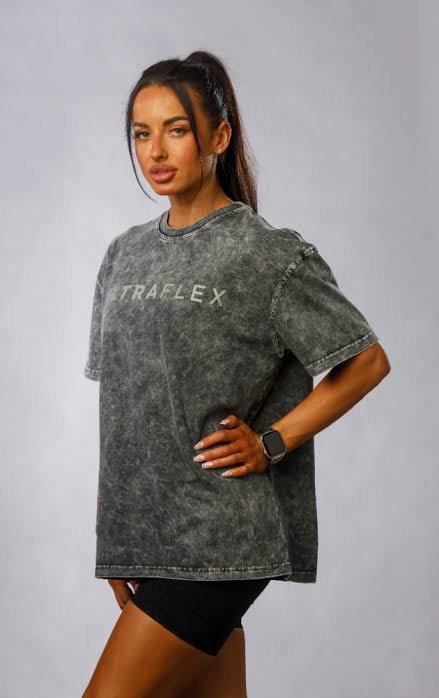
It works well when the garment needs to attract attention before customers notice the print or construction.
Visual Decision Table
| Desired Result | Better Choice |
|---|---|
| Soft black vintage T-shirt | Vintage wash |
| Strong black-and-gray contrast | Acid wash |
| Minimal premium hoodie | Vintage wash |
| Retro statement hoodie | Acid wash |
| Consistent core product | Vintage wash |
| Intentionally unique pieces | Acid wash |
| Subtle faded graphic base | Vintage wash |
| Wash effect as the main design | Acid wash |
Which Fabrics Work Best?
The fiber, fabric construction, dye method, and color all affect the final wash result.
Cotton Jersey
Cotton jersey is a common choice for washed T-shirts because it can develop:
- A soft hand feel
- Muted color
- Natural-looking fading
- Visible surface character
Heavy cotton jersey also provides enough structure for oversized silhouettes.
Explore suitable silhouettes through FuKi Apparel Vintage T-Shirt Manufacturing.
French Terry and Fleece
French terry works well for vintage-washed hoodies and sweatpants.
Brushed fleece requires more careful testing because washing can affect:
- The inner surface
- Warmth
- Pilling
- Shrinkage
- Fabric softness
The body fabric and rib should be tested together. They may absorb dye or lose color differently.
Denim and Twill
Denim is strongly associated with acid wash because its surface construction can create visible high-contrast effects.
Cotton twill can also support vintage or irregular washed finishes, especially for:
- Cargo pants
- Workwear jackets
- Utility shorts
- Overshirts
Cotton Blends
Cotton-polyester blends may not react as evenly as 100% cotton because the fibers can respond differently to dyeing and color-removal processes.
A blend may still be suitable, but the wash result should be tested on the exact production fabric.
Best Wash by Product Type
| Product | Recommended Starting Wash | Reason |
|---|---|---|
| Oversized graphic T-shirt | Vintage wash | Supports graphics without excessive visual competition |
| Minimal logo T-shirt | Vintage or acid wash | Depends on how bold the garment should appear |
| Heavyweight blank T-shirt | Vintage wash | Highlights fabric and silhouette |
| Statement T-shirt | Acid wash | Creates a strong surface effect |
| Core hoodie | Vintage wash | Easier to style and reorder |
| Limited-edition hoodie | Acid wash | Stronger product differentiation |
| Denim jacket | Acid or vintage wash | Both suit structured denim |
| Sweatpants | Vintage wash | More controlled matching across sets |
| Retro matching set | Acid wash | Creates a recognizable visual concept |
For matching sets, I generally prefer a controlled vintage wash. Strong acid-wash variation can make it more difficult to match the hoodie and pants perfectly.
How Washing Affects Fit and Measurements
Garment washing can change the product physically, not only visually.
Possible changes include:
- Body-length shrinkage
- Chest-width shrinkage
- Sleeve twisting
- Seam puckering
- Collar deformation
- Rib tightening
- Fabric softening
- Reduced structure
This is especially important for oversized garments.
An oversized T-shirt may lose its intended proportions when the body shrinks more than the width. A hoodie may become unbalanced when the body fabric and rib react differently.
My Recommended Development Sequence
- Select the intended production fabric.
- Create the garment sample.
- Apply the planned wash.
- Measure the finished sample.
- Review the fit.
- Adjust the pattern when required.
- Approve the washed pre-production sample.
Do not approve the fit using an unwashed sample when bulk garments will receive a strong wash treatment.
Printing Before or After Washing
The printing sequence affects the final appearance.
Washing Before Printing
Washing first can provide:
- More stable garment measurements
- Cleaner artwork colors
- Better print-position control
- Less risk of the graphic changing during a strong wash
This is useful when the print should remain sharp and modern.
Printing Before Washing
Printing before washing can help create:
- A naturally faded graphic
- A distressed surface
- Softer print edges
- A more integrated vintage appearance
However, the wash may affect:
- Ink color
- Adhesion
- Print height
- Cracking
- Fine details
Choose by Desired Graphic Result
| Graphic Goal | Recommended Starting Sequence |
|---|---|
| Clean screen print on faded garment | Wash, then print |
| Naturally aged graphic | Print, then tested wash |
| Puff print with stable height | Usually wash first, then test print |
| Cracked vintage artwork | Test print and wash together |
| Detailed multicolor illustration | Wash first, then print |
| Embroidery on washed garment | Usually wash before final embroidery |
The correct sequence depends on the ink, fabric, wash, and artwork. Always test the complete process.
Review available decoration methods through FuKi Apparel Custom Printing Services.
Cost, MOQ, and Repeatability
Wash pricing depends on more than the name of the finish.
Important cost factors include:
- Fabric composition
- Original garment color
- Wash intensity
- Number of process stages
- Hand-finishing requirements
- Testing
- Order quantity
- Required consistency
- Sorting after washing
Vintage Wash Cost
A simple enzyme-softened vintage finish may be relatively straightforward.
A more complex vintage effect involving custom garment dyeing, fading, abrasion, and several finishing stages will cost more.
Acid Wash Cost
Acid wash may require:
- More development tests
- Careful color-removal control
- Additional sorting
- Greater defect allowance
- Closer monitoring of fabric strength
- Wider acceptable shade variation
For this reason, acid wash is not always the best choice for a product that must look almost identical across every unit.
Reorder Consistency
Vintage wash is generally easier to repeat when the brand keeps:
- The same fabric
- The same base color
- The same dye lot direction
- The approved wash recipe
- The same finishing standard
- A physical reference sample
Acid wash can also be repeated within an agreed visual range, but exact pattern placement should not be expected.
How to Approve a Wash Sample
A digital image is not enough to approve a washed garment.
I recommend reviewing at least three areas: appearance, measurements, and performance.
Wash Sample Checklist
| Inspection Area | What to Check |
|---|---|
| Overall tone | Matches the approved color direction |
| Contrast | Neither too weak nor too aggressive |
| Pattern distribution | Balanced across the garment |
| Hand feel | Soft enough for the intended product |
| Measurements | Within the approved tolerance |
| Shrinkage | Acceptable after the full process |
| Seam condition | No holes, breakage, or severe puckering |
| Rib and collar | Correct recovery and color |
| Print or embroidery | No unwanted damage |
| Color transfer | Acceptable during dry and wet rubbing |
| Rewash result | Remains suitable after customer laundering |
For color performance, brands can review AATCC TM61 Colorfastness to Laundering and AATCC TM8 Colorfastness to Crocking.
FuKi Apparel applies wash, shrinkage, color, and construction checks through its Streetwear Quality Control Service.
Approve a Range, Not Only One Perfect Garment
For washes with natural variation, approve:
- A light-limit sample
- A target sample
- A dark-limit sample
This creates a clearer acceptable range for bulk inspection.
It is especially useful for acid wash, pigment dyeing, and other finishes that cannot produce perfectly identical garments.
Which Wash Should Your Brand Choose?
Use these four questions.
1. Should the Wash Be Subtle or Dominant?
Choose vintage wash for subtle aging.
Choose acid wash when the surface effect should dominate the design.
2. Is the Product a Core Style or Limited Drop?
Choose vintage wash for core and repeat products.
Choose acid wash for limited releases and statement pieces.
3. How Much Variation Can You Accept?
Choose vintage wash when tighter visual consistency is important.
Choose acid wash when natural garment-to-garment variation supports the concept.
4. What Decoration Will Be Added?
Choose vintage wash when the garment includes a detailed graphic.
Choose acid wash when the logo is simple enough to remain visible against a busy background.
Final Decision Matrix
| Brand Requirement | Recommended Wash |
|---|---|
| Easy everyday styling | Vintage wash |
| Strong visual identity | Acid wash |
| Detailed front or back graphic | Vintage wash |
| Small minimal logo | Either |
| Consistent repeat orders | Vintage wash |
| Individual garment character | Acid wash |
| Matching hoodie and pants | Controlled vintage wash |
| Retro capsule collection | Acid wash |
Common Wash Development Mistakes
Treating Vintage Wash as One Fixed Formula
Vintage wash describes an appearance. The manufacturer still needs a clear color, softness, fade, and texture reference.
Expecting Every Acid-Washed Garment to Be Identical
Controlled production is possible, but some pattern variation is part of the effect.
Choosing the Wash Before the Fabric
The same process may create different results on different cotton yarns, knits, blends, and dye systems.
Approving Only One Small Swatch
A swatch cannot show how seams, collars, pockets, ribs, and full garment panels will react.
Ignoring Shrinkage
The wash may change the finished measurements and silhouette.
Adding Detailed Artwork Without Testing
A strong acid-wash background may reduce graphic readability.
Skipping Colorfastness Checks
Dark washed garments can transfer color through rubbing or laundering when the process is not properly controlled.
Using an Unwashed Sample as the Fit Standard
The final washed garment—not the untreated sample—should determine bulk fit approval.
Frequently Asked Questions
Is vintage wash the same as acid wash?
No. Vintage wash is a broad category of finishes that create an aged appearance. Acid wash is a specific high-contrast color-removal effect.
Which wash looks more faded?
Both can look faded, but acid wash normally creates stronger and less even contrast. Vintage wash usually creates a softer overall fade.
Which wash is better for streetwear T-shirts?
Vintage wash is more versatile for core graphic and oversized T-shirts. Acid wash is better for statement products with a bold retro appearance.
Can acid wash be used on hoodies?
Yes. It can be used on suitable hoodie fabrics, but the body fabric, rib, seams, shrinkage, and color variation must be tested.
Are acid-washed garments identical?
No. The production can be controlled within an approved range, but exact marbling and color-removal patterns may vary.
Which wash is easier to reorder?
A controlled vintage wash is generally easier to repeat. Acid wash can be reordered, but brands should approve an acceptable light-to-dark range.
Does garment washing shrink clothing?
It can. The amount depends on the fiber, fabric construction, finishing, temperature, mechanical action, and previous shrinkage control.
Should printing be completed before washing?
It depends on the desired result. Wash before printing for a cleaner graphic, or test printing before washing when a faded and integrated graphic is required.
Final Recommendation
Choose vintage wash when you need:
- A soft lived-in appearance
- Subtle fading
- Greater styling versatility
- Better reorder consistency
- A base for detailed graphics
- A reliable core product
Choose acid wash when you need:
- Strong contrast
- Irregular marbling
- A bold retro identity
- Natural garment variation
- A statement product
- A wash effect that becomes the main design feature
My final rule is:
Choose vintage wash when the garment should look naturally aged. Choose acid wash when the washing effect should become the product’s strongest visual feature.
Approve the complete washed garment, not only the fabric swatch. Check the final color, measurements, fit, hand feel, decoration, color transfer, and acceptable shade range before bulk production.
FuKi Apparel supports streetwear brands with custom vintage washes, acid-wash development, garment dyeing, oversized patterns, printing, embroidery, private labels, packaging, and bulk production.
Visit FuKi Apparel or contact our streetwear production team to develop a custom washed collection.
