
Puff print and screen print are both popular for streetwear, but they create different results.
Choose standard screen printing for detailed artwork, accurate colors, and reliable repeat production. Choose puff printing when you want raised texture, bold lettering, or a stronger three-dimensional effect.
From my experience developing custom T-shirts and hoodies, standard screen printing is usually the safer choice for a core collection. Puff print works best when texture is an intentional part of the design—not simply an effect added because it is trending.
Quick answer: Puff print is a type of screen printing that expands during heat curing. It creates a raised surface but is less suitable for tiny text and fine details. Standard screen printing stays flatter and offers more control for detailed or multicolor graphics.
Table of Contents
- Quick Comparison
- What Is Screen Printing?
- What Is Puff Printing?
- Which Method Should You Choose?
- Fabric and Artwork Requirements
- Durability, Cost, and Production
- Can You Combine Both Methods?
- Common Printing Mistakes
- Frequently Asked Questions
- Final Recommendation
Quick Comparison
| Feature | Puff Print | Standard Screen Print |
|---|---|---|
| Appearance | Raised and three-dimensional | Flat or slightly raised |
| Best artwork | Bold text, logos, and simple shapes | Detailed, multicolor, or illustrated graphics |
| Fine-detail control | Limited | Strong |
| Texture | Soft, thick, and tactile | Depends on the ink and print layers |
| Color predictability | May change slightly after expansion | Usually easier to control |
| Production difficulty | Higher | More standardized |
| Best products | Heavyweight T-shirts and hoodies | T-shirts, hoodies, pants, and jackets |
| Best use | Statement graphics | Core collections and repeat orders |
Choose Puff Print When
- Raised texture is central to the design.
- The artwork contains thick lettering or simple shapes.
- You want a one-color graphic to feel more distinctive.
- The garment uses a stable fabric.
- You can approve a physical print test.
Choose Standard Screen Print When
- The artwork contains fine lines or small text.
- Accurate color matching is important.
- The graphic has several colors.
- You need predictable repeat orders.
- You want a flatter and more flexible print.
What Is Screen Printing?
Screen printing transfers ink through a prepared mesh screen onto fabric. Each print color normally requires a separate screen.
It is widely used for streetwear because it supports:
- Small logos
- Large front and back graphics
- Multicolor illustrations
- Halftones
- Bold solid colors
- Different ink finishes
- Medium and large production runs
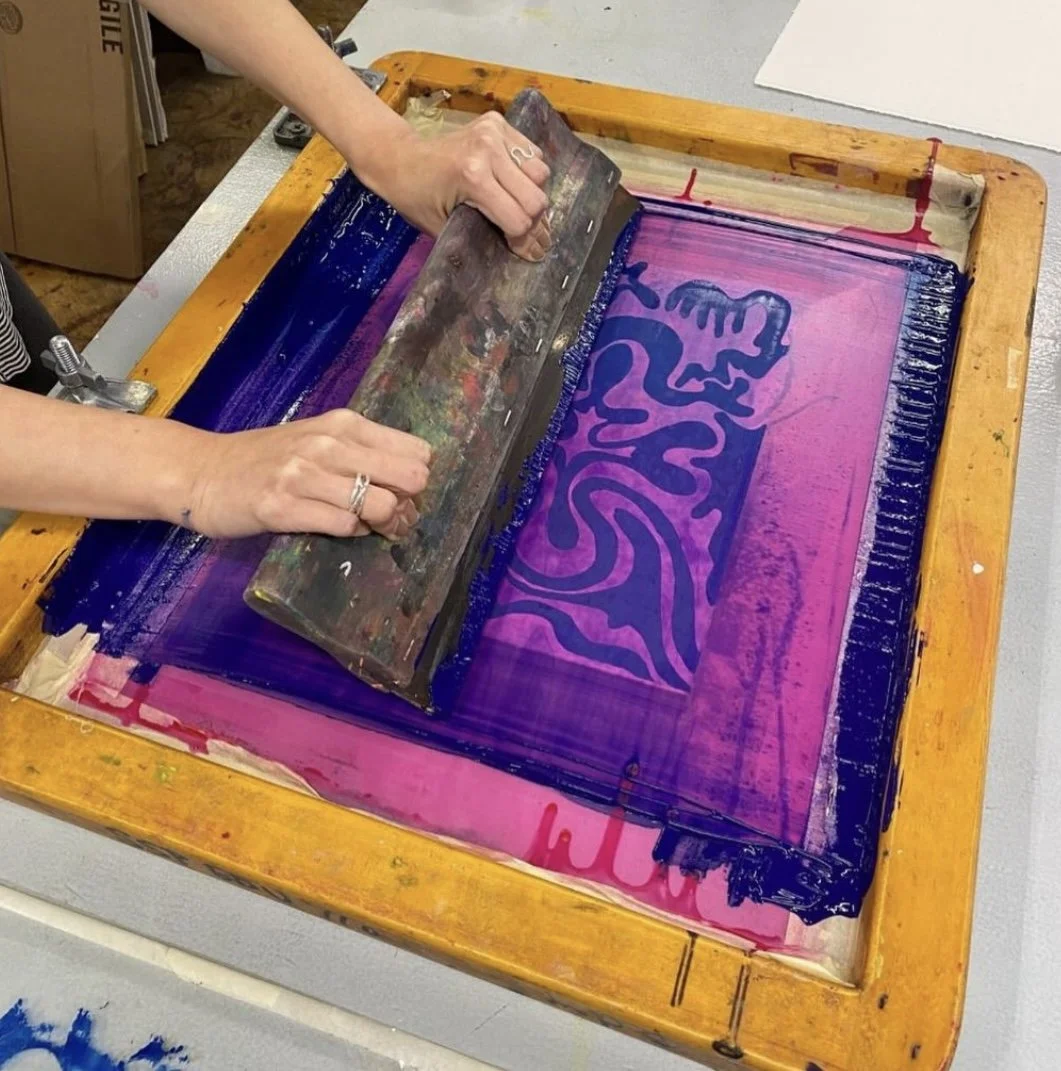
A screen print can feel soft, smooth, matte, rubberized, or slightly raised. The result depends on the ink, screen mesh, artwork, fabric, print layers, and curing process.
Why Brands Choose Screen Printing
Standard screen printing offers strong control over:
- Fine details
- Graphic edges
- Ink coverage
- Color separation
- Repeat production
- Print placement
I normally recommend it when the artwork itself is the main feature.
For example, a large illustrated back graphic with small supporting text will usually be easier to reproduce through standard screen printing than through puff print.
Brands can review available ink and decoration options through FuKi Apparel Custom Printing Services.
What Is Puff Printing?
Puff printing is a specialty screen-printing technique.
A puff additive or prepared puff ink is printed onto the garment. During heat curing, the ink expands and creates a raised surface.
Puff print is commonly used for:
- Large logos
- College-style lettering
- Short slogans
- Bold outlines
- Simple symbols
- Selected areas of a larger graphic
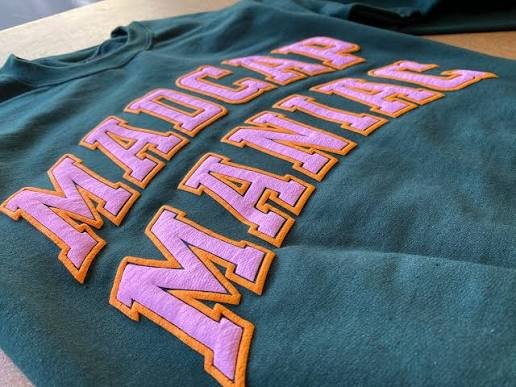
The finished result can feel soft, rounded, rubberized, or foam-like depending on the ink formula and production settings.
What Puff Print Does Well
Puff print can make simple artwork feel more valuable without adding many colors.
It works especially well for:
- Minimal logo hoodies
- Heavyweight graphic T-shirts
- Large center-chest lettering
- Raised back graphics
- Limited-edition streetwear drops
Where Puff Print Struggles
Puff ink expands after printing, so it may reduce the clarity of:
- Tiny lettering
- Thin lines
- Narrow gaps
- Detailed illustrations
- Small spaces inside letters
Letters such as A, B, O, P, and R need enough internal space to remain open after expansion.
The artwork should therefore be prepared specifically for puff printing rather than copied directly from a flat-print file.
The Avient Flexipuff Technical Guide provides technical information about screen setup, ink deposits, curing, and multicolor puff applications.
Which Method Should You Choose?
The best option depends on what customers should notice first.
Choose by Artwork
| Artwork Type | Better Choice |
|---|---|
| Small chest logo | Standard screen print |
| Large block lettering | Puff print |
| Detailed illustration | Standard screen print |
| Thin handwritten text | Standard screen print |
| Simple one-color back logo | Puff or standard screen print |
| Multicolor character artwork | Standard screen print |
| Raised brand name | Puff print |
| Photographic design | DTG or another digital method |
| Detailed graphic with one raised element | Combine both |
Choose by Product
For lightweight T-shirts, standard screen printing is normally safer because it has less effect on fabric drape.
For heavyweight T-shirts, either method can work. Puff print is useful when the garment has enough structure to support a raised graphic.
For hoodies and sweatshirts, puff print can create a strong result because the heavier fabric balances the raised decoration.
Explore suitable product bases through:
Choose by Brand Positioning
Use standard screen printing for:
- Detailed graphic brands
- Artist collaborations
- Core products
- Frequent repeat orders
- Multicolor collections
Use puff print for:
- Minimal premium branding
- Bold typography
- Limited drops
- Tactile statement pieces
- Simple designs that need more visual depth
Neither method is automatically more premium. A clean standard print will look better than a poorly controlled puff print.
Fabric and Artwork Requirements
Printing should be tested on the actual production fabric.
The same ink can behave differently on cotton jersey, fleece, polyester blends, garment-dyed fabric, and heavily washed garments.
Fabric for Standard Screen Printing
Standard screen printing works on many fabric types, but the surface should ideally be:
- Smooth
- Stable
- Clean
- Free from excessive hairiness
- Suitable for the selected ink system
A rough surface may reduce edge clarity. Polyester-rich fabrics may also require suitable ink to manage dye migration.
The Avient Screen Printing Technique Guide explains how garment selection, screens, ink deposits, and printing conditions influence the result.
Fabric for Puff Printing
Puff print normally performs best on stable medium-to-heavy fabric.
Practical starting options include:
- 220–280 GSM cotton T-shirts
- Heavy cotton jersey
- French terry
- Brushed fleece
- Cotton-rich hoodie fabrics
These are useful starting points rather than strict rules.
A large puff graphic on very lightweight fabric may:
- Change the garment’s drape
- Pull the fabric inward
- Feel unbalanced
- Show more distortion
Prepare the Artwork Correctly
For standard screen printing:
- Confirm the final print dimensions.
- Separate the artwork colors.
- Provide vector files when possible.
- Define color references.
- Measure the print position.
For puff printing:
- Use thicker lines.
- Increase narrow spaces.
- Simplify unnecessary details.
- Avoid tiny lettering.
- Test the expected expansion.
Never approve either method from a digital mockup alone.
Durability, Cost, and Production
Both methods can be durable when the correct ink is used and fully cured.
Print failure may result from:
- Incorrect curing
- Incompatible ink and fabric
- Excessive ink deposits
- Poor fabric preparation
- Dye migration
- High-temperature washing
- Aggressive drying
- Excessive stretching
Which Is More Durable?
Standard screen printing is generally easier to control across repeated production.
Puff print has a raised surface, so it receives more direct friction during wearing and washing. Its performance depends heavily on proper expansion and curing.
Before bulk production, I recommend testing:
- Surface consistency
- Edge clarity
- Stretch response
- Adhesion
- Color after washing
- Cracking
- Flattening
- Print height
Which Costs More?
Puff printing often costs more than a simple flat print because it may require:
- Specialty ink or additives
- Artwork adjustment
- Additional testing
- Controlled ink deposits
- Careful curing
- More production monitoring
However, a one-color puff logo may still cost less than a large six-color standard screen print.
The actual price depends on:
- Print size
- Number of colors
- Number of placements
- Artwork complexity
- Order quantity
- Garment fabric
- Required testing
Ask the manufacturer to quote the exact artwork instead of comparing printing methods only by name.
Can You Combine Both Methods?
Yes. Combining puff and standard screen printing is often the best design solution.
For example, a back graphic may use:
- Standard screen print for an illustration
- Puff print for the brand name
- Standard screen print for small supporting text
This preserves the detailed areas while adding texture to the most important element.
When Combination Printing Works Best
Use both methods when:
- Only one part of the artwork needs texture.
- The design includes both bold and detailed elements.
- You want visual contrast without making the entire graphic heavy.
- The garment has a strong enough fabric base.
The complete design should be tested together because the printing and curing sequence can affect the final result.
Common Printing Mistakes
Using the Same File for Both Methods
Puff artwork needs more space and stronger lines than a flat print.
Applying Puff to Every Element
Too much raised ink can make the garment feel stiff, heavy, and visually crowded.
Skipping the Strike-Off
A print strike-off allows you to approve the real color, texture, dimensions, and surface before bulk production.
Testing on the Wrong Fabric
A successful print on standard cotton may behave differently on brushed fleece, polyester, or garment-washed fabric.
Ignoring the Wash Process
Garment washing, pigment dyeing, and heat treatments may affect the print. Confirm the correct production sequence before sampling.
Brands developing washed garments can review Washed T-Shirt Manufacturing.
Approving Only the Appearance
Also test:
- Adhesion
- Stretch
- Wash performance
- Surface strength
- Bulk consistency
A print should not only look good when new. It should remain suitable for the intended use and care method.
Frequently Asked Questions
Is puff print the same as screen print?
Puff print is a specialty type of screen printing. It uses ink or an additive that expands during heat curing to create a raised surface.
Is puff print better than screen print?
Neither is always better. Puff print is better for raised texture and bold shapes. Standard screen printing is better for fine details, multicolor artwork, and repeatability.
Is puff print more expensive?
It is usually more expensive than a simple one-color flat print because it requires specialty materials and additional testing. Final cost depends on the artwork and order quantity.
Can puff print include small details?
Some details are possible, but very thin lines and narrow spaces may close during expansion. Simplified artwork is more reliable.
Can puff print be used on hoodies?
Yes. Heavyweight hoodies and sweatshirts are among the most suitable garments for puff print.
Does puff print crack after washing?
Correctly developed puff print can be wash-durable. Cracking may result from poor curing, excessive ink, incompatible fabric, or unsuitable care conditions.
Can standard and puff ink be used together?
Yes. Flat ink can preserve illustrations and small text, while puff ink adds texture to selected logos or lettering.
Final Recommendation
Choose standard screen printing when you need:
- Fine details
- Small text
- Multiple colors
- Accurate graphic edges
- Predictable repeat production
- A flatter and more flexible finish
Choose puff printing when you need:
- Raised texture
- Bold lettering
- Simple logos
- Strong visual impact
- A tactile premium detail
My main recommendation is:
Use standard screen printing as the foundation for detailed artwork, and use puff selectively when raised texture adds real value to the design.
Always approve a physical print test on the actual production fabric before bulk manufacturing.
FuKi Apparel supports streetwear brands with screen printing, puff printing, high-density printing, embroidery, garment washing, custom labels, packaging, and bulk production.
Visit FuKi Apparel or explore Custom Streetwear Printing Services to discuss your artwork and desired print effect.
