
When developing a graphic streetwear T-shirt or hoodie, brands often compare:
Puff Print
and
Screen Print
But technically, puff printing is not a completely separate printing method.
Puff print is usually created through the screen-printing process using a specialty puff ink or puff additive that expands when exposed to controlled heat.
So in this article, when we say screen print, we mean a standard flat screen print without the raised puff effect.
Both techniques can work extremely well for streetwear.
The better choice depends on:
Artwork + Fabric + Texture + Durability + Cost + Brand Style
From our production experience, puff printing works best when the raised texture is intentionally designed into the graphic rather than added simply because it looks more premium.
Table of Contents
- What Is Standard Screen Printing?
- What Is Puff Printing?
- 1. The Biggest Difference Is Texture
- 2. Puff Print Changes the Appearance of the Artwork
- 3. Which Method Works Better for Fine Details?
- 4. How Fabric Affects Puff and Screen Printing
- 5. Which Print Feels Softer on the Garment?
- 6. Durability Depends on Proper Curing
- 7. Puff Print Requires More Production Control
- 8. Which One Costs More?
- When Should a Streetwear Brand Use Puff Print?
- When Should a Brand Use Standard Screen Print?
- Can You Combine Puff and Standard Screen Print?
- How We Test Prints Before Bulk Production
- Frequently Asked Questions
- Final Recommendation
What Is Standard Screen Printing?
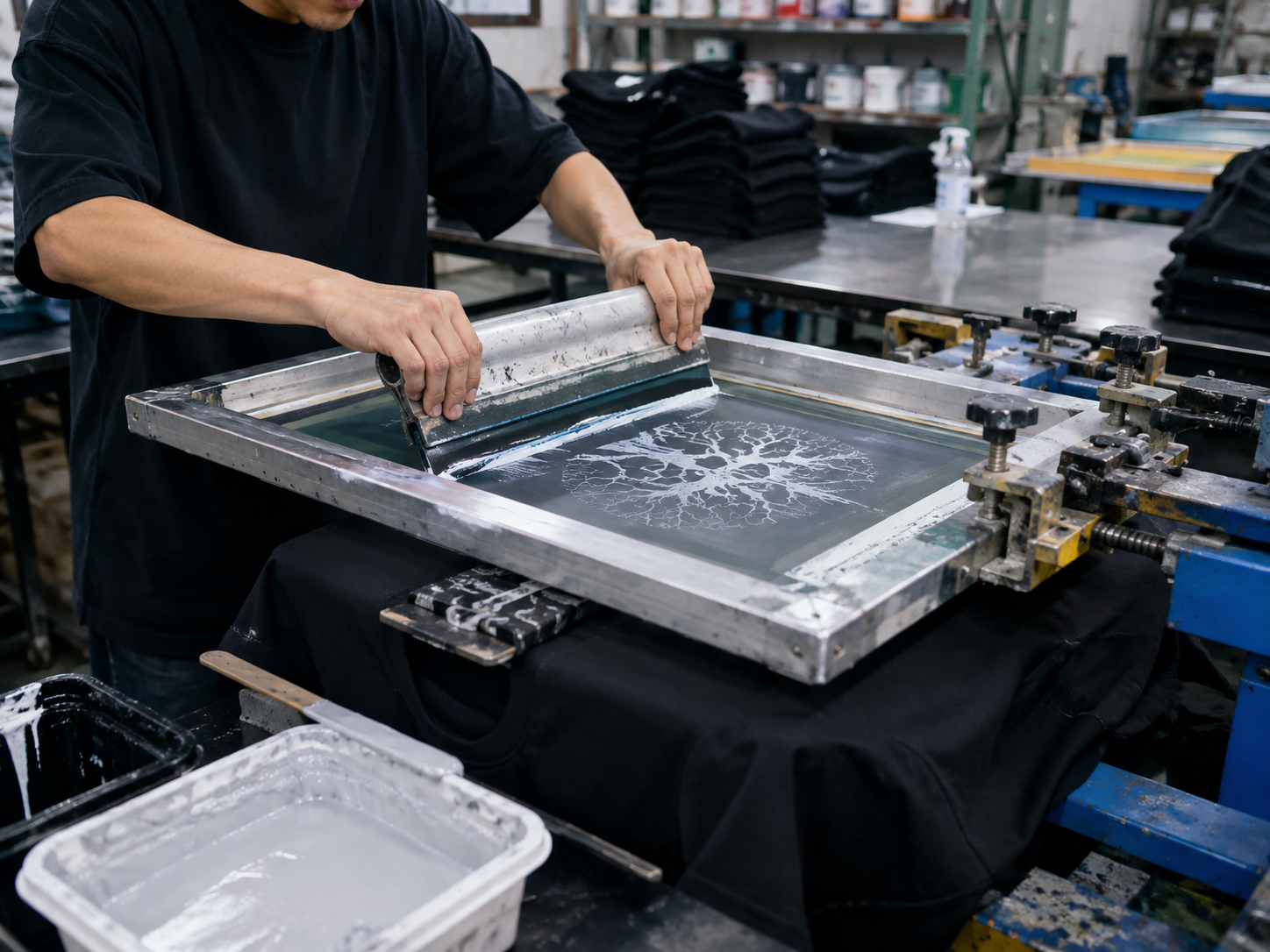
Screen printing uses a mesh screen and stencil to transfer ink onto the garment.
Each ink color normally uses a separate printing screen.
A basic production process may look like:
Artwork
↓
Color Separation
↓
Screen Preparation
↓
Ink Mixing
↓
Printing
↓
Flashing if Required
↓
Final Curing
Standard screen printing normally produces a relatively flat graphic.
Depending on the ink system and number of print passes, it can create anything from a softer print to a heavier, more opaque surface.
It is widely used for:
- Oversized T-shirts
- Hoodies
- Sweatshirts
- Graphic tees
- Streetwear collections
For more information about available printing techniques:
Custom Streetwear Printing Services
What Is Puff Printing?
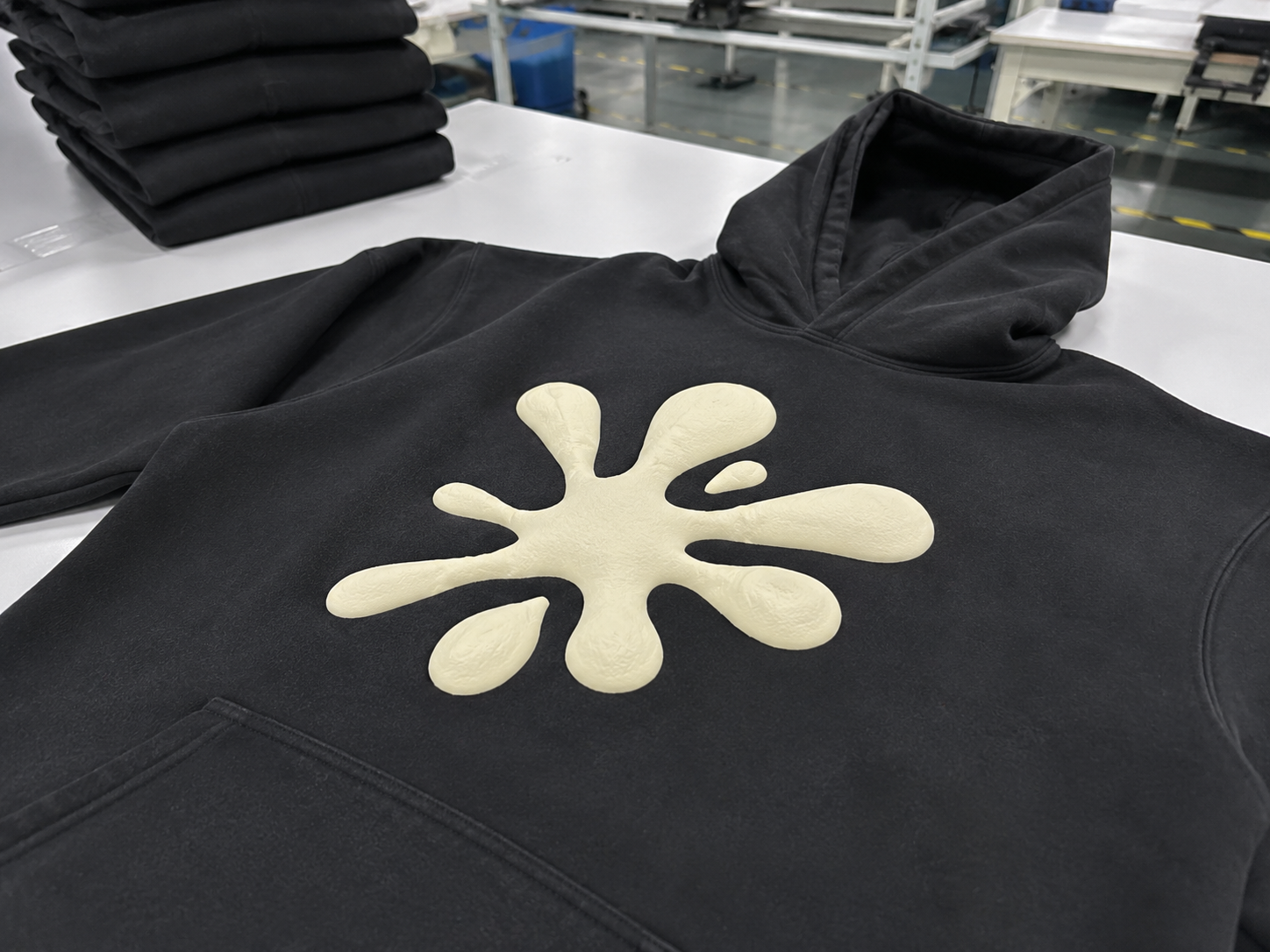
Puff printing uses the same basic screen-printing process but introduces a specialty puff ink or additive.
When properly heated, components inside the ink expand.
This creates a raised surface.
The result can look:
- Thicker
- Softer-edged
- Three-dimensional
- More tactile
The amount of puff depends on several variables, including:
- Ink formulation
- Ink deposit
- Mesh count
- Stencil thickness
- Artwork
- Curing temperature
ScreenPrinting.com's technical guidance explains that puff additives contain expandable particles that react to heat, causing the printed ink layer to rise.
External reference:
ScreenPrinting.com – Puff Ink Guide
This is why puff printing requires more testing than simply printing a thicker layer of normal ink.
1. The Biggest Difference Is Texture
The clearest difference is surface height.
Standard Screen Print
Usually creates:
- Flat graphic
- Sharp surface
- Cleaner edges
- Traditional printed appearance
Puff Print
Usually creates:
- Raised graphic
- Soft 3D appearance
- More tactile surface
- Stronger visual texture
This makes puff printing popular for minimalist streetwear graphics.
For example:
A simple chest logo may look relatively basic as a flat print.
The same artwork in puff can create much more visual impact because the lettering physically rises above the fabric.
However:
More texture does not automatically mean better design.
The printing method should match the artwork.
2. Puff Print Changes the Appearance of the Artwork
One important thing brands should understand is that puff printing can change the shape of artwork.
The ink expands during curing.
It does not remain completely identical to the flat artwork on the computer.
This means:
Very small gaps may become smaller.
Thin lines may become less sharp.
Closely spaced details can begin to merge.
ScreenPrinting.com notes that puff expands outward as it activates, meaning extremely fine lines or tightly spaced details can lose definition.
External reference:
ScreenPrinting.com – Printing Detailed Puff Designs
This is why the artwork may need to be adjusted before puff printing.
Good puff artwork often uses:
- Bold lettering
- Medium or large graphic areas
- Clear spacing
- Strong shapes
rather than extremely fine details.
3. Which Method Works Better for Fine Details?
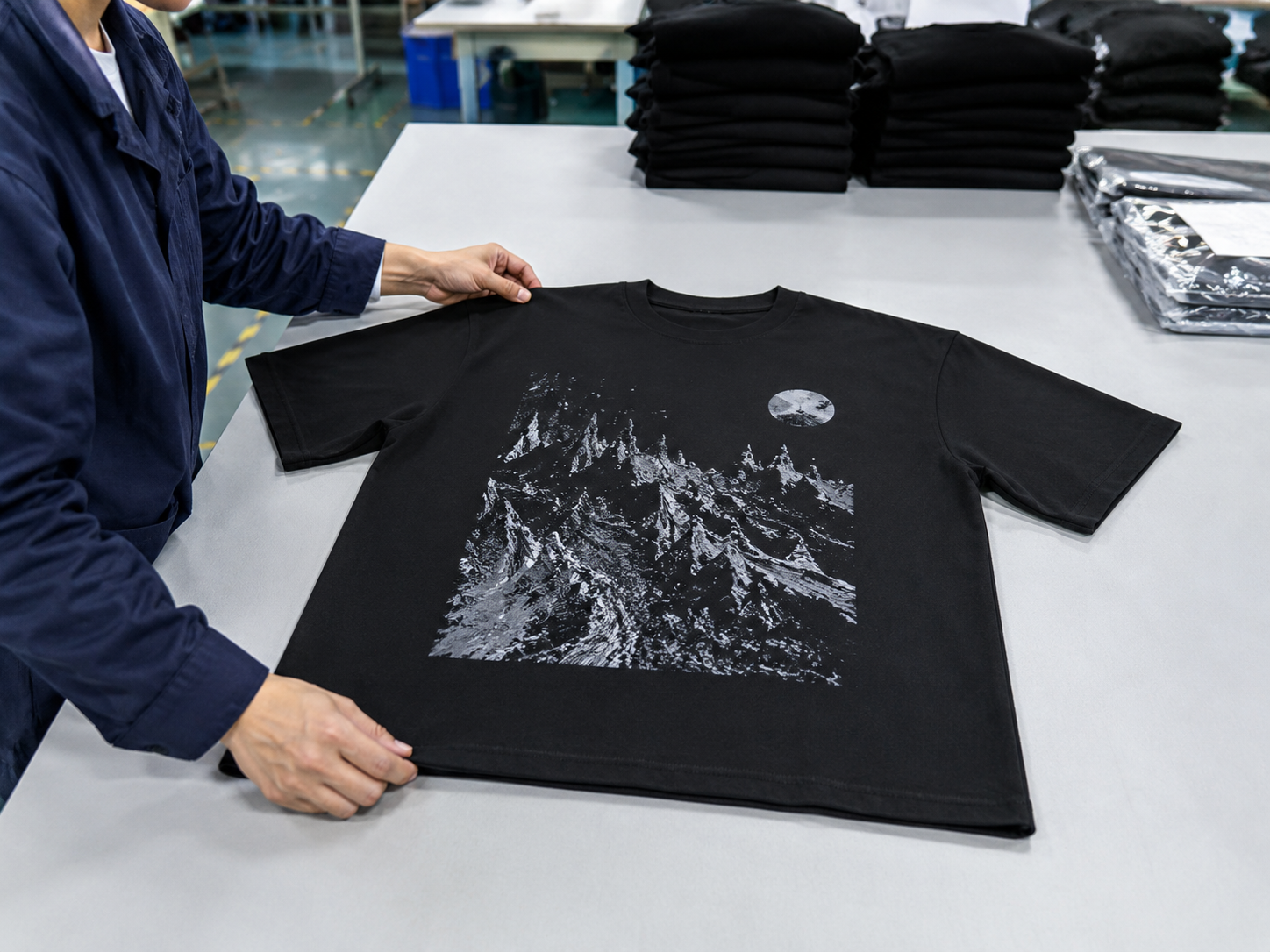
Standard screen printing usually provides more control for very detailed artwork.
It is better suited for:
- Fine lines
- Small lettering
- Detailed illustrations
- Halftones
- Photographic graphics
Puff printing works better when the artwork allows enough space for expansion.
For example:
Better for Puff
- Bold typography
- Large logos
- Simple symbols
- Thick outlines
- Selected graphic sections
Better for Standard Screen Print
- Small text
- Complex graphics
- Fine illustrations
- Detailed halftones
This does not mean puff cannot contain detail.
Experienced printers can produce detailed puff effects.
But the artwork, screen setup, and curing process need more careful control.
4. How Fabric Affects Puff and Screen Printing
The fabric underneath the print matters.
Both techniques usually perform more consistently when the printing surface is:
- Stable
- Relatively smooth
- Suitable for the selected ink
For streetwear, common fabrics include:
- Cotton jersey
- Heavyweight cotton
- French Terry
- Fleece
Heavyweight streetwear fabrics often provide a stable base for large printed graphics.
However, a rough or heavily washed surface may change:
- Print sharpness
- Ink coverage
- Puff consistency
Puff printing can also pull on the surrounding fabric as the ink expands.
On some garments, this can create slight movement or puckering around the raised print.
That does not always mean the print is defective.
But excessive distortion should be corrected during testing.
If you are choosing T-shirt fabric, see:
How to Source Streetwear Fabrics
5. Which Print Feels Softer on the Garment?
This depends on how the print is constructed.
Standard Screen Print
A thin print can feel relatively flexible.
But a large opaque print with:
- Heavy underbase
- Multiple colors
- Multiple print passes
may also feel substantial.
Puff Print
Puff printing creates more physical volume.
That makes the graphic thicker and more noticeable to the touch.
However, the expanded surface can sometimes feel softer than a very dense flat ink deposit.
The final hand feel depends on:
- Ink system
- Print thickness
- Underbase
- Artwork coverage
- Fabric
- Curing
This is why brands should evaluate a physical print sample instead of choosing only from photos.
6. Durability Depends on Proper Curing
Both standard screen printing and puff printing can provide good durability when produced correctly.
But curing is critical.
For standard screen printing, the ink must reach the curing conditions required by the specific ink system.
For puff printing, temperature control becomes even more important.
The puff needs enough heat to activate and cure.
But excessive heat can cause the raised structure to lose height or collapse depending on the ink system.
ScreenPrinting.com's puff-printing guidance specifically warns that too much heat can cause puff ink to over-expand or collapse.
External reference:
ScreenPrinting.com – FN-INK Puff Additive
This is why the correct curing temperature cannot be guessed.
The printer should follow the technical requirements of the actual ink being used.
7. Puff Print Requires More Production Control
Standard screen printing already requires control over:
- Screens
- Ink
- Registration
- Pressure
- Flashing
- Curing
Puff adds more variables.
These include:
Ink Deposit
A thicker deposit can create more expansion.
Mesh Count
Different mesh setups change the amount of ink transferred.
Stencil Thickness
The stencil influences how much puff ink reaches the garment.
Flashing
Too much heat before final curing can activate the puff too early.
Final Cure
The final temperature and time need to activate the puff without damaging the effect.
This means two factories can use the same artwork and produce noticeably different puff results.
Testing is important before bulk production.
8. Which One Costs More?
In many projects, puff printing can cost more than a basic flat screen print.
Why?
Because it may require:
- Specialty ink or additive
- Different screen preparation
- More ink deposit
- Additional testing
- More production control
However, the final cost depends on the actual design.
Important factors include:
- Print size
- Number of colors
- Number of screens
- Garment quantity
- Print locations
- Underbase requirements
- Specialty effects
A small one-color puff chest logo may still be relatively simple.
A large back graphic combining:
Flat Print + Puff + Multiple Colors
will require more production setup.
When Should a Streetwear Brand Use Puff Print?
Puff is a strong option when you want the graphic itself to become part of the garment texture.
Consider puff for:
Bold Brand Logos
Raised lettering creates a stronger physical identity.
Minimal Streetwear
A simple design can gain more visual interest without adding more colors.
Oversized T-Shirts
Heavyweight oversized tees often work well with selected puff graphics.
Hoodies and Sweatshirts
The heavier garment construction can visually complement dimensional printing.
Statement Details
Puff can be used only on selected areas rather than the entire artwork.
For example:
Flat Graphic + Puff Logo
can create contrast without making the whole print overly heavy.
When Should a Brand Use Standard Screen Print?
Standard screen printing may be better when your priority is:
- Sharp detail
- Multiple colors
- Large illustrations
- Halftones
- Photographic graphics
- Classic streetwear printing
It is also more versatile for artwork that contains different line weights and detailed visual elements.
For example:
A detailed vintage back graphic may work better as a standard multi-color screen print.
A simple front logo from the same collection might use puff.
This allows the printing method to support each artwork instead of forcing every graphic into the same technique.
Can You Combine Puff and Standard Screen Print?
Yes.
This is one of the most useful approaches for streetwear.
A design can combine:
Standard Flat Screen Print
with
Selected Puff Elements
For example:
- Flat background + puff lettering
- Flat illustration + puff logo
- Flat black print + raised cream details
This creates contrast in both:
- Color
- Texture
However, mixed printing requires careful planning.
Print order matters because puff expands during heating.
If other fine-detail colors need to be printed over or near puff areas, the factory needs to plan the sequence correctly.
ScreenPrinting.com's dimensional printing guidance also notes that print order becomes important when combining puff with other detail layers.
External reference:
ScreenPrinting.com – Dimensional Puff Printing
How We Test Prints Before Bulk Production
For custom streetwear, we prefer testing the actual artwork on the actual production fabric.
A typical process is:
Final Artwork
↓
Final Fabric
↓
Choose Print Method
↓
Prepare Screens
↓
Test Print
↓
Check Puff Height / Print Surface
↓
Cure
↓
Wash Test
↓
Approve Sample
↓
Bulk Production
For puff printing, we normally review:
- Puff height
- Edge definition
- Fine details
- Surface consistency
- Fabric distortion
- Cracking
- Adhesion
- Appearance after washing
If the puff effect is too high, too low, or unstable, adjustments should be made before the bulk order begins.
Frequently Asked Questions
Is puff print the same as screen printing?
Puff print is usually a type of screen printing.
It uses specialty puff ink or an additive that expands when heated to create a raised effect.
Is puff print more premium than screen print?
Not automatically.
Puff creates more texture, but a high-quality flat screen print can be equally premium.
The best technique depends on the artwork.
Does puff print crack easily?
Properly produced puff printing can be durable.
Cracking or flaking may occur if the ink formulation, deposit, curing, or wash performance is incorrect.
Can puff print be used on heavyweight T-shirts?
Yes.
Heavyweight cotton T-shirts are commonly suitable for puff printing when the fabric surface and ink system are compatible.
Is puff print good for small text?
Very small or closely spaced text can be difficult because the ink expands.
Testing or artwork adjustment may be required.
Can puff and normal screen print be used in one graphic?
Yes.
Combining flat printing and puff printing can create strong visual and textural contrast.
Which printing method lasts longer?
There is no universal winner.
Durability depends more on ink selection, fabric compatibility, curing, construction, and washing than simply whether the print is flat or puff.
Is puff printing more expensive?
It can be because it uses specialty materials and may require additional testing and production control.
Final Recommendation
Puff print and standard screen print serve different design purposes.
Choose Puff Print when you want:
Raised Texture + Bold Logos + Dimensional Streetwear Details
Choose Standard Screen Print when you want:
Sharp Details + More Complex Artwork + Versatile Color Printing
For many streetwear collections, the best solution is not choosing only one.
It can be:
Standard Screen Print + Selected Puff Details
The safest production workflow is:
Final Artwork → Final Fabric → Print Test → Cure → Wash Test → Approve → Bulk Production
If you are developing oversized graphic T-shirts, heavyweight hoodies, puff prints, or multi-color screen-printed streetwear, Fuki Apparel can help with artwork review, printing development, sampling, testing, and bulk production.