
Starting a streetwear brand requires more than creating a logo and printing it on a T-shirt. You need a clear customer, recognizable product direction, realistic budget, reliable production process, and focused launch plan.
From my experience helping streetwear brands develop custom clothing, the safest way to start is:
- Define one specific target customer.
- Choose one or two strong products.
- Set a realistic total budget.
- Develop and test physical samples.
- Produce a controlled first order.
- Build content before launching.
- Use early sales data to plan reorders.
Quick answer: A new streetwear brand should usually begin with one or two products, one clear design direction, and a small but commercially workable production run. Focus on fit, fabric, and product quality before expanding into a large collection.
Table of Contents
- Streetwear Startup Plan at a Glance
- Step 1: Define Your Target Customer
- Step 2: Create a Clear Brand Direction
- Step 3: Choose Your First Products
- Step 4: Set a Realistic Budget
- Step 5: Choose a Production Model
- Step 6: Develop and Test Samples
- Step 7: Plan Your First Order
- Step 8: Prepare Your Brand and Labels
- Step 9: Build a Launch Plan
- Common Startup Mistakes
- Frequently Asked Questions
- Final Recommendation
Streetwear Startup Plan at a Glance
| Stage | Main Decision | Recommended Starting Point |
|---|---|---|
| Customer | Who are you designing for? | One clearly defined audience |
| Brand direction | What makes the brand recognizable? | One visual and product identity |
| Products | What will you launch first? | One T-shirt and one hoodie |
| Budget | How much can you invest safely? | Include samples, production and marketing |
| Production | Blanks or custom manufacturing? | Choose based on product originality |
| Sampling | Does the product work physically? | Test fit, fabric, decoration and washing |
| First order | How much should you produce? | Focused quantities and limited colors |
| Launch | How will people discover the brand? | Build content before inventory arrives |
| Growth | What should you produce next? | Follow actual sales data |
The goal of the first collection is not to show everything your brand could make. It is to prove that customers want one clear product direction.
Step 1: Define Your Target Customer
Do not begin by saying your brand is “for everyone who likes streetwear.”
Instead, define a specific customer.
Ask:
- How old are they?
- Where do they live?
- What brands do they already buy?
- What music, sports, art, or communities influence them?
- Do they prefer oversized, vintage, minimal, or technical clothing?
- What price can they comfortably pay?
- Why would they choose your brand instead of an established one?
For example, these are three different audiences:
- Skate-inspired customers looking for durable oversized basics
- Minimal streetwear customers who value fabric and fit
- Graphic streetwear customers interested in bold artwork and limited drops
Each audience needs different products, content, pricing, and branding.
Use customer interviews, competitor reviews, social media comments, and keyword research before placing an order. The SBA Market Research Guide provides a useful framework for identifying customers and evaluating competitors.
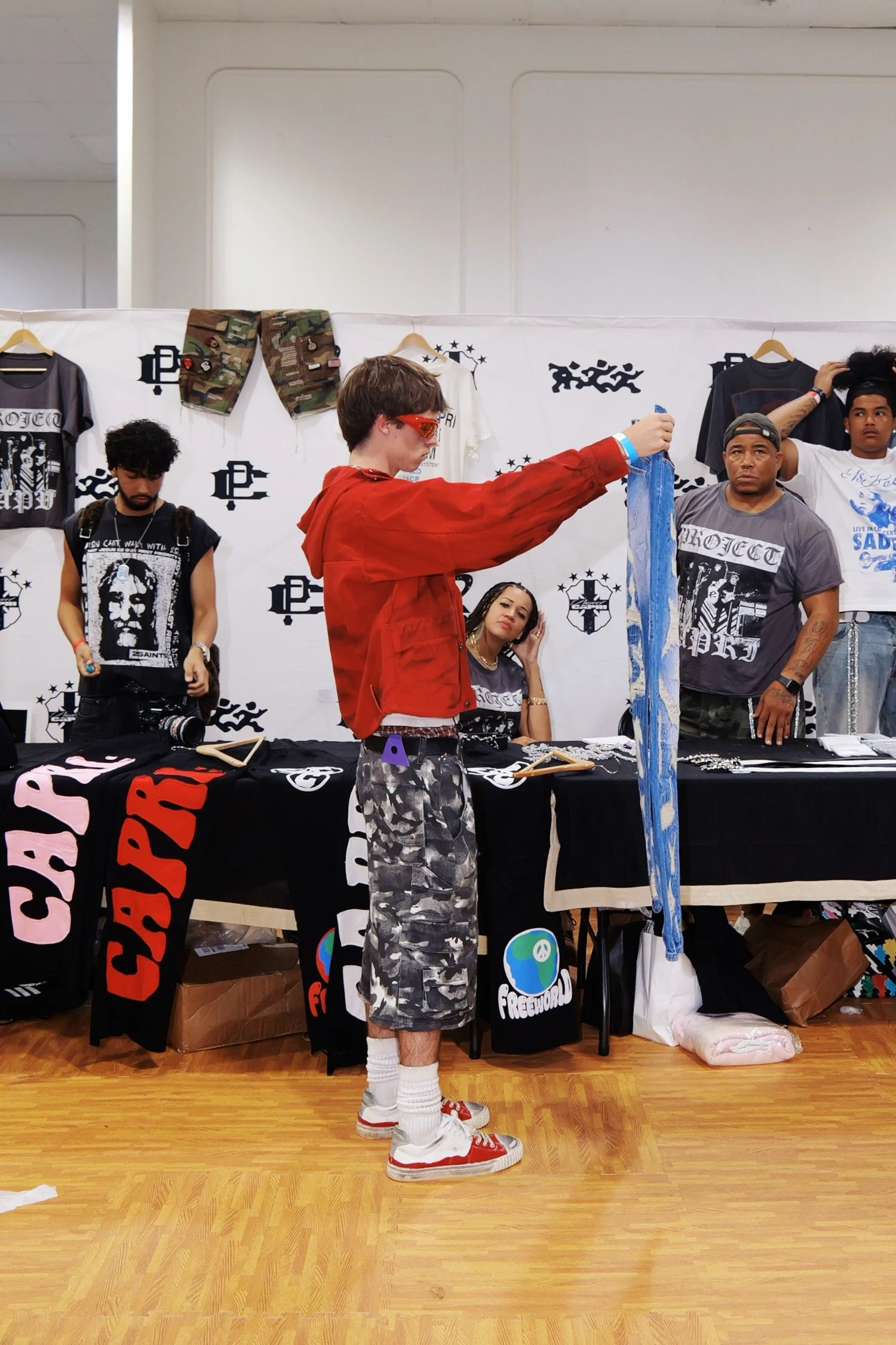
Step 2: Create a Clear Brand Direction
Your brand direction should answer three questions:
- What does the brand represent?
- What should the products look and feel like?
- Why should customers remember it?
A strong direction does not require a complicated story. It requires consistency.
Build a Simple Brand Foundation
Define:
- Brand purpose
- Target customer
- Visual mood
- Main color palette
- Preferred silhouettes
- Fabric direction
- Graphic style
- Expected retail price
For example:
A premium vintage streetwear brand for young creatives, using faded neutral colors, heavyweight oversized fits, distressed graphics, and limited seasonal drops.
That description is much more useful than saying:
We want to make cool, high-quality streetwear.
Create a Mood Board
Your mood board can include:
- Garment silhouettes
- Fabric textures
- Typography
- Photography style
- Color references
- Packaging
- Cultural influences
Use references to communicate direction, but do not copy another brand’s artwork, logo, or complete garment design.
Step 3: Choose Your First Products
For most new brands, I recommend starting with one or two products.
Good first products include:
- Oversized T-shirts
- Heavyweight hoodies
- Sweatshirts
- Simple sweatpants
- Caps
Complex jackets, denim washes, and multi-pocket cargo pants normally require more development, higher costs, and longer production timelines.
Recommended First Collection
A practical first drop could include:
- One oversized T-shirt design
- One hoodie design
- One or two colors per product
- Four or five core sizes
- One main printing or embroidery technique
Brands developing custom proportions can explore our Oversized T-Shirt Manufacturer services.
For heavyweight hoodies, review our Custom Oversized Hoodie Manufacturer options.
Choose One Hero Product
Your hero product should represent the brand clearly.
It may be recognized by:
- A distinctive oversized fit
- A custom heavyweight fabric
- A strong back graphic
- A signature wash
- A recognizable color
- A unique construction detail
One memorable product is usually easier to market than a collection containing several unrelated ideas.
Step 4: Set a Realistic Budget
Your budget should include more than bulk manufacturing.
| Cost Category | What It May Include |
|---|---|
| Brand setup | Logo, website and business registration |
| Product development | Tech packs, patterns and samples |
| Production | Fabric, cutting, sewing and decoration |
| Branding | Labels, hangtags and packaging |
| Logistics | Freight, duties and local delivery |
| Marketing | Photography, video, creators and advertising |
| Contingency | Revisions, defects and unexpected costs |
Example Budget Levels
| Budget | Practical Direction |
|---|---|
| Under $1,500 | Blanks, preorders or very small testing |
| $2,000–$4,000 | Focused custom T-shirt launch |
| $4,000–$7,000 | T-shirt and hoodie collection |
| $8,000+ | More products, custom materials or outerwear |
Do not invest your entire budget in inventory. You still need funds for photography, content, shipping, customer acquisition, and possible reorders.
The SBA Startup Cost Guide can help you organize one-time and ongoing business expenses.
Step 5: Choose a Production Model
There are three common ways to produce streetwear.
| Production Model | Best For | Main Limitation |
|---|---|---|
| Print on demand | Very low-risk testing | Limited margins and product control |
| Decorated blanks | Graphic-based first drops | Standard fabric and fit |
| Custom cut and sew | Original long-term brands | Higher development cost and MOQ |
Choose Blanks When
- You need to launch quickly.
- Your main value comes from the graphic.
- Your budget is limited.
- You are testing demand.
Choose Cut and Sew When
- Fit is part of your brand identity.
- You need a specific fabric or GSM.
- You want custom washing or construction.
- You need original labels, trims, and packaging.
- You plan to build a long-term product line.

FuKi Apparel provides product development from fabric and pattern selection to decoration and packaging. Review our Streetwear Brand Solutions for custom OEM and ODM production.
Step 6: Develop and Test Samples
Never approve a product from a digital mockup alone.
A physical sample allows you to check:
- Fabric weight and hand feel
- Measurements
- Fit and proportions
- Stitching
- Print or embroidery
- Color
- Labels and trims
- Shrinkage after washing
Sample Review Checklist
| Area | Main Question |
|---|---|
| Fit | Does it match the intended silhouette? |
| Fabric | Does it feel suitable for the retail price? |
| Measurements | Are key points within tolerance? |
| Decoration | Is the size, position and texture correct? |
| Construction | Are the seams secure and balanced? |
| Washing | Does the garment shrink, twist or fade excessively? |
| Branding | Are all labels and details correct? |
Send clear comments using photographs, arrows, measurements, and numbered corrections.
Avoid feedback such as “make it better” or “more oversized.” Explain exactly what needs to change.
For screen print, puff print, embroidery, and other techniques, see Custom Streetwear Printing Services.
Step 7: Plan Your First Order
A first order should be large enough to provide meaningful inventory but small enough to control risk.
For custom manufacturing, around 100 pieces per style is a practical starting point for many projects.
Keep the SKU Count Controlled
Imagine you produce:
- 100 T-shirts
- Two colors
- Five sizes
That creates ten SKUs, averaging ten pieces per SKU.
Adding four colors would create twenty SKUs and leave only five pieces per SKU. Popular sizes could sell out immediately while slow sizes remain.
For a first order, I normally recommend:
- One or two styles
- One or two colors
- Four or five important sizes
- A planned size ratio
- Enough budget for a reorder
Do not choose a higher quantity only to reduce the unit price. Unsold inventory can cost more than a slightly higher manufacturing price.
Step 8: Prepare Your Brand and Labels
Before selling, protect and organize the business side of the brand.
Consider:
- Business registration
- Brand-name availability
- Domain and social-media names
- Trademark research
- Product labeling
- Care instructions
- Terms and return policies
- Basic bookkeeping
The USPTO Trademark Basics explains trademark searches, applications, and common registration issues in the United States.
For clothing sold in the US, most textile products require information such as fiber content, country of origin, and the identity of the responsible business. Care instructions must also be handled correctly. Review the FTC Clothing and Textiles Guidance before finalizing labels.
Requirements differ by country, so confirm the rules for every market where you plan to sell.
Step 9: Build a Launch Plan
Do not wait until the products arrive before creating interest.
Start building your audience during development.
Content You Can Share
- Brand story
- Fabric selection
- Sample revisions
- Graphic development
- Fit comparisons
- Printing process
- Packaging
- Behind-the-scenes production
- Launch countdown
- Product styling
Simple Launch Timeline
| Timing | Main Action |
|---|---|
| 6–8 weeks before launch | Introduce the brand direction |
| 4–6 weeks before launch | Show product development |
| 2–4 weeks before launch | Reveal details and collect emails |
| 1–2 weeks before launch | Announce products, pricing and date |
| Launch week | Publish product content and customer proof |
| After launch | Collect feedback and plan reorders |
Your first launch should answer three questions clearly:
- What is the product?
- Why is it different?
- Why should someone buy it now?
Common Startup Mistakes
Launching Too Many Products
A large collection divides your budget, inventory, content, and customer attention.
Copying Established Brands
References can guide quality and fit, but direct copying does not create a sustainable identity.
Spending Everything on Production
Keep money for photography, marketing, logistics, and reorders.
Choosing a Manufacturer Only by Price
Compare sample quality, fabric, communication, lead time, quality control, and what the quotation includes.
Skipping Wash Testing
A garment may look correct before washing but shrink, twist, fade, or crack afterward.
Ordering Before Building an Audience
Start collecting feedback and customer interest while the product is still being developed.
Setting the Retail Price Too Late
Estimate your landed cost and selling expenses before approving the final design. A product may be attractive but commercially unsuitable at the required retail price.
Frequently Asked Questions
How much money do I need to start a streetwear brand?
A small blank-based test may start below $1,500. A focused custom-manufactured launch commonly requires approximately $2,000–$7,000, depending on the products and quantity.
What product should a streetwear brand launch first?
An oversized T-shirt or hoodie is usually a practical starting point. Both products are familiar to customers and offer flexible fabric, fit, and decoration options.
Do I need a manufacturer?
You need a manufacturer when you want custom patterns, fabrics, construction, washes, labels, and bulk production. Blanks or print-on-demand may be enough for early graphic testing.
How many designs should I launch?
One or two strong designs are normally safer than a large first collection. Expand after reviewing actual customer demand.
Do I need a tech pack?
A tech pack is strongly recommended for custom manufacturing. It should include measurements, fabric, construction, artwork, colors, labels, and packaging requirements.
How long does production take?
Sampling may take one or more rounds, followed by material preparation and bulk manufacturing. A custom project should generally be planned several weeks or months before the intended launch.
Can I start without a large audience?
Yes, but you should begin building an audience before ordering too much inventory. Use content, email collection, customer research, and small product tests to validate demand.
Final Recommendation
To start a streetwear brand successfully:
- Define one specific customer.
- Build a clear product and visual direction.
- Begin with one or two hero products.
- Calculate the full startup budget.
- Choose the correct production model.
- Test physical samples carefully.
- Keep the first order focused.
- Prepare legal and labeling details.
- Build demand before launch.
- Use sales data to guide the next collection.
My main recommendation is simple:
Start narrow, develop one product properly, and expand only after customers prove what they want.
FuKi Apparel supports streetwear brands with fabric sourcing, custom patterns, sampling, printing, embroidery, garment washing, private labels, packaging, quality control, and bulk production.
Explore the FuKi Apparel Custom Streetwear Manufacturing Guide or visit FuKi Apparel to discuss your first collection.
SEO Title: How to Start a Streetwear Brand: 9-Step Guide
Meta Description: Learn how to start a streetwear brand, choose products, set a budget, find a manufacturer, test samples, plan your launch, and avoid costly mistakes.
