
A streetwear graphic can look completely different depending on how it is printed.
The same artwork may appear:
- Sharp and flat
- Soft and faded
- Raised and three-dimensional
- Photographic and highly detailed
- Thick and rubberized
depending on the printing method.
That is why choosing a print technique should not begin with:
"Which printing method looks the most premium?"
A better question is:
"Which printing method fits this artwork, fabric, quantity, and final effect?"
For custom streetwear, the decision usually depends on:
Artwork + Fabric + Number of Colors + Order Quantity + Texture + Wash Requirements
There is no single printing method that works best for every graphic.
Table of Contents
- Start With the Artwork, Not the Printing Method
- 1. Choose Screen Printing for Bold Streetwear Graphics
- 2. Choose DTG for Detailed and Full-Color Artwork
- 3. Choose DTF for Flexible Small-Run Graphics
- 4. Choose Puff Print When Texture Is Part of the Design
- 5. Choose High-Density Print for Sharper Raised Graphics
- 6. Choose Water-Based Printing for a Softer Hand Feel
- 7. Choose Discharge Printing Carefully for Vintage Effects
- 8. Choose Sublimation for Polyester and All-Over Graphics
- How Fabric Changes the Printing Result
- How Order Quantity Affects the Best Printing Method
- Quick Streetwear Printing Comparison
- How We Approve Printing Before Bulk Production
- Frequently Asked Questions
- Final Recommendation
Start With the Artwork, Not the Printing Method
The artwork should normally determine the printing method.
Before choosing a process, look at:
- Number of colors
- Line thickness
- Gradient
- Photographic detail
- Print size
- Desired texture
For example:
Bold One-Color Logo
Possible choice:
Screen Printing
Photographic Graphic
Possible choice:
DTG
Raised College-Style Lettering
Possible choice:
Puff Print
Large Polyester All-Over Graphic
Possible choice:
Sublimation
Trying to force every artwork into the same printing technique can reduce quality.
A good printing method should support the design instead of fighting against it.
1. Choose Screen Printing for Bold Streetwear Graphics
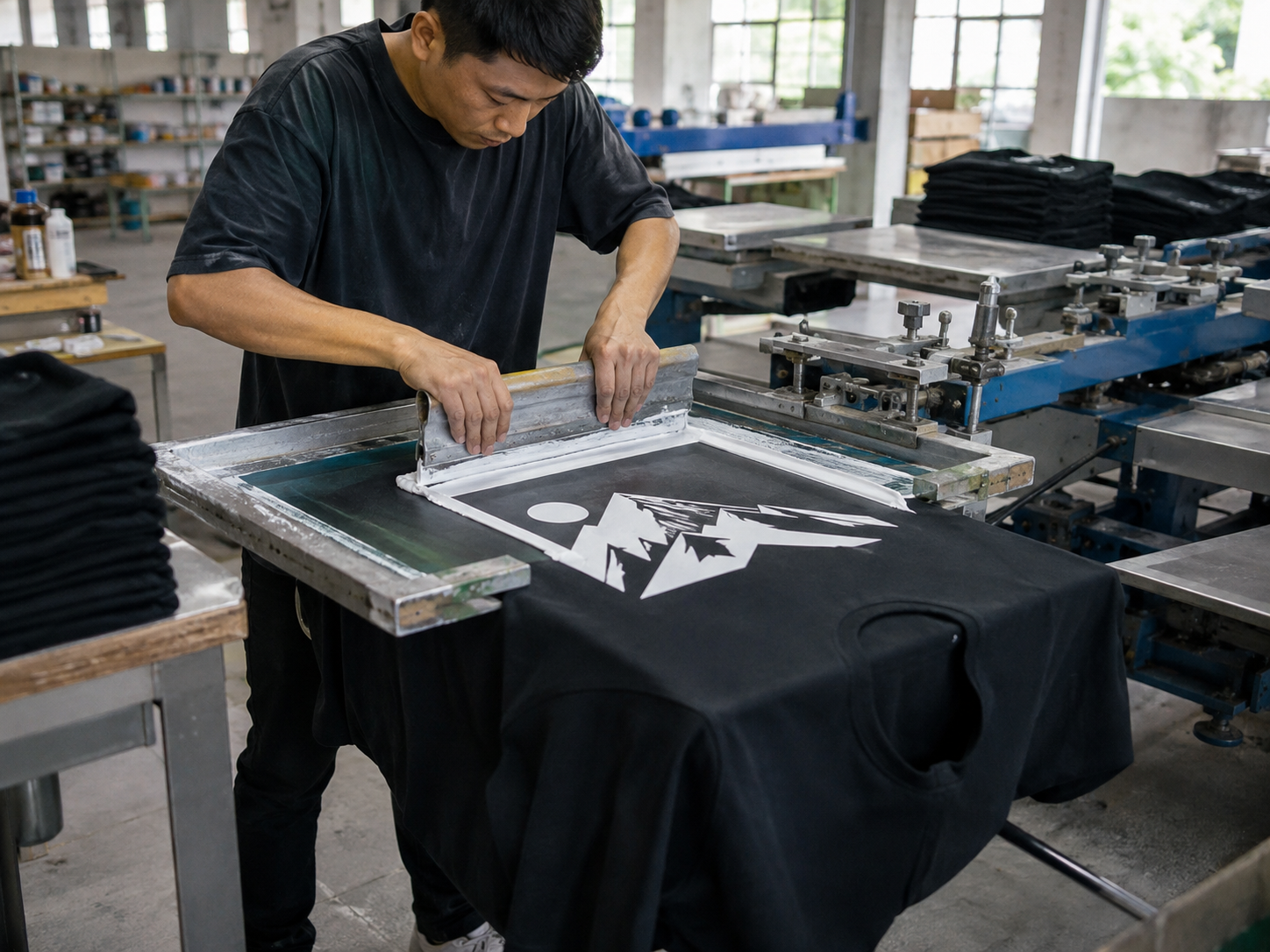
Screen printing is one of the most common methods used for streetwear.
Ink is pushed through a prepared mesh screen onto the garment.
It works particularly well for:
- Bold typography
- Logos
- Large back graphics
- Solid colors
- Repeat production
Screen printing also supports specialty effects such as:
- Puff ink
- High-density ink
- Metallic effects
- Crack effects
- Water-based ink
Screen Printing Is a Strong Choice When:
- The artwork uses a few solid colors
- Color saturation is important
- The order quantity is relatively large
- The same graphic will be reordered
- Specialty textures are required
Its biggest limitation is setup.
Each color normally requires additional screen preparation.
That means a complicated seven-color graphic may require significantly more setup than a simple one-color logo.
Suggested internal link:
Puff Print vs Screen Print for Streetwear
2. Choose DTG for Detailed and Full-Color Artwork
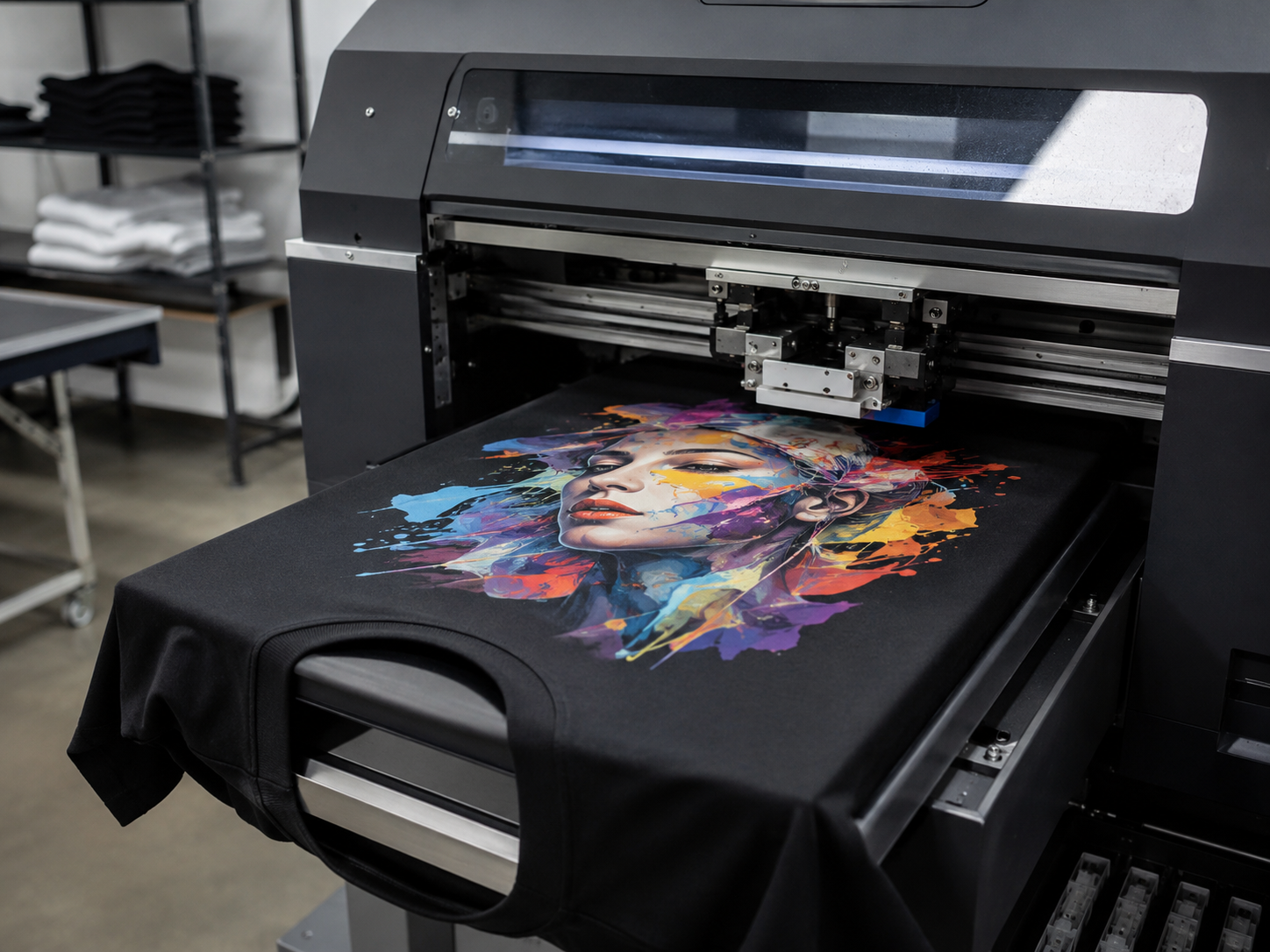
DTG means:
Direct-to-Garment Printing
A digital printer applies textile ink directly onto the garment.
DTG is particularly useful when the artwork contains:
- Photographic detail
- Gradients
- Many colors
- Fine shading
- Complex illustrations
Unlike traditional spot-color screen printing, DTG does not normally require one separate physical screen for every artwork color.
This makes it attractive for:
- Small drops
- Samples
- Test collections
- Complex graphics
However, DTG performance depends heavily on the fabric.
Smooth, cotton-rich fabrics generally provide a better printing surface than very rough or fuzzy materials.
Dark garments may also require pretreatment and a white ink base.
Suggested internal link:
DTG vs Screen Printing for Streetwear
3. Choose DTF for Flexible Small-Run Graphics
DTF stands for:
Direct-to-Film
The artwork is first printed onto a transfer film.
It is then transferred onto the garment using heat and pressure.
DTF can be useful when brands need:
- Small production quantities
- Full-color graphics
- Multiple different designs
- Flexible placement
- Different garment materials
It can work across more fabric types than some DTG setups.
However, the print sits more noticeably on top of the fabric.
A large DTF graphic can sometimes feel:
- Thicker
- Less breathable
- More transfer-like
For a small chest graphic, this may not be a problem.
For an extremely large back print, the hand feel should be tested before production.
4. Choose Puff Print When Texture Is Part of the Design
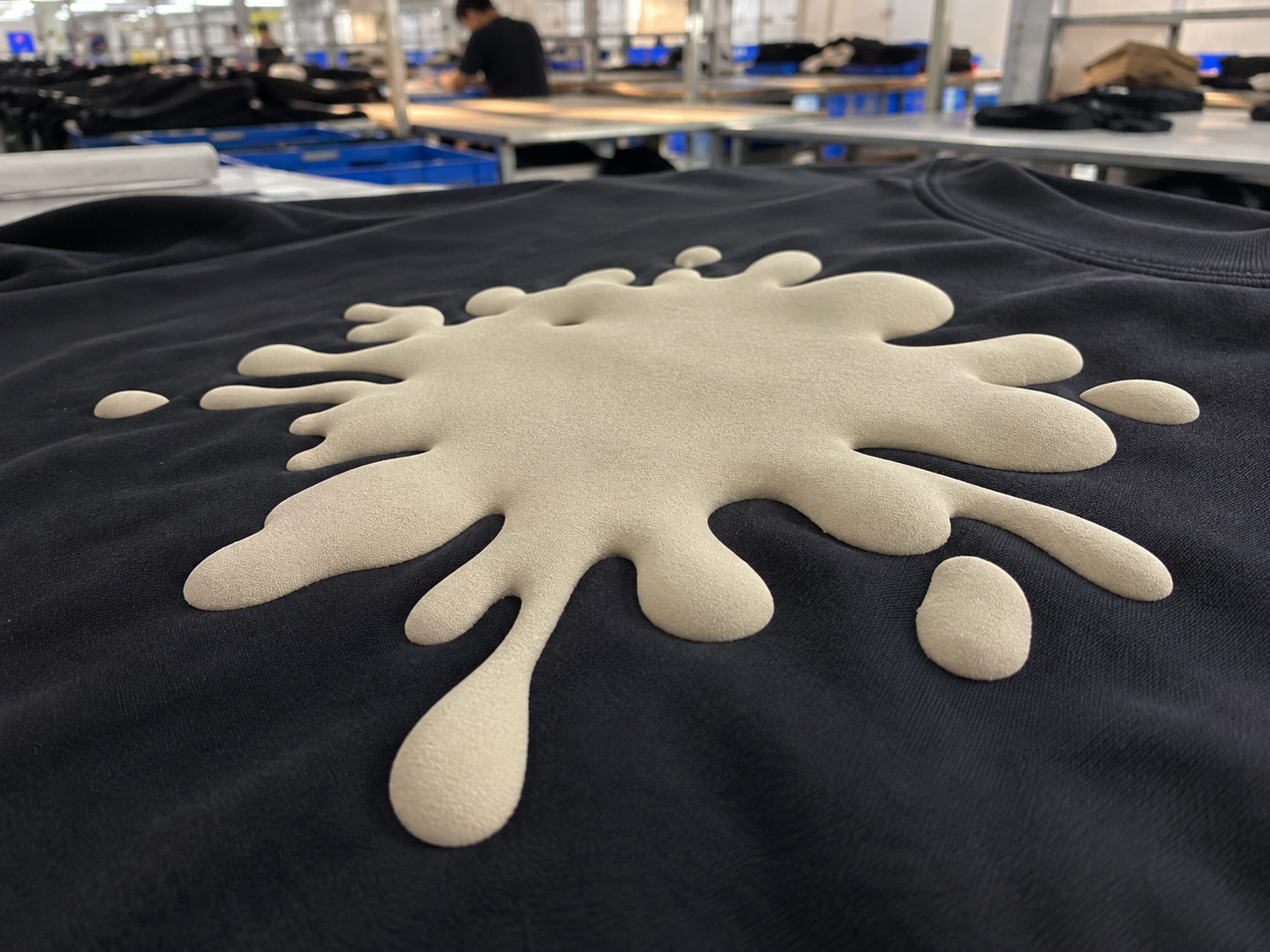
Puff printing is a specialty form of screen printing.
The ink expands during controlled heating and creates a raised surface.
Puff works especially well for:
- Large lettering
- Brand names
- Bold logos
- Simple graphic shapes
The finished result can feel:
- Raised
- Soft
- Thick
- Three-dimensional
But puff is not ideal for every artwork.
Very small gaps and thin lines can lose definition when the ink expands.
That is why puff artwork often needs to be adjusted before printing.
Best for:
Bold + Simple + Tactile Graphics
rather than:
Extremely Fine + Complex Artwork
Suggested internal link:
Puff Print vs Screen Print for Streetwear
5. Choose High-Density Print for Sharper Raised Graphics
High-density printing also creates a raised effect.
But it normally looks different from puff.
Puff Print
Usually creates:
- Rounded edges
- Softer raised texture
- More expanded appearance
High-Density Print
Usually creates:
- Sharper edges
- More controlled height
- Strong geometric appearance
High-density printing can work well for:
- Technical logos
- Geometric graphics
- Minimal branding
- Small premium details
If the design requires a clean architectural raised shape, high-density printing may be more suitable than puff.
6. Choose Water-Based Printing for a Softer Hand Feel
Water-based inks can create a softer printing experience because the finished graphic can integrate more naturally with the fabric surface.
They are often selected when brands want:
- Softer hand feel
- Vintage graphics
- Lightweight print appearance
- Less rubber-like surface
Water-based printing can work particularly well on suitable cotton fabrics.
However, correct curing is essential.
If the ink is not properly cured, durability can suffer.
The printing setup also depends on:
- Ink system
- Fabric
- Mesh
- Drying
- Curing equipment
This is why a physical print and wash test should be completed before bulk production.
7. Choose Discharge Printing Carefully for Vintage Effects
Discharge printing is commonly associated with soft vintage graphics on dark cotton garments.
Instead of simply placing a thick opaque layer on top of the garment, the process changes the existing garment color in the printed area.
This can create a softer surface.
It may work well for:
- Washed streetwear
- Vintage graphics
- Dark cotton T-shirts
- Retro prints
However, discharge performance depends heavily on the original garment dye.
Not every black fabric reacts the same way.
Two black T-shirts may produce different discharged colors.
One may become:
Cream
while another may become:
Brownish
or:
Gray
Therefore, discharge printing should always be tested on the actual production fabric.
8. Choose Sublimation for Polyester and All-Over Graphics
Sublimation is very different from traditional surface printing.
The dye becomes part of suitable polyester fibers under heat.
It works particularly well for:
- Polyester jerseys
- Sportswear
- All-over prints
- Complex full-color graphics
Sublimation can produce artwork across very large garment areas without creating a heavy surface layer.
However, it is not normally the first choice for:
100% Cotton Heavyweight Streetwear T-Shirts
It is much better suited to polyester-based products.
How Fabric Changes the Printing Result
The same printing method can look different on different fabrics.
Important factors include:
Surface Smoothness
Smooth cotton jersey usually supports sharper detail.
Fabric Weight
Heavyweight fabrics can provide a stable surface for:
- Screen printing
- Puff print
- High-density print
but GSM alone does not guarantee good results.
Fiber Composition
Cotton, polyester, nylon, and blends react differently to inks and heat.
Fabric Color
Dark garments often require:
- White underbase
- Pretreatment
- Additional opacity
depending on the printing method.
Garment Washing
Vintage wash or acid wash can also affect printing.
If the final garment will be washed after printing, the print should be tested through the actual production sequence.
The correct decision is therefore:
Final Fabric + Final Printing Method
not simply:
Artwork + Printing Method
How Order Quantity Affects the Best Printing Method
Quantity can completely change which printing method is commercially practical.
Small Quantity
For example:
10–50 pieces
DTG or DTF may be practical when the design contains many colors.
Medium Quantity
For example:
50–200 pieces
The best option depends heavily on:
- Artwork
- Number of colors
- Print size
Screen printing may already become attractive for simpler graphics.
Larger Quantity
For repeat production, screen printing often becomes efficient because the screens can be used repeatedly during the production run.
However, quantity should never be considered alone.
A complicated photographic graphic may still be better suited to DTG even when the order is larger.
Quick Streetwear Printing Comparison
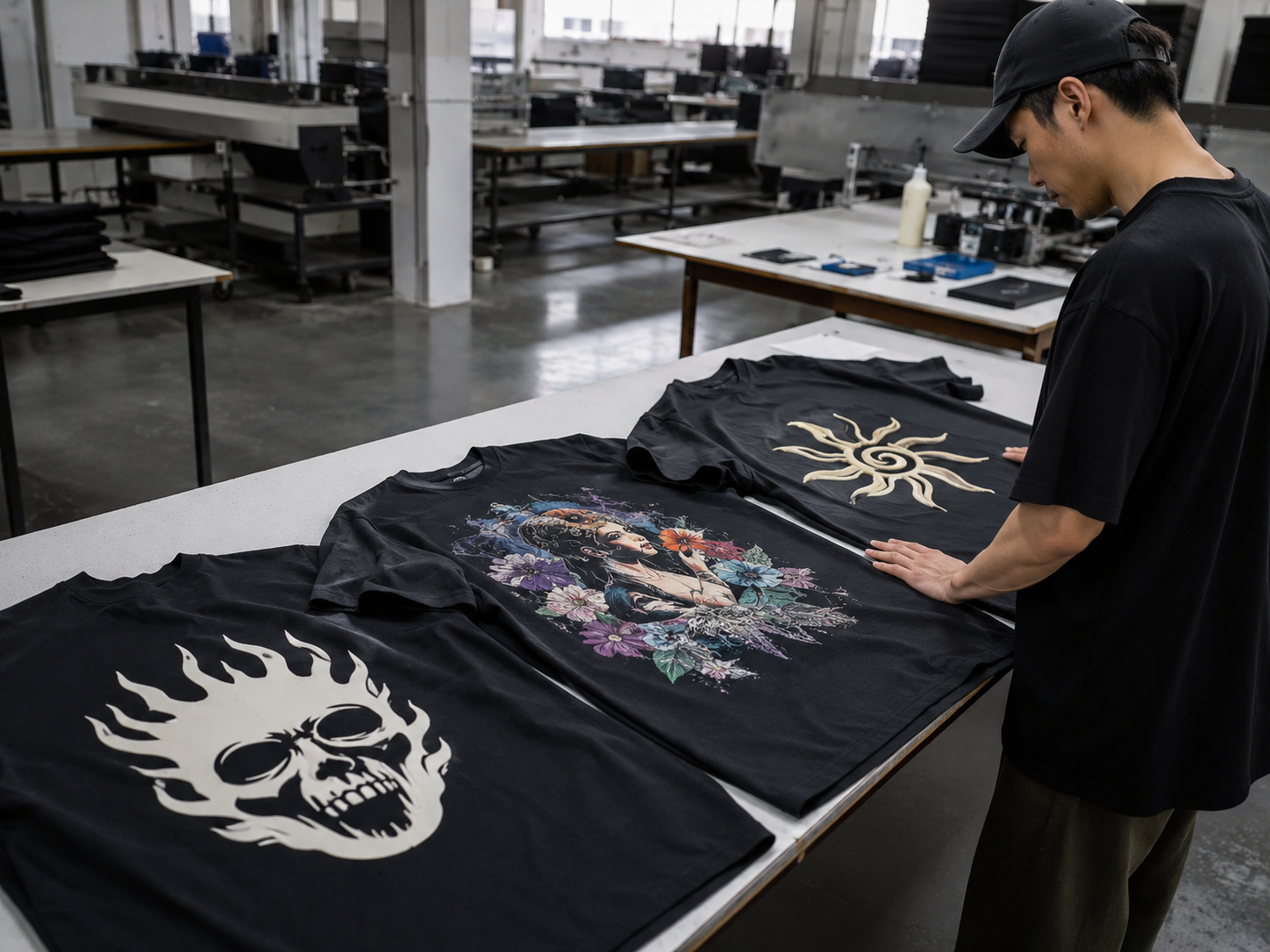
| Printing Method | Best For | Main Advantage | Main Limitation |
|---|---|---|---|
| Screen Print | Bold graphics | Strong color and bulk efficiency | More setup |
| DTG | Detailed artwork | Full color and gradients | Fabric dependent |
| DTF | Small flexible orders | Works across many garments | More noticeable surface |
| Puff Print | Raised logos | Strong 3D texture | Fine detail can be lost |
| High-Density | Sharp raised logos | Controlled print height | More technical setup |
| Water-Based | Soft graphics | Softer hand feel | Requires controlled curing |
| Discharge | Vintage dark tees | Soft faded appearance | Dye compatibility varies |
| Sublimation | Polyester graphics | Excellent all-over color | Not ideal for cotton |
This table should only be used as a starting point.
The final method should always be tested on the actual production garment.
How We Approve Printing Before Bulk Production
For custom streetwear, we normally prefer testing the final design on the final fabric before bulk production.
A practical workflow is:
Final Artwork
↓
Final Fabric
↓
Choose Printing Method
↓
Prepare Print Test
↓
Check Color
↓
Check Detail
↓
Check Hand Feel
↓
Cure
↓
Wash Test
↓
Approve
↓
Bulk Production
During sample review, we normally check:
- Print position
- Print dimensions
- Color
- Edge definition
- Ink coverage
- Hand feel
- Fabric distortion
- Cracking
- Adhesion
- Wash performance
This is especially important for specialty processes such as:
- Puff printing
- High-density printing
- Discharge printing
The digital artwork alone cannot show exactly how the finished print will behave on fabric.
Frequently Asked Questions
What is the best printing method for streetwear?
There is no single best method.
Screen printing is a strong all-around choice for bold graphics, while DTG works well for detailed full-color artwork and puff works well for raised designs.
Which printing method is best for heavyweight T-shirts?
Screen printing, puff, high-density, and DTG can all work depending on the fabric surface and artwork.
Which printing method is best for small orders?
DTG and DTF are often practical for small orders with complex full-color graphics.
Which method is best for large back graphics?
Screen printing is often suitable for bold large graphics, while DTG can work well when the artwork contains many colors and gradients.
Is puff printing more premium?
Not automatically.
Puff creates a stronger texture, but the technique must match the artwork.
Which method produces the softest print?
Water-based and some discharge prints can create very soft results on suitable fabrics.
Can different printing techniques be combined?
Yes.
For example:
Flat Screen Print + Puff Detail
can create contrast between flat and raised areas.
Should printing be wash-tested before production?
Yes.
Wash testing can reveal problems with curing, adhesion, cracking, fading, and fabric interaction.
Final Recommendation
The best streetwear printing method is not the most complicated one.
It is the method that fits:
Artwork + Fabric + Quantity + Texture + Brand Direction
Choose:
Screen Print
for bold, repeatable graphics.
DTG
for detailed full-color artwork.
DTF
for flexible smaller production runs.
Puff Print
for soft raised graphics.
High-Density Print
for sharper dimensional effects.
Water-Based / Discharge
for softer or vintage results.
Sublimation
for polyester and all-over artwork.
The safest development process is:
Artwork Review → Fabric Review → Select Method → Print Test → Wash Test → Approve → Bulk Production
For custom streetwear printing, Fuki Apparel can support screen printing, puff printing, DTG, specialty printing, sampling, testing, and bulk production.