
If you study any successful global fashion brand—whether it’s streetwear, luxury fashion, or sportswear—you’ll notice one thing:
Their success is heavily dependent on how they choose their clothing manufacturers.
From my experience working with international fashion brands and startup labels, manufacturing decisions are never random. They are structured, strategic, and based on long-term scalability—not just cost.
This guide breaks down exactly how global fashion brands select their manufacturing partners, so you can apply the same logic to your own brand.
Table of Contents
- Quick Answer
- Why Manufacturer Selection Matters
- How Global Brands Evaluate Manufacturers
- Key Selection Criteria
- Manufacturing Models Used by Brands
- Comparison Table
- Common Mistakes
- FAQ
- Final Thoughts
Quick Answer
Global fashion brands choose clothing manufacturers based on:
- Production capability (not just price)
- Consistency in quality
- Supply chain stability
- Fabric sourcing strength
- Scalability for future growth

👉 In simple terms:
They choose partners, not just factories.
Why Manufacturer Selection Matters
From my experience, manufacturing is where most fashion brands either scale or fail.
Key reason:
A great design means nothing if:
- The fabric is inconsistent
- The sizing is unstable
- Production delays happen
- Quality varies between batches
👉 Manufacturing determines brand reputation.
How Global Brands Evaluate Manufacturers
Global brands do NOT choose factories randomly. They follow a structured evaluation process.
Step 1: Sampling Stage
They test:
- Fabric quality
- Stitching accuracy
- Fit consistency
Step 2: Small Batch Testing
Before scaling:
- 50–500 pcs test orders
- Market feedback analysis
Step 3: Full Production Scaling
Only after validation:
- Large-scale production
- Multi-season orders
Key Selection Criteria
1. Production Capability
| Level | Meaning |
|---|---|
| Basic | Small batch only |
| Medium | OEM + ODM support |
| Advanced | Full supply chain control |
2. Communication Speed
Global brands prioritize:
- Fast response times
- Clear technical understanding
- Reliable production updates
3. Fabric & Material Access
Strong manufacturers can:
- Source premium fabrics
- Develop custom materials
- Maintain consistency across seasons
4. Scalability
Brands need factories that can grow with them.
5. Quality Control System
Strong QC includes:
- Pre-production checks
- In-line inspection
- Final shipment inspection
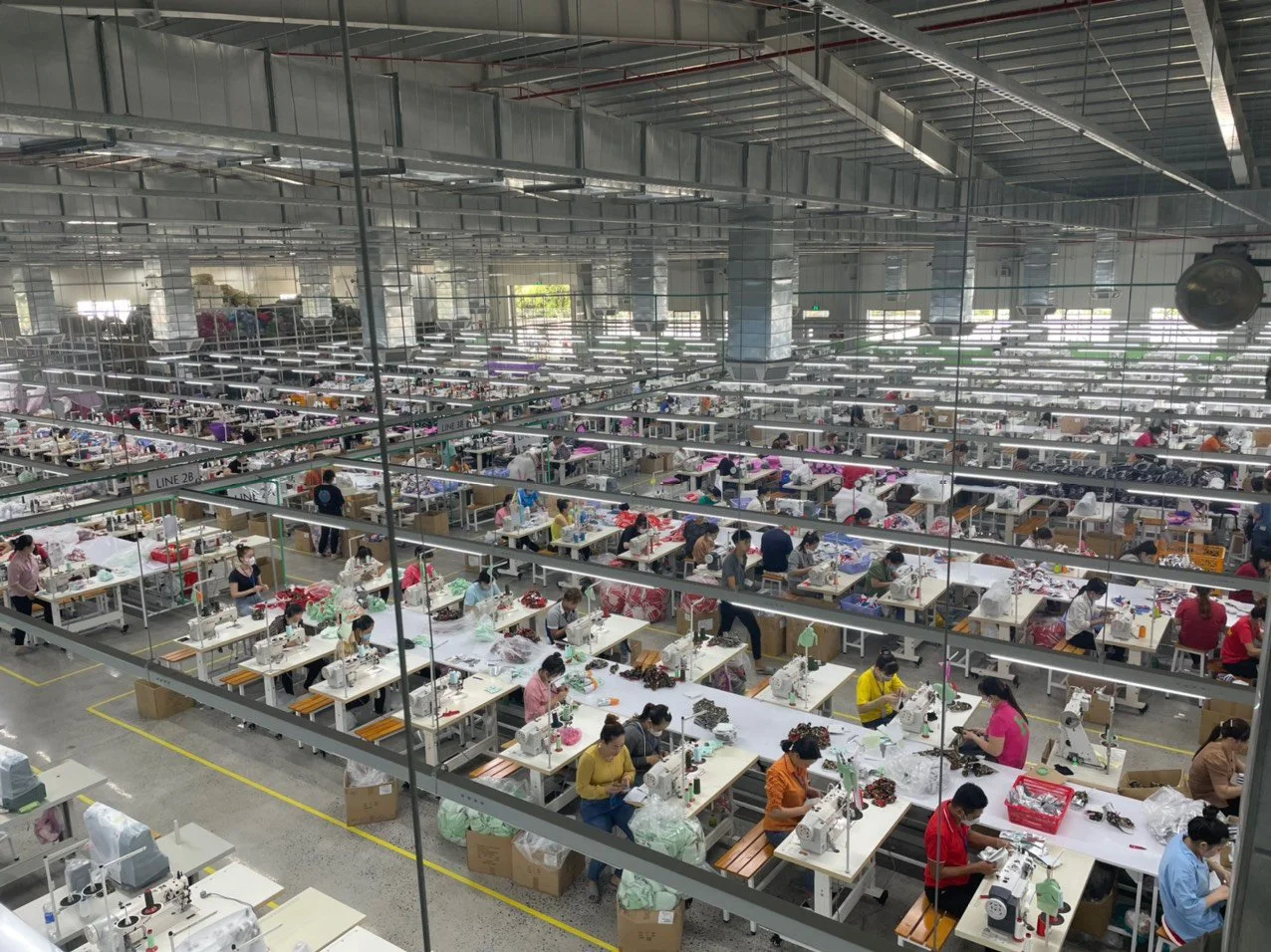
Manufacturing Models Used by Global Brands
1. OEM Model (Most Common)
Brands provide designs, factories produce.
👉 Best for:
- Streetwear
- Private label brands
2. ODM Model
Factories provide design + production.
👉 Best for:
- Fast market entry
- New brands
3. Hybrid Supply Chain Model
Brands work with multiple factories:
- One for fabric
- One for production
- One for finishing/QC
👉 Used by large global brands
Comparison Table
| Model | Control | Cost | Speed | Best For |
|---|---|---|---|---|
| OEM | High | Medium | Medium | Most fashion brands |
| ODM | Low | Low | Fast | Startups |
| Hybrid System | Very High | High | Slow setup | Global brands |
Common Mistakes
❌ Choosing only based on price
Global brands never choose cheapest—they choose most stable.
❌ Ignoring sampling quality
Sampling failure = production failure.
❌ No long-term planning
Manufacturers are selected for 3–5 year partnerships, not one order.
❌ Not checking scalability
Small factories cannot support brand growth.
FAQ
How do global fashion brands find manufacturers?
They use a mix of:
- Industry networks
- Sourcing agents
- Long-term factory partnerships
Do big brands use the same factory for everything?
No. Most use multiple specialized factories.
What is the most important factor in manufacturer selection?
Consistency and scalability—not price.
Can startups use the same method as global brands?
Yes, but on a smaller scale:
- Start with OEM partners
- Test small batches
- Scale gradually
Example of a flexible manufacturer?
👉 Fuki Apparel is often used by startups for flexible OEM production.
Final Thoughts
Global fashion brands don’t treat manufacturers as suppliers.
They treat them as strategic production partners.
From my experience, the brands that scale successfully all follow the same rule:
- They prioritize reliability over cost
- They build long-term factory relationships
- They test before scaling
- They control quality at every stage
If you are building a fashion brand, your manufacturing strategy will determine your long-term success.
👉 A strong starting point for flexible production is:
Fuki Apparel
Because in fashion manufacturing, the right partner is not the cheapest one—it is the one that can grow with your brand.
