
Heavyweight streetwear offers more structure, opacity, warmth, and visual presence. Lightweight streetwear offers better breathability, movement, layering, and comfort in warm weather.
From my experience developing custom streetwear collections, neither option is automatically better. The correct choice depends on the product, silhouette, climate, customer expectations, decoration method, and target price.
For most brands, I recommend:
- Lightweight fabrics for summer T-shirts, layering pieces, technical jackets, and warm markets
- Midweight fabrics for versatile core products sold throughout the year
- Heavyweight fabrics for boxy T-shirts, oversized hoodies, structured pants, and premium statement pieces
Quick answer: Choose heavyweight streetwear when structure and a substantial hand feel define the product. Choose lightweight streetwear when breathability, movement, and year-round layering matter more. For a balanced first collection, use midweight core products and add heavyweight or lightweight pieces for specific seasons.
Table of Contents
- Quick Comparison
- What Counts as Heavyweight or Lightweight?
- How Fabric Weight Changes the Fit
- Heavyweight vs Lightweight T-Shirts
- Heavyweight vs Lightweight Hoodies
- Pants, Jackets, and Technical Streetwear
- Climate and Customer Comfort
- Printing, Embroidery, and Washing
- Cost, MOQ, and Shipping
- How to Build a Balanced Collection
- Sample Testing Checklist
- Common Selection Mistakes
- Frequently Asked Questions
- Final Recommendation
Quick Comparison
| Factor | Heavyweight Streetwear | Lightweight Streetwear |
|---|---|---|
| Hand feel | Substantial and dense | Soft, light, and flexible |
| Silhouette | Structured and boxy | Relaxed and flowing |
| Warmth | Higher | Lower |
| Breathability | Usually lower | Usually higher |
| Opacity | Usually stronger | May require careful color and fit selection |
| Layering | Better as an outer layer | Better under jackets or hoodies |
| Decoration support | Good for large prints and embroidery | Better for lighter decoration |
| Material cost | Usually higher | Usually lower |
| Freight weight | Higher | Lower |
| Best season | Fall and winter | Spring and summer |
| Best market | Cool climates and premium drops | Warm climates and everyday collections |
Choose Heavyweight Streetwear When
- A structured silhouette is central to the design.
- Customers expect a substantial premium hand feel.
- The product uses large prints or dense embroidery.
- The collection targets cooler weather.
- Opacity and shape retention are important.
- The garment is designed as a statement piece.
Choose Lightweight Streetwear When
- The collection targets warm or humid markets.
- The garment should drape naturally.
- Customers need easy movement and layering.
- Lower shipping weight is commercially important.
- The product is intended for frequent everyday wear.
- The design uses smaller or softer decoration.
What Counts as Heavyweight or Lightweight?
Fabric weight is commonly measured in GSM, meaning grams per square meter.
However, the terms “lightweight” and “heavyweight” are relative to the product.
A 240 GSM fabric may feel heavy for a T-shirt but light for a hoodie.
Practical Weight Guide
| Product | Lightweight | Midweight | Heavyweight |
|---|---|---|---|
| T-shirt | 140–190 GSM | 190–230 GSM | 230–320 GSM |
| Hoodie | 260–330 GSM | 330–400 GSM | 400–500+ GSM |
| Sweatpants | 260–330 GSM | 330–400 GSM | 400–480 GSM |
| Woven pants | 120–200 GSM | 200–280 GSM | 280–400+ GSM |
| Jacket shell | Depends on fabric and construction | Depends on fabric and construction | Depends on layers and lining |
These ranges are useful starting points, not universal quality grades.
ASTM D3776/D3776M covers the measurement of fabric mass per unit area. Brands that need a formal reference can review the ASTM Fabric Weight Standard.
Fabric Weight Is Not Garment Weight
The final garment weight also depends on:
- Garment size
- Fit and body volume
- Hood construction
- Lining
- Rib
- Pockets
- Zippers
- Embroidery
- Multiple fabric layers
An oversized 350 GSM hoodie may weigh more than a regular-fit 420 GSM sweatshirt because it uses more material.
GSM measures the fabric, not the full customer experience. Fit, density, finishing, construction, and climate determine whether the weight is appropriate.
How Fabric Weight Changes the Fit
Fabric weight directly influences how a streetwear silhouette behaves.
Heavyweight Fabric
Dense or heavy fabric can help create:
- Strong dropped shoulders
- Wide sleeves
- A short boxy body
- A structured hood
- Clear garment volume
- A silhouette that sits away from the body
This works well for premium oversized T-shirts and hoodies.
However, heavy fabric can become uncomfortable when the pattern is too long, the hood is oversized, or several layers overlap.
Lightweight Fabric
Light fabric normally creates:
- Softer drape
- More natural movement
- Easier layering
- Less bulk around seams
- A closer relationship with the body
It suits relaxed summer T-shirts, loose shirts, technical pants, and packable jackets.
A lightweight oversized garment still needs a properly developed pattern. Simply increasing the width can make thin fabric appear shapeless rather than intentionally relaxed.
Brands developing custom proportions can explore our Oversized T-Shirt Manufacturing Service.
Heavyweight vs Lightweight T-Shirts
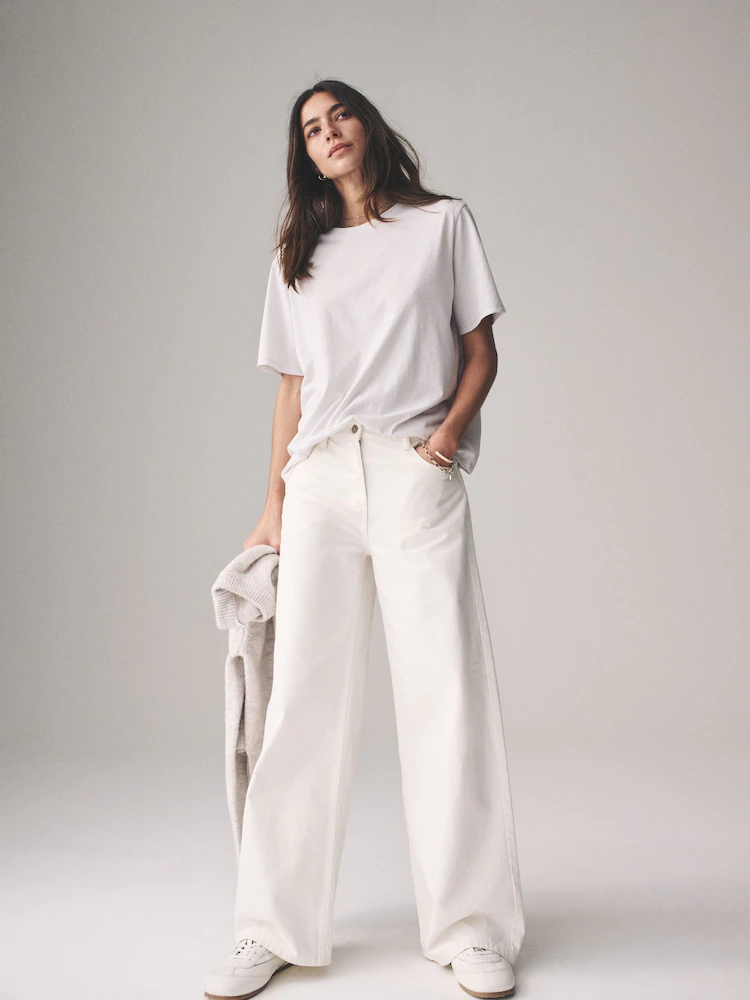
Lightweight T-Shirts
Lightweight T-shirts are suitable for:
- Summer collections
- Hot-weather markets
- Layering
- Music merchandise
- Promotional products
- Softer relaxed fits
A practical range is approximately 160–200 GSM.
Their advantages include comfort, airflow, faster drying, and lower freight weight.
Possible limitations include:
- Reduced opacity
- Less structure
- More visible body shape
- Lower support for dense embroidery
- Greater risk of distortion under heavy graphics
Heavyweight T-Shirts
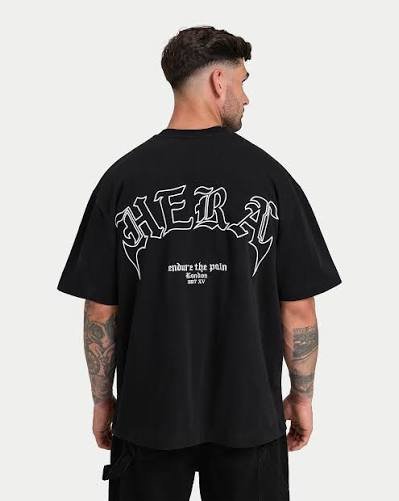
Heavyweight streetwear T-shirts commonly use approximately 230–300 GSM fabric.
They work well for:
- Boxy silhouettes
- Oversized fits
- Premium basics
- Large back graphics
- Garment-washed collections
- Fall and winter layering
Heavyweight fabric can create a stronger product identity even when the design is minimal.
However, it may also feel:
- Too warm for summer
- Stiff before washing
- Heavy during international shipping
- Unsuitable for customers who prefer soft drape
Which T-Shirt Should You Choose?
| Brand Goal | Better Direction |
|---|---|
| Summer graphic collection | Lightweight or midweight |
| Premium everyday T-shirt | Midweight |
| Boxy oversized essential | Heavyweight |
| Vintage washed tee | Midweight to heavyweight |
| Low-cost event merchandise | Lightweight |
| Minimal luxury basic | Dense midweight or heavyweight |
| Global year-round product | Approximately 210–250 GSM |
For most first collections, I recommend a dense 220–250 GSM cotton jersey. It offers a premium feel without entering the most extreme heavyweight category.
Explore more options through FuKi Apparel Custom T-Shirt Manufacturing.
Heavyweight vs Lightweight Hoodies
Lightweight Hoodies
Lightweight hoodies commonly use French terry or light fleece.
They are suitable for:
- Spring collections
- Cool summer evenings
- Warm climates
- Indoor wear
- Layering under jackets
- Travel products
A practical range is approximately 260–350 GSM.
They are easier to wear across several seasons but may not create the dramatic structure associated with heavyweight streetwear.
Heavyweight Hoodies
Heavyweight hoodies usually use dense French terry, brushed fleece, or cotton-rich blends.
They are suitable for:
- Fall and winter collections
- Oversized silhouettes
- Premium matching sets
- Structured hoods
- Large embroidery
- Statement products
A common direction is approximately 400–500 GSM.
Heavyweight hoodie production requires careful control of:
- Hood weight
- Neckline strength
- Shoulder balance
- Rib recovery
- Pocket position
- Shrinkage
- Seam thickness
A heavy hood can pull the garment backward when the neckline and pattern are not properly balanced.
My Hoodie Recommendation
Choose:
- 280–350 GSM for warm markets and layering
- 350–420 GSM for versatile premium hoodies
- 420–500 GSM for winter and heavyweight positioning
For most brands selling internationally, a 380–420 GSM French terry hoodie provides a practical balance between structure, comfort, and seasonal flexibility.
Review custom fits and materials through our Oversized Hoodie Manufacturer page.
Pants, Jackets, and Technical Streetwear
Fabric weight should also match the function of pants and outerwear.
Streetwear Pants
Heavy cotton twill, canvas, and denim can create:
- Strong leg shapes
- Durable pocket construction
- Workwear character
- Better support for hardware
Lightweight nylon and ripstop are better for:
- Technical cargo pants
- Packable styles
- Warm-weather trousers
- Adjustable outdoor-inspired designs
Jackets
A lightweight jacket may use:
- Nylon
- Polyester
- Ripstop
- Lightweight twill
- Unlined woven fabric
A heavyweight jacket may use:
- Denim
- Canvas
- Wool blends
- Heavy twill
- Quilted lining
- Multi-layer construction
For jackets, the total construction often matters more than the shell GSM. A light shell with insulation and lining may be warmer than a heavy unlined cotton jacket.
Climate and Customer Comfort
A premium garment still fails commercially when customers cannot wear it comfortably.
Choose by Climate
| Customer Environment | Recommended Direction |
|---|---|
| Hot and humid | Lightweight, breathable fabrics |
| Warm year-round | Lightweight to midweight |
| Mixed seasons | Midweight core products |
| Cool and dry | Midweight to heavyweight |
| Cold winter | Heavyweight, brushed, or lined fabrics |
| International market | Balanced midweight range |
Consider How Customers Use the Product
Ask whether the garment will be:
- Worn alone
- Layered under a jacket
- Used indoors
- Worn during travel
- Used for outdoor activities
- Sold mainly during one season
A heavyweight hoodie may work as outerwear in a mild climate but become an indoor layering piece in a colder region.
Printing, Embroidery, and Washing
Decoration adds weight and stiffness to the garment.
Heavyweight Fabrics Support
Heavyweight fabrics are usually better suited to:
- Large screen prints
- Puff printing
- High-density ink
- Dense embroidery
- Heavy patches
- Metal trims
The stable base helps support decoration, but excessive coverage can still make the garment uncomfortable.
Lightweight Fabrics Need More Control
For lightweight products, consider:
- Water-based printing
- Small screen prints
- DTG
- Lightweight transfers
- Small embroidery
- Minimal labels
A large, thick transfer may reduce airflow and change the drape of a light T-shirt.
Compare decoration options through FuKi Apparel Custom Printing Services.
Washing Changes the Result
Enzyme, pigment, acid, and vintage washing may change:
- Fabric weight
- Softness
- Dimensions
- Surface texture
- Color
- Drape
Heavy fabric may become softer after washing, while lightweight fabric may lose structure or strength.
CottonWorks provides technical information about controlling dimensional changes through its Shrinkage and Skewing Resource.
Cost, MOQ, and Shipping
Heavyweight garments usually require more raw material and create higher freight weight.
They may also require:
- Stronger sewing equipment
- Longer drying times
- More careful seam construction
- Larger packaging
- Higher fabric minimums
- More expensive samples
Lightweight garments can reduce material and shipping costs, but they are not always cheaper to develop. Technical nylon, special coatings, or high-performance finishes can be expensive even when the fabric is light.
Commercial Comparison
| Cost Factor | Heavyweight | Lightweight |
|---|---|---|
| Material usage | Higher | Lower |
| Shipping weight | Higher | Lower |
| Packaging volume | Often higher | Often lower |
| Perceived premium value | Often stronger | Depends on fabric and function |
| Warm-market sales potential | Lower | Higher |
| Winter sales potential | Higher | Lower |
| Decoration support | Strong | More limited |
| Development complexity | Higher for thick seams | Higher for technical materials |
Do not choose fabric weight only to reach a target unit price. Compare the complete landed cost and expected selling season.
Explore available, custom-knit, washed, and technical materials through FuKi Apparel Custom Fabric Services.
How to Build a Balanced Collection
A complete streetwear brand does not need every garment to use the same weight.
I recommend building a weight system.
Core Layer
Use midweight fabrics for products sold throughout the year.
Examples:
- 220–250 GSM T-shirts
- 350–420 GSM French terry hoodies
- Midweight twill pants
Seasonal Layer
Add lighter or heavier products for specific conditions.
Examples:
- Lightweight summer tees
- Nylon shorts
- Heavy fleece hoodies
- Lined winter jackets
Statement Layer
Use extreme weights only when they support a clear concept.
Examples:
- 300 GSM boxy T-shirt
- 500 GSM oversized hoodie
- Heavy canvas jacket
- Ultralight packable shell
Recommended First Collection
| Product | Practical Direction |
|---|---|
| Graphic T-shirt | Midweight |
| Hero oversized T-shirt | Heavyweight |
| Core hoodie | Midweight to heavyweight |
| Technical shorts | Lightweight |
| Cargo pants | Midweight |
| Seasonal jacket | Climate-specific |
This approach gives the collection variety without forcing every product into the same fabric category.
Textile Exchange’s Fiber and Materials Matrix can also help brands compare broader material sourcing trade-offs beyond weight alone.
Sample Testing Checklist
Never approve fabric weight from a swatch number alone.
Check the finished sample for:
- Hand feel
- Drape
- Opacity
- Fit balance
- Comfort
- Seam thickness
- Hood weight
- Print performance
- Embroidery support
- Shrinkage
- Twisting
- Drying time
- Final garment weight
Test the Real Use Case
For a heavyweight hoodie:
- Wear it for at least one hour.
- Check pressure around the neck and shoulders.
- Test the hood up and down.
- Wash and dry it according to the care label.
- Confirm that the rib returns to shape.
For a lightweight T-shirt:
- Check transparency in natural light.
- Test how it behaves when stretched.
- Review the print area from inside and outside.
- Check twisting and shrinkage after washing.
Common Selection Mistakes
Believing Heavyweight Always Means Premium
Premium quality also depends on fiber, yarn, construction, finishing, fit, sewing, and wash performance.
Using the Same Weight for Every Market
A 500 GSM hoodie may be successful in a cold region and impractical in a tropical market.
Choosing Fabric Before Defining the Silhouette
The pattern and material should be developed together.
Ignoring the Full Garment Weight
Large hoods, pockets, linings, and decoration can make the final garment much heavier than expected.
Using Heavy Decoration on Light Fabric
Large transfers or dense embroidery may distort lightweight garments.
Selecting Lightweight Fabric Only to Save Money
A thin fabric that becomes transparent, unstable, or unsuitable for the design can reduce customer satisfaction.
Skipping the Wash Test
Both light and heavy fabrics can shrink, twist, pill, fade, or change in hand feel.
Frequently Asked Questions
Is heavyweight streetwear better quality?
Not automatically. Heavyweight fabric provides more mass and structure, but quality also depends on fiber, construction, finishing, fit, and durability.
What GSM is considered heavyweight for a T-shirt?
Streetwear T-shirts above approximately 230–250 GSM are often described as heavyweight. The exact classification varies by brand and market.
What GSM is considered heavyweight for a hoodie?
Hoodies around 400 GSM and above are commonly treated as heavyweight, although construction and fiber composition also affect the result.
Is lightweight streetwear suitable for oversized fits?
Yes. Lightweight fabric can create a soft, flowing oversized silhouette. It will not hold the same boxy structure as a dense heavyweight fabric.
Is heavyweight clothing always warmer?
It is usually warmer when the fabric structure and fiber are similar. Brushing, lining, airflow, and fabric composition also influence warmth.
Which is better for printing?
Heavyweight fabrics support large, dense, and raised decoration more easily. Lightweight fabrics work well with controlled screen prints, DTG, and softer ink systems.
Which option is cheaper to ship?
Lightweight garments usually cost less to ship because the total parcel and carton weight is lower.
What should a new streetwear brand choose?
Start with versatile midweight products. Add heavyweight pieces for structure and premium positioning, or lightweight pieces for summer and warm-weather customers.
Final Recommendation
Choose heavyweight streetwear when you need:
- Strong structure
- High opacity
- Bold oversized silhouettes
- Warmth
- Large or raised decoration
- A substantial premium hand feel
Choose lightweight streetwear when you need:
- Breathability
- Easy movement
- Warm-weather comfort
- Layering
- Lower shipping weight
- Softer drape
For most brands, the safest strategy is not choosing one side. Build a collection around reliable midweight products, then use lightweight and heavyweight fabrics for specific products and seasons.
My final rule is:
Choose fabric weight according to how the garment should fit, feel, perform, and sell—not according to the largest GSM number available.
FuKi Apparel supports streetwear brands with fabric sourcing, custom pattern development, sampling, printing, embroidery, garment washing, private labels, packaging, and bulk manufacturing.
Visit FuKi Apparel or contact our streetwear production team to develop the right fabric-weight strategy for your collection.
