
When developing a streetwear hoodie, one of the most important fabric decisions is:
French Terry or Fleece?
Both fabrics are widely used for hoodies, sweatshirts, and oversized streetwear.
They can even have the same GSM.
But they do not create the same garment.
French Terry usually feels:
- More breathable
- More structured
- Less bulky
- Better for year-round wear
Fleece usually feels:
- Softer
- Warmer
- Thicker
- Better for colder seasons
From our experience developing custom hoodies, there is no single fabric that is always better.
The right choice depends on:
Climate + GSM + Desired Hand Feel + Hoodie Structure + Brand Positioning
Table of Contents
- What Is French Terry?
- What Is Fleece?
- 1. The Biggest Difference Is the Inside Surface
- 2. Which Fabric Feels Softer?
- 3. Which Fabric Is Better for Heavyweight Hoodies?
- 4. How French Terry and Fleece Affect Hoodie Fit
- 5. Warmth and Breathability
- 6. How GSM Changes French Terry and Fleece
- 7. Printing and Embroidery Performance
- 8. Washing and Shrinkage
- Which Fabric Should Your Streetwear Brand Choose?
- How We Select Hoodie Fabric Before Production
- Frequently Asked Questions
- Final Recommendation
What Is French Terry?
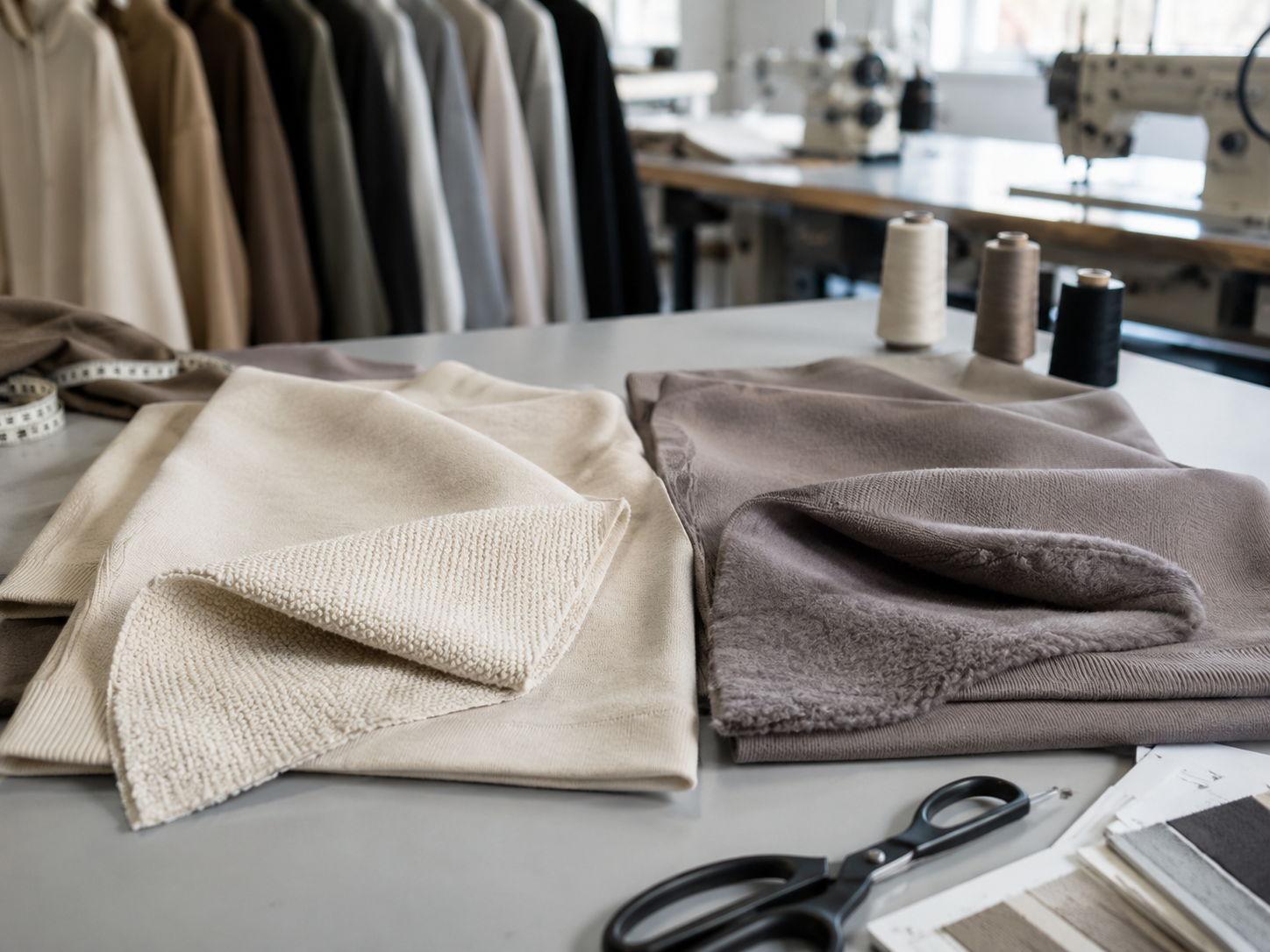
French Terry is a knitted fabric commonly used for:
- Hoodies
- Sweatshirts
- Sweatpants
- Shorts
- Streetwear sets
The outside normally has a relatively smooth jersey surface.
The inside has visible yarn loops.
These loops are one of the easiest ways to identify French Terry.
Because the inside is not heavily brushed, French Terry usually feels less fluffy than fleece.
It can provide a good balance between:
Weight + Structure + Breathability
This makes it especially useful for oversized streetwear garments that need enough body to hold their shape without becoming excessively warm.
For more information about choosing streetwear fabrics:
How to Source Streetwear Fabrics
What Is Fleece?
Sweatshirt fleece usually begins with a knitted construction that is mechanically brushed on the inside.
Brushing raises the fibers and creates the soft surface commonly seen inside winter hoodies.
This gives fleece its characteristic:
- Soft hand feel
- Fuzzy interior
- Warmth
- Fuller appearance
Depending on the fabric, the inside can be lightly brushed or heavily brushed.
That means two fleece fabrics with the same GSM can still feel different.
CottonWorks describes sweatshirt fleece as a knit structure that can be brushed to create a soft, warm interior surface.
External reference:
CottonWorks – Knit Fabric Basics
1. The Biggest Difference Is the Inside Surface
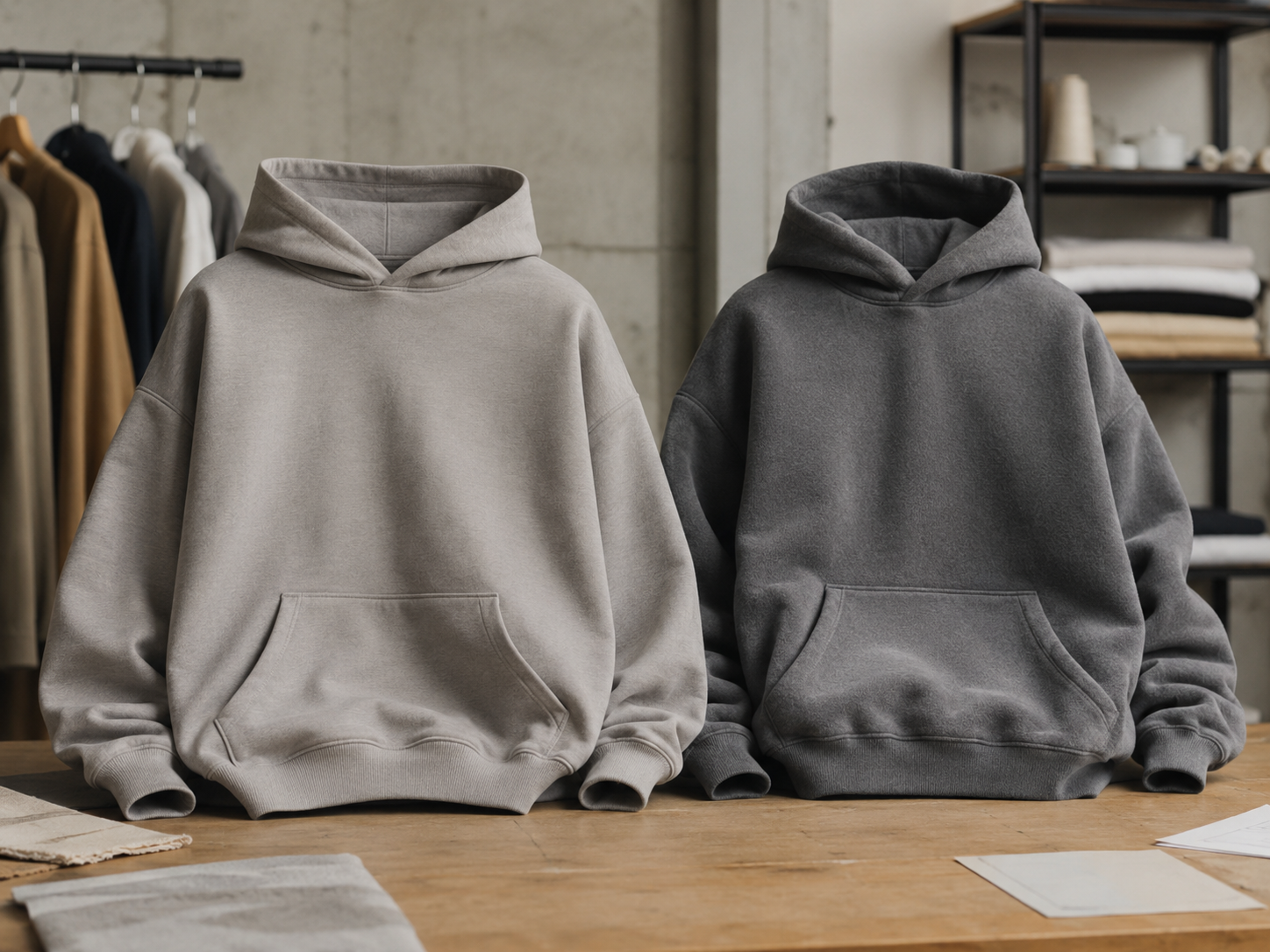
The easiest way to understand French Terry vs Fleece is to look inside the garment.
French Terry
Inside:
Visible loops
This normally creates a fabric that feels:
- Cleaner
- Less bulky
- More breathable
Fleece
Inside:
Brushed fibers
This normally creates a fabric that feels:
- Softer
- Fluffier
- Warmer
The outside surfaces may look relatively similar.
But once you touch the inside, the difference becomes obvious.
This difference also changes the way the finished hoodie feels when worn.
2. Which Fabric Feels Softer?
Fleece usually feels softer immediately.
The brushing process creates raised fibers that provide a plush interior.
This is why fleece is often selected for:
- Winter hoodies
- Comfortable basics
- Cozy streetwear
- Cold-weather collections
French Terry normally feels flatter and more structured.
However, French Terry can still become very soft depending on:
- Yarn quality
- Cotton quality
- Enzyme treatment
- Softening
- Garment washing
So the comparison is not simply:
Fleece = Good
French Terry = Rough
A premium washed French Terry can feel extremely comfortable while maintaining more structure than fleece.
3. Which Fabric Is Better for Heavyweight Hoodies?
Both fabrics can be used for heavyweight streetwear.
For example:
400 GSM French Terry
and
400 GSM Fleece
can both create premium hoodies.
But the finished garments will feel different.
Heavyweight French Terry
Usually provides:
- Strong structure
- Cleaner silhouette
- More breathable feel
- Less bulk inside
Heavyweight Fleece
Usually provides:
- More warmth
- Softer interior
- Fuller hand feel
- More winter-focused comfort
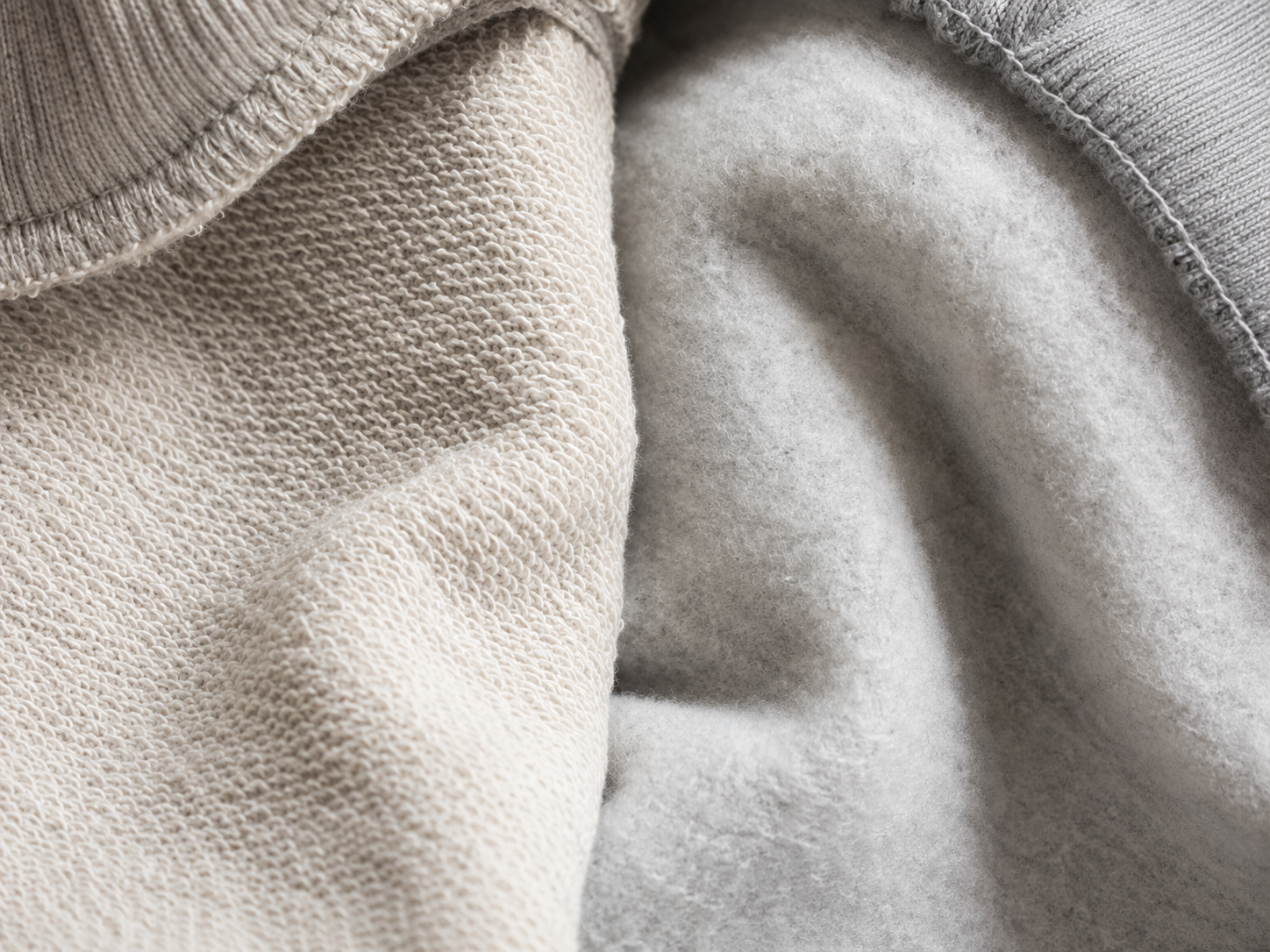
A 450–500 GSM fleece hoodie can become extremely substantial.
If the design also uses:
- Double-layer hood
- Heavy rib
- Large kangaroo pocket
the final garment may become very heavy.
You can read more about this here:
Why Do Heavyweight Hoodies Feel Too Stiff?
4. How French Terry and Fleece Affect Hoodie Fit
Fabric structure affects the final silhouette.
French Terry
A dense French Terry can create:
- Cleaner dropped shoulders
- Stronger sleeve shape
- Boxy silhouette
- More visible structure
This works well for:
- Oversized hoodies
- Minimal streetwear
- Vintage washed styles
Fleece
Fleece usually creates:
- Softer folds
- Fuller body
- More relaxed appearance
- More volume
The exact result still depends on GSM and fabric density.
A lightweight French Terry can drape more than a very dense fleece.
This is why we recommend checking the actual sample rather than selecting fabric only from the fabric name.
The final fit comes from:
Pattern + Fabric + Construction
5. Warmth and Breathability
This is one of the clearest differences.
Fleece
Usually provides better warmth because the brushed inside traps more air.
This makes it suitable for:
- Winter
- Cold climates
- Outdoor streetwear
- Heavy seasonal collections
French Terry
Usually provides better breathability because the inside loops are not fully brushed into a dense fuzzy surface.
This makes it useful for:
- Spring
- Fall
- Mild climates
- Layering
- Year-round collections
For brands selling internationally, French Terry can sometimes be more versatile.
A very heavy fleece hoodie may have a narrower seasonal wearing window.
6. How GSM Changes French Terry and Fleece
GSM still matters.
But GSM should always be considered together with fabric type.
For example:
| Fabric | Typical Result |
|---|---|
| 300 GSM French Terry | Medium structure, breathable |
| 300 GSM Fleece | Softer and warmer |
| 400 GSM French Terry | Heavy, structured streetwear |
| 400 GSM Fleece | Heavy, warm and plush |
| 500 GSM French Terry | Very strong structure |
| 500 GSM Fleece | Extra heavy and very warm |
These are general characteristics only.
Actual results depend on:
- Yarn
- Knitting density
- Fiber content
- Brushing
- Finishing
This is why a brand should not ask only:
"Do you have 400 GSM?"
A better question is:
"What kind of 400 GSM fabric creates the fit and hand feel we want?"
7. Printing and Embroidery Performance
Both French Terry and Fleece can work well with streetwear decoration because the outer surface is normally suitable for printing and embroidery.
Screen Printing
Both can support:
- Screen print
- Puff print
- High-density print
- Heat transfer
The actual print quality depends more on the outer surface than the brushed or looped inside.
A smoother face fabric usually creates cleaner printing.
For more information:
Custom Streetwear Printing Services
Embroidery
Heavy French Terry and fleece generally provide better embroidery support than lightweight jersey.
However, embroidery still needs correct:
- Backing
- Stitch density
- Digitizing
- Hoop tension
Fabric weight alone does not prevent distortion.
8. Washing and Shrinkage
Both French Terry and fleece can change after washing.
Possible changes include:
- Shrinkage
- Softness
- Surface appearance
- Drape
- Hand feel
This is especially important for cotton-rich fabrics.
Garment washing can also create very different streetwear effects.
Washed French Terry
Often creates:
- Vintage appearance
- Dry structured hand
- Natural fading
Washed Fleece
Can create:
- Softer feeling
- Relaxed surface
- Vintage warmth
However, brushing and washing can also influence:
- Pilling
- Fiber shedding
- Surface durability
That is why the final wash process should be tested before bulk production.
Which Fabric Should Your Streetwear Brand Choose?
Choose French Terry if you want:
- More structure
- Better breathability
- Cleaner oversized silhouette
- Year-round wear
- Vintage wash potential
Choose Fleece if you want:
- Maximum softness
- More warmth
- Cozy interior
- Winter-focused products
- Plush premium hand feel
For many brands, the decision can be simplified:
Everyday Oversized Hoodie
French Terry
Winter Heavyweight Hoodie
Fleece
Vintage Washed Hoodie
French Terry
Soft Premium Basic Hoodie
Fleece
But these are starting points, not fixed rules.
The actual fabric sample should always make the final decision.
How We Select Hoodie Fabric Before Production
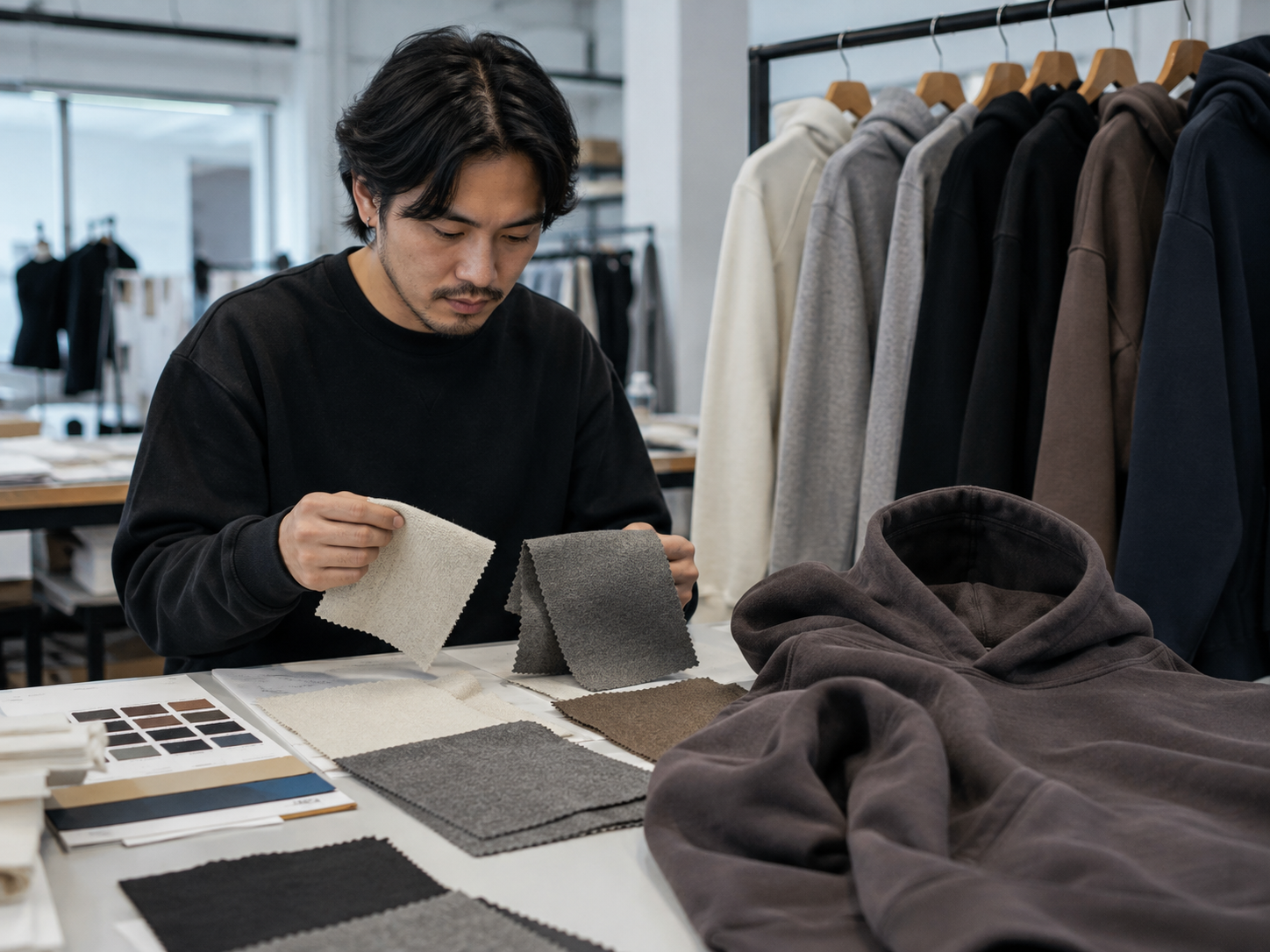
For custom hoodie development, we prefer comparing physical fabric options before bulk production.
A typical process is:
Define Product Direction
↓
Select GSM Range
↓
Compare French Terry and Fleece
↓
Check Hand Feel
↓
Make Sample
↓
Check Fit and Hood Structure
↓
Apply Final Wash if Required
↓
Approve
↓
Bulk Production
During development, we evaluate:
- Fabric weight
- Inside structure
- Softness
- Drape
- Warmth
- Stretch
- Shrinkage
- Hood weight
- Rib compatibility
- Printing or embroidery performance
The same fabric can feel very different as a finished hoodie compared with a small swatch.
That is why garment sampling is important.
Frequently Asked Questions
Is French Terry or fleece better for streetwear hoodies?
Neither is always better.
French Terry is usually more structured and breathable, while fleece is usually softer and warmer.
Is French Terry good for heavyweight hoodies?
Yes.
Heavyweight French Terry is commonly used for structured oversized streetwear hoodies.
Is fleece better for winter hoodies?
Usually yes.
The brushed interior helps trap air and creates more warmth.
Which fabric is softer?
Fleece normally feels softer because of its brushed inside surface.
However, washed and softened French Terry can also feel very comfortable.
Is French Terry more breathable than fleece?
Generally yes.
Its looped interior normally provides better breathability than a heavily brushed fleece surface.
Can French Terry and fleece have the same GSM?
Yes.
For example, both can be 400 GSM while producing completely different hand feels and wearing experiences.
Which fabric is better for vintage washed hoodies?
French Terry is often a strong choice because it maintains structure while working well with many garment-wash effects.
Does fleece pill more easily?
Brushed surfaces can be more exposed to friction, so pilling performance depends on fiber quality, brushing level, yarn, and finishing.
It should be tested for the specific fabric.
Final Recommendation
French Terry and fleece are both excellent streetwear hoodie fabrics.
The main difference is the wearing experience.
French Terry
offers:
Structure + Breathability + Cleaner Silhouette
while:
Fleece
offers:
Softness + Warmth + Plush Comfort
Do not choose between them based only on GSM.
The safest process is:
Choose Product Direction → Compare Fabrics → Make Sample → Check Fit → Wash Test → Approve
From our production experience, the right fabric is the one that creates the intended hoodie—not simply the heaviest or softest option.
If you are developing oversized hoodies, heavyweight sweatshirts, washed streetwear, or custom fleece garments, Fuki Apparel can help with fabric sourcing, sampling, washing, decoration, and bulk production.
