
Standard embroidery and puff embroidery both use thread, but they create very different results.
Choose standard embroidery for detailed logos, small text, flexible placements, and consistent everyday branding. Choose puff embroidery for bold lettering, simple shapes, and a raised three-dimensional effect.
From my experience developing custom streetwear, standard embroidery is the safer choice for most logos. Puff embroidery works best when the artwork is specifically designed for height and texture.
Quick answer: Standard embroidery is flatter, more detailed, and suitable for more garments. Puff embroidery places foam beneath the stitches to create a raised effect, making it better for bold logos and thick lettering.
Table of Contents
- Quick Comparison
- What Is Standard Embroidery?
- What Is Puff Embroidery?
- Which Method Should You Choose?
- Artwork and Digitizing Requirements
- Best Fabrics and Garments
- Durability, Comfort, and Cost
- Can You Combine Both Methods?
- How to Approve an Embroidery Sample
- Common Embroidery Mistakes
- Frequently Asked Questions
- Final Recommendation
Quick Comparison
| Feature | Standard Embroidery | Puff Embroidery |
|---|---|---|
| Appearance | Flat or slightly raised | Clearly raised and three-dimensional |
| Best artwork | Detailed logos, icons, and text | Bold letters and simple shapes |
| Small-detail control | Better | Limited |
| Materials required | Thread, backing, and stabilizer | Thread, backing, stabilizer, and foam |
| Digitizing difficulty | Standard | More specialized |
| Best placements | Chest, sleeve, back, pocket, and cap | Cap front, hoodie chest, and bold panels |
| Fabric flexibility | Works on many stable fabrics | Best on firm and supportive materials |
| Production cost | Usually lower | Usually higher |
| Best brand use | Core branding and repeat products | Statement branding and premium details |
Choose Standard Embroidery When
- The logo contains small text.
- The artwork has fine lines.
- You need several placements.
- The fabric is soft or moderately lightweight.
- You want a clean and timeless finish.
- The same logo will be used across many products.
Choose Puff Embroidery When
- The logo uses thick lettering.
- Raised texture is part of the design.
- The garment has enough structure.
- The artwork can be simplified.
- You can approve a physical sew-out before production.
What Is Standard Embroidery?
Standard embroidery uses a machine to build a design from stitches placed directly onto a garment or fabric panel.
The process normally includes:
- Preparing the artwork
- Converting it into an embroidery file
- Selecting thread colors
- Adding backing or stabilizer
- Hooping the garment
- Stitching the design
- Trimming and inspecting the result
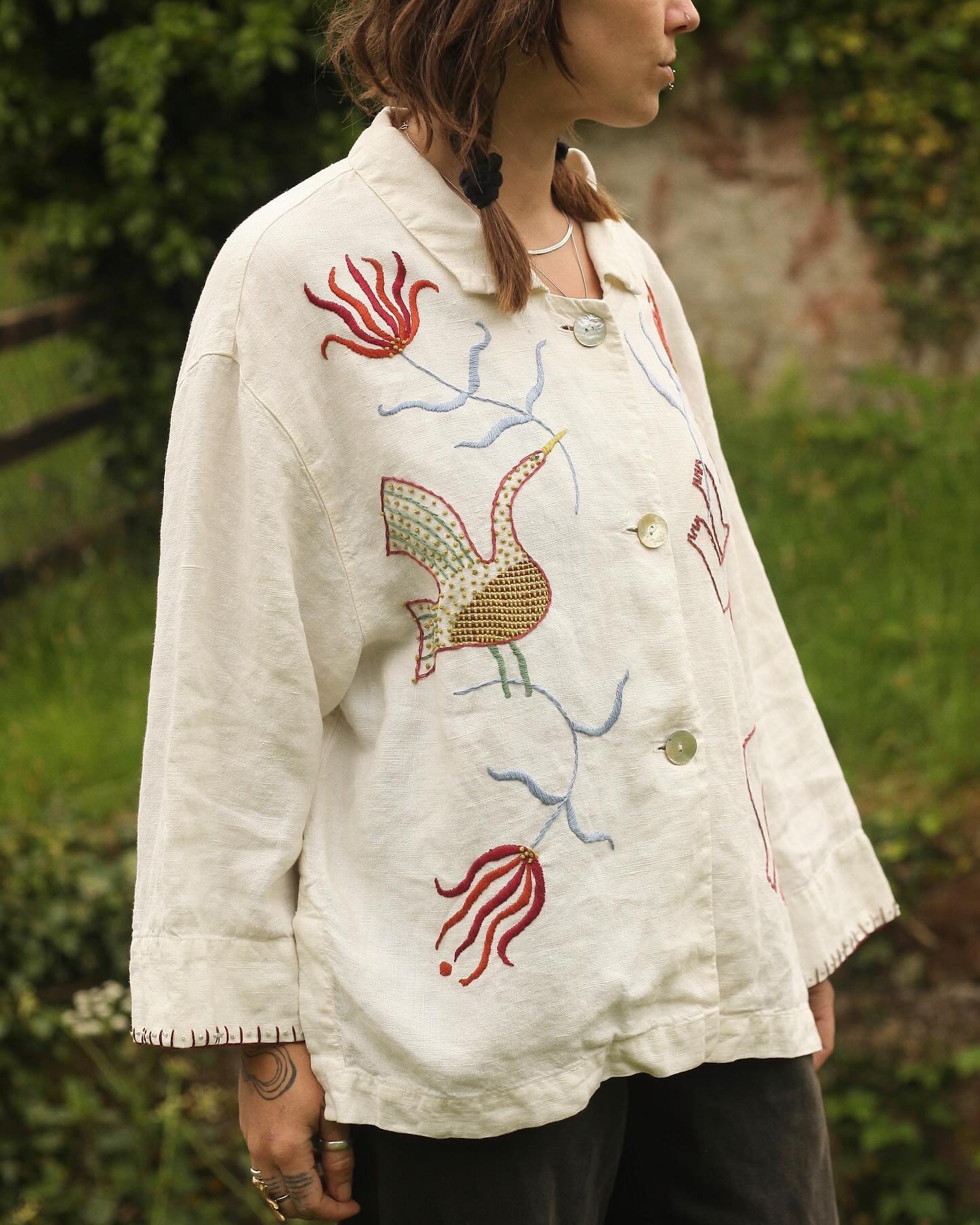
The conversion from artwork to machine instructions is called digitizing.
A digitized embroidery file controls:
- Stitch type
- Stitch direction
- Stitch density
- Underlay
- Color sequence
- Start and stop points
- Trimming
- Final design size
Standard embroidery can use satin stitches, fill stitches, running stitches, or a combination of different stitch types.
Where Standard Embroidery Works Best
I usually recommend standard embroidery for:
- Small chest logos
- Sleeve branding
- Detailed emblems
- Wording under a logo
- Back-neck branding
- Woven-style patches
- Jacket and trouser details
It is a practical option for brands that want durable and recognizable branding without making the decoration dominate the entire garment.
Explore available decoration options through FuKi Apparel Custom Printing and Embroidery Services.
What Is Puff Embroidery?
Puff embroidery, also called 3D puff embroidery, uses embroidery foam beneath the thread.
The foam is placed over the garment before the raised sections are stitched. Dense stitches cover and cut around the foam, leaving a raised design after the excess material is removed.
This technique is commonly used for:
- Large brand initials
- College-style letters
- Short words
- Bold numbers
- Simple symbols
- Cap logos
- Hoodie chest branding
The Madeira 3D Foam Embroidery Guide explains that the embroidery file must be prepared specifically for dimensional foam.
Why Puff Embroidery Looks Different
Standard embroidery builds height through thread layers.
Puff embroidery creates additional height because the stitches cover a physical foam layer. This produces a rounder and more noticeable surface.
However, puff embroidery is not simply standard embroidery with foam added. The digitizing, stitch direction, spacing, underlay, and finishing process must all support the raised structure.
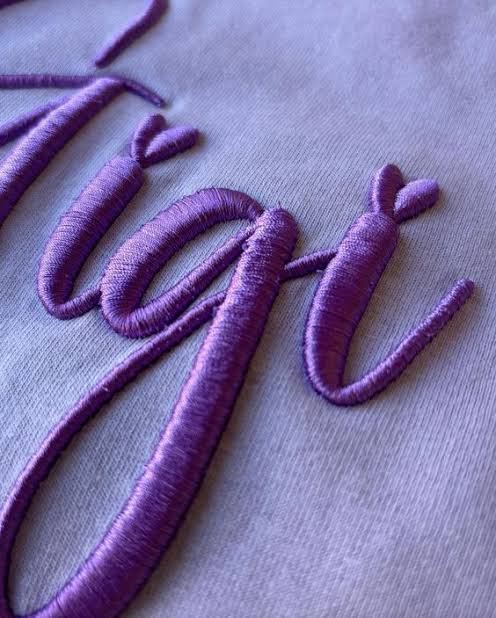
A successful puff design begins with puff-friendly artwork, not with adding foam to an ordinary embroidery file.
Puff embroidery is also different from puff printing. Puff printing uses expandable ink, while puff embroidery uses thread over foam.
Which Method Should You Choose?
Choose the technique according to what the artwork needs to communicate.
Choose by Artwork Type
| Artwork Type | Better Choice |
|---|---|
| Small chest logo | Standard embroidery |
| Detailed badge | Standard embroidery |
| Thin handwritten wording | Standard embroidery |
| Logo with small supporting text | Standard embroidery |
| Large block letters | Puff embroidery |
| Bold brand initials | Puff embroidery |
| Simple number graphic | Puff embroidery |
| Detailed logo with one bold word | Combine both methods |
Choose by Brand Style
Standard embroidery is usually better for:
- Minimal streetwear
- Premium basics
- Workwear-inspired products
- Small repeated logos
- Detailed brand emblems
- Multi-product collections
Puff embroidery is usually better for:
- Bold American-inspired streetwear
- Varsity and collegiate designs
- Statement caps
- Heavyweight hoodies
- Limited-edition drops
- Large typography
My Practical Selection Rule
I choose standard embroidery when the customer needs clarity.
I choose puff embroidery when the customer needs depth.
When both are important, I use flat embroidery for the detailed areas and puff embroidery only for the main lettering.
Artwork and Digitizing Requirements
The same artwork should not automatically be used for both methods.
Standard Embroidery Artwork
Standard embroidery can reproduce more detail, but the artwork should still be simplified.
Prepare:
- A clear vector logo
- Final embroidery dimensions
- Thread color references
- Exact placement measurements
- A suitable background color
- Separate artwork versions for very small placements
Tiny details may disappear when converted into stitches. Small text may need to be enlarged, thickened, or replaced with a simpler font.
Puff Embroidery Artwork
Puff embroidery needs:
- Thick strokes
- Wide internal spaces
- Simple shapes
- Smooth curves
- Clear separation between elements
- Enough room for the foam and stitch coverage
Avoid:
- Very small text
- Thin outlines
- Narrow gaps
- Sharp internal corners
- Detailed illustrations
- Gradient effects
- Crowded artwork
Letters with enclosed spaces need enough room to remain readable after the foam is covered.
The Wilcom 3D Foam Embroidery Guide provides a useful visual explanation of how foam creates a raised embroidery surface.
Do Not Resize the Same File Carelessly
An embroidery file is prepared for a specific finished size.
Reducing it too much can make the stitches excessively dense. Enlarging it without adjusting the stitch structure can create weak coverage and visible gaps.
Ask for a separate digitized file when the logo will be used at significantly different sizes.
Best Fabrics and Garments
Standard embroidery works on a wider range of products.
Puff embroidery normally requires more fabric support.
Best Options by Product
| Product | Recommended Method | Reason |
|---|---|---|
| Structured cap | Puff or standard embroidery | Firm base supports raised logos |
| Dad cap | Standard embroidery | Softer structure may not support heavy puff |
| Heavyweight hoodie | Both methods | Stable fabric supports dense stitches |
| Lightweight T-shirt | Standard embroidery | Puff may feel too heavy |
| Heavyweight T-shirt | Standard or limited puff | Depends on logo size and placement |
| Varsity jacket | Both methods | Structured panels support decoration |
| Denim jacket | Both methods | Denim provides a stable base |
| Cargo pants | Standard embroidery | Smaller branding is more practical |
| Soft knitwear | Standard embroidery | Puff can distort flexible surfaces |
Fabric Stability Matters
A suitable fabric should resist:
- Stretching during stitching
- Puckering around the logo
- Sagging under embroidery weight
- Distortion after the hoop is removed
- Shape changes during washing
Heavy French terry, fleece, denim, twill, and structured cap materials usually provide better support than thin or highly stretchy jersey.
For heavyweight hoodie development, explore Custom Oversized Hoodie Manufacturing.
Backing and Stabilizer
Embroidery backing supports the fabric during and after stitching.
The correct backing depends on:
- Fabric weight
- Fabric stretch
- Stitch count
- Logo size
- Placement
- Desired hand feel
Using insufficient backing can cause puckering. Using excessive backing can make the garment feel stiff and uncomfortable.
Durability, Comfort, and Cost
Which Is More Durable?
Both methods can be durable when the digitizing, materials, and machine settings are correct.
Standard embroidery usually has fewer variables because it does not rely on an internal foam layer.
Puff embroidery can remain durable, but poor production may cause:
- Exposed foam
- Uneven height
- Loose edges
- Collapsed areas
- Thread gaps
- Rough finishing
Which Is More Comfortable?
Standard embroidery is generally less bulky.
Large or dense embroidery can still feel stiff, especially when placed on a lightweight garment or directly against the skin.
Puff embroidery is thicker and is usually better for external areas such as:
- Cap fronts
- Hoodie chests
- Jacket backs
- Outer sleeves
I avoid placing large puff embroidery where the raised surface will rub continuously against the body or interfere with garment movement.
Which Costs More?
Puff embroidery normally costs more because it may require:
- Specialized digitizing
- Embroidery foam
- More setup
- Slower machine operation
- Manual foam removal
- Additional cleaning
- More sample testing
Standard embroidery cost is usually influenced by:
- Stitch count
- Logo size
- Number of colors
- Number of placements
- Order quantity
- Garment fabric
A small puff word may cost less than a very large and detailed flat embroidery design. Always request a quotation based on the actual artwork.
Can You Combine Both Methods?
Yes. Combining standard and puff embroidery is often the best solution for a detailed streetwear logo.
For example:
- Use puff embroidery for the main brand name.
- Use standard embroidery for small supporting text.
- Use flat fill stitches for the background.
- Use puff satin stitches for selected outlines.
- Use a flat embroidered border around a raised center.
When Combination Embroidery Works Best
Choose a mixed design when:
- One part of the logo needs height.
- Other parts contain small details.
- You want texture without making the full design bulky.
- The main lettering must stand out.
- The supporting information must remain readable.
The complete embroidery sequence must be planned carefully. Flat sections are normally stitched before foam is added for the raised areas.
FuKi Apparel supports mixed decoration methods for Custom Graphic Hoodies and other custom streetwear products.
How to Approve an Embroidery Sample
Never approve embroidery from a digital preview alone.
A screen preview cannot accurately show:
- Thread shine
- Stitch height
- Fabric puckering
- Foam coverage
- Edge definition
- Real thread color
- Backing stiffness
- Garment comfort
Embroidery Approval Checklist
| Inspection Area | What to Check |
|---|---|
| Logo size | Matches the approved dimensions |
| Placement | Correct distance from seams and edges |
| Thread color | Matches the selected reference |
| Readability | Small text remains clear |
| Stitch coverage | No fabric or foam is visible |
| Fabric surface | No puckering or distortion |
| Edges | Clean and consistently shaped |
| Backing | Stable without unnecessary stiffness |
| Puff height | Even across the entire design |
| Wash result | No major deformation or loose stitching |
I recommend approving a sew-out on the actual production fabric.
After approval, keep:
- The physical embroidery sample
- The final digitized file
- The thread color record
- The placement measurements
- The approved garment sample
For repeat orders, these references help the manufacturer reproduce the same result.
Common Embroidery Mistakes
Using a Regular File for Puff Embroidery
A flat embroidery file is not automatically suitable for foam.
Keeping Too Much Detail
Puff embroidery becomes less clear when the artwork contains small text, thin lines, or crowded shapes.
Choosing Puff for Lightweight Fabric
A large raised logo may distort a thin T-shirt or make the decorated area feel unbalanced.
Ignoring Stitch Direction
Stitch direction affects the shape, coverage, shine, and visible height of the design.
Using the Wrong Foam Color
Visible foam can appear around the embroidery edges. A foam color close to the thread reduces this risk.
Approving Only a Photo
Photos may hide exposed foam, puckering, uneven height, and backing stiffness.
Skipping Wash Testing
The finished garment should be checked after laundering for thread condition, shape, puckering, and foam stability. Brands can review AATCC Standard Laundering Resources for structured textile-testing information.
Choosing by Trend Instead of Artwork
Puff embroidery is popular, but it is not suitable for every logo.
A clean standard embroidery result is more professional than a puff design with closed text, rough edges, and visible foam.
Frequently Asked Questions
Is puff embroidery better than standard embroidery?
Puff embroidery is better for bold raised logos. Standard embroidery is better for detail, smaller text, flexible placements, and general branding.
Is puff embroidery the same as puff print?
No. Puff embroidery uses thread over foam. Puff printing uses ink that expands during heat curing.
Can puff embroidery be used on hoodies?
Yes. Heavyweight hoodies are suitable because their fabric can support the raised embroidery and dense stitching.
Can puff embroidery include small text?
Very small text is usually better in standard embroidery. Puff designs need wider strokes and more open space.
Is puff embroidery suitable for T-shirts?
It can work on heavyweight and stable T-shirts when the design is controlled. Standard embroidery is safer for lightweight or stretchy tees.
Does puff embroidery cost more?
It usually costs more because it requires special digitizing, foam, additional setup, manual finishing, and more testing.
Can standard and puff embroidery be used together?
Yes. Flat embroidery can preserve small details, while puff embroidery creates height in selected lettering or shapes.
What should I approve before bulk production?
Approve the physical sew-out, logo size, placement, thread colors, stitch coverage, backing, puff height, fabric condition, and wash performance.
Final Recommendation
Choose standard embroidery when you need:
- Detailed logos
- Small text
- Flexible garment placements
- A clean and timeless finish
- Easier repeat production
- Lower decoration complexity
Choose puff embroidery when you need:
- Bold raised lettering
- Strong three-dimensional texture
- Simple brand initials
- Statement cap or hoodie branding
- A premium decorative focal point
My main recommendation is:
Use standard embroidery to protect detail and readability. Use puff embroidery only where height makes the design stronger.
For many streetwear logos, the best solution is a combination: flat embroidery for detailed areas and puff embroidery for the main letters.
Always approve a physical sew-out on the actual production fabric before starting the bulk order.
FuKi Apparel supports custom flat embroidery, puff embroidery, patches, printing, labels, packaging, and full streetwear production.
Visit FuKi Apparel or explore its Streetwear Brand Solutions to discuss the right embroidery technique for your collection.
