
The best printing methods for streetwear are screen printing, puff printing, DTG, DTF transfer, water-based printing, discharge printing, silicone printing, and dye sublimation.
Each method produces a different surface, level of detail, cost structure, and production result.
From my experience developing custom streetwear, I usually recommend:
- Screen printing for bold graphics and medium-to-large orders
- Puff printing for raised logos and statement lettering
- DTG for detailed, full-color artwork and smaller runs
- DTF transfer for colorful designs across different fabric types
- Water-based printing for a softer hand feel
- Discharge printing for vintage graphics on suitable dyed cotton
- Silicone printing for flexible, raised technical logos
- Sublimation for all-over graphics on polyester garments
Quick answer: Screen printing is the best all-around method for most streetwear collections. Choose DTG for complex artwork, puff print for raised texture, water-based ink for softness, DTF for flexible small runs, and sublimation for polyester all-over designs.
Table of Contents
- Streetwear Printing Methods at a Glance
- Why There Is No Single Best Method
- Screen Printing
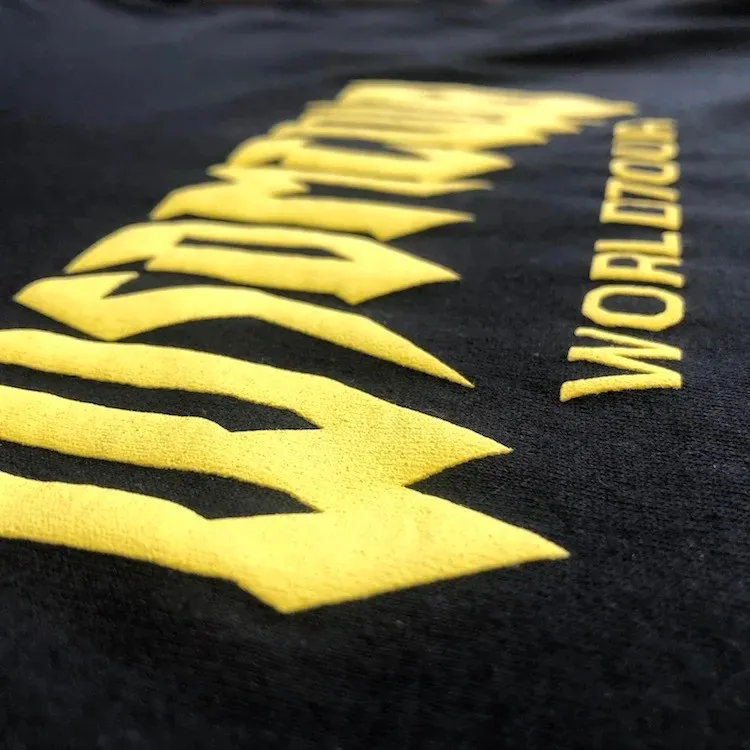
- Puff and High-Density Printing
- DTG Printing
- DTF and Heat Transfer Printing
- Water-Based and Discharge Printing
- Silicone Printing
- Dye Sublimation
- Best Method by Product and Artwork
- How I Choose a Printing Method
- Print Sample Approval Checklist
- Common Printing Mistakes
- Frequently Asked Questions
- Final Recommendation
Streetwear Printing Methods at a Glance
| Printing Method | Best For | Main Advantage | Main Limitation |
|---|---|---|---|
| Screen printing | Bold graphics and bulk orders | Strong color and repeatability | Each color requires setup |
| Puff printing | Raised logos and lettering | Noticeable 3D texture | Limited fine-detail control |
| High-density print | Sharp raised graphics | Clean and structured height | Requires careful artwork |
| DTG | Detailed full-color designs | Handles gradients and many colors | Sensitive to fabric and pretreatment |
| DTF transfer | Small colorful runs | Works on many fabrics | Can feel like a surface layer |
| Water-based print | Premium soft-hand graphics | Ink can feel lighter on fabric | Requires strong process control |
| Discharge print | Vintage dark cotton garments | Soft faded effect | Fabric dyes must be compatible |
| Silicone print | Technical and flexible logos | Raised, elastic surface | Usually more expensive |
| Sublimation | Polyester and all-over prints | No heavy surface layer | Not suitable for standard cotton |
My Fast Recommendation
Choose:
- Screen printing for a core graphic T-shirt collection
- Puff printing for bold streetwear typography
- DTG for detailed art drops
- DTF for low-volume designs on varied fabrics
- Water-based printing for a soft premium finish
- Discharge printing for vintage dark cotton tees
- Silicone printing for technical streetwear
- Sublimation for polyester jerseys and all-over artwork
Why There Is No Single Best Method
Printing quality does not depend on the printing method alone.
The final result is also affected by:
- Fabric composition
- Fabric surface
- Garment color
- Artwork complexity
- Print dimensions
- Number of colors
- Order quantity
- Wash treatment
- Ink compatibility
- Curing conditions
A printing technique that performs well on a smooth cotton T-shirt may produce a different result on fleece, nylon, polyester, or garment-washed fabric.
My main production rule is:
The best printing method is the one that reproduces the artwork consistently on the actual production fabric, at the required quantity, after washing.
This is why I recommend approving a physical print strike-off instead of choosing only from a digital mockup.
Screen Printing
Screen printing pushes ink through a prepared mesh screen onto the garment. Each artwork color normally uses a separate screen.
It remains one of the most practical methods for streetwear because it can create:
- Bold solid graphics
- Large front and back prints
- Small brand logos
- Multicolor illustrations
- Vintage effects
- Specialty textures
- Repeatable bulk production
Best Uses
Screen printing is suitable for:
- Graphic T-shirts
- Hoodies
- Sweatshirts
- Sweatpants
- Jackets
- Cotton tote bags
- Medium and large orders
Main Advantages
It provides:
- Strong color coverage
- Accurate spot colors
- Good repeat consistency
- Multiple ink options
- Efficient larger-volume production
- Flexible graphic sizes
Main Limitations
Costs and production difficulty normally increase with:
- More artwork colors
- More print placements
- Complex color registration
- Smaller order quantities
- Specialty inks
I normally select screen printing when a brand has a stable design that will be produced in medium or large quantities.
Explore available techniques through FuKi Apparel Custom Printing Services.
Puff and High-Density Printing
Puff and high-density printing both create raised graphics, but they do not produce exactly the same surface.
Puff Printing
Puff ink expands during heat curing.
It creates a rounded, soft, raised effect that works well for:
- College-style lettering
- Large logos
- Short slogans
- Brand initials
- Simple symbols
Puff print is not ideal for tiny text, thin lines, or narrow spaces because the expanding ink can reduce clarity.
High-Density Printing
High-density printing builds controlled layers of ink to create a sharper raised surface.
Compared with puff print, it normally creates:
- Flatter top surfaces
- Cleaner edges
- More controlled height
- A rubberized technical appearance
Choose high-density printing for modern logos, geometric artwork, and precise raised details.
Choose puff printing when you want a softer and more inflated appearance.
For heavyweight garment bases, review FuKi Apparel Custom Hoodies.
DTG Printing
DTG means direct-to-garment printing.
A digital printer applies textile ink directly to the finished garment. This allows DTG to reproduce detailed artwork without preparing a separate physical screen for every color.
Best Uses
DTG is suitable for:
- Photographic graphics
- Detailed illustrations
- Gradients
- Many artwork colors
- Artist collaborations
- Samples and small runs
- Designs that change frequently
Main Advantages
DTG provides:
- Strong fine-detail control
- Flexible color counts
- Low physical setup requirements
- Practical short-run production
- Smooth color transitions
Main Limitations
The result depends heavily on:
- Fabric composition
- Surface smoothness
- Garment pretreatment
- White-ink coverage
- Printer settings
- Proper curing
Dark garments usually need pretreatment and a white ink underbase. Brother explains how pretreatment helps white ink remain on the garment surface in its Official DTG Pretreatment Guide.
I usually recommend DTG for complex artwork that would require too many screens or color separations.
FuKi Apparel offers custom printed garments through its Custom T-Shirt Manufacturing Service.
DTF and Heat Transfer Printing
DTF means direct-to-film printing.
The artwork is first printed onto a special film. Adhesive powder is applied, and the design is then transferred to the garment using heat and pressure.
DTF works on many suitable materials, including:
- Cotton
- Polyester
- Blended fabrics
- Fleece
- Some nylon fabrics
When DTF Is Useful
Choose DTF for:
- Smaller orders
- Full-color logos
- Several artwork variations
- Small detailed graphics
- Mixed garment materials
- Fast design testing
Main Advantages
DTF offers:
- Strong color opacity
- Flexible fabric compatibility
- No separate screen for each color
- Practical short-run production
- Easy storage of prepared transfers
Main Limitations
A large DTF graphic may:
- Feel heavier on the fabric
- Reduce breathability
- Create a noticeable surface layer
- Affect the natural drape of lightweight garments
I prefer DTF for smaller logos and controlled print areas. For large premium streetwear graphics, I normally compare DTG or screen printing before selecting DTF.
Water-Based and Discharge Printing
Water-based and discharge printing are often selected when a brand wants a softer or more vintage result.
Water-Based Printing
Water-based ink can penetrate the fabric more than a thick surface ink, depending on the ink system and garment.
It works well for:
- Premium cotton T-shirts
- Soft graphic prints
- Large designs that should remain breathable
- Vintage-inspired collections
- Minimal designs
Its main advantages are a softer hand feel and less heavy surface coverage.
However, water-based ink requires proper screen preparation, production control, and curing. It can begin drying in the screen if the workflow is not managed correctly.
The MagnaColours Water-Based Ink Resource provides technical information about water-based screen-printing systems.
Discharge Printing
Discharge printing uses a chemical process to remove or alter the garment’s original dye in the printed area. Color pigment may then be added to create the final graphic.
It can create:
- Soft prints on dark garments
- Faded graphics
- Vintage surfaces
- A print with less noticeable ink buildup
Discharge printing does not work consistently on every fabric or dye.
It normally requires:
- Suitable cotton fabric
- Compatible reactive dyes
- Physical testing
- Controlled curing
- Careful color approval
I never recommend approving discharge results from a digital color reference. The final shade can change according to the garment dye and fabric.
Silicone Printing
Silicone printing creates a flexible, slightly rubberized surface.
It can be flat or raised and is commonly used for:
- Technical streetwear
- Performance-inspired garments
- Small sleeve logos
- Chest branding
- Flexible labels
- Raised minimalist artwork
Main Advantages
Silicone printing can provide:
- Good stretch
- A smooth surface
- Strong raised texture
- Modern visual appearance
- Flexibility on suitable garments
Main Limitations
It may require:
- Specialized materials
- Additional testing
- More controlled curing
- Higher production costs
- Stable fabric surfaces
Silicone is useful when a brand wants a clean technical effect rather than the traditional appearance of screen print or embroidery.
FuKi Apparel currently supports silicone, screen, puff, and digital decoration options through its Custom Streetwear Printing Service.
Dye Sublimation
Dye sublimation transfers artwork into polyester fibers using heat.
Instead of creating a heavy layer on top of the fabric, the color becomes part of the polyester material.
Sublimation is suitable for:
- Polyester jerseys
- Technical T-shirts
- Lightweight shorts
- Tracksuits
- All-over printed garments
- Complex repeating patterns
Main Advantages
It allows:
- Full-color artwork
- Gradients
- All-over coverage
- Lightweight print results
- Good flexibility
- No thick ink surface
Main Limitations
Sublimation generally performs best on:
- White or light-colored materials
- Polyester fabrics
- Products designed around the print process
It is not the correct choice for a standard heavyweight cotton streetwear T-shirt.
I recommend sublimation for sports-streetwear crossovers and polyester-based collections rather than cotton graphic basics.
Best Method by Product and Artwork
| Product or Design | Recommended Method |
|---|---|
| Bold graphic T-shirt | Screen printing |
| Full-color art T-shirt | DTG |
| Vintage washed T-shirt | Water-based or tested discharge print |
| Raised logo hoodie | Puff or high-density print |
| Detailed graphic hoodie | Screen print or DTG |
| Small colorful logo | DTF transfer |
| Technical nylon jacket | Compatible silicone or transfer |
| Polyester jersey | Sublimation |
| All-over polyester design | Sublimation |
| Large repeat order | Screen printing |
| Small multi-design collection | DTG or DTF |
| Minimal raised branding | Silicone or high-density print |
For vintage products, explore FuKi Apparel Washed T-Shirt Manufacturing.
For printed hoodies, review Graphic Hoodie Manufacturing.
How I Choose a Printing Method
I use five questions before recommending a technique.
1. What Does the Artwork Look Like?
Choose:
- Screen print for solid colors
- DTG for photos and gradients
- Puff for bold raised letters
- DTF for small full-color graphics
- Sublimation for all-over designs
2. What Fabric Is Being Used?
| Fabric | Practical Starting Options |
|---|---|
| Cotton jersey | Screen print, DTG, water-based, puff |
| French terry | Screen print, puff, silicone |
| Brushed fleece | Screen print, puff, embroidery |
| Cotton-polyester blend | Screen print, DTF, tested DTG |
| Polyester | Sublimation, DTF, compatible screen ink |
| Nylon | Specialized screen ink, silicone, or transfer |
3. How Many Pieces Are Required?
For small runs with many colors, DTG or DTF may be more practical.
For larger quantities using a stable design, screen printing normally provides better production efficiency.
4. What Should the Print Feel Like?
Choose:
- Water-based ink for softness
- DTG for a relatively smooth digital print
- Puff for rounded height
- High density for controlled height
- Silicone for flexible rubberized texture
- Sublimation for no heavy surface layer
5. Will the Product Be Washed or Dyed?
Garment washing can affect color, adhesion, print height, and cracking.
Confirm whether printing should happen before or after:
- Pigment dyeing
- Enzyme washing
- Acid washing
- Distressing
- Softening
The full production sequence should be tested before bulk manufacturing.
Print Sample Approval Checklist
Never approve printing only from a computer mockup.
| Inspection Area | What to Check |
|---|---|
| Artwork size | Matches the approved dimensions |
| Placement | Correct distance from seams |
| Color | Matches the agreed reference |
| Detail | Fine lines and text remain clear |
| Coverage | Fabric does not show unexpectedly |
| Surface | Correct softness, gloss, or height |
| Fabric condition | No scorching or distortion |
| Stretch | Print performs under normal movement |
| Wash result | No serious cracking, peeling, or fading |
| Bulk repeatability | Process can be reproduced consistently |
I recommend keeping:
- The approved physical strike-off
- Final artwork files
- Color references
- Placement measurements
- Ink and technique records
- Wash-test results
These records make repeat orders easier to control.
Common Printing Mistakes
Choosing a Method Before Reviewing the Artwork
The artwork should guide the technique, not the other way around.
Using Puff Print for Tiny Details
Raised ink can close narrow spaces and reduce readability.
Using DTG on an Unsuitable Surface
Hairy, unstable, or poorly pretreated fabric can reduce print clarity.
Applying a Large Transfer to Lightweight Fabric
A large transfer may make the garment feel stiff and reduce breathability.
Ignoring Dye Migration
Polyester dyes may move into the printed area under heat. Avient recommends pretesting polyester garments and dye lots before production in its Polyester Printing Best Practices.
Skipping the Wash Test
A print can look correct when new and fail after laundering.
Approving a Different Fabric
The test print should use the same fabric, garment color, wash treatment, and production sequence planned for bulk.
Choosing Only by Price
The cheapest method may not provide the required hand feel, artwork clarity, durability, or brand positioning.
Frequently Asked Questions
What is the best printing method for streetwear?
Screen printing is the best all-around option for many streetwear collections because it supports bold graphics, specialty effects, and repeat production.
What is best for detailed streetwear artwork?
DTG is normally best for photographs, gradients, and highly detailed full-color illustrations.
What is best for heavyweight hoodies?
Screen printing, puff printing, high-density printing, silicone printing, and embroidery can all work well on stable heavyweight hoodie fabrics.
Is DTF good for streetwear?
DTF is useful for small full-color runs and mixed fabric types. Large transfers may feel heavier than DTG or water-based screen printing.
Which printing method feels the softest?
Water-based, discharge, and sublimation methods can produce very soft results. The actual hand feel still depends on the fabric, ink, and production process.
Which method is best for raised logos?
Choose puff print for a rounded raised effect, high-density print for sharper height, or silicone for a flexible rubberized surface.
Which printing method lasts the longest?
Several methods can be durable when correctly developed and cured. Fabric compatibility, curing, washing, and print testing are more important than the method name alone.
Should printing be tested before bulk production?
Yes. Approve a physical strike-off on the actual production fabric and complete a wash test before bulk printing.
Final Recommendation
For most streetwear brands, I recommend:
- Screen printing for core graphic products
- DTG for detailed full-color designs
- Puff printing for bold raised lettering
- High-density printing for sharp raised logos
- DTF for flexible small-run production
- Water-based printing for a softer hand feel
- Discharge printing for tested vintage cotton products
- Silicone printing for modern technical branding
- Sublimation for polyester and all-over graphics
My final rule is:
Choose the printing method after confirming the artwork, fabric, quantity, desired texture, wash process, and target price.
Do not choose a method simply because it is popular. A clean, well-tested standard print is more valuable than a complicated effect that does not suit the garment.
FuKi Apparel supports streetwear brands with screen printing, puff printing, DTG, silicone printing, embroidery, garment washing, private labels, packaging, and bulk manufacturing.
Visit FuKi Apparel or contact our streetwear production team to discuss the best printing method for your collection.
