
The best fabrics for streetwear brands are cotton jersey, French terry, brushed fleece, interlock, cotton twill, canvas, denim, nylon, and ripstop.
However, the right fabric depends on what your brand is trying to sell.
From my experience developing custom streetwear collections, I recommend choosing fabrics according to four factors:
- The product silhouette
- The customer’s climate
- The brand’s price level
- The required printing, washing, or embroidery
For most new streetwear brands, a practical starting collection uses:
- 220–260 GSM cotton jersey for T-shirts
- 350–420 GSM French terry for hoodies and sweatpants
- Cotton twill for cargo pants and structured jackets
- Nylon or ripstop for technical products
Quick answer: Cotton jersey and French terry are the safest core fabrics for most streetwear brands. Denim, canvas, nylon, ripstop, and specialty knits should be added when they support a clear product or brand direction.
Table of Contents
- Streetwear Fabric Recommendations at a Glance
- Start With Your Brand Positioning
- Best Fabric for Streetwear T-Shirts
- Best Fabric for Hoodies and Sweatpants
- Best Fabric for Cargo Pants and Workwear
- Best Fabric for Technical Streetwear
- Best Fabric for Premium Minimal Streetwear
- Build a Fabric System for Your Collection
- Choose Fabric by Climate and Selling Season
- Match Fabric With Decoration and Washing
- How to Evaluate Fabric Samples
- Common Fabric Selection Mistakes
- Frequently Asked Questions
- Final Recommendation
Streetwear Fabric Recommendations at a Glance
| Fabric | Best Products | Main Brand Value | Main Risk |
|---|---|---|---|
| Cotton jersey | T-shirts and long sleeves | Comfortable and easy to decorate | Shrinkage and twisting |
| French terry | Hoodies and sweatpants | Structured but versatile | May feel too warm at high GSM |
| Brushed fleece | Winter hoodies and sets | Warm and substantial | Pilling and lint |
| Interlock | Premium tees and matching sets | Smooth and stable | Higher material cost |
| Cotton twill | Cargo pants and jackets | Durable and structured | Can feel stiff |
| Canvas | Workwear jackets and pants | Rugged brand character | Heavy and less flexible |
| Denim | Jeans, jackets, and shorts | Strong wash potential | Higher development complexity |
| Nylon | Jackets, pants, and shorts | Lightweight technical look | Requires suitable decoration |
| Ripstop | Cargo pants and outerwear | Functional texture and durability | May look too utilitarian |
| Knitted fabric | Sweaters and cardigans | Adds texture and variety | Pilling and measurement control |
My Fast Recommendation
Choose:
- Cotton jersey for graphic-focused brands
- French terry for year-round streetwear collections
- Brushed fleece for winter products
- Twill or canvas for workwear-inspired brands
- Denim for wash-led collections
- Nylon or ripstop for technical streetwear
- Interlock for clean premium basics
- Knitted fabrics for brands needing texture and seasonal variety
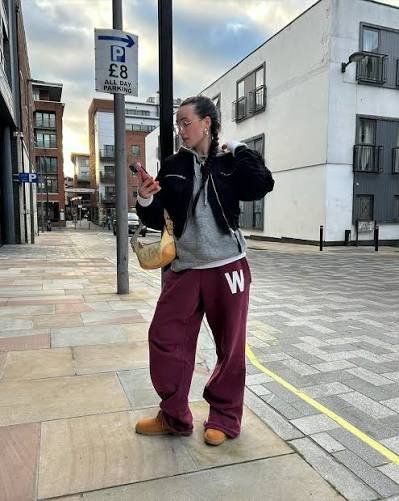
Start With Your Brand Positioning
Do not choose fabric only because another streetwear brand uses it.
The fabric should support your own brand identity.
Vintage Streetwear
A vintage streetwear brand may benefit from:
- Open-end cotton jersey
- Heavy cotton jersey
- Pigment-dyed French terry
- Denim
- Cotton twill
- Canvas
These fabrics can support fading, distressing, enzyme washing, and other aged effects.
Minimal Premium Streetwear
A minimal brand normally needs fabrics with:
- A clean surface
- Stable structure
- Controlled shrinkage
- Good color consistency
- A refined hand feel
Suitable options include:
- Combed cotton jersey
- Interlock
- Dense French terry
- Double-knit fabric
- Fine-gauge knitted fabric
Skate-Inspired Streetwear
Skate-related clothing should balance comfort and durability.
Useful fabrics include:
- Midweight cotton jersey
- French terry
- Cotton twill
- Canvas
- Denim
- Durable ripstop
Technical Streetwear
Technical collections often use:
- Matte nylon
- Crinkle nylon
- Taslan
- Ripstop
- Coated polyester
- Stretch woven fabric
- Mesh
These materials work well with functional pockets, adjustable details, lightweight construction, and weather-resistant finishes.
Brand Positioning Table
| Brand Direction | Recommended Fabric Group |
|---|---|
| Vintage and distressed | Open-end cotton, denim, twill |
| Minimal and premium | Combed cotton, interlock, double knit |
| Skate and graphic | Cotton jersey, French terry, canvas |
| Technical and utility | Nylon, ripstop, stretch woven |
| Workwear-inspired | Twill, canvas, denim |
| Luxury casual streetwear | Dense jersey, premium knits, refined woven fabrics |
Best Fabric for Streetwear T-Shirts
Cotton jersey remains the most practical fabric for streetwear T-shirts.
It is comfortable, printable, widely available, and suitable for many fits and wash treatments.
Recommended T-Shirt Weights
| T-Shirt Direction | Recommended GSM |
|---|---|
| Lightweight summer tee | 160–190 GSM |
| Everyday graphic tee | 190–220 GSM |
| Premium streetwear tee | 220–260 GSM |
| Heavyweight boxy tee | 260–300 GSM |
For most streetwear brands, I recommend 220–260 GSM cotton jersey.
This range usually provides:
- Good opacity
- Enough structure for oversized fits
- A substantial hand feel
- Strong support for printing
- Better premium positioning
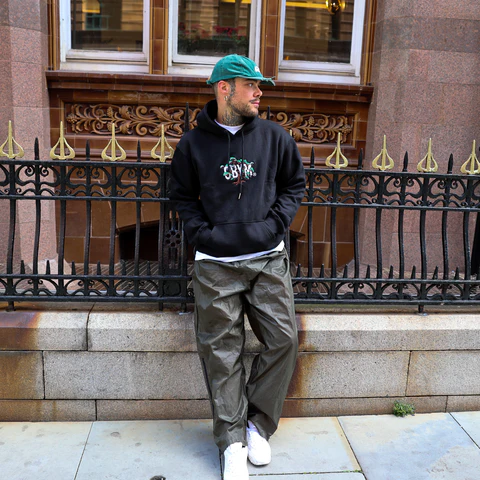
Combed Cotton vs Open-End Cotton
Choose combed cotton when you want:
- A smoother surface
- Cleaner print details
- Softer hand feel
- More refined basics
Choose open-end cotton when you want:
- A dry hand feel
- A rougher vintage texture
- A heavier old-school appearance
- Stronger washed character
Brands developing original proportions can explore Custom Oversized T-Shirt Manufacturing.
Best Fabric for Hoodies and Sweatpants
French terry and brushed fleece are the main fabric choices for streetwear hoodies.
French Terry
French terry has a smooth outer face and loops on the inside.
It is suitable for:
- Year-round hoodies
- Sweatshirts
- Sweatpants
- Matching sets
- Garment-washed products
A practical weight is 350–420 GSM.
Choose French terry when you need structure without extreme warmth.
Brushed Fleece
Brushed fleece has a soft raised surface inside.
It works best for:
- Winter hoodies
- Heavyweight sweatpants
- Cold-weather collections
- Premium matching sets
A common range is 400–500 GSM.
Choose fleece when warmth and softness are more important than year-round versatility.
Cotton-Polyester Blends
Cotton-rich blends may provide:
- Better shape recovery
- Lower shrinkage
- Faster drying
- More consistent repeat production
Choose 100% cotton for natural hand feel and garment washing. Choose a cotton-rich blend when commercial stability is more important.
Review custom material and fit options through FuKi Apparel Custom Hoodie Manufacturing.
Best Fabric for Cargo Pants and Workwear
Streetwear pants need enough structure to support pockets, hardware, and wide-leg silhouettes.
Cotton Twill
Cotton twill works well for:
- Cargo pants
- Chore jackets
- Overshirts
- Utility shorts
- Structured trousers
It is durable, familiar, and easier to wear than very heavy canvas.
Canvas
Canvas provides a rugged and substantial appearance.
Choose it for:
- Carpenter pants
- Workwear jackets
- Utility vests
- Heavy overshirts
Garment washing can help soften canvas when the original material feels too rigid.
Denim
Denim is suitable for:
- Baggy jeans
- Denim jackets
- Shorts
- Vests
- Panelled streetwear
Denim gives brands more opportunities to create identity through:
- Stone washing
- Fading
- Whiskering
- Distressing
- Acid washing
- Pigment effects
Denim usually requires more sampling because fabric weight, shrinkage, construction, and washing must be developed together.
Best Fabric for Technical Streetwear
Technical streetwear requires lighter and more functional materials.
Nylon
Nylon works well for:
- Windbreakers
- Track pants
- Cargo shorts
- Lightweight jackets
- Packable products
Common options include:
- Matte nylon
- Crinkle nylon
- Taslan nylon
- Coated nylon
- Stretch nylon
Ripstop
Ripstop has a visible reinforced grid.
It is suitable for:
- Technical cargo pants
- Utility jackets
- Outdoor-inspired shorts
- Functional vests
Choose ripstop when durability and visible technical texture support the brand concept.
Important Technical Fabric Questions
Before ordering, confirm:
- Water resistance
- Breathability
- Coating durability
- Tear strength
- Colorfastness
- Fabric noise
- Print compatibility
- Seam construction
A lightweight technical fabric can still be expensive when it includes coatings, stretch, lamination, or other performance finishes.
Best Fabric for Premium Minimal Streetwear
Premium minimal streetwear depends heavily on fit and fabric because there may be little decoration.
Useful options include:
Interlock
Interlock is smoother and more stable than standard jersey.
It works well for:
- Clean T-shirts
- Premium basics
- Matching sets
- Small-logo products
Double-Knit Fabric
Double-knit fabrics can create:
- Strong shape retention
- Clean edges
- Smooth surfaces
- Structured modern silhouettes
Premium Knitted Fabrics
Cotton or blended yarns can be used for:
- Sweaters
- Cardigans
- Knitted polos
- Textured pullovers
When using knitwear, check:
- Yarn composition
- Gauge
- Pilling
- Recovery
- Finished measurements
- Wash performance
The CottonWorks resource library provides useful background on cotton fibers, yarns, knitting, and textile performance.
Build a Fabric System for Your Collection
One of the most effective strategies for a streetwear brand is to create a small fabric library instead of sourcing a different material for every product.
Example Fabric System
| Fabric | Products |
|---|---|
| 240 GSM cotton jersey | T-shirts and long sleeves |
| 400 GSM French terry | Hoodies, sweatshirts, sweatpants |
| Midweight cotton twill | Cargo pants, shorts, overshirts |
| Lightweight nylon | Jackets and technical shorts |
This approach can help:
- Reduce material minimums
- Improve color consistency
- Simplify sampling
- Make reorders easier
- Create a more consistent brand hand feel
- Reduce leftover fabric
Core, Seasonal, and Statement Fabrics
I recommend dividing your materials into three groups.
Core Fabrics
Use these for products that remain in the collection.
They should be:
- Easy to reorder
- Commercially practical
- Consistent in quality
- Suitable for several colors
Seasonal Fabrics
Use these for summer or winter products.
Examples include lightweight jersey, fleece, lined nylon, and knitted yarns.
Statement Fabrics
Use these selectively.
Examples include custom jacquard, coated fabric, heavy canvas, specialty denim, or unusual textures.
A streetwear brand does not need many fabrics. It needs a small number of materials that customers can recognize and the production team can repeat.
Choose Fabric by Climate and Selling Season
| Selling Condition | Recommended Fabric Direction |
|---|---|
| Hot and humid market | Lightweight jersey, nylon, mesh |
| Warm year-round market | Midweight jersey, light French terry |
| Mixed seasons | Midweight core fabrics |
| Cool climate | Heavy jersey, French terry, twill |
| Cold winter | Brushed fleece, denim, lined outerwear |
| Global market | Balanced midweight products |
Do not choose a 500 GSM hoodie only because heavyweight streetwear is popular. Customers may admire the product online but avoid wearing it if the climate is too warm.
For brands selling internationally, midweight core products are normally easier to position.
Match Fabric With Decoration and Washing
The decoration method should be considered before fabric approval.
For Screen Printing
Choose fabric with:
- A smooth surface
- Stable construction
- Low hairiness
- Suitable opacity
For Puff Printing
Use stable medium-to-heavy fabric that can support the raised print.
For DTG
Smooth cotton-rich fabric usually provides the strongest starting point.
For Embroidery
Dense jersey, interlock, French terry, fleece, denim, and twill generally provide more support than thin lightweight fabric.
For Garment Washing
Confirm how the wash affects:
- Color
- Measurements
- Strength
- Hand feel
- Print quality
- Rib and trim matching
Explore screen printing, puff printing, embroidery, and digital methods through FuKi Apparel Custom Printing Services.
How to Evaluate Fabric Samples
Never approve fabric from a photo or GSM number alone.
Fabric Scorecard
| Category | Suggested Weight |
|---|---|
| Suitable for intended product | 25% |
| Hand feel and appearance | 20% |
| Fit and drape | 15% |
| Wash performance | 15% |
| Decoration compatibility | 10% |
| MOQ and availability | 5% |
| Price | 5% |
| Reorder consistency | 5% |
| Total | 100% |
Check the Physical Swatch
Review:
- Weight
- Thickness
- Density
- Surface
- Stretch
- Recovery
- Opacity
- Color
- Drape
Test the Finished Garment
A fabric that feels good as a swatch may fail when turned into a complete product.
Check:
- Fit
- Seam behavior
- Collar or rib recovery
- Printing
- Embroidery
- Shrinkage
- Twisting
- Pilling
- Comfort
Broader material sourcing considerations can be reviewed through the Textile Exchange Materials Matrix.
For certified organic textile requirements, brands can review the Global Organic Textile Standard.
Common Fabric Selection Mistakes
Choosing Only by GSM
GSM measures weight, not complete quality.
Believing Heavier Means More Premium
Heavy fabric may also be too hot, stiff, expensive, or difficult to ship.
Using Different Fabrics for Every Style
This increases minimums, development work, and leftover materials.
Ignoring the Target Market
The best fabric for winter streetwear may be unsuitable for a warm-weather customer.
Approving From a Small Swatch Only
Always test the material in the finished garment.
Forgetting Reorder Availability
A fabric may be available for the sample but unavailable for the next production order.
Changing Fabric After Fit Approval
A new fabric can change the drape, stretch, measurements, and entire silhouette.
Skipping Quality Tests
Check shrinkage, color performance, pilling, recovery, and decoration durability according to the product risk.
FuKi Apparel supports production-stage checking through its Streetwear Quality Control Service.
Frequently Asked Questions
What is the best fabric for a streetwear brand?
Cotton jersey and French terry are the most practical core fabrics. They work well for T-shirts, hoodies, sweatpants, printing, washing, and private-label production.
What fabric is best for oversized T-shirts?
Choose 220–260 GSM cotton jersey for most premium oversized tees. Use a heavier fabric when a more structured boxy silhouette is required.
What fabric is best for heavyweight hoodies?
Dense French terry or brushed fleece between approximately 380 and 500 GSM is a practical direction.
Is 100% cotton always best?
No. Cotton provides a natural hand feel, while cotton-polyester blends may offer better recovery, lower shrinkage, and more consistent production.
What fabric is best for cargo pants?
Cotton twill is suitable for classic cargo pants. Ripstop and nylon are better for technical or lightweight styles.
Should a new brand develop custom fabric?
Most new brands should begin with a suitable available fabric. Custom fabric becomes more practical after the product has proven demand.
How many fabrics should a small streetwear collection use?
Two to four main fabrics are normally enough for a focused first collection. Reusing fabrics across products can reduce minimums and improve consistency.
How should I approve streetwear fabric?
Approve a physical swatch, a finished garment sample, wash-test results, decoration performance, bulk availability, and the final production lot before cutting.
Final Recommendation
For most streetwear brands, I recommend building the collection around:
- 220–260 GSM cotton jersey for premium T-shirts
- 350–420 GSM French terry for hoodies and sweatpants
- Cotton twill for cargo pants and workwear
- Nylon or ripstop for technical products
- Denim for wash-led statement pieces
- Interlock or double knit for premium minimal styles
My main recommendation is:
Do not choose the most impressive fabric swatch. Choose the fabric your customers will value, your design can use effectively, and your supply chain can reproduce consistently.
FuKi Apparel supports streetwear brands with stock and custom fabric sourcing, pattern development, sampling, printing, embroidery, garment washing, private labels, quality control, packaging, and bulk production.
Explore FuKi Apparel Custom Fabric Services or visit FuKi Apparel to discuss the best material strategy for your collection.
