
The best fabrics for oversized streetwear are heavyweight cotton jersey for T-shirts, French terry for year-round hoodies, brushed fleece for winter pieces, and cotton twill or nylon for pants and jackets.
From my experience developing oversized streetwear, I usually recommend:
- 220–280 GSM cotton jersey for oversized T-shirts
- 350–450 GSM French terry for hoodies and sweatpants
- 400–500 GSM brushed fleece for warm winter collections
- Cotton twill, ripstop, or nylon for cargo pants and jackets
For a new brand, 240 GSM cotton jersey is a reliable starting point for T-shirts, while 400 GSM French terry works well for premium oversized hoodies.
Quick answer: The best oversized streetwear fabric is not simply the heaviest one. It should provide enough structure to hold the intended silhouette while remaining comfortable, printable, washable, and suitable for the target climate.
Table of Contents
- Best Fabrics at a Glance
- What Makes a Fabric Good for Oversized Streetwear?
- Best Fabric for Oversized T-Shirts
- Best Fabric for Oversized Hoodies
- Best Fabrics for Pants and Jackets
- How to Choose the Right Fabric
- Common Fabric Selection Mistakes
- Useful Fabric Resources
- Frequently Asked Questions
- Final Recommendation
Best Fabrics at a Glance
| Product | Recommended Fabric | Suggested Weight |
|---|---|---|
| Summer oversized T-shirt | Cotton single jersey | 180–220 GSM |
| Premium oversized T-shirt | Heavyweight cotton jersey | 220–280 GSM |
| Structured boxy T-shirt | Dense jersey or interlock | 260–300 GSM |
| Year-round hoodie | French terry | 350–450 GSM |
| Winter hoodie | Brushed fleece | 400–500 GSM |
| Oversized sweatpants | French terry or fleece | 350–450 GSM |
| Cargo pants | Cotton twill or ripstop | 220–350 GSM |
| Lightweight jacket | Nylon or polyester | 100–220 GSM |
| Workwear jacket | Cotton twill or canvas | 250–450 GSM |
My Fast Recommendation
Choose:
- Cotton jersey for oversized graphic T-shirts
- French terry for versatile hoodies and matching sets
- Brushed fleece for warm heavyweight collections
- Interlock for smooth, minimal premium styles
- Twill or canvas for workwear-inspired products
- Nylon or ripstop for technical streetwear
What Makes a Fabric Good for Oversized Streetwear?
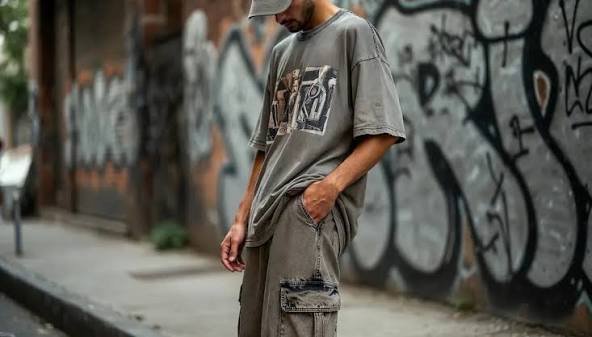
Oversized clothing is not made by simply increasing every measurement. The fabric must work with the wider body, dropped shoulders, larger sleeves, and intended drape.
I normally evaluate four factors.
Structure
Structured fabric holds the garment away from the body and creates a clean boxy shape.
Light or very soft fabric creates more movement but may collapse against the wearer.
Drape
Drape describes how the fabric falls.
Choose a softer drape for relaxed, flowing streetwear. Choose a firmer drape for cropped, wide, or workwear-inspired silhouettes.
Surface
A smooth surface is better for detailed printing. A dry or textured surface works well for vintage and washed styles.
Wash Stability
The fabric should maintain its measurements and shape after washing. Check for:
- Shrinkage
- Twisting
- Pilling
- Color change
- Collar deformation
- Loss of structure
GSM is useful, but it does not tell you everything about the fabric. Fiber quality, yarn, knitting density, and finishing also affect the final result.
Best Fabric for Oversized T-Shirts
Heavyweight Cotton Jersey
Heavyweight cotton jersey is the most practical option for oversized streetwear T-shirts.
It is suitable for:
- Drop-shoulder fits
- Boxy bodies
- Large screen prints
- Puff printing
- Garment washing
- Vintage effects
A useful starting range is 220–280 GSM.
| Desired Result | Recommended GSM |
|---|---|
| Lightweight summer fit | 180–220 GSM |
| Balanced premium fit | 220–250 GSM |
| Heavyweight boxy fit | 250–280 GSM |
| Extra-structured statement tee | 280–300 GSM |
For most projects, I recommend 240 GSM. It provides enough structure for an oversized fit without making the garment excessively stiff or hot.
Brands developing custom proportions can explore our Oversized T-Shirt Manufacturer service.
Combed Cotton or Open-End Cotton?
Choose combed cotton when you want:
- A smoother surface
- A softer hand feel
- Cleaner printing
- A refined premium appearance
Choose open-end cotton when you want:
- A drier hand feel
- A more rugged texture
- A vintage appearance
- A heavier old-school streetwear feel
Neither is automatically better. The correct choice depends on the brand style.
Interlock
Interlock is smoother and more stable than regular single jersey.
It works well for:
- Minimal oversized T-shirts
- Clean monochrome collections
- Structured matching sets
- Small embroidery
- Premium basics
I recommend interlock when the fabric and silhouette are more important than distressed or vintage texture.

Best Fabric for Oversized Hoodies
French Terry
French terry has a smooth outer surface and small loops on the inside.
It is one of the best choices for oversized hoodies because it provides structure without being as warm as brushed fleece.
Choose French terry for:
- Year-round collections
- Oversized hoodies
- Sweatshirts
- Sweatpants
- Shorts
- Matching sets
A practical range is 350–450 GSM.
For most brands, 400 GSM French terry offers a strong balance of structure, comfort, and premium hand feel.
Brushed Fleece
Brushed fleece has a soft, warm inner surface.
It is better for:
- Fall and winter drops
- Heavyweight hoodies
- Warm sweatpants
- Cold-weather markets
- Premium lounge sets
Its main disadvantages are greater warmth, higher shipping weight, and a higher risk of pilling if the fabric quality is poorly controlled.
Cotton-Polyester Blends
Cotton-rich blends such as 80% cotton and 20% polyester are common for hoodies.
They can provide:
- Better shape retention
- Reduced shrinkage
- Faster drying
- Greater durability
- More stable bulk production
For a natural premium feel, I normally prefer a cotton-rich blend rather than fabric with a very high polyester percentage.
You can compare fabric options through FuKi Apparel Custom Fabric Services.
Best Fabrics for Pants and Jackets
Cotton Twill
Cotton twill is a strong choice for:
- Cargo pants
- Utility trousers
- Overshirts
- Workwear jackets
- Structured shorts
It supports pockets and hardware better than lightweight jersey.
Canvas
Canvas is heavier and more rugged than standard twill.
Use it for:
- Heavy workwear jackets
- Utility vests
- Durable cargo pants
- Structured streetwear pieces
Garment washing can be used to soften canvas and create a worn-in appearance.
Nylon and Ripstop
Nylon and ripstop work well for technical streetwear.
Common applications include:
- Windbreakers
- Track pants
- Lightweight cargo pants
- Utility jackets
- Water-resistant outerwear
Matte nylon creates a cleaner modern look, while crinkle or coated nylon provides a more technical appearance.
How to Choose the Right Fabric
Use this simple four-step system.
Step 1: Choose the Silhouette
Ask whether the garment should be:
- Soft and relaxed
- Wide and structured
- Cropped and boxy
- Heavy and rigid
- Lightweight and technical
Choose the silhouette before choosing the fabric.
Step 2: Consider the Climate
| Climate | Better Fabric Direction |
|---|---|
| Hot weather | Lightweight cotton jersey or nylon |
| Year-round | Heavyweight jersey or French terry |
| Cool weather | Heavy French terry |
| Cold weather | Brushed fleece or lined woven fabric |
Do not choose 500 GSM fleece for customers who mainly live in hot climates.
Step 3: Check the Decoration
For detailed screen printing, use a smooth and stable surface.
For puff print or dense embroidery, choose fabric with enough body to support the added weight.
Learn more about decoration options through Custom Streetwear Printing Services.
Step 4: Test the Finished Garment
Do not approve fabric only from a small untreated swatch.
The final sample should include the actual:
- Pattern
- Color
- Printing
- Embroidery
- Wash treatment
- Rib and trims
Vintage washing can change the color, softness, dimensions, and fabric structure. Brands interested in these effects can review our Washed T-Shirts Manufacturer page.
Common Fabric Selection Mistakes
Choosing Only by GSM
Two fabrics with the same GSM can have different density, softness, stretch, and drape.
Always compare physical samples.
Believing Heavier Means Better
A 300 GSM T-shirt is not automatically better than a 240 GSM T-shirt. It may be too stiff or hot for the intended customer.
Ignoring the Pattern
Fabric and pattern must be developed together. Heavy fabric cannot correct an unbalanced oversized fit.
Approving Unwashed Fabric
Garment washing may change the measurements, texture, and color. Approve the finished garment instead.
Forgetting the Collar and Rib
A heavyweight body fabric needs rib with suitable weight and recovery. A weak collar can make the entire garment look poorly made.
Copying Another Brand
Another brand’s fabric may not fit your climate, retail price, decoration, or target customer.
Use competitor garments as references, not automatic specifications.
Useful Fabric Resources
These external resources can help you understand fabric quality, testing, and material sourcing:
- CottonWorks Cotton Fiber Quality
- ASTM Textile Standards
- Textile Exchange Materials Matrix
- Global Organic Textile Standard
Certification and sustainability claims should always be confirmed for the specific material, supplier, and production order.
Frequently Asked Questions
What is the best fabric for oversized T-shirts?
A 220–280 GSM cotton jersey is the best general choice. Around 240 GSM provides a reliable balance of structure, comfort, and print compatibility.
What fabric is best for oversized hoodies?
French terry is best for year-round hoodies. Brushed fleece is better for warm fall and winter garments.
Is 100% cotton good for oversized streetwear?
Yes. It is breathable, comfortable, printable, and suitable for garment washing. Cotton-rich blends may offer better recovery and lower shrinkage for hoodies.
Is 300 GSM too heavy for a T-shirt?
Not necessarily, but it creates a firm and warm garment. It is better for statement pieces than general year-round collections.
What fabric is best for vintage streetwear?
Open-end cotton jersey, cotton twill, and canvas work well with pigment washing, enzyme washing, fading, and distressing.
Does heavier fabric mean higher quality?
No. Quality also depends on fiber, yarn, knitting density, finishing, stitching, shrinkage control, and construction.
Final Recommendation
For most oversized streetwear collections, I recommend:
- 240 GSM cotton jersey for T-shirts
- 400 GSM French terry for year-round hoodies
- 450 GSM brushed fleece for winter garments
- Cotton twill or ripstop for cargo pants
- Canvas or nylon for jackets
My main rule is simple:
Choose the silhouette first, then select the fabric that can hold that silhouette comfortably and consistently.
FuKi Apparel supports streetwear brands with fabric sourcing, custom patterns, printing, embroidery, washing, private labels, packaging, and bulk production.
Visit FuKi Apparel to discuss the best fabric for your oversized streetwear collection.