
The best fabrics for oversized hoodies are French terry, brushed fleece, cotton-rich fleece, and double-knit fabrics.
From my experience developing custom streetwear hoodies, I usually recommend:
- 350–420 GSM French terry for year-round oversized hoodies
- 400–500 GSM brushed fleece for warm winter hoodies
- Cotton-polyester fleece when better shape retention is important
- Double-knit fabric for smooth, structured, minimal styles
For most streetwear brands, 400 GSM French terry is the safest starting point. It provides enough structure for dropped shoulders and wide sleeves without becoming excessively warm or bulky.
Quick answer: Choose French terry for versatility, brushed fleece for warmth, cotton-rich blends for stability, and double-knit fabric for a clean structured look. The best fabric should support the oversized silhouette while remaining comfortable and stable after washing.
Table of Contents
- Best Hoodie Fabrics at a Glance
- What Makes a Fabric Suitable for an Oversized Hoodie?
- French Terry
- Brushed Fleece
- Cotton-Rich Blended Fleece
- Double-Knit Fabrics
- How to Choose the Right Fabric
- Best Fabric for Printing and Washing
- Common Fabric Selection Mistakes
- Useful Fabric Resources
- Frequently Asked Questions
- Final Recommendation
Best Hoodie Fabrics at a Glance
| Hoodie Fabric | Best For | Recommended Weight | Main Advantage |
|---|---|---|---|
| French terry | Year-round streetwear | 350–420 GSM | Structured but breathable |
| Brushed fleece | Fall and winter hoodies | 400–500 GSM | Warm and soft inside |
| Cotton-rich fleece | Commercial collections | 350–480 GSM | Better shape retention |
| Double-knit fabric | Minimal premium hoodies | 300–450 GSM | Smooth and structured |
| Lightweight French terry | Warm climates | 280–350 GSM | Comfortable and easier to layer |
My Fast Recommendation
Choose:
- French terry for the most versatile oversized hoodie
- Brushed fleece for warmth and a soft interior
- Cotton-polyester fleece for lower shrinkage and better recovery
- Double-knit fabric for a smooth, modern silhouette
- Lightweight terry for warm-weather markets
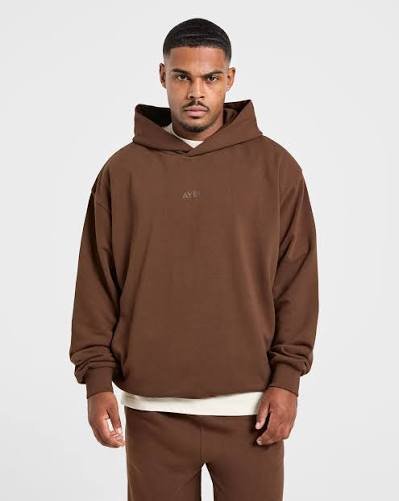
What Makes a Fabric Suitable for an Oversized Hoodie?
An oversized hoodie needs more than a heavy fabric. The material must work with the pattern, hood, rib, pockets, printing, and washing process.
I normally check four characteristics.
Structure
The fabric should support:
- Dropped shoulders
- Wide sleeves
- A larger hood
- A broad chest
- A boxy body
A fabric that is too soft may collapse against the body. A fabric that is too stiff may make the hoodie feel uncomfortable.
Drape
Drape describes how the fabric falls.
Choose softer fabric for a relaxed oversized shape. Choose denser fabric when you want the hoodie to hold a stronger boxy silhouette.
Recovery
Recovery is the ability of the fabric to return to its original shape after stretching.
Poor recovery may cause:
- Loose cuffs
- A stretched bottom hem
- Elbow growth
- A weak neckline
- Distorted pockets
Wash Stability
The finished hoodie should be tested for:
- Shrinkage
- Twisting
- Pilling
- Color change
- Rib deformation
- Print or embroidery damage
GSM is useful, but fabric weight alone cannot predict these results.
French Terry
French terry has a smooth outer surface and visible loops on the inside.
It is my preferred fabric for many oversized hoodie projects because it provides structure without the heavy warmth of brushed fleece.
Why Choose French Terry?
French terry is suitable for:
- Year-round hoodies
- Spring and fall collections
- Matching sweatpants
- Garment-washed products
- Oversized zip-up hoodies
- Warm but not extremely cold markets
A practical range is 350–420 GSM.
Use approximately:
- 280–350 GSM for lightweight hoodies
- 350–420 GSM for premium year-round hoodies
- 420–480 GSM for heavier statement pieces
The CottonWorks Guide to Single and Double Knits explains that French terry is an un-napped fleece commonly used for sweatshirts and other layering garments.
For custom fabric weights and silhouettes, explore our Custom Oversized Hoodie Manufacturer service.
Brushed Fleece
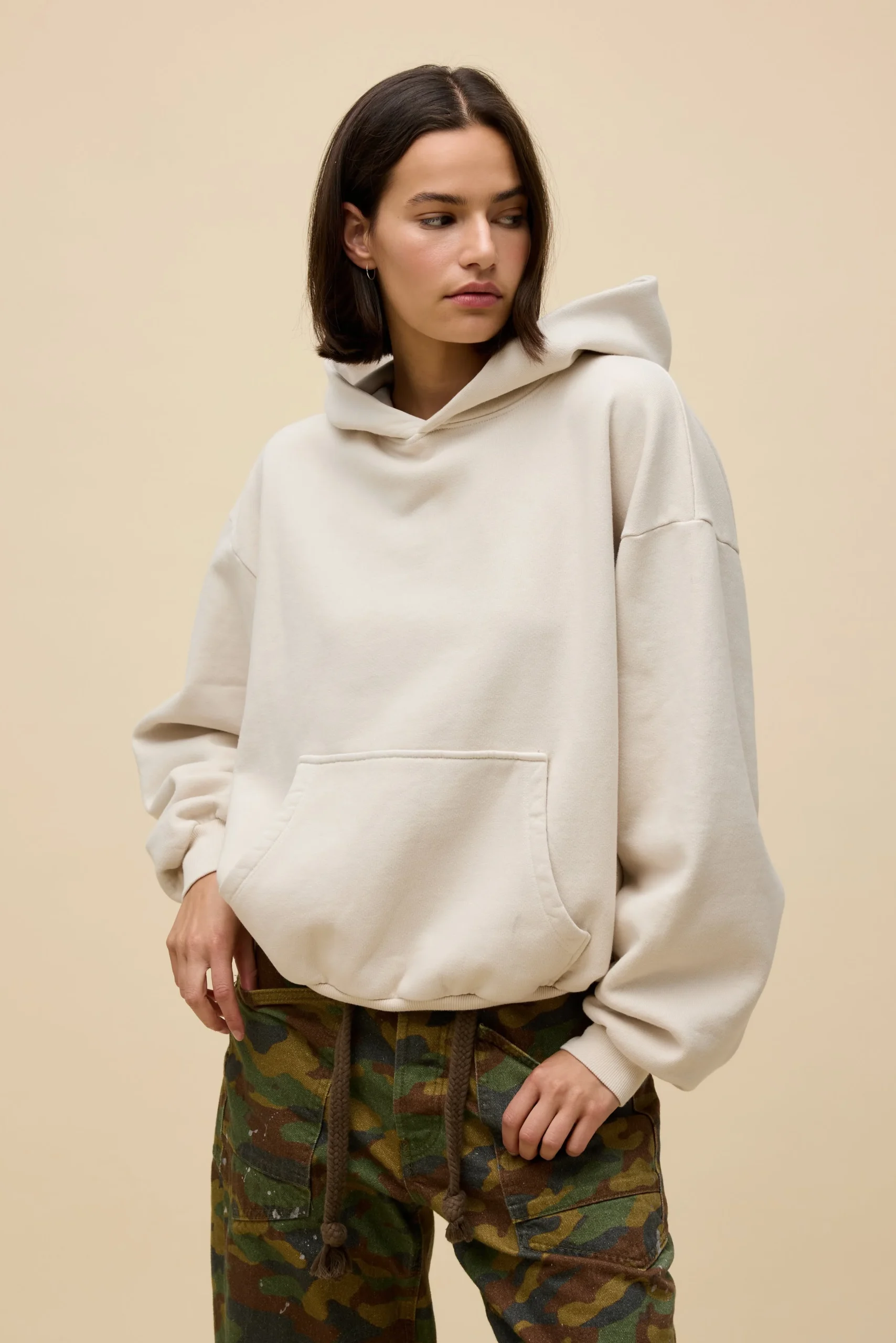
Brushed fleece has a soft, raised inner surface created by brushing the fabric.
It is best for:
- Winter hoodies
- Cold-weather collections
- Heavyweight matching sets
- Warm premium basics
- Hoodies designed for outdoor wear
Main Advantages
Brushed fleece provides:
- Greater warmth
- A soft interior
- A substantial hand feel
- Strong support for oversized shapes
- A clear heavyweight identity
Main Limitations
It may also:
- Feel too hot in warm climates
- Increase shipping weight
- Take longer to dry
- Produce lint
- Develop pilling if the surface is poorly controlled
For a global or year-round collection, I usually choose French terry. For a dedicated winter launch, brushed fleece is often the better option.
Cotton-Rich Blended Fleece
Cotton-polyester blends are widely used for streetwear hoodies.
Common compositions include:
- 80% cotton and 20% polyester
- 70% cotton and 30% polyester
- Cotton face with a polyester-rich inner layer
Why Brands Use Blends
Compared with 100% cotton, a cotton-rich blend can offer:
- Better shape retention
- Lower shrinkage risk
- Faster drying
- Improved durability
- More consistent bulk production
A smooth cotton outer face can still provide a good surface for printing, while polyester in the structure improves stability.
When I Recommend a Blend
Choose a cotton-rich blend when:
- The hoodie will be reordered regularly
- Consistent sizing is important
- Customers may use tumble dryers
- The design includes a large hood or wide rib
- The collection needs commercial durability
Choose 100% cotton when a natural hand feel, garment dyeing, or vintage wash is more important than maximum stability.
Review more options through our Custom Streetwear Fabric Service.
Double-Knit Fabrics
Double-knit fabrics are constructed with two connected knitted layers.
They are normally smoother and more stable than standard single-knit fabrics.
Double knits work well for:
- Minimal streetwear
- Clean monochrome hoodies
- Structured matching sets
- Modern zip-up hoodies
- Small embroidery
- Premium logo-free designs
Advantages
Double-knit fabric can provide:
- A smooth surface
- Strong shape retention
- Good opacity
- A clean, modern appearance
- Reduced curling at cut edges
Limitations
It may feel less traditional than French terry or fleece. Some double knits can also feel dense, less breathable, or slightly synthetic depending on their composition.
I recommend requesting a physical sample before selecting this fabric from photos alone.
How to Choose the Right Fabric
Use these four questions.
1. When Will Customers Wear It?
| Selling Season | Recommended Fabric |
|---|---|
| Spring or summer evenings | 280–350 GSM French terry |
| Year-round | 350–420 GSM French terry |
| Fall | Heavy French terry or light fleece |
| Winter | 400–500 GSM brushed fleece |
2. What Silhouette Do You Want?
Choose softer French terry for a relaxed drape.
Choose dense French terry, heavy fleece, or double knit for:
- A short boxy body
- Strong dropped shoulders
- Wide sleeves
- A large structured hood
3. How Important Is Wash Stability?
Choose a cotton-rich blend when lower shrinkage and stronger recovery are priorities.
Choose 100% cotton when natural hand feel and garment washing are central to the design.
4. What Is the Target Retail Price?
Heavier and more specialized fabrics may increase:
- Material cost
- Sample cost
- Freight cost
- Drying time
- Production minimums
Choose a fabric that customers can feel and value, not simply the highest GSM available.
You can compare available materials in the FuKi Apparel Streetwear Fabric Catalog.
Best Fabric for Printing and Washing
Screen Printing
French terry and cotton-rich fleece normally provide a stable surface for large streetwear graphics.
The outer surface should be smooth, tightly knitted, and free from excessive hairiness.
Puff Printing
Puff printing works well on medium-to-heavy hoodie fabrics.
The fabric must support the raised ink without excessive distortion. A physical print test should be approved before bulk production.
Explore available techniques through our Custom Streetwear Printing Services.
Embroidery
Dense embroidery requires a stable fabric and suitable backing.
Heavy French terry, fleece, and double-knit fabrics normally support embroidery better than thin, loose materials.
Garment Washing
Pigment, enzyme, and vintage washing can change:
- Color
- Hand feel
- Measurements
- Surface texture
- Fabric strength
Always approve the completed hoodie after washing.
Fabric mass per unit area can be tested using ASTM D3776/D3776M. Broader textile performance methods are available through AATCC Testing Standards.
Common Fabric Selection Mistakes
Choosing Fabric Only by GSM
Two 400 GSM fabrics may have different thickness, density, softness, recovery, and warmth.
Believing Heavier Always Means Better
A 500 GSM hoodie may look premium but feel too hot, stiff, and expensive for the target customer.
Ignoring the Rib
The cuffs and bottom rib should match the body fabric in weight, recovery, color, and shrinkage behavior.
Approving an Unwashed Sample
The hoodie may become shorter, twisted, tighter, or softer after washing.
Choosing Fabric Before Defining the Fit
The fabric and pattern should be developed together. Heavy material cannot correct an unbalanced oversized pattern.
Using Winter Fleece for Every Market
Consider where and when customers will wear the product. A heavyweight fleece hoodie may perform poorly in a hot climate.
Useful Fabric Resources
- CottonWorks Single and Double Knits Guide
- ASTM Fabric Weight Standard
- AATCC Textile Testing Standards
- FuKi Apparel Fabric Catalog
Frequently Asked Questions
What is the best fabric for an oversized hoodie?
For most oversized hoodies, 350–420 GSM French terry is the best all-around choice. It provides structure without excessive warmth.
Is French terry or fleece better?
French terry is more breathable and suitable for several seasons. Brushed fleece is warmer and better for winter.
Is 100% cotton good for oversized hoodies?
Yes. It offers a natural hand feel and works well with garment washing. However, it normally requires stronger shrinkage control than cotton-polyester blends.
What GSM is best for oversized hoodies?
Most premium oversized hoodies use approximately 350–500 GSM. Choose the lower end for versatility and the higher end for warmth and structure.
Is 500 GSM too heavy for a hoodie?
Not necessarily, but it is best for cold-weather or statement products. It may be too warm and bulky for year-round use.
What fabric is best for hoodie embroidery?
Dense French terry, fleece, and double-knit fabrics provide a stable base for embroidery. Correct backing and digitizing are still important.
Should I wash-test a hoodie sample?
Yes. Test the finished hoodie for shrinkage, twisting, pilling, rib recovery, color change, and decoration performance before bulk production.
Final Recommendation
For most oversized streetwear hoodies, I recommend:
- 350–420 GSM French terry for year-round collections
- 400–500 GSM brushed fleece for winter hoodies
- Cotton-rich blended fleece for better stability
- Double-knit fabric for clean and structured designs
For a first sample, start with 400 GSM French terry and test the complete hoodie after printing, sewing, and washing.
My final rule is simple:
Choose the fabric according to the desired silhouette, climate, warmth, wash performance, and customer comfort—not GSM alone.
FuKi Apparel supports streetwear brands with fabric sourcing, oversized pattern development, printing, embroidery, garment washing, private labels, packaging, and bulk production.
Visit FuKi Apparel or explore our Custom Hoodie Manufacturer service to develop your next oversized hoodie.