
If you're building a clothing brand, one of the most misunderstood parts of production is lead time.
Many first-time founders think once they approve a sample, production will be fast. In reality, apparel manufacturing has multiple stages, each with its own timeline.
From my experience working with OEM clothing factories and startup fashion brands, lead time is often the difference between a successful product launch and a delayed season.
In this guide, I'll break down exactly how apparel manufacturing lead time works, what affects it, and what you should realistically expect in 2026.
Table of Contents
- Quick Answer
- What Is Apparel Manufacturing Lead Time?
- Typical Production Timeline
- Factors That Affect Lead Time
- How to Reduce Lead Time
- Lead Time Comparison Table
- Common Mistakes Brands Make
- Internal & External Resources
- FAQ
- Final Thoughts
Quick Answer
Apparel manufacturing lead time is the total time required to produce your clothing order—from sample approval to final shipment.
Typical lead times:
- Sampling: 5–20 days
- Fabric sourcing: 7–30 days
- Bulk production: 15–45 days
- Shipping: 5–20 days

👉 Total lead time: 30–90 days depending on complexity
From my experience, most delays happen not in production—but in fabric sourcing and approval stages.
What Is Apparel Manufacturing Lead Time?
Lead time refers to the full production cycle required to turn your design into finished garments.
It includes:
- Fabric sourcing
- Pattern making
- Sampling
- Bulk production
- Quality inspection
- Packaging
- Shipping
Each stage depends on factory capacity, material availability, and communication speed.
Typical Production Timeline
Here is a realistic breakdown most professional brands follow:
1. Development Stage (7–20 Days)
- Tech pack review
- Fabric confirmation
- Sample making
2. Sample Approval Stage (5–15 Days)
- First sample production
- Revisions if needed
- Final approval
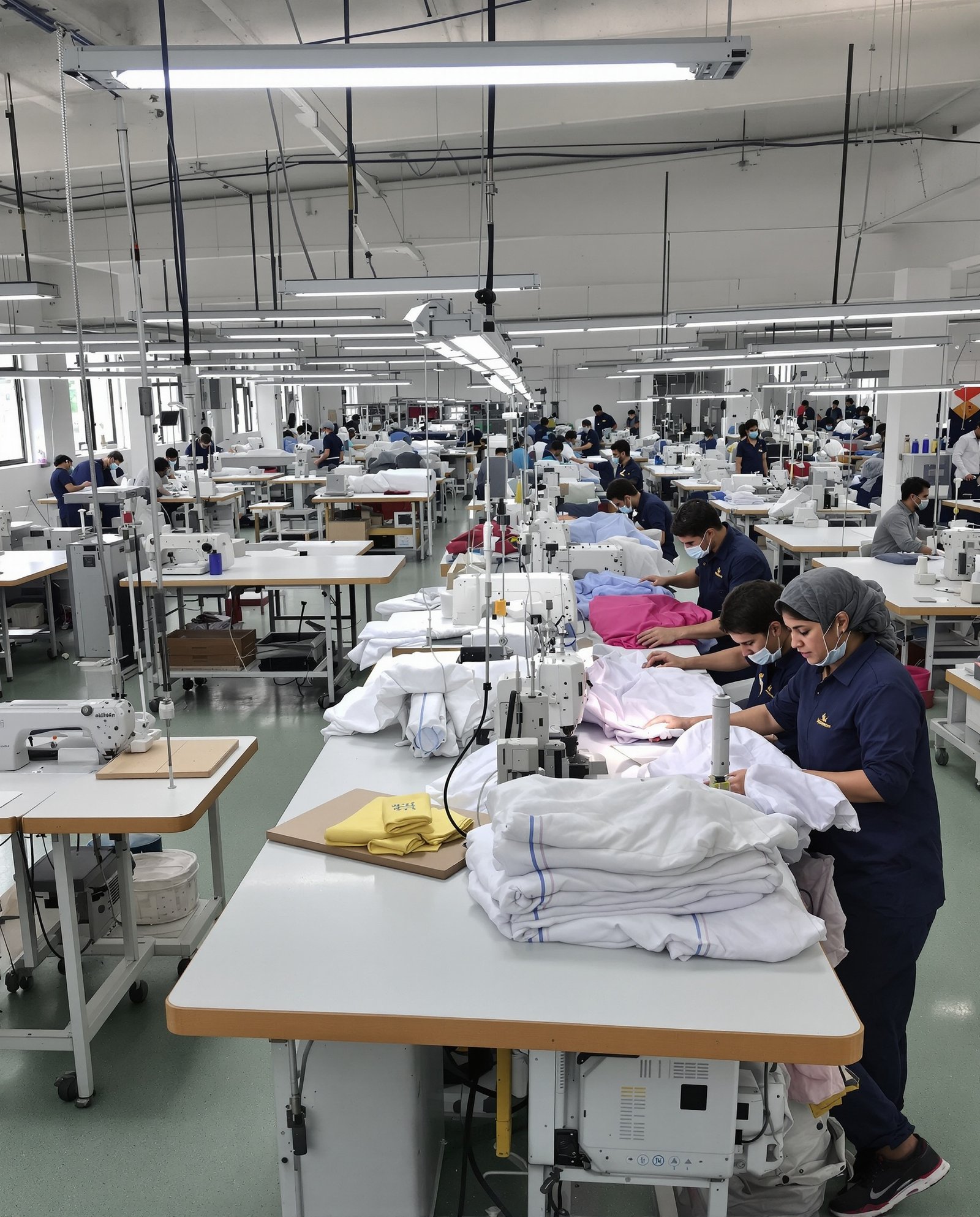
3. Bulk Production Stage (15–45 Days)
::contentReference[oaicite:0]{index=0}
Even though production is not a mathematical function, this stage follows a linear workflow logic:
- Cutting
- Sewing
- Printing/embroidery
- Finishing
- Quality inspection
More quantity → longer production time.
4. Shipping Stage (5–20 Days)
Depends on:
- Air freight (fast)
- Sea freight (slow but cheap)
- Destination country
Factors That Affect Lead Time
1. Fabric Availability
If fabric is not in stock, lead time increases significantly.
2. Customization Level
More customization = more time:
- Custom fabric
- Special dyeing
- Complex embroidery
3. Order Quantity
Larger orders require:
- More production lines
- Longer QC process
4. Factory Capacity
Busy factories during peak season (Q2–Q4) often have longer queues.
5. Communication Speed
From my experience, slow feedback is one of the biggest hidden delays.
How to Reduce Lead Time
If you're working with clothing manufacturers, you can actively reduce delays by:
1. Finalizing Tech Packs Early
Clear instructions reduce back-and-forth communication.
2. Using Stock Fabrics
Stock materials eliminate sourcing delays.
3. Approving Samples Quickly
Delayed feedback = delayed production.
4. Avoiding Over-Complex Designs
Simpler garments move faster through production.
5. Working With Experienced OEM Factories
For example:
👉 Fuki Apparel specializes in streamlined OEM streetwear production with optimized sampling and bulk manufacturing systems for fashion brands.
Lead Time Comparison Table
| Stage | Fast Scenario | Standard Scenario | Complex Scenario |
|---|---|---|---|
| Sampling | 5–7 days | 7–14 days | 15–20 days |
| Fabric sourcing | 7–10 days | 10–20 days | 20–30 days |
| Production | 15–25 days | 25–40 days | 40–60 days |
| Shipping | 5–7 days | 7–15 days | 15–20 days |
| Total | ~30 days | ~60 days | ~90+ days |
Common Mistakes Brands Make
From my experience, these mistakes cause the biggest delays:
❌ Changing designs mid-production
❌ Not confirming fabric early
❌ Slow sample feedback
❌ Unrealistic launch timelines
❌ Ignoring peak season congestion
Internal & External Resources
Internal Resources
Industry Resources
FAQ
What is the average apparel manufacturing lead time?
Usually 30–90 days depending on complexity and order size.
What is the fastest stage in production?
Sampling and cutting are usually the fastest stages.
What causes the biggest delays?
Fabric sourcing and slow approval feedback are the most common bottlenecks.
Can lead time be reduced?
Yes—by using stock fabrics, simplifying designs, and working with experienced manufacturers.
Is air shipping faster than sea shipping?
Yes, air freight is significantly faster but more expensive.
Final Thoughts
From my experience, apparel manufacturing lead time is not fixed—it is a system influenced by decisions you make at the very beginning.
Brands that plan properly, communicate clearly, and simplify production always launch faster and more reliably.
If you're building a streetwear or private label brand, working with an experienced OEM partner like:
can help you reduce delays, improve workflow efficiency, and bring products to market on time.
