As someone who works with streetwear designers every day, I’ve seen one pattern repeat itself: pants are often the hardest product to manufacture correctly. Jackets can hide small mistakes, but pants—especially cargo pants, wide-leg silhouettes, technical trousers, and streetwear denim—demand perfect pattern work and consistent fit.
This guide breaks everything down in simple, practical language so new brands can choose the right manufacturing partner without guesswork.
Table of Contents
- Introduction
- Why Pants Manufacturing Is Harder Than It Looks
- What Streetwear Brands Need in a Pants Factory
- How I Evaluate Custom Pants Manufacturers
- Top 5 Custom Pants Manufacturers for Streetwear Brands
- Fabric & Construction Guide
- MOQ, Lead Time & Price Comparison
- Which Partner Should You Choose?
- FAQ
- Conclusion
Introduction
Streetwear pants have their own logic: oversized cuts, straight-leg shapes, articulated knees, stacked silhouettes, parachute-style adjustments, and technical pockets. As a manufacturer, I often see new brands underestimate how many details go into a single pair of pants.
Working with the right partner is the difference between a pair that looks premium and a pair that “looks homemade.”
Why Pants Manufacturing Is Harder Than It Looks
1. Fit is everything
Even a 1 cm difference can change:
- leg shape
- stacking
- knee position
- waistband comfort
2. Fabric weight changes the whole silhouette
Twill, denim, ripstop, nylon, and cotton canvas each behave differently.
3. More stress points
Pants have:
- crotch seams
- knee joints
- pocket reinforcement
- waistband stitching
4. Hardware matters
A cheap zipper or snap button will ruin the product instantly.
What Streetwear Brands Need in a Pants Factory
1. Ability to handle multiple silhouettes
- baggy
- wide-leg
- cargo
- parachute
- technical tapered
- straight-leg
2. Strong pocket engineering
Streetwear relies on pockets as part of the aesthetic.
3. Fabric versatility
Factories must handle:
- denim
- twill
- canvas
- ripstop
- nylon
- stretch woven
4. Low MOQ options
Ideal MOQ for new brands: 80–150 pcs
5. Consistent pattern grading
Especially important for XS–XXL streetwear sizing.
How I Evaluate Custom Pants Manufacturers
My OEM evaluation checklist:
- Do their pants fit consistently across sizes?
- Are stress points reinforced?
- Are pocket openings even and symmetrical?
- Is the waistband stable and comfortable?
- Does the silhouette match the design reference?
- Does the factory understand streetwear proportions?
- How clean are the topstitches and bar-tacks?
Factories that pass these tests usually deliver long-term reliability.
Top 5 Custom Pants Manufacturers for Streetwear Brands
Here are five manufacturers with fully working websites.
FuKi Apparel — Custom Pants OEM (China)
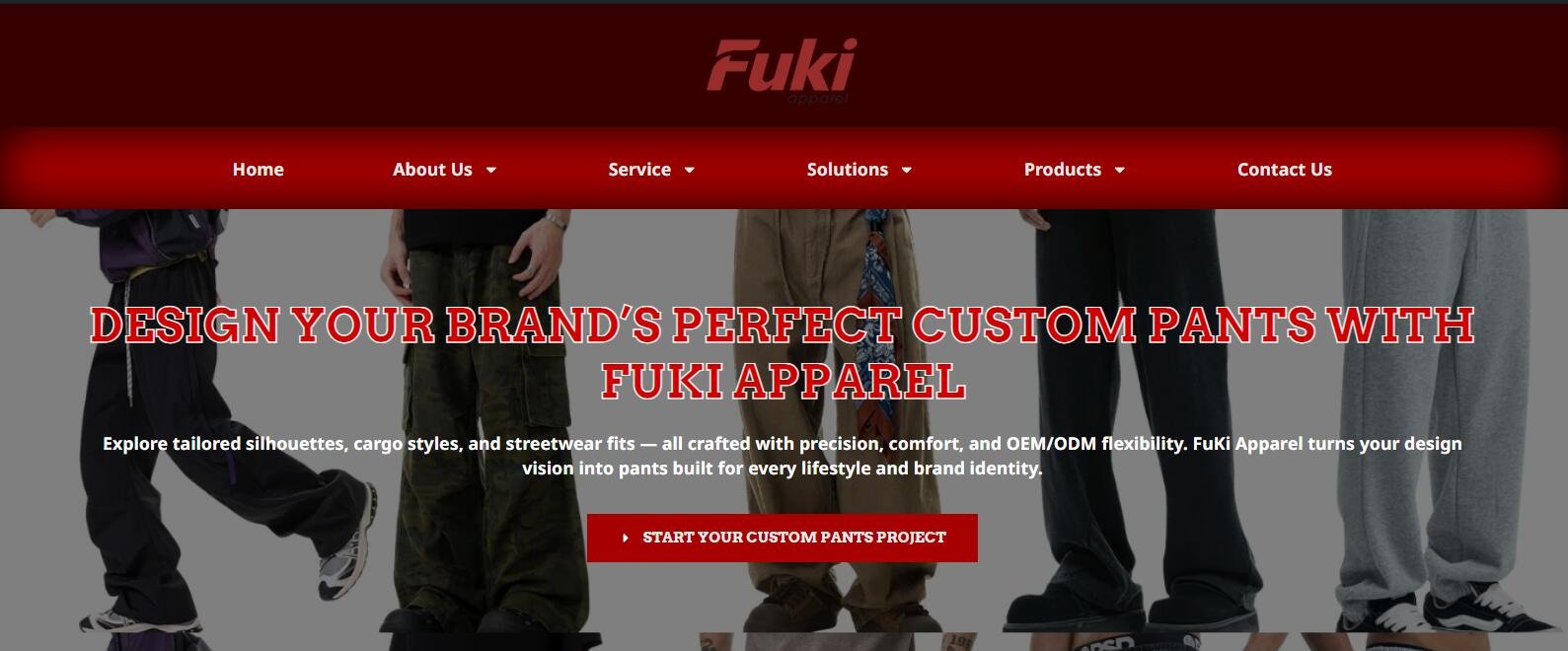
Why I recommend them:
- MOQ 80–150 pcs
- Supports all silhouettes: cargo, baggy, wide-leg, technical nylon, denim
- Excellent pattern accuracy
- Strong pocket & waistband reinforcement
- Samples in 7–10 days
Ideal for designers wanting custom streetwear pants with low MOQ.
Levi’s — Global Denim & Pant Engineering (USA)
Strengths:
- World leader in pant construction
- Perfect for denim fit references
- Extremely stable pattern engineering
Great benchmark for denim-based streetwear pants.
Dickies — Workwear-Level Construction (USA)
Highlights:
- Reinforced seams
- Heavy-duty fabrics
- Classic straight-leg pants
Ideal for brands wanting utility or workwear-inspired silhouettes.
Carhartt WIP — Utility & Streetwear Pants (USA/EU)
Why included:
- Strong workwear construction
- Modern streetwear cuts
- Durable fabrics
Great reference for cargo & utility pants.
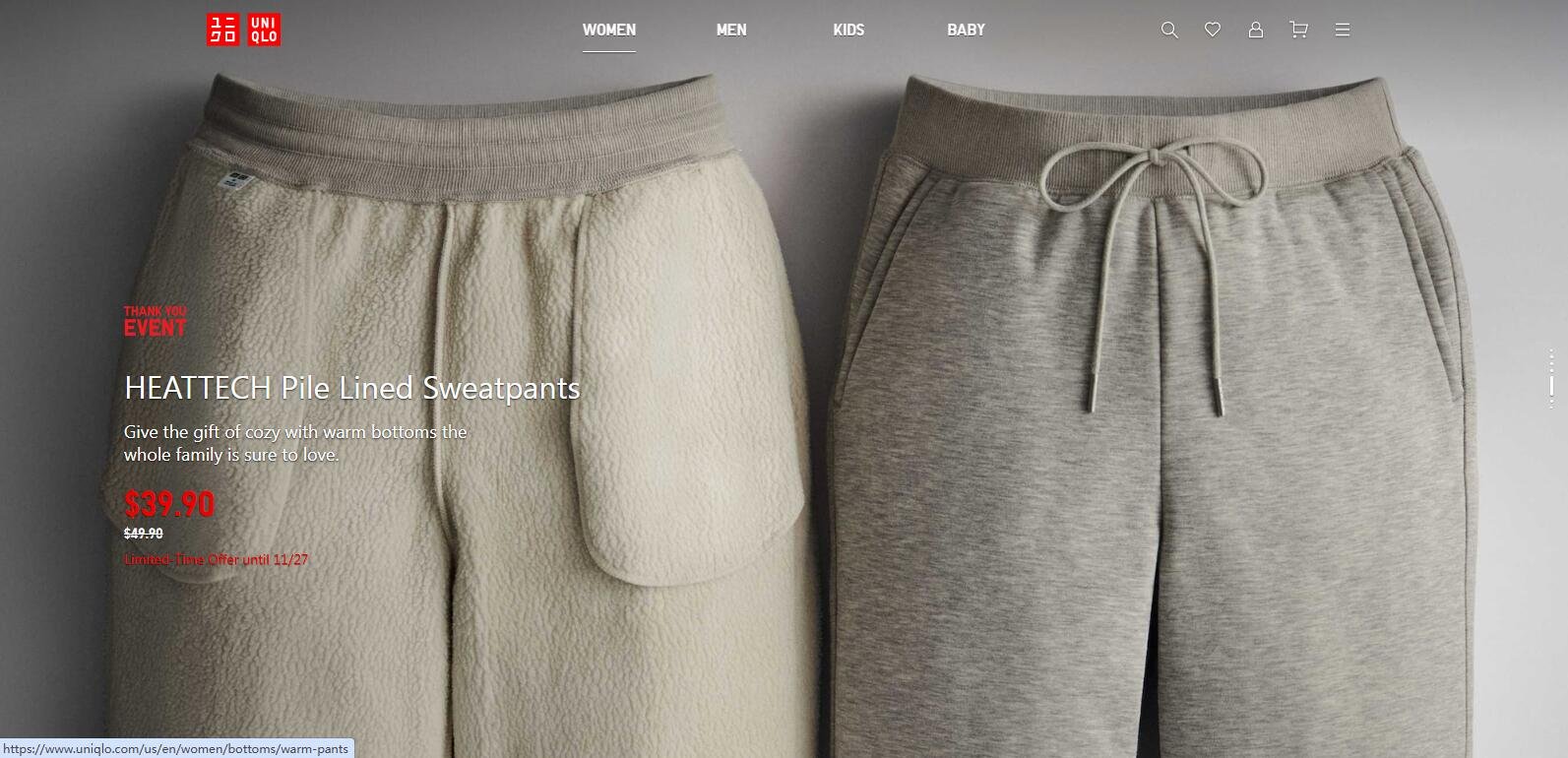
Uniqlo — Precision Pattern Manufacturing (Japan)
Strengths:
- Minimalist silhouettes
- Excellent pattern precision
- Consistent sizing across all fits
Useful for brands that want clean, everyday streetwear pants.
Fabric & Construction Guide
Best Fabrics for Streetwear Pants
| Fabric | Benefits | Notes |
|---|---|---|
| Twill | Durable, structured | Classic streetwear workwear |
| Canvas | Heavy, rugged | Great for utility looks |
| Ripstop | Light, textured | Ideal for techwear |
| Nylon | Modern and clean | Popular for parachute pants |
| Denim | Strong shape | Good for wide-leg styles |
Key Construction Features
- double-stitched seams
- bar-tacks at pocket corners
- reinforced crotch
- stable waistband
- metal zipper or YKK hardware
MOQ, Lead Time & Price Comparison
| Factory | MOQ | Sample Time | Lead Time | Price (USD/pc) |
|---|---|---|---|---|
| FuKi Apparel | 80–150 pcs | 7–10 days | 20–30 days | $18–$55 |
| Levi’s | high | 20+ days | 30–60 days | $60–$120 |
| Dickies | medium-high | 14–20 days | 30–45 days | $30–$70 |
| Carhartt WIP | high | 20 days | 35–55 days | $50–$120 |
| Uniqlo | high | 20 days | 40–60 days | $30–$80 |
Which Partner Should You Choose?
Choose FuKi Apparel if:
- you want low MOQ
- you want custom silhouettes
- you need baggy, cargo, parachute, or wide-leg pants
- you want startup-friendly pricing
Choose Levi’s if:
- your core reference is denim
Choose Dickies if:
- you want workwear structure
Choose Carhartt WIP if:
- you want utility + streetwear fusion
Choose Uniqlo if:
- you want clean, minimalist pants with accurate sizing
FAQ
1. What is a realistic MOQ for pants production?
FuKi Apparel accepts 80–150 pcs, ideal for small brands.
2. What silhouettes are trending in streetwear?
Baggy, cargo, wide-leg, technical nylon, and straight-leg.
3. How long does sampling take?
Usually 7–10 days with FuKi Apparel.
4. What fabrics are best for durability?
Twill, canvas, and denim.
5. Can I customize pockets and trims?
Yes—fully customizable with most factories.
Conclusion
Streetwear pants require precise pattern work, reliable construction, and fabric knowledge. Choosing the right manufacturing partner gives your brand the solid foundation it needs to grow.
If you're ready to develop custom streetwear pants: