
Launching a streetwear brand requires more than designing a logo and printing it on a T-shirt. You need a clear customer, recognizable brand direction, commercially realistic products, reliable manufacturing, sustainable pricing, and a launch plan that creates demand before inventory arrives.
From my experience helping streetwear brands develop custom products, the safest approach is to start focused: launch a small collection, prove customer demand, study the results, and expand only after you know what sells.
The best first launch is not the biggest collection. It is the smallest collection that clearly proves your brand idea.
Table of Contents
- Streetwear Brand Launch Roadmap
- Define Your Brand Position
- Validate Demand Before Production
- Build a Focused First Drop
- Choose a Production Model
- Set Your Budget and Prices
- Develop and Test Samples
- Prepare Branding and Legal Basics
- Build an Audience Before Launch
- Plan Your Launch Calendar
- Measure Results After Launch
- Common Launch Mistakes
- Frequently Asked Questions
- Final Recommendation
Streetwear Brand Launch Roadmap
| Stage | Main Goal | Required Result |
|---|---|---|
| Positioning | Define who the brand serves | Clear customer and brand direction |
| Validation | Test interest before ordering | Evidence of customer demand |
| Product planning | Build a focused first drop | Three to five connected products |
| Development | Turn ideas into real garments | Approved samples |
| Production | Manufacture saleable inventory | Quality-controlled bulk order |
| Pre-launch | Build awareness and collect leads | Audience ready for release |
| Launch | Convert attention into orders | Clear sales campaign |
| Review | Learn from actual results | Reorder and improvement plan |
Define Your Brand Position
Before selecting fabrics or graphics, decide why your brand should exist.
A useful positioning statement answers four questions:
- Who is the customer?
- What style does the brand represent?
- What makes the product different?
- Why should customers trust the brand?
Weak Positioning
We sell high-quality streetwear for everyone.
This is too broad. It does not guide your design, pricing, content, or customer targeting.
Stronger Positioning
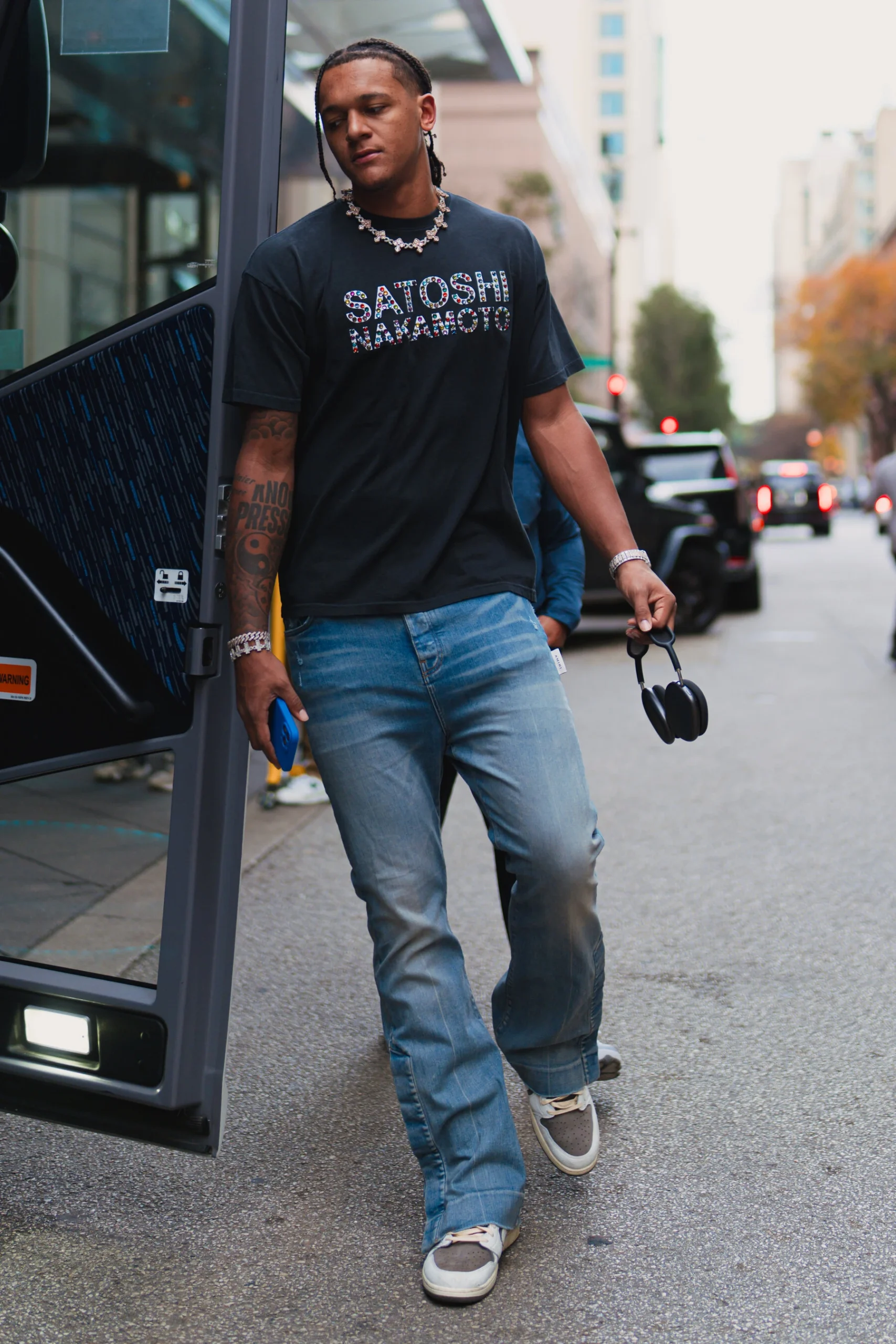
We create heavyweight, vintage-inspired streetwear for US customers who prefer relaxed silhouettes, muted colors, and limited seasonal drops.
This statement provides clear direction for:
- Fabric weight
- Product fit
- Color palette
- Photography
- Pricing
- Marketing channels
Use the SBA Market Research Guide to study your target customer, competitors, demand, and market position.
Validate Demand Before Production
Do not use a large inventory order to discover whether customers like your idea.
I recommend testing demand through:
- Social media concept posts
- Product mockups
- Customer interviews
- Email waitlists
- Small pre-orders
- Sample photography
- Landing-page sign-ups
- Limited local events
What Validation Should Measure
| Signal | What It Tells You |
|---|---|
| Email registrations | Customers want future updates |
| Product-page visits | The concept creates interest |
| Pre-orders | Customers are willing to pay |
| Size requests | Helps plan the size ratio |
| Comments and saves | Shows which designs attract attention |
| Direct feedback | Reveals objections and expectations |
Likes alone are not enough. Payment, email registration, repeat engagement, and product-specific questions are stronger demand signals.
Build a Focused First Drop
For most new brands, I recommend launching three to five products.
A practical first drop may include:
- One hero graphic T-shirt
- One simpler logo T-shirt
- One hoodie
- One pair of pants
- One accessory
Product Roles
| Product Role | Purpose |
|---|---|
| Hero product | Attracts attention and represents the collection |
| Core product | Provides stable everyday sales |
| Entry product | Offers a more accessible first purchase |
| Supporting product | Helps customers create complete outfits |
Avoid launching every product in several fabrics and colors. Each additional variation creates more samples, SKUs, minimum quantities, and inventory risk.
Brands needing help converting ideas into production-ready garments can explore FuKi Apparel Streetwear Brand Solutions.
Choose a Production Model
Your production model affects customization, cost, speed, and risk.
| Production Model | Best For | Main Limitation |
|---|---|---|
| Print on demand | Testing graphics without inventory | Limited product control |
| Customized blanks | Small graphic-led launches | Standard fabric and fit |
| Private label | Faster branded collections | Moderate customization |
| Cut and sew | Original products and long-term brands | More development required |
Choose Customized Blanks When
- You are testing several graphics.
- Your budget is limited.
- A standard fit is acceptable.
- Fast market entry matters most.
Choose Cut-and-Sew Manufacturing When
- Fit is part of your brand identity.
- You need specific fabrics or GSM.
- You want custom washing or construction.
- The product must be difficult to copy.
FuKi Apparel provides pattern development, material sourcing, sampling, branding, and production through its OEM and ODM Streetwear Service.
Set Your Budget and Prices
Your budget must cover more than manufacturing.
Include:
- Product design
- Tech packs
- Samples
- Sample shipping
- Bulk production
- Labels and packaging
- Inspection
- Freight and duties
- Photography
- Website costs
- Marketing
- Returns and defects
Calculate the Real Product Cost
Use:
Landed cost per sellable unit = Total landed order cost ÷ Sellable units
Do not treat the factory quotation as the complete product cost.
Check Pricing From Three Directions
- Cost: Does the price protect your required margin?
- Market: Is the price realistic for your category?
- Value: Can customers see why the product deserves that price?
A new brand does not always need to be cheap. It needs a price that matches its product, presentation, customer, and credibility.
Develop and Test Samples
Never launch custom clothing without reviewing a physical sample.
Check:
- Fabric and color
- Fit and measurements
- Sewing
- Printing or embroidery
- Wash effect
- Comfort
- Shrinkage
- Labels
- Packaging
Sample Approval Scorecard
| Category | Suggested Weight |
|---|---|
| Fit and silhouette | 25% |
| Fabric suitability | 20% |
| Construction | 15% |
| Decoration | 15% |
| Wash performance | 10% |
| Customer value | 10% |
| Branding details | 5% |
Wear and wash the sample before bulk approval.
FuKi Apparel supports screen printing, puff printing, DTG, silicone printing, and embroidery through its Custom Streetwear Printing Service.
Prepare Branding and Legal Basics
Before publicly launching, review:
- Brand name availability
- Domain name
- Social media handles
- Logo ownership
- Trademark considerations
- Business registration
- Product labeling
- Return and privacy policies
The USPTO Trademark Basics resource explains how trademarks relate to brand names, logos, and commercial identity in the United States.
For US-market textile products, review the FTC Clothing and Textiles Guidance when preparing fiber-content, country-of-origin, responsible-business, and care information.
Your exact obligations depend on where and how the products are sold, so professional legal or compliance advice may still be necessary.
Build an Audience Before Launch
Do not wait until launch day to introduce the brand.
Start sharing the process early.
Useful pre-launch content includes:
- Brand story
- Mood board
- Fabric selection
- Sample development
- Fit comparisons
- Printing details
- Behind-the-scenes production
- Styling videos
- Product close-ups
- Launch countdowns
Create a Waitlist
A simple pre-launch page should include:
- Clear brand concept
- Hero product image
- Launch date
- Main product benefit
- Email registration
- Social media links
The goal is to collect interested customers before asking them to purchase.
Plan Your Launch Calendar
A focused four-week plan is easier to manage than posting random content.
| Period | Main Activity |
|---|---|
| Four weeks before | Introduce the brand idea |
| Three weeks before | Reveal fabrics, fit, and development |
| Two weeks before | Show products and collect waitlist sign-ups |
| One week before | Announce pricing, sizing, and launch time |
| Launch day | Email the waitlist and publish sales content |
| After launch | Share styling, reviews, and remaining stock |
Before launch, test:
- Website checkout
- Mobile product pages
- Size guide
- Shipping rates
- Discount codes
- Inventory
- Confirmation emails
- Return information
Measure Results After Launch
The first launch should provide information for the second one.
Track:
- Sales by product
- Sales by size
- Sales by color
- Website conversion rate
- Average order value
- Return reasons
- Customer questions
- Sell-through rate
- Marketing cost
- Waitlist conversion
Use Results to Make Decisions
Reorder when:
- The product sells consistently.
- Customers request additional sizes or colors.
- Returns remain controlled.
- The margin supports another order.
Revise when:
- Customers repeatedly mention fit or quality issues.
- One color performs much worse.
- The price creates strong resistance.
- The product attracts attention but few purchases.
Do not expand the next collection only because the first launch sold some units. Expand based on clear product-level evidence.
Common Launch Mistakes
Launching Too Many Products
A large collection increases development cost and inventory risk.
Copying Popular Brands
References can guide quality, but your brand still needs an original identity.
Ordering Before Testing Demand
Use waitlists, samples, content, or pre-orders to validate interest.
Underpricing the Collection
Low prices can make marketing, returns, and future production difficult to support.
Approving Products From Photos
Review physical samples and wash-test them.
Building an Audience Too Late
Begin telling the brand story before inventory arrives.
Treating Launch Day as the Finish Line
Customer feedback, fulfillment, content, and reorders begin after the launch.
Frequently Asked Questions
How much money do I need to launch a streetwear brand?
The amount depends on your products, quantity, manufacturing model, website, content, and marketing. Build a complete budget before ordering inventory.
How many products should I launch?
Three to five connected products are normally enough for a focused first drop.
Should I use blanks or custom manufacturing?
Use blanks for fast graphic testing. Choose custom manufacturing when fabric, fit, construction, or washing defines the product.
Do I need a trademark before launching?
You should research name availability and trademark risk early. Registration decisions depend on your market and business strategy.
Should I use pre-orders?
Pre-orders can reduce inventory risk when the delivery schedule, refund policy, and customer communication are clear.
When should I contact a manufacturer?
Contact a manufacturer after defining the product categories, design direction, quantity, target price, and expected launch date.
Final Recommendation
To launch a streetwear brand:
- Define a specific customer and position.
- Validate demand before ordering inventory.
- Build a focused three-to-five-product drop.
- Choose the right production model.
- Calculate the complete budget and landed cost.
- Develop and wash-test physical samples.
- Prepare branding, labeling, and business basics.
- Build an audience before launch.
- Follow a clear launch calendar.
- Use sales data to improve the next collection.
My main recommendation is:
Launch to learn, not only to sell. A focused first drop should prove which product, fit, price, and message deserve further investment.
FuKi Apparel supports streetwear brands with product development, custom fabrics, pattern making, sampling, printing, embroidery, garment washing, labels, packaging, quality control, and bulk manufacturing.
Visit FuKi Apparel or contact the streetwear production team to discuss your first collection.
