
A streetwear manufacturer develops and produces garments according to your specifications. A clothing supplier usually provides products, materials, or sourcing services that already exist or require limited customization.
From my experience working with streetwear brands, the right choice depends on one question:
Do you want to create an original product, or do you mainly need an existing product delivered quickly?
Choose a streetwear manufacturer when fit, fabric, washing, construction, and branding are part of your product identity.
Choose a clothing supplier when speed, low development effort, and access to ready-made products are more important than complete customization.
Table of Contents
- Quick Comparison
- What Is a Streetwear Manufacturer?
- What Is a Clothing Supplier?
- Manufacturer, Wholesaler, and Sourcing Agent
- Which Option Gives You More Customization?
- MOQ, Cost, and Lead Time
- Quality Control and Product Consistency
- Which Option Is Better for Your Brand?
- Can You Use Both?
- How to Compare Potential Partners
- Common Sourcing Mistakes
- Frequently Asked Questions
- Final Recommendation
Quick Comparison
| Factor | Streetwear Manufacturer | Clothing Supplier |
|---|---|---|
| Main service | Develops and manufactures garments | Supplies existing or sourced products |
| Product originality | High | Low to moderate |
| Custom patterns | Usually available | Usually limited |
| Fabric development | Available for suitable orders | Mostly existing options |
| Custom washing | Often available | Limited |
| Printing and embroidery | Fully integrated or coordinated | Usually added to existing garments |
| Development time | Longer | Shorter |
| MOQ | Usually higher | Often lower |
| Unit cost | Competitive at production scale | May be higher for ready-made products |
| Best for | Original streetwear brands | Fast launches and product testing |
| Main risk | Development mistakes and higher commitment | Limited differentiation and supply inconsistency |
Choose a Streetwear Manufacturer When
- You need a custom oversized fit.
- You want a specific fabric or GSM.
- The product includes custom washing.
- You need original pockets, panels, or construction.
- You want private labels and custom packaging.
- The design will become a long-term brand product.
- You need repeat production based on an approved standard.
Choose a Clothing Supplier When
- You need existing products quickly.
- Standard fits are acceptable.
- You are testing a new graphic or market.
- Your starting quantity is very small.
- You do not need custom garment construction.
- Speed is more important than exclusivity.
- You want to avoid a long sample-development process.
What Is a Streetwear Manufacturer?
A streetwear manufacturer turns a design idea into a finished garment.
Depending on its service model, the manufacturer may handle:
- Fabric sourcing
- Pattern development
- Sample making
- Size grading
- Cutting
- Sewing
- Printing
- Embroidery
- Garment washing
- Labels
- Packaging
- Quality inspection
- Bulk production
A manufacturer is usually the better option when the garment itself must be original.
For example, a manufacturer can develop an oversized T-shirt with:
- A custom shoulder width
- A shorter boxy body
- Wide sleeves
- A heavier collar
- 260 GSM cotton
- A vintage wash
- Puff printing
- Custom neck and care labels
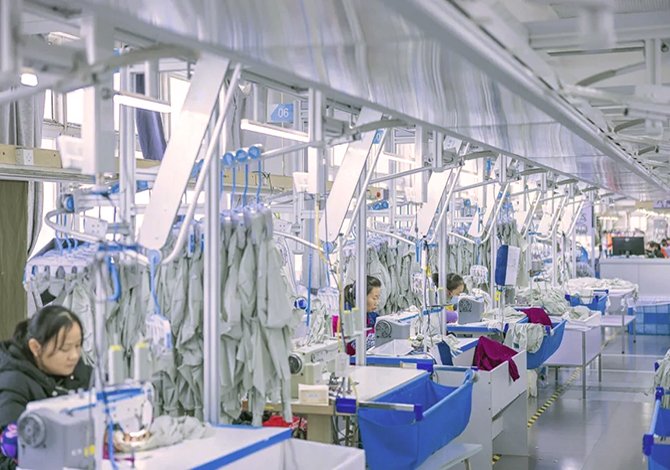
A general supplier may offer a similar-looking T-shirt, but it will normally use an existing fit, fabric, and construction.
Brands requiring full product development can review FuKi Apparel OEM and ODM Services.
What Is a Clothing Supplier?
“Clothing supplier” is a broad term.
It may refer to a business that provides:
- Blank garments
- Ready-made wholesale clothing
- Stock products
- Private-label products
- Fabric or trims
- Sourcing and purchasing services
- Finished products from several factories
A supplier does not always own or manage production directly.
Some suppliers purchase finished garments from factories and resell them. Others coordinate production between brands and several manufacturing partners.
What Can a Clothing Supplier Customize?
Depending on the supplier, customization may include:
- Printing a logo
- Adding embroidery
- Replacing a neck label
- Adding hangtags
- Changing packaging
- Selecting from existing colors
- Choosing available product styles
However, the supplier may not be able to change:
- The garment pattern
- Fabric composition
- Fabric weight
- Pocket construction
- Hood shape
- Sleeve proportions
- Internal sewing details
This model is useful when product development is not the brand’s main priority.
Manufacturer, Wholesaler, and Sourcing Agent
Not every clothing supplier operates in the same way.
| Partner Type | What It Does | Best For |
|---|---|---|
| Manufacturer | Makes garments from fabric | Full custom production |
| Blank supplier | Provides undecorated garments | Printing and embroidery projects |
| Wholesaler | Sells finished products in quantity | Fast resale collections |
| Private-label supplier | Adds branding to existing products | Simple branded launches |
| Sourcing agent | Finds and coordinates factories | Brands needing local sourcing support |
| Trading company | Manages products from several factories | Broad product ranges |
| Fabric supplier | Provides knitted or woven material | Brands managing their own production |
Direct Manufacturer
Choose a direct manufacturer when you need technical control and repeat production.
Wholesaler
Choose a wholesaler when you need products that are already developed and available.
Sourcing Agent or Trading Company
Choose an agent or trading company when you need access to several product categories but do not want to manage many factories yourself.
From my experience, the company type matters less than its ability to explain:
- Who makes the product
- Who controls the specifications
- Who checks quality
- Who accepts responsibility when problems occur
Which Option Gives You More Customization?
Customization can be divided into three levels.
Level 1: Branding Customization
This includes:
- Screen printing
- Embroidery
- Neck labels
- Hangtags
- Packaging
Both manufacturers and suppliers may offer this level.
Review decoration options through FuKi Apparel Custom Printing Services.
Level 2: Product Customization
This includes:
- Fabric selection
- GSM
- Measurements
- Color development
- Wash treatments
- Rib and trim changes
A streetwear manufacturer is normally more suitable for this level.
Level 3: Full Product Development
This includes:
- Custom patterns
- Original garment construction
- Unique panels
- Special pockets
- Custom hardware
- Technical sewing
- Several rounds of sampling
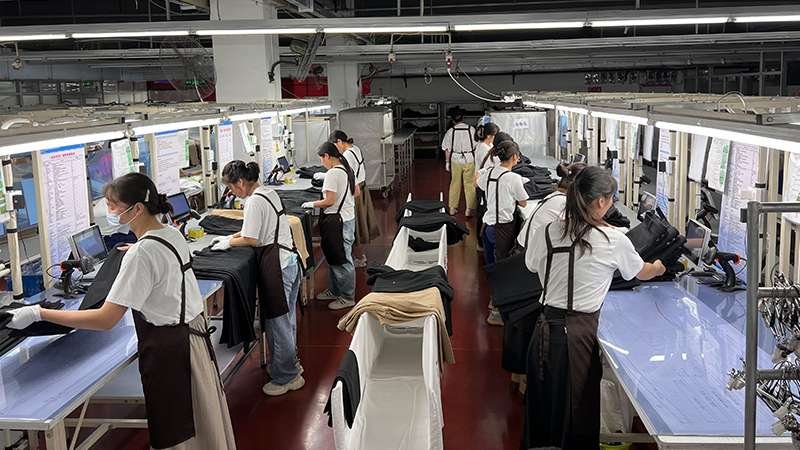
This usually requires a cut-and-sew manufacturer.
Customization Decision Table
| Your Requirement | Better Partner |
|---|---|
| Add a logo to a blank T-shirt | Clothing supplier |
| Replace the neck label | Either |
| Change the garment measurements | Manufacturer |
| Develop a custom oversized fit | Manufacturer |
| Use a custom 450 GSM fabric | Manufacturer |
| Purchase existing cargo pants | Supplier |
| Create original cargo-pocket construction | Manufacturer |
| Test five graphic designs in small quantities | Supplier or print partner |
| Produce a long-term signature hoodie | Manufacturer |
For custom silhouettes, explore FuKi Apparel Oversized T-Shirt Manufacturing and Custom Oversized Hoodie Manufacturing.
MOQ, Cost, and Lead Time
A supplier may appear cheaper or faster because product development has already been completed.
A manufacturer must often arrange:
- Fabric
- Patterns
- Samples
- Printing tests
- Cutting preparation
- Production-line setup
Typical Commercial Differences
| Commercial Factor | Manufacturer | Supplier |
|---|---|---|
| Sample development | Required | Limited or unnecessary |
| Development cost | Higher | Lower |
| MOQ | Usually 50–200+ pieces per style | May begin from a few pieces |
| Production lead time | Several weeks after approval | Often faster |
| Unit cost at scale | Usually more competitive | May include reseller margin |
| Inventory risk | Higher initial commitment | Easier small tests |
| Reorder control | Strong with fixed specifications | Depends on stock availability |
Do Not Compare Unit Price Alone
Ask what the price includes:
- Fabric
- Pattern development
- Printing or embroidery
- Washing
- Labels
- Packaging
- Inspection
- Freight
A supplier may offer a lower starting commitment but a higher unit cost.
A manufacturer may require more development and quantity but provide better pricing when the same product is reordered.
Quality Control and Product Consistency
A manufacturer can control the garment from material inspection to final packaging.
A useful manufacturing quality process includes:
- Fabric inspection
- Pre-production sample approval
- Cutting checks
- Print or embroidery approval
- In-line sewing inspection
- Measurement checks
- Wash testing
- Final inspection
- Packaging verification
A supplier selling existing products may only inspect finished garments.
This can be enough for a simple blank-based product, but it gives the brand less control over:
- Fabric changes
- Size consistency
- Dye-lot differences
- Construction changes
- Future product availability
Questions to Ask Either Partner
- Who produces the garment?
- Can the same fabric be reordered?
- Is the pattern controlled and stored?
- How are bulk measurements checked?
- What happens when defects are found?
- Can you provide inspection evidence?
- Will future orders use the same specifications?
- Who approves subcontracted processes?
FuKi Apparel provides production-stage checks through its Streetwear Quality Control Service.
Which Option Is Better for Your Brand?
New Brand Testing Graphics
Choose a clothing supplier or blank-garment provider.
This allows you to test:
- Artwork
- Pricing
- Customer interest
- Marketing channels
You can move to custom production after identifying successful designs.
Fit-Led Streetwear Brand
Choose a streetwear manufacturer.
Your value depends on:
- Silhouette
- Proportions
- Fabric
- Construction
- Wash effect
These features cannot be fully controlled through standard blanks.
Limited Budget
Use a supplier when the main objective is launching quickly with low inventory.
Use a manufacturer only when the custom product creates enough additional value to justify the development cost.
Premium Brand
Choose a manufacturer when customers are expected to pay for:
- Better fabric
- Original fits
- Custom details
- Reliable repeat quality
- Stronger product differentiation
Wholesale Reseller
Choose a supplier when you mainly need existing products that can be purchased, stocked, and resold quickly.
Decision Matrix
| Brand Situation | Recommended Partner |
|---|---|
| First graphic T-shirt test | Supplier |
| Custom oversized T-shirt | Manufacturer |
| Existing blank hoodie with logo | Supplier |
| 450 GSM signature hoodie | Manufacturer |
| Fast seasonal trend product | Supplier |
| Custom washed collection | Manufacturer |
| Very small product test | Supplier |
| Long-term core collection | Manufacturer |
| Several unrelated product categories | Trading company or sourcing agent |
| Original streetwear label | Manufacturer |
Can You Use Both?
Yes. Many brands use a hybrid sourcing model.
For example:
- Use blanks for small graphic tests.
- Use custom manufacturing for hero products.
- Use a supplier for caps and accessories.
- Use a manufacturer for T-shirts, hoodies, and pants.
- Move proven supplier products into custom development later.
A Practical Growth Path
| Brand Stage | Sourcing Approach |
|---|---|
| Market testing | Blanks or ready-made products |
| First successful drop | Small custom production |
| Growing customer base | Custom core products |
| Established collection | Manufacturer plus specialist suppliers |
| Wholesale expansion | Planned production and repeat materials |
This approach allows a brand to control risk without remaining dependent on generic products forever.
Use suppliers to test demand. Use manufacturers to build product identity.
How to Compare Potential Partners
I recommend scoring each company instead of choosing only by price.
| Category | Suggested Weight |
|---|---|
| Product fit for your needs | 20% |
| Sample or product quality | 20% |
| Customization capability | 15% |
| Communication | 15% |
| Quality-control process | 10% |
| Pricing transparency | 5% |
| MOQ | 5% |
| Lead time | 5% |
| Business verification | 5% |
| Total | 100% |
Verification Checklist
Confirm:
- Registered company name
- Business address
- Website and company email
- Bank-account information
- Product specialization
- Factory or warehouse evidence
- Sample quality
- Written quotation
- Production responsibilities
- Quality-control procedure
The Trade.gov Due Diligence Guide provides a useful framework for checking potential international business partners.
The SBA Market Research Guide can also help brands compare competitors, customers, and sourcing decisions before committing capital.
Common Sourcing Mistakes
Assuming Every Supplier Is a Manufacturer
Ask who owns the production facility and which processes are subcontracted.
Choosing a Manufacturer for a Very Small Test
Full custom development may be unnecessary when you only need to validate one graphic.
Staying With Blanks for Too Long
Standard products can limit fit, fabric, pricing, and brand differentiation as the business grows.
Comparing Different Specifications
A custom 260 GSM washed T-shirt should not be compared directly with an available 180 GSM blank.
Focusing Only on MOQ
A low MOQ may come with limited customization, a high unit cost, or uncertain reorder availability.
Ignoring Repeat Production
Ask whether the same fabric, color, fit, and construction can be reproduced later.
Approving From Photos
Always check a physical sample or finished product before placing a larger order.
Failing to Confirm Label Requirements
Products sold in the United States may require appropriate fiber-content, country-of-origin, business-identity, and care information. Review the FTC Clothing and Textiles Guidance when preparing labels.
Frequently Asked Questions
Is a clothing supplier the same as a manufacturer?
No. A manufacturer produces garments, while a supplier may provide finished products, blanks, materials, or sourcing services.
Is a manufacturer always cheaper?
Not for very small orders. Manufacturers often become more cost-effective when the product is customized and produced repeatedly at a practical quantity.
Should a new streetwear brand use a supplier?
A supplier is useful for testing graphics and demand. A manufacturer is better when the brand needs an original fit, fabric, wash, or construction.
Can a supplier add my brand label?
Many suppliers can replace labels or add hangtags, but the garment itself may remain a standard existing product.
What is a full-package manufacturer?
A full-package manufacturer manages fabric sourcing, pattern making, samples, production, decoration, labels, packaging, and quality control.
Does working with a manufacturer require a tech pack?
A tech pack is strongly recommended. Some ODM manufacturers can also develop specifications from sketches, references, and sample garments.
How do I know whether a company owns a factory?
Request company documents, production videos, a live video call, factory details, and an explanation of which processes are completed or subcontracted.
Can I start with a supplier and move to a manufacturer later?
Yes. This is a practical way to test demand before investing in a fully customized product.
Final Recommendation
Choose a streetwear manufacturer when your brand needs:
- Custom patterns
- Original fits
- Specific fabrics and GSM
- Custom washing
- Unique construction
- Full private labeling
- Controlled repeat production
Choose a clothing supplier when your brand needs:
- Faster product access
- Lower starting quantities
- Standard garments
- Simple branding
- Market testing
- Less development work
My main recommendation is:
Choose a supplier when you need access to products. Choose a manufacturer when you need control over the product.
A clothing supplier can help you launch faster. A streetwear manufacturer can help you build something customers cannot easily buy elsewhere.
FuKi Apparel supports streetwear brands with fabric sourcing, pattern development, sampling, printing, embroidery, garment washing, private labels, packaging, quality control, and bulk manufacturing.
Explore FuKi Apparel Streetwear Brand Solutions or contact our streetwear production team to discuss the right production model for your collection.
