
To source streetwear fabrics successfully, start with the garment you want to make—not with a random fabric swatch that looks attractive.
From my experience developing custom streetwear, I first define the product, fit, target weight, hand feel, color, decoration method, wash treatment, quantity, and price range. I then compare available fabrics, request physical swatches, make a garment sample, test the finished material, and confirm the bulk standard before ordering production fabric.
Quick answer: Use stock fabric when you need lower minimums, faster sampling, and less risk. Develop custom fabric when the material itself is essential to your brand identity and you can support the higher quantity, cost, and lead time.
Table of Contents
- Streetwear Fabric Sourcing at a Glance
- Step 1: Build a Fabric Sourcing Brief
- Step 2: Choose the Right Sourcing Route
- Step 3: Decide Between Stock and Custom Fabric
- Step 4: Request and Compare Fabric Swatches
- Step 5: Check MOQ, Price, and Lead Time
- Step 6: Test the Fabric in a Garment Sample
- Step 7: Verify Quality and Performance
- Step 8: Review Certifications and Claims
- Step 9: Approve the Bulk Fabric Standard
- Fabric Sourcing Decisions by Product
- Supplier Scorecard
- Common Fabric Sourcing Mistakes
- Frequently Asked Questions
- Final Recommendation
Streetwear Fabric Sourcing at a Glance
| Sourcing Stage | Main Decision | What You Should Approve |
|---|---|---|
| Product definition | What garment are you making? | Fit, use, season, and price |
| Material direction | What should the fabric feel like? | Fiber, construction, GSM, and finish |
| Supplier selection | Where will the fabric come from? | Mill, wholesaler, agent, or manufacturer |
| Swatch review | Does the fabric match the concept? | Hand feel, color, stretch, and structure |
| Commercial review | Is it practical to order? | MOQ, price, lead time, and availability |
| Sample development | Does it work as a garment? | Fit, sewing, decoration, and washing |
| Testing | Will it perform as expected? | Shrinkage, colorfastness, and durability |
| Bulk approval | Can production begin? | Final lot, color, width, and quality standard |
My preferred sourcing process is simple:
- Define the garment.
- Set measurable fabric requirements.
- Compare several physical options.
- Make a sample in the actual material.
- Test the finished garment.
- Approve the bulk fabric before cutting.
Step 1: Build a Fabric Sourcing Brief
A supplier cannot recommend the right fabric from a request such as:
“I need premium cotton for a streetwear brand.”
The word “premium” is too subjective. A useful sourcing brief should explain what the fabric must do.
Include These Requirements
- Product type
- Target customer
- Selling season
- Target climate
- Fiber composition
- Preferred GSM
- Knitted or woven construction
- Desired hand feel
- Stretch and recovery
- Surface texture
- Color
- Wash treatment
- Printing or embroidery
- Order quantity
- Target fabric or garment cost
Example Fabric Brief
| Requirement | Example |
|---|---|
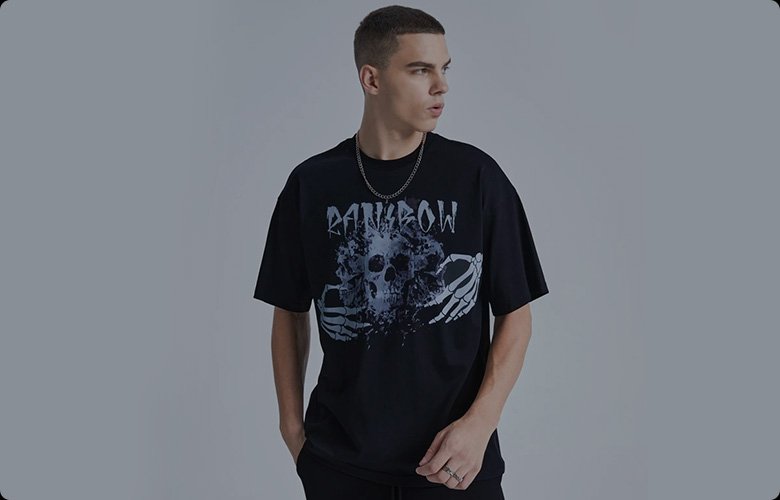
| Product | Oversized T-shirt |
| Composition | 100% cotton |
| Construction | Single jersey |
| Target weight | 240 GSM |
| Hand feel | Dense, smooth, and slightly dry |
| Fit | Boxy with dropped shoulders |
| Color | Washed black |
| Decoration | Large screen print |
| Performance | Controlled shrinkage and good opacity |
| Quantity | 100 garments |
This brief gives the supplier enough information to recommend suitable options.
Brands developing custom silhouettes can review our Oversized T-Shirt Manufacturing Service.
Step 2: Choose the Right Sourcing Route
Streetwear brands can source fabric through several channels.
Fabric Mill
A mill knits or weaves fabric and may also provide dyeing or finishing.
Choose a mill when:
- You need custom development.
- Your order can meet the material minimum.
- You require stable repeat production.
- Fabric is central to the product.
Fabric Wholesaler or Converter
A wholesaler or converter may offer fabrics that are already developed and available in smaller quantities.
Choose this route when:
- Your quantity is limited.
- You need faster sampling.
- Standard colors are acceptable.
- You want to compare several options quickly.
Garment Manufacturer
A full-package clothing manufacturer can source fabric and produce the finished garment.
Choose this route when:
- You want one supplier to manage development.
- You do not have textile sourcing experience.
- The fabric must work with the pattern and sewing process.
- You need sampling, decoration, labels, and packaging.
FuKi Apparel supports fabric selection, pattern development, sampling, and production through its OEM and ODM Streetwear Service.
Sourcing Agent
An agent can search several mills or markets on your behalf.
This may be useful when:
- You need access to a wider supplier network.
- You are sourcing several material categories.
- Communication with individual mills is difficult.
Confirm how the agent charges, which suppliers are involved, and who is responsible when the bulk material differs from the approved sample.
Step 3: Decide Between Stock and Custom Fabric
This is one of the most important sourcing decisions.
| Factor | Stock Fabric | Custom Fabric |
|---|---|---|
| MOQ | Usually lower | Usually higher |
| Sampling speed | Faster | Slower |
| Color choice | Limited to available shades | Can be developed |
| Composition | Existing specification | Can be adjusted |
| GSM | Existing range | Can be customized |
| Brand differentiation | Moderate | Higher |
| Repeat availability | Must be confirmed | Can be planned |
| Development risk | Lower | Higher |
| Best for | Startups and test orders | Established or fabric-led products |
Choose Stock Fabric When
- You are launching your first collection.
- The order quantity is limited.
- You need samples quickly.
- A standard black, gray, cream, or navy works.
- The product is mainly differentiated by fit or graphics.
- You want to reduce development risk.
Choose Custom Fabric When
- The fabric is a signature brand feature.
- You need a special weight, texture, or composition.
- The available market options do not meet your requirements.
- You have repeat-order potential.
- You can support material development and minimums.
For custom knitting, dyeing, finishes, and material matching, explore FuKi Apparel Custom Fabric Services.
My Recommendation for New Brands
I usually recommend beginning with a suitable available fabric and investing more time in fit, artwork, and garment quality.
After the product has proven demand, the brand can develop a more exclusive material for repeat production.
Step 4: Request and Compare Fabric Swatches
Never select fabric only from photographs.
A photo cannot reliably show:
- Weight
- Density
- Thickness
- Softness
- Drape
- Stretch
- Recovery
- Surface hairiness
- Opacity
- Color in natural light
Request physical swatches or sample yardage.
Fabric Comparison Checklist
| Area | What to Check |
|---|---|
| Composition | Does it match the stated fiber content? |
| GSM | Is it suitable for the product? |
| Surface | Smooth, dry, brushed, hairy, or textured? |
| Drape | Does it flow or hold its shape? |
| Stretch | How far does it stretch? |
| Recovery | Does it return to its original shape? |
| Opacity | Is it transparent under light or stretch? |
| Color | Does it match the intended collection? |
| Width | Is it efficient for cutting? |
| Finish | Pre-shrunk, brushed, washed, coated, or softened? |
Use a Swatch Comparison Sheet
Give each option a reference number and record:
- Supplier
- Fabric code
- Composition
- GSM
- Width
- Price
- MOQ
- Lead time
- Available colors
- Test results
- Intended product
This prevents confusion when several fabrics look similar.
Brands can also review our Streetwear Fabric Catalog for material directions used across T-shirts, hoodies, pants, denim, and outerwear.
Step 5: Check MOQ, Price, and Lead Time
A good fabric is not useful when it cannot support your production plan.
Ask the supplier:
- What is the MOQ per fabric?
- Is there a minimum per color?
- Is the fabric currently available?
- How much stock is available?
- Can the same fabric be reordered?
- What is the custom dyeing minimum?
- How long does bulk knitting or dyeing take?
- Is sample yardage charged separately?
- Does the price include dyeing and finishing?
- How long is the quotation valid?
Separate Fabric MOQ From Garment MOQ
A clothing manufacturer may accept 100 garments, but the fabric mill may require more material than those garments consume.
Possible solutions include:
- Using available fabric
- Choosing an available color
- Sharing one fabric across several products
- Buying and storing leftover material
- Accepting a material surcharge
- Increasing the order quantity
Do not approve a product sample until you understand how the bulk fabric will be supplied.
Step 6: Test the Fabric in a Garment Sample
A swatch can feel excellent but perform poorly after it is cut and sewn.
The garment sample reveals how the fabric interacts with:
- Pattern shape
- Seams
- Rib
- Pockets
- Hoods
- Printing
- Embroidery
- Washing
- Finished measurements
What I Check in the Sample
For a T-shirt:
- Shoulder structure
- Body drape
- Sleeve volume
- Collar recovery
- Opacity
- Print surface
- Twisting after washing
For a hoodie:
- Hood weight
- Shoulder balance
- Rib recovery
- Seam thickness
- Pocket shape
- Warmth
- Pilling
- Shrinkage
For custom hoodie development, review our Oversized Hoodie Manufacturing Service.
The correct fabric is not the one that feels best as a swatch. It is the one that performs best in the finished garment.
Step 7: Verify Quality and Performance
Testing should match the product’s real use.
Depending on the material, consider checking:
- Fiber composition
- Fabric weight
- Shrinkage
- Colorfastness to washing
- Color transfer through rubbing
- Pilling
- Tensile or tear strength
- Seam performance
- Stretch and recovery
- Print or embroidery durability
The AATCC Testing and Standards Resource provides recognized methods for evaluating textile colorfastness, appearance, dimensional change, and other performance areas.
The ASTM Textile Standards Collection also covers physical, mechanical, and chemical textile properties.
Not every first order needs a full laboratory package. I choose tests according to:
- Product risk
- Fabric type
- Selling market
- Customer requirements
- Decoration
- Care instructions
- Order value
FuKi Apparel can support production-stage checks through its Streetwear Quality Control Service.
Step 8: Review Certifications and Claims
Do not accept a sustainability or safety claim without checking what is actually certified.
Ask:
- Is the supplier certified, or only one fabric?
- Is the certificate still valid?
- Does it cover the correct facility?
- Does it cover the required material and processing stage?
- Can the supplier provide a transaction or scope document?
- Are you allowed to use the certification claim on your product?
Useful Verification Resources
- GOTS Certified Suppliers Database for certified organic textile suppliers
- OEKO-TEX Buying Guide for labelled products and suppliers
- Textile Exchange Fiber and Materials Matrix for comparing material sourcing considerations
- CottonWorks Sourcing Resources for cotton mills, sourcing education, and supply-chain information
A certificate held by one supplier does not automatically mean every fabric it sells is covered. Match the document to the exact material and order.
Step 9: Approve the Bulk Fabric Standard
The approved sample fabric and the bulk fabric must be compared before cutting.
Check:
- Composition
- GSM
- Width
- Color
- Hand feel
- Stretch
- Recovery
- Surface
- Shrinkage
- Shade variation
- Defects
Keep a Fabric Approval Standard
Your approval record should include:
- Fabric code
- Supplier name
- Approved swatch
- Color reference
- Test report
- GSM tolerance
- Width
- Approved hand feel
- Bulk lot information
- Wash result
For colors or finishes with natural variation, approve a light, target, and dark range.
Do not allow full cutting to begin when the bulk material is visibly different from the approved standard.
Fabric Sourcing Decisions by Product
| Product | Practical Fabric Starting Point | Main Sourcing Risk |
|---|---|---|
| Graphic T-shirt | Cotton jersey | Surface hairiness and shrinkage |
| Heavyweight T-shirt | Dense cotton jersey | Stiffness and collar balance |
| Oversized hoodie | French terry or fleece | Shrinkage, pilling, and hood weight |
| Sweatpants | French terry or fleece | Knee growth and rib recovery |
| Cargo pants | Cotton twill or ripstop | Strength, color, and pocket support |
| Denim jeans | Denim | Wash variation and shrinkage |
| Technical jacket | Nylon or polyester | Coating, color, and seam compatibility |
| Varsity jacket | Several materials | Shade and shrinkage differences |
Supplier Scorecard
I recommend comparing suppliers with a weighted scorecard.
| Category | Suggested Weight |
|---|---|
| Fabric matches the brief | 25% |
| Sample quality | 20% |
| Bulk consistency | 15% |
| MOQ and price | 10% |
| Lead time | 10% |
| Communication | 10% |
| Testing and documentation | 5% |
| Reorder ability | 5% |
| Total | 100% |
Do not choose the lowest-priced supplier when the fabric only partially matches the product.
A slightly higher fabric cost may be justified when it improves fit, print quality, wash performance, and repeat consistency.
Common Fabric Sourcing Mistakes
Starting With GSM Alone
GSM measures weight, not softness, density, durability, or quality.
Approving Fabric From a Photo
Always request a physical swatch or garment sample.
Ignoring Bulk Availability
A sample fabric may be available in a small quantity but unavailable for production.
Choosing Too Many Custom Colors
Each custom color may create separate dyeing minimums and lead times.
Skipping Wash Testing
Cotton fabrics can shrink, twist, fade, or change in hand feel.
Forgetting Decoration Compatibility
Dense embroidery, puff print, DTG, and garment washing place different demands on fabric.
Trusting Unverified Certificates
Check the certificate holder, scope, validity, and exact product coverage.
Changing Fabric After Fit Approval
A different fabric can change the drape, stretch, measurements, and complete silhouette.
Frequently Asked Questions
Where can I source streetwear fabrics?
You can source from fabric mills, wholesalers, sourcing agents, textile markets, or full-package streetwear manufacturers.
Should a new brand use stock or custom fabric?
Stock fabric is usually safer for a new brand because it offers lower minimums, faster development, and less financial risk.
How do I know whether a fabric is high quality?
Check its composition, construction, surface, recovery, shrinkage, colorfastness, pilling, and performance in the finished garment.
Do I need to test every fabric?
At minimum, test the material in a garment sample and complete a wash test. Additional laboratory testing should be selected according to product risk and market requirements.
What information should I send a fabric supplier?
Send the product type, composition, GSM, construction, color, finish, stretch, quantity, decoration, target price, and delivery schedule.
Can I use one fabric for several products?
Yes. Sharing one fabric across hoodies, sweatpants, shorts, or sweatshirts can help meet material minimums and reduce leftovers.
How do I prevent bulk fabric from changing?
Keep an approved swatch, technical specification, color reference, test report, and bulk approval process. Compare the production lot before cutting.
Final Recommendation
To source streetwear fabrics successfully:
- Start with a detailed product brief.
- Choose the right supplier type.
- Compare stock and custom options.
- Review physical swatches.
- Confirm MOQ, price, availability, and lead time.
- Make a garment sample in the actual fabric.
- Test wash and performance.
- Verify certifications and claims.
- Approve the bulk material before cutting.
My main recommendation is:
Source fabric as part of the complete garment—not as an isolated material decision. The fabric must support the fit, decoration, wash process, target price, and customer use.
FuKi Apparel supports streetwear brands with fabric sourcing, custom fabric development, pattern making, sampling, printing, embroidery, garment washing, labels, packaging, quality control, and bulk production.
Visit FuKi Apparel or contact our streetwear production team to discuss your fabric requirements.