
A reliable streetwear manufacturer does more than make attractive samples. It should provide clear quotations, realistic timelines, consistent quality, material traceability, structured sampling, and honest communication from development to delivery.
From my experience working with custom streetwear projects, the strongest manufacturers do not promise that every order will be perfect. Instead, they identify risks early, document approvals, control production, and explain how problems will be corrected.
Quick answer: A reliable streetwear manufacturer has proven product experience, transparent pricing, responsive communication, controlled sampling, repeatable quality standards, realistic lead times, and clear responsibility when something goes wrong.
Table of Contents
- Reliability Checklist
- 1. Relevant Streetwear Experience
- 2. Clear and Honest Communication
- 3. A Controlled Sampling Process
- 4. Transparent Pricing and MOQ
- 5. Reliable Quality Control
- 6. Realistic Production Timelines
- 7. Business Verification and Transparency
- How to Compare Manufacturers
- Common Warning Signs
- Frequently Asked Questions
- Final Recommendation
Reliability Checklist
Before placing an order, check whether the manufacturer can provide the following:
| Reliability Factor | What You Should Expect |
|---|---|
| Product experience | Examples of similar T-shirts, hoodies, pants, or jackets |
| Communication | Clear answers instead of vague promises |
| Sampling | Measurements, fabric, artwork, and revisions recorded |
| Pricing | A quotation showing what is included |
| MOQ | Minimums explained by style, color, fabric, and trim |
| Quality control | Fabric, sewing, decoration, and final inspections |
| Timeline | Separate sampling, production, and shipping schedules |
| Transparency | Business details, factory information, and production evidence |
| Problem solving | A clear response when quality or delivery issues appear |
My most important rule is simple:
Judge a manufacturer by its process, not only by its sample photos or lowest quotation.
1. Relevant Streetwear Experience
A manufacturer may produce clothing successfully but still lack the experience required for streetwear.
Streetwear often requires knowledge of:
- Oversized and boxy patterns
- Heavyweight cotton
- Dropped shoulders
- Garment washing
- Puff and high-density printing
- Large embroidery
- Cargo construction
- Custom labels and trims
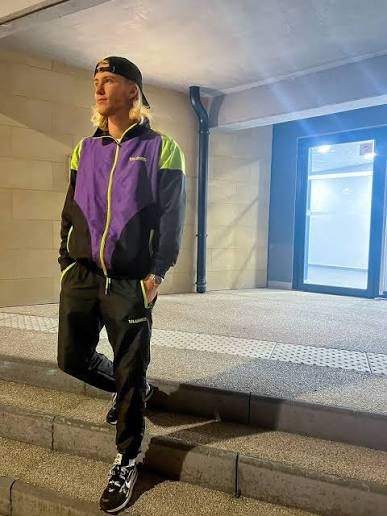
Ask to see products similar to your design.
For example, a factory that mainly produces basic uniforms may not understand how to balance a short body, wide chest, low shoulder seam, and larger sleeve opening.
Questions to Ask
- Have you produced this product before?
- Can you show similar fabric weights and constructions?
- Can you develop a custom pattern?
- Which printing and washing techniques do you handle?
- Which parts are completed in-house or outsourced?
Brands needing original patterns and materials can review our Streetwear OEM and ODM Service.
2. Clear and Honest Communication
Reliable communication does not mean replying “yes” to every request.
A strong manufacturer should explain:
- What is possible
- What needs testing
- Which detail may increase cost
- Which material may delay production
- Which design could create a quality risk
From my experience, an honest warning before production is more valuable than a confident promise followed by an excuse.
Good Communication Signs
- Questions are answered directly.
- Measurements and materials are confirmed in writing.
- Sample comments are recorded.
- Problems are reported before they become serious.
- One person is responsible for following the project.
- The manufacturer gives realistic solutions.
Weak Communication Signs
- The supplier agrees to everything immediately.
- Prices change without explanation.
- Important questions are ignored.
- Updates are provided only after repeated follow-up.
- Verbal promises are not added to the order documents.
Keep important approvals in email, a tech pack, a sample comment sheet, or another written record.
3. A Controlled Sampling Process
Sampling shows whether the manufacturer can turn your idea into a repeatable product.
A proper sample review should cover:
- Fabric and GSM
- Garment measurements
- Fit and proportions
- Stitching and construction
- Printing or embroidery
- Labels and trims
- Wash performance
The first sample does not always need to be perfect. However, the manufacturer should understand your comments and improve the next version.
A Reliable Sample Process
| Stage | Main Purpose |
|---|---|
| Development sample | Test the design and construction |
| Fit correction | Adjust measurements and silhouette |
| Print or embroidery test | Confirm color, size, placement, and texture |
| Pre-production sample | Approve the complete product before bulk cutting |
| Approved reference | Provide a standard for bulk inspection |
Do not approve a sample only from photographs. Fabric hand feel, garment balance, stitching strength, and fit must be checked physically whenever possible.
4. Transparent Pricing and MOQ
A reliable manufacturer should explain what the price includes.
A quotation may cover:
- Fabric
- Cutting and sewing
- Printing or embroidery
- Washing
- Labels
- Packaging
- Inspection
Other costs may be separate, such as:
- Sample development
- Custom fabric dyeing
- Print setup
- Embroidery digitizing
- Custom hardware
- Freight
- Import charges
Questions to Confirm
- Is the MOQ per style or per color?
- Can sizes be mixed?
- Is decoration included?
- Are labels and packaging included?
- What causes the price to change?
- What shipping term is being quoted?
The cheapest quotation is not always the lowest-risk option. It may use a different fabric, exclude important details, or depend on unrealistic assumptions.
A dependable supplier should be willing to explain the cost instead of providing only one unexplained number.
5. Reliable Quality Control
Quality control should happen throughout production, not only after every garment has been packed.
A practical inspection system includes:
- Incoming fabric inspection
- Color and fabric approval
- Cutting checks
- Print or embroidery checks
- Sewing-line inspection
- Measurement checks
- Final inspection
- Packing verification

For washed garments, the team should also check shrinkage, twisting, color variation, and decoration performance.
You can review a typical process through Streetwear Quality Control Services.
Ask for Evidence
A manufacturer should be able to provide:
- Fabric inspection photos
- Measurement reports
- Production photos
- Print or embroidery tests
- Packing details
- Final inspection results
Certifications can support your evaluation, but they should not replace product inspection. ISO Quality Management Resources explain how structured quality systems help organizations control and improve their processes.
6. Realistic Production Timelines
Reliable manufacturers separate the timeline into stages.
| Stage | Typical Planning Requirement |
|---|---|
| Material sourcing | Depends on stock or custom development |
| Sample development | Begins after specifications are confirmed |
| Sample revision | Required when important changes remain |
| Bulk production | Begins after approval and material readiness |
| Inspection and packing | Completed before shipment |
| Shipping | Separate from factory production time |
Be careful when a supplier promises an unusually fast delivery without checking:
- Fabric availability
- Artwork
- Order quantity
- Wash treatment
- Custom trims
- Sample approval
A realistic schedule is more valuable than the shortest promise.
Good manufacturers also tell you which part of the order controls the completion date. It may be fabric dyeing, embroidery, custom zippers, washing, or packaging.
7. Business Verification and Transparency
Before paying a new supplier, verify that the business information is consistent.
Check:
- Registered company name
- Business address
- Company email domain
- Bank account name
- Website and contact details
- Product specialization
- Factory or production videos
- Export experience
- References when available
You can also request a live video call or factory visit.
The Trade.gov Due Diligence Guide recommends checking potential business partners before entering an international transaction.
Important Reminder
A polished website does not prove production ability. At the same time, a simple website does not automatically mean the supplier is unreliable.
Compare several types of evidence instead of relying on one signal.
How to Compare Manufacturers
Use a scorecard instead of choosing only by price.
| Category | Suggested Weight |
|---|---|
| Relevant product experience | 20% |
| Sample quality | 20% |
| Communication | 15% |
| Quality-control process | 15% |
| Pricing transparency | 10% |
| Timeline reliability | 10% |
| Business verification | 5% |
| Problem-solving ability | 5% |
| Total | 100% |
My Decision Guide
Choose the manufacturer with the best overall process when:
- You are building a long-term brand.
- Fit and fabric are important.
- You plan to reorder.
- Your product uses custom decoration or washing.
- Delivery dates affect launches or wholesale customers.
Choose a simpler supplier only when:
- The product is basic.
- Specifications are already proven.
- The order is mainly a short-term test.
- The quality risk is easy to control.
FuKi Apparel supports fabric sourcing, pattern development, samples, decoration, quality control, and bulk production. Learn more through our Custom Streetwear Manufacturing Services.
Common Warning Signs
Be cautious when a manufacturer:
- Offers a price before understanding the design
- Refuses to provide material details
- Uses copied or inconsistent product photos
- Pressures you to pay immediately
- Changes the bank account without a clear reason
- Promises zero defects
- Guarantees an unrealistic delivery date
- Avoids written specifications
- Cannot explain its quality process
- Blames every problem on the buyer
One warning sign may have a reasonable explanation. Several warning signs together should not be ignored.
For products sold in the United States, brands should also understand labeling responsibilities. The FTC Clothing and Textiles Guidance provides information about textile labeling and related requirements.
Frequently Asked Questions
How can I tell whether a streetwear manufacturer is legitimate?
Check its registered business information, company address, bank details, product history, production evidence, and communication consistency. Request samples before placing a large order.
Should I choose the manufacturer with the lowest price?
Not automatically. Compare the fabric, construction, decoration, packaging, quality control, and shipping terms included in each quotation.
Is a good sample enough to prove reliability?
No. A sample proves development ability, but bulk consistency also depends on material control, production management, inspection, and communication.
Should a manufacturer provide a tech pack?
The brand may provide the tech pack, or the manufacturer may help develop one. In either case, the final production specifications should be written and approved.
Are factory certifications necessary?
They may be useful depending on your market and customer requirements. However, certification alone does not guarantee that a specific order will meet your standards.
Should I visit the factory?
A factory visit can provide useful information about production, equipment, organization, and quality control. A live video inspection is another option when travel is not practical.
What should I order first?
Start with a sample or a focused low-risk order. Do not begin with several complex styles until the supplier has demonstrated reliable development and production.
Final Recommendation
A reliable streetwear manufacturer should provide:
- Relevant product experience
- Clear communication
- Structured sampling
- Transparent pricing
- Realistic MOQ requirements
- Multi-stage quality control
- Achievable production timelines
- Verifiable business information
- Responsible problem solving
My final rule is:
Do not choose a manufacturer because it promises the lowest price or fastest delivery. Choose the one that can clearly explain how your product will be developed, controlled, checked, and repeated.
FuKi Apparel supports emerging and established brands with custom fabrics, streetwear patterns, sampling, printing, embroidery, garment washing, private labels, packaging, and bulk production.
Visit FuKi Apparel or Contact Our Streetwear Production Team to discuss your product requirements.
