
If you’ve seen Denim Tears jeans covered in cotton wreath graphics and finished with a Levi’s red tab, it is easy to ask:
“Is Denim Tears actually a Levi’s brand?”
That is a fair question, and I hear it often.
The short answer is no. Denim Tears is not owned by Levi’s.
But the longer answer is more interesting.
Denim Tears is an independent, creator-led brand that has worked with Levi’s on special collections. Because those collaborations became so recognizable, many people assume Denim Tears belongs to Levi’s.
It does not.
This guide explains the relationship clearly so you can understand what Denim Tears is, what Levi’s does, and why the collaboration feels so closely connected.
Table of Contents
- Quick Answer
- What Is Denim Tears?
- What Is Levi’s Role?
- Why the Collaboration Feels So Strong
- Denim Tears vs. Levi’s: Key Differences
- Comparison Table
- Should You Buy Denim Tears x Levi’s?
- FAQ
- Conclusion
- Internal Reference
- SEO Configuration
Quick Answer
No, Denim Tears is not by Levi’s.
Denim Tears is an independent brand founded by Tremaine Emory. Levi’s is a collaboration partner, not the owner.
The two brands have created limited-edition collections together, but they remain separate entities.
What Is Denim Tears?
Denim Tears is a culture-first streetwear brand created by Tremaine Emory.
The brand is known for using clothing, especially denim, to explore Black American history, labor, memory, and identity. One of its most recognizable visual symbols is the cotton wreath, which carries historical and cultural meaning far beyond decoration.
That is why Denim Tears is often understood as more than a fashion label. It is a narrative-driven brand.
From my perspective, Denim Tears does not build products simply to follow trends. It builds products to say something.
That is an important reason why people connect with it so strongly.
What Is Levi’s Role?
Levi’s is a heritage denim company with deep roots in American workwear and mass denim production.
When Levi’s works with Denim Tears, Levi’s typically provides:
- Original Levi’s denim bases
- Classic product foundations such as 501 jeans or trucker jackets
- Large-scale manufacturing knowledge
- Distribution power
- Archival denim credibility
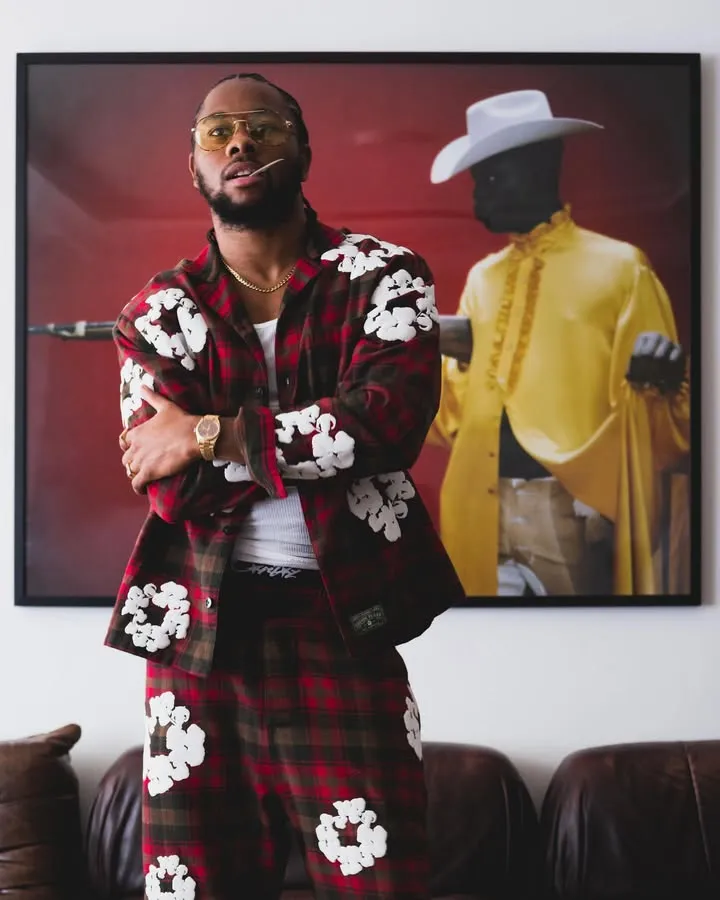
Denim Tears usually provides:
- Cultural concept
- Graphic language
- Symbolic direction
- Storytelling framework
- Creative authorship
So the final product is co-created.
But collaboration does not mean ownership.
Levi’s helps produce and support the garment platform. Denim Tears shapes the message and meaning.
Why the Collaboration Feels So Strong
This partnership feels unusually powerful because the historical connection makes sense.
Levi’s represents:
- American labor history
- Workwear heritage
- Industrial denim tradition
Denim Tears represents:
- The people behind that labor
- The cultural and historical weight tied to cotton and work
- A reinterpreted narrative through modern fashion
That is why the collaboration feels deeper than a normal brand crossover.
It does not feel random. It feels aligned.
In simple terms, Levi’s brings the historical denim canvas, and Denim Tears brings the cultural voice placed onto that canvas.
That is also why many buyers confuse collaboration with ownership. The partnership is so visually and conceptually strong that it can look like a built-in extension of Levi’s.
But it is still a partnership, not a parent-child brand relationship.
Denim Tears vs. Levi’s: Key Differences
Even when they work together, they are not the same kind of brand.
Levi’s is:
- A global denim corporation
- Built for scale
- Focused on broad market access
- Rooted in heritage manufacturing
Denim Tears is:
- A creator-led label
- Built around concept and message
- Released in smaller drops
- Focused on cultural storytelling
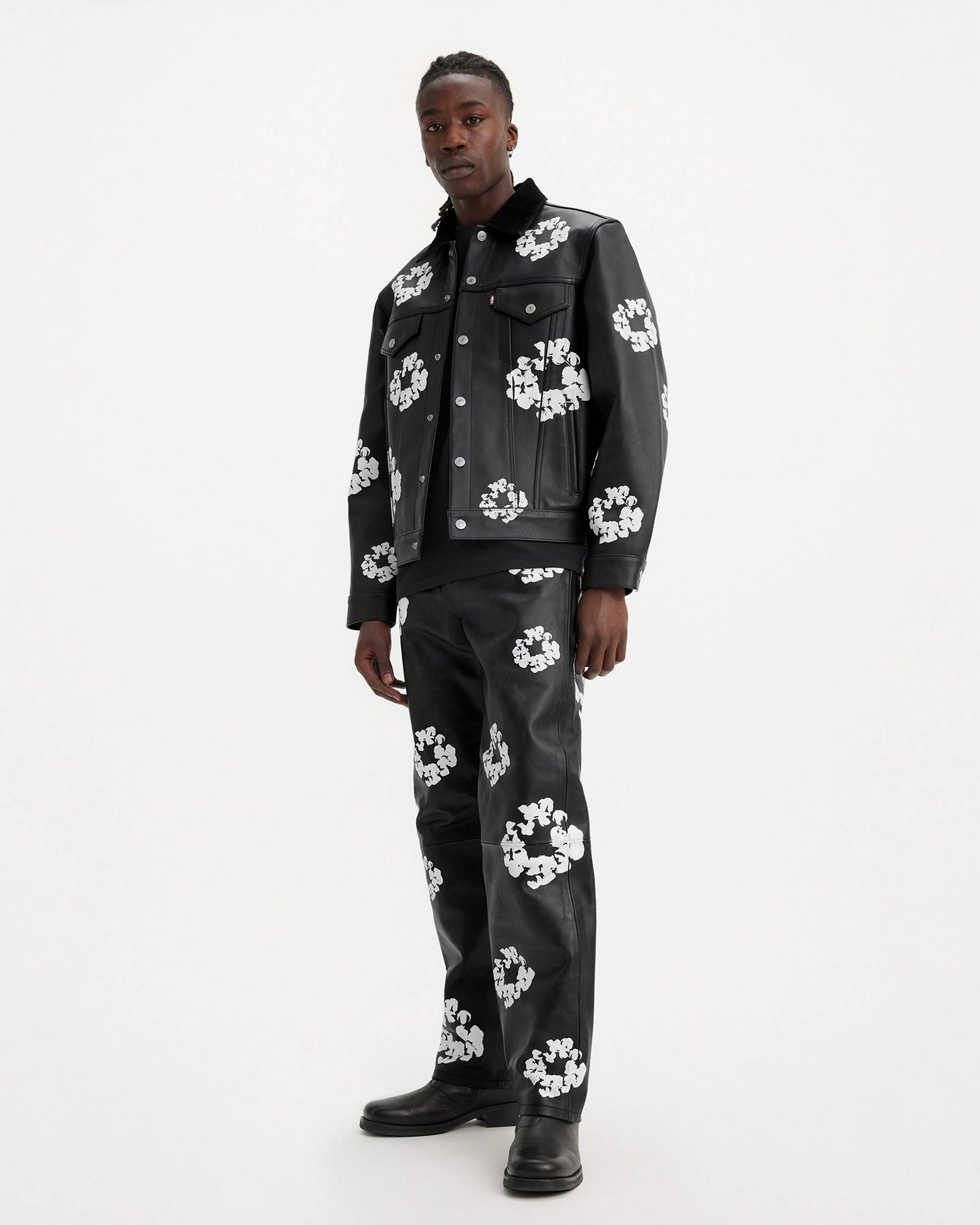
Levi’s often leads with function and category legacy.
Denim Tears leads with meaning and interpretation.
They meet in the product, but they do not become the same brand.
Comparison Table
| Brand | Role in Collaboration | Owns the Brand? |
|---|---|---|
| Levi’s | Manufacturer and collaboration partner | No |
| Denim Tears | Independent creative brand and concept owner | Yes |
A simple way to understand it is this:
Levi’s is the denim platform.
Denim Tears is the narrative voice.
Should You Buy Denim Tears x Levi’s?
It depends on what matters to you.
You should consider buying Denim Tears x Levi’s if you:
- Care about cultural storytelling in clothing
- Appreciate heritage denim foundations
- Want limited-edition pieces
- Like fashion with stronger symbolic meaning
You may want to skip it if you:
- Only want basic jeans
- Do not care about narrative or symbolism
- Prefer easy-to-find mass-market denim
- Just want value based on utility alone
These pieces are usually not meant to function as ordinary jeans only.
They are designed to carry message, identity, and context.
That is why some buyers see them as worth it, while others do not.
FAQ
Is Denim Tears owned by Levi’s?
No. Denim Tears is an independent brand.
Are all Denim Tears products made by Levi’s?
No. Only certain collaboration products involve Levi’s.
Why does Denim Tears work with Levi’s so often?
Because Levi’s denim history aligns naturally with Denim Tears’ cultural themes and storytelling direction.
Is Denim Tears a sub-brand of Levi’s?
No. It is a separate brand that collaborates with Levi’s on selected releases.
Conclusion
Denim Tears is not by Levi’s.
It is with Levi’s.
That difference matters.
Levi’s is a global denim manufacturer with historic reach. Denim Tears is an independent cultural brand with a distinct voice.
When they collaborate, the result is not just another denim product. It becomes a conversation between heritage manufacturing and modern cultural storytelling.
That is what makes the partnership so strong, and that is why so many people misunderstand the relationship at first.
Internal Reference
If you are building a fashion brand and want to understand how manufacturing strength can work together with stronger story-driven design, explore how narrative-based apparel development works at 👉 Fuki Apparel
Strong products are not only made well.
They also mean something.
