
People often ask, “Who runs Denim Tears?” or “Is there a CEO behind the brand?”
From the outside, Denim Tears looks like a hype-driven streetwear label. But from inside the fashion industry, it’s something very different:
Denim Tears is a creator-led brand, not a corporate one.
So the real answer is simple:
Tremaine Emory is the founder and de facto CEO of Denim Tears.
There isn’t a public corporate executive team. The brand is built around one voice, one vision, and one cultural mission.
Table of Contents
- Quick Answer
- Is There an Official CEO?
- Who Is Tremaine Emory?
- Why Denim Tears Doesn’t Look “Corporate”
- Creator-Led vs. Corporate Brands
- Comparison Table
- Does It Matter Who the CEO Is?
- FAQ
- Conclusion
- Internal Reference
Quick Answer
Denim Tears does not have a publicly listed corporate CEO.
The brand is founded and led by Tremaine Emory, who functions as the creative head, cultural architect, and business leader of Denim Tears.
In practice, Tremaine Emory is the CEO.
Is There an Official CEO?
Unlike global fashion houses, Denim Tears is not structured like a traditional corporation.
- No public board
- No press-listed CEO role
- No investor-facing hierarchy
It operates more like an art-driven label than a retail machine.

That’s intentional.
Denim Tears is designed to protect meaning, not maximize volume.
Who Is Tremaine Emory?
Tremaine Emory is one of the most influential cultural figures in modern fashion.
He has:
- Worked closely with Kanye West
- Served as Creative Director at Supreme
- Shaped projects for Stüssy and major houses
- Built Denim Tears as his personal narrative brand
Fashion media such as Highsnobiety and Hypebeast often describe him as a bridge between history, hip-hop, and high fashion.
Denim Tears is not just his business—it’s his voice.
Why Denim Tears Doesn’t Look “Corporate”
From a manufacturing and brand-structure perspective, Denim Tears avoids:
- Constant product drops
- Mass-market expansion
- Franchise-style growth
- Overexposure
Instead, it focuses on:
- Cultural storytelling
- Small-batch production
- Meaning-driven design
- Slow, intentional releases
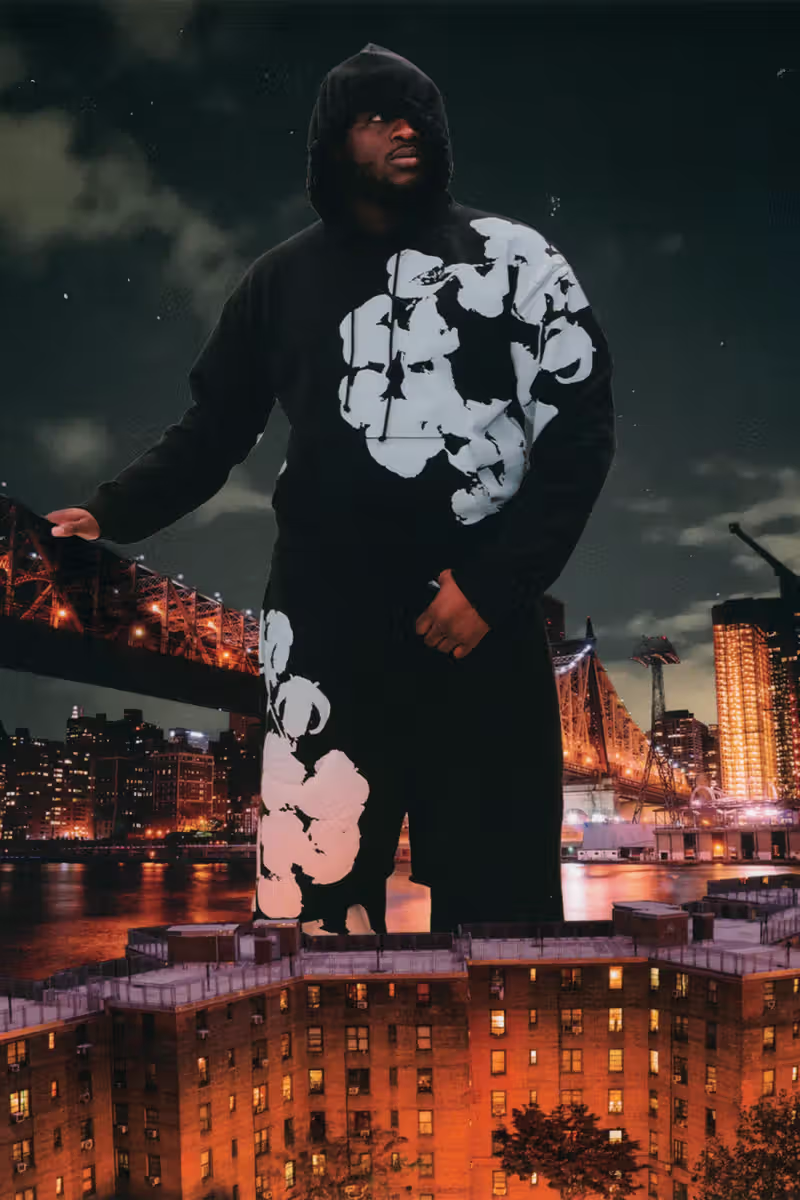
That’s why you don’t see press releases about executives.
The brand is the creator.
Creator-Led vs. Corporate Brands
| Brand Type | Who Leads It | What Drives Decisions |
|---|---|---|
| Corporate fashion | CEO + board | Revenue & scale |
| Celebrity merch | Artist | Fame & fanbase |
| Denim Tears | Tremaine Emory | Culture & narrative |
Denim Tears doesn’t optimize for speed.
It optimizes for meaning.
Comparison Table
| Brand | Public CEO? | Leadership Style | Core Purpose |
|---|---|---|---|
| Nike | Yes | Corporate | Global performance |
| Supreme | Yes | Brand-led corporate | Streetwear empire |
| Denim Tears | No | Creator-led | Cultural legacy |
Does It Matter Who the CEO Is?
Yes—because leadership defines intention.
A corporate CEO asks:
“How do we scale this?”
Tremaine Emory asks:
“What story needs to be told?”
That difference explains everything about Denim Tears:
- Why drops are rare
- Why symbols are heavy
- Why pieces feel emotional
- Why it resists trends
You’re not buying from a company.
You’re buying from a voice.
FAQ
Is Tremaine Emory officially titled “CEO”?
Not publicly. But he leads the brand in every meaningful way.
Is Denim Tears owned by a corporation?
No. It is creator-led and privately controlled.
Will Denim Tears become corporate one day?
Possibly—but its identity is built on independence.
Conclusion
Denim Tears doesn’t have a traditional CEO.
It has a creator at the center.
Tremaine Emory isn’t just the founder—he is the brand’s mind, heart, and direction.
That’s why Denim Tears feels different.
It isn’t managed.
It’s authored.
Internal Reference
If you’re building a brand where the creator’s voice stays at the center—from concept to production—explore how independent labels develop at fukiapparel.