
When developing an oversized streetwear T-shirt, the difference between 220 GSM and 300 GSM can be much bigger than it sounds.
Both can be considered premium fabrics.
Both can work for oversized T-shirts.
But the finished garments usually do not feel or fit the same.
A 220 GSM T-shirt tends to provide a balance between:
Structure + Comfort + Everyday Wearability
A 300 GSM T-shirt usually creates:
More Weight + Stronger Structure + Heavier Hand Feel
But this does not mean 300 GSM is automatically better.
From our experience developing custom streetwear, the right choice depends on the silhouette, fabric construction, climate, printing method, and the experience the brand wants to create.
Table of Contents
- What Is the Real Difference Between 220 GSM and 300 GSM?
- 1. 220 GSM Creates a More Balanced Streetwear T-Shirt
- 2. 300 GSM Creates a Stronger and Heavier Silhouette
- 3. How GSM Changes the Oversized Fit
- 4. How the Hand Feel Changes
- 5. Breathability and Everyday Comfort
- 6. Fabric Construction Still Matters More Than GSM Alone
- 7. How GSM Affects Screen Printing and Embroidery
- 8. Which GSM Is Better for Different Streetwear Styles?
- How We Choose Between 220 GSM and 300 GSM
- Frequently Asked Questions
- Final Recommendation
What Is the Real Difference Between 220 GSM and 300 GSM?
GSM means:
Grams per Square Meter
It measures the weight of the fabric.
So, in simple terms:
300 GSM fabric contains more weight per square meter than 220 GSM fabric.
However, GSM does not directly tell you:
- Exact thickness
- Softness
- Drape
- Stretch
- Surface quality
- Durability
A dense 220 GSM jersey can sometimes feel more compact than a softer 250 GSM fabric.
That is why physical fabric evaluation is still important.
In general, however, the difference between 220 GSM and 300 GSM becomes very noticeable once the fabric is made into an oversized T-shirt.
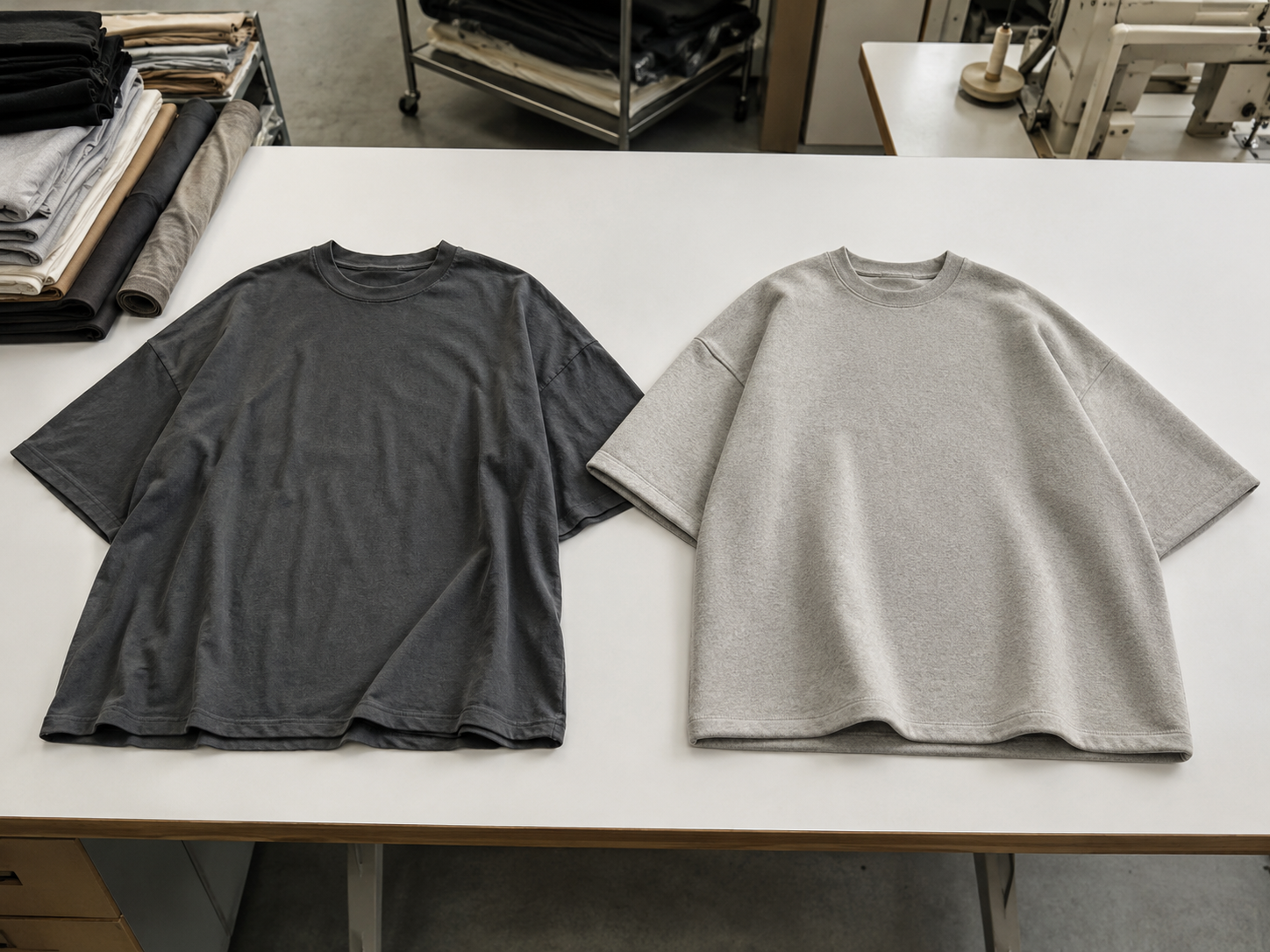
| Feature | 220 GSM | 300 GSM |
|---|---|---|
| Weight | Mid-heavyweight | Extra heavyweight |
| Structure | Good | Very strong |
| Drape | More natural | More rigid |
| Breathability | Better | Lower |
| Oversized Shape | Structured but relaxed | Strong and boxy |
| Layering | Easier | More difficult |
| Warm Climate | More suitable | Less suitable |
For more information about fabric selection:
How to Source Streetwear Fabrics
1. 220 GSM Creates a More Balanced Streetwear T-Shirt
220 GSM is a popular weight for premium streetwear because it provides enough structure without making the T-shirt excessively heavy.
It normally works well for:
- Oversized T-shirts
- Graphic tees
- Premium basics
- Vintage streetwear
- Everyday collections
A good 220 GSM cotton jersey can maintain:
- Dropped shoulders
- Wide sleeves
- Boxy body shape
while still allowing the garment to move naturally.
This is important for everyday streetwear.
The T-shirt should look substantial when worn, but it should still feel like a T-shirt.
For brands targeting customers who wear oversized tees throughout most of the year, 220 GSM can be a very practical starting point.
2. 300 GSM Creates a Stronger and Heavier Silhouette
300 GSM is significantly heavier.
When used correctly, it can create a very distinctive streetwear silhouette.
The fabric tends to hold:
- Shoulder shape
- Sleeve structure
- Wide body proportions
- Boxy hems
more strongly.
This can create the heavy, almost sweatshirt-like T-shirt appearance used in some premium streetwear collections.
300 GSM can work particularly well for:
- Statement oversized tees
- Luxury heavyweight basics
- Winter T-shirts
- Structured boxy silhouettes
However, the extra structure also changes the wearing experience.
A 300 GSM T-shirt may feel:
- Heavier
- Warmer
- Less flexible
- Less breathable
This is not necessarily a problem.
It simply creates a different product.
3. How GSM Changes the Oversized Fit
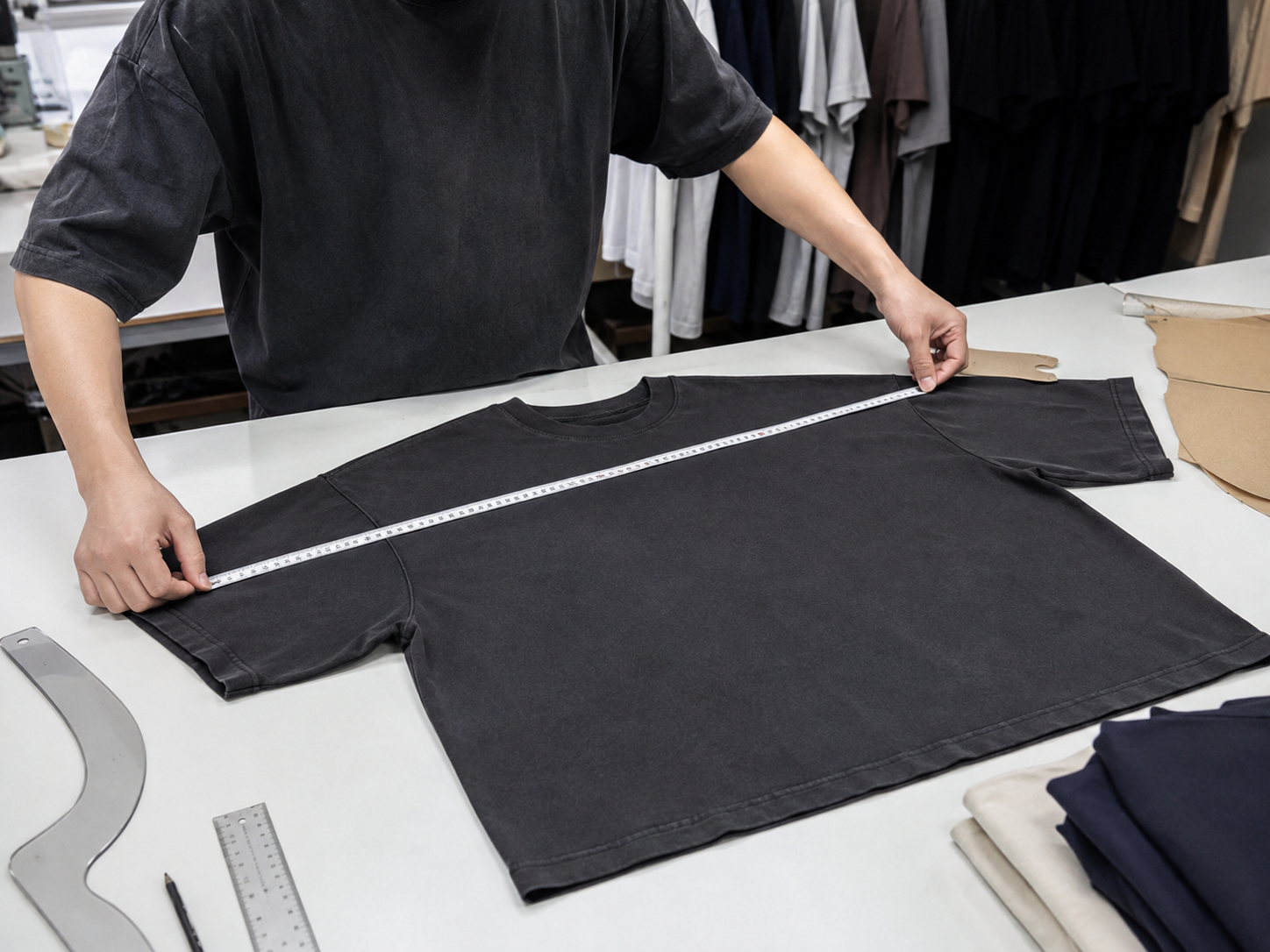
Fabric weight has a major influence on how an oversized pattern behaves.
Imagine using exactly the same pattern with two fabrics.
With 220 GSM Fabric
The garment may:
- Fall more naturally from the shoulder
- Create softer folds
- Move more easily
- Look relaxed
With 300 GSM Fabric
The same pattern may:
- Hold the shoulder more strongly
- Create a straighter side profile
- Produce wider-looking sleeves
- Maintain a more rigid boxy shape
This is why changing GSM without reviewing the sample can change the final silhouette.
For example, a pattern developed using 220 GSM jersey may need adjustment if the brand later decides to use 300 GSM fabric.
The relationship is:
Fabric + Pattern = Final Fit
not:
Pattern Alone = Final Fit
For oversized products, we recommend approving the fit using the actual production fabric whenever possible.
4. How the Hand Feel Changes
One of the biggest differences is how the garment feels in your hand and on the body.
220 GSM
Usually feels:
- Substantial
- Flexible
- Comfortable
- Easier to move in
300 GSM
Usually feels:
- Dense
- Heavy
- Thick
- More structured
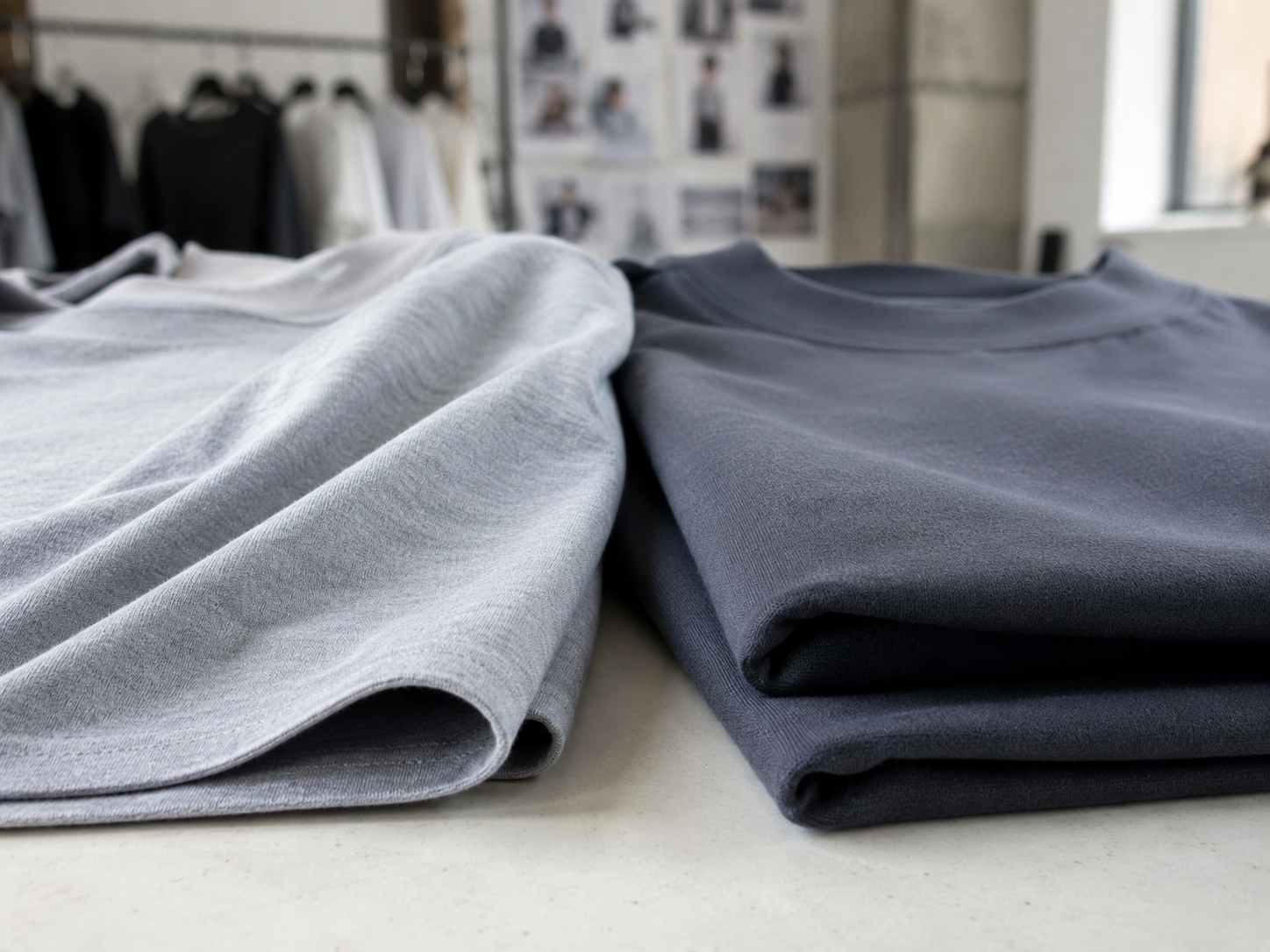
Some brands describe this as a more "premium" feel.
But heavier does not automatically mean better.
A poorly developed 300 GSM fabric can feel:
- Dry
- Hard
- Stiff
while a high-quality 220 GSM cotton can feel:
- Smooth
- Dense
- Soft
- Premium
That is why hand feel should be evaluated separately from GSM.
5. Breathability and Everyday Comfort
Another major difference is comfort.
A heavier fabric contains more material around the body.
That usually means the garment feels warmer.
220 GSM
More suitable for:
- Everyday wear
- Spring
- Fall
- Mild summer conditions
- Layering
300 GSM
More suitable for:
- Cooler weather
- Heavy streetwear styling
- Statement pieces
- Winter collections
For brands selling mainly in warm climates, 300 GSM may reduce the number of situations in which customers can comfortably wear the T-shirt.
For global streetwear brands, this is worth considering.
The heaviest fabric is not always the most commercially versatile fabric.
6. Fabric Construction Still Matters More Than GSM Alone
A common mistake is comparing only:
220 GSM vs 300 GSM
without considering how the fabrics are made.
Important variables include:
Cotton Quality
Different cotton fibers can create different softness and surface quality.
Yarn
Yarn count and yarn construction affect:
- Density
- Surface
- Hand feel
- Durability
Knit Density
A tightly knitted fabric can feel firmer.
A slightly more relaxed construction can provide more flexibility.
Finishing
Processes such as:
- Enzyme washing
- Softening
- Compacting
- Garment washing
can significantly change the final feel.
This means:
A good 220 GSM fabric can feel more premium than a poor 300 GSM fabric.
This is why we normally recommend selecting fabric based on the actual product instead of asking only for the highest GSM available.
7. How GSM Affects Screen Printing and Embroidery
Streetwear T-shirts often use large graphics.
Fabric structure can affect how those decorations perform.
Screen Printing
Both 220 GSM and 300 GSM can work well for screen printing.
A heavier fabric can provide a stable surface for:
- Large graphics
- Puff printing
- High-density printing
But the actual print result also depends on:
- Fabric texture
- Ink deposit
- Screen mesh
- Curing
For more information:
Custom Streetwear Printing Services
Embroidery
300 GSM fabric generally provides more support for embroidery than very lightweight jersey.
However, embroidery quality still depends on:
- Stitch density
- Backing
- Digitizing
- Hooping
A heavyweight fabric does not automatically eliminate embroidery distortion.
For large embroidered graphics, testing is still recommended.
8. Which GSM Is Better for Different Streetwear Styles?
The better fabric depends on the product concept.
Choose 220 GSM If You Want:
- Premium everyday streetwear
- Comfortable oversized fit
- Better breathability
- Easier layering
- Wider seasonal use
Choose 300 GSM If You Want:
- Extra heavyweight feeling
- Strong boxy structure
- Statement T-shirts
- Winter-focused streetwear
- More dramatic silhouette
There is also no reason every product in one collection needs the same GSM.
For example:
Core Oversized Tee
→ 220–240 GSM
Premium Heavy Tee
→ 260–300 GSM
This allows a brand to create different product levels without making every T-shirt extremely heavy.
How We Choose Between 220 GSM and 300 GSM
When developing a custom oversized T-shirt, we prefer looking at the complete garment rather than choosing fabric from a specification sheet alone.
A typical process is:
Define Silhouette
↓
Select Fabric Options
↓
Compare GSM and Hand Feel
↓
Make Sample
↓
Check Shoulder & Sleeve Shape
↓
Evaluate Drape
↓
Test Printing / Embroidery
↓
Wash Test if Required
↓
Approve
↓
Bulk Production
During sample review, we check:
- Overall weight
- Shoulder shape
- Sleeve fall
- Body structure
- Softness
- Surface appearance
- Shrinkage
- Decoration performance
This is especially important when switching between significantly different weights such as 220 GSM and 300 GSM.
The final decision should be made from the garment, not only from the GSM number.
Frequently Asked Questions
Is 220 GSM considered heavyweight for a T-shirt?
220 GSM is generally considered mid-heavyweight to heavyweight compared with standard basic T-shirts.
It is commonly suitable for premium oversized streetwear.
Is 300 GSM too heavy for a T-shirt?
Not necessarily.
300 GSM can work very well for structured heavyweight streetwear, but it will usually feel warmer and heavier than a standard T-shirt.
Which is better for oversized T-shirts: 220 GSM or 300 GSM?
For everyday oversized streetwear, 220 GSM is usually more versatile.
For a very structured statement silhouette, 300 GSM may be more suitable.
Does 300 GSM mean better quality?
No.
GSM measures weight.
Quality also depends on cotton, yarn, knitting, finishing, stitching, and overall garment construction.
Will 300 GSM hold a boxy shape better?
Usually yes.
A heavier and denser fabric generally provides more structure, but the knit construction and pattern also affect the final result.
Is 220 GSM better for screen printing?
Both 220 GSM and 300 GSM can perform well with screen printing.
The best printing setup depends on the fabric surface and artwork rather than GSM alone.
Which GSM is better for hot weather?
220 GSM is generally more practical than 300 GSM in warmer conditions because it is lighter and usually more breathable.
Final Recommendation
The biggest difference between 220 GSM and 300 GSM is not simply:
Light vs Heavy
The real difference is how the fabric changes:
Fit + Structure + Drape + Comfort + Wearing Experience
Choose 220 GSM when you want a premium oversized T-shirt that still feels comfortable and versatile.
Choose 300 GSM when you want a much heavier, more structured streetwear piece with a stronger boxy silhouette.
From our production experience, the safest approach is:
Compare Fabric → Make Sample → Check Fit → Test Decoration → Wash if Required → Approve
instead of choosing the highest GSM available.
For brands developing oversized T-shirts, heavyweight graphic tees, or custom streetwear collections, Fuki Apparel can help with fabric sourcing, sample development, printing, fit testing, and bulk production.
