
The first time I held a pair of Rick Owens boots, I understood immediately why people talk about them differently.
They don’t feel like “shoes.” They feel like objects—dense, raw, intentional.
As someone who has worked with premium fashion materials for years, I’m often asked:
“What exactly are Rick Owens boots made of, and why do they feel so different from other designer boots?”
This guide answers that in plain English. No jargon. No mystique.
You’ll learn:
- The core materials Rick Owens uses
- How each material behaves in real life
- Which materials suit different lifestyles
- How brands can recreate similar effects
Table of Contents
- Quick Answer
- Why Materials Matter in Rick Owens Boots
- Core Materials Used
- Material Comparison Table
- How These Materials Perform in Daily Wear
- Which Material Is Right for You?
- FAQ
- Internal Reference
Quick Answer
Rick Owens boots are mainly made from:
- Full-grain calf leather
- Horse leather (including shell types)
- Vegetable-tanned leather
- Heavy rubber, crepe, or TPU soles
- Industrial metal hardware
These materials are chosen to age visibly, not stay perfect.
They crease, darken, and develop personality over time.
Why Materials Matter in Rick Owens Boots
Most footwear brands aim for consistency.
Rick Owens designs for evolution.
From my experience in manufacturing, his boots stand out because:
- The leather is left natural
- Surfaces are minimally corrected
- Soles are intentionally heavy
- Wear is part of the design
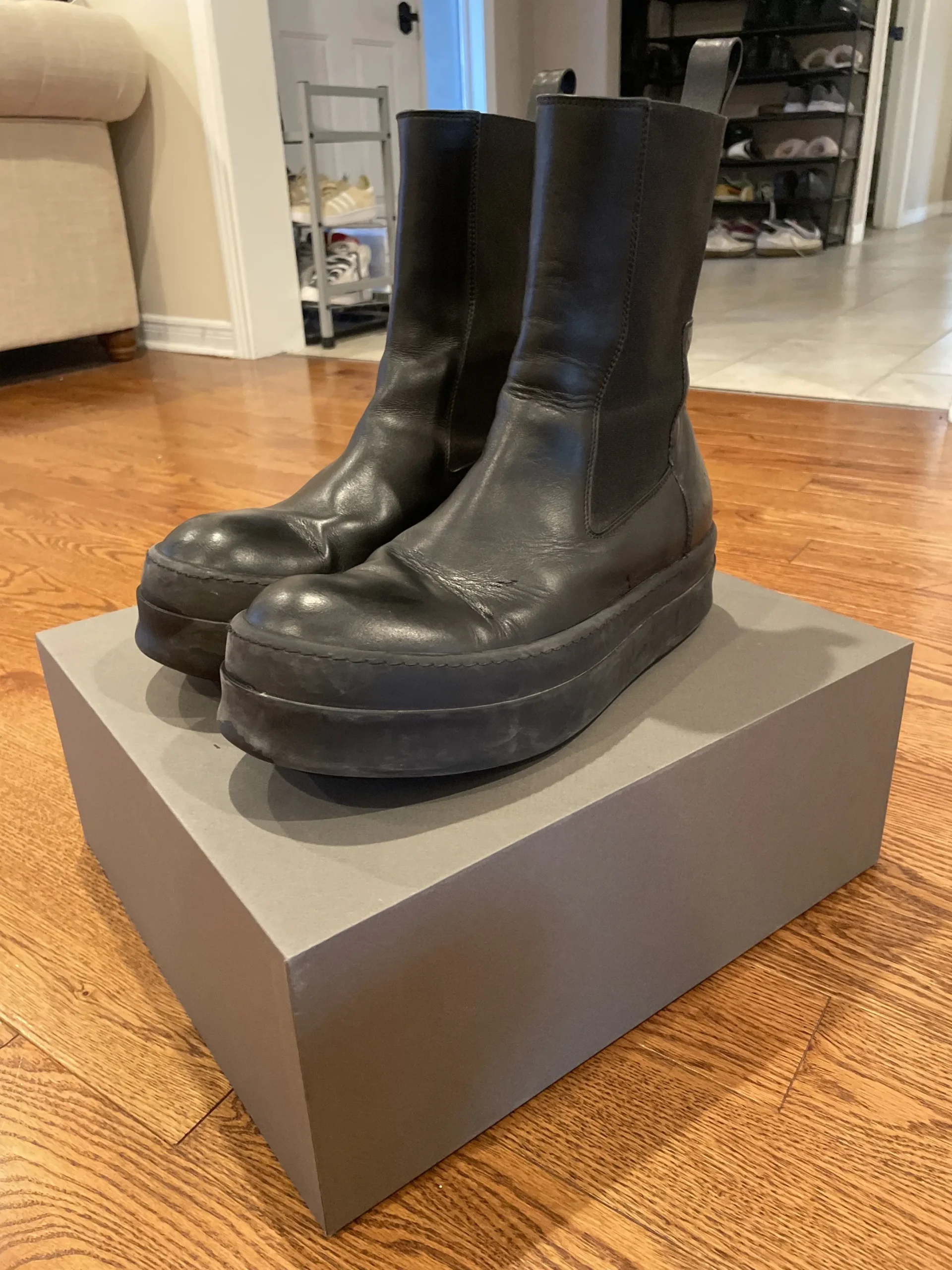
Two people wearing the same model for six months will end up with boots that look completely different.
That’s the point.
You can explore his official collection here:
Rick Owens
Core Materials Used
Full-Grain Calf Leather
This is the backbone of most Rick Owens boots.
- Thick, dense hide
- Natural grain kept intact
- High tear resistance
- Dramatic creasing over time
Because it’s not heavily coated, every bend and fold becomes visible.
Best for:
Daily wear, street styling, long-term aging.
Horse Leather
Used in select high-end models.
- Tighter fiber structure
- Stiffer feel
- Develops shine with wear
- Extremely durable
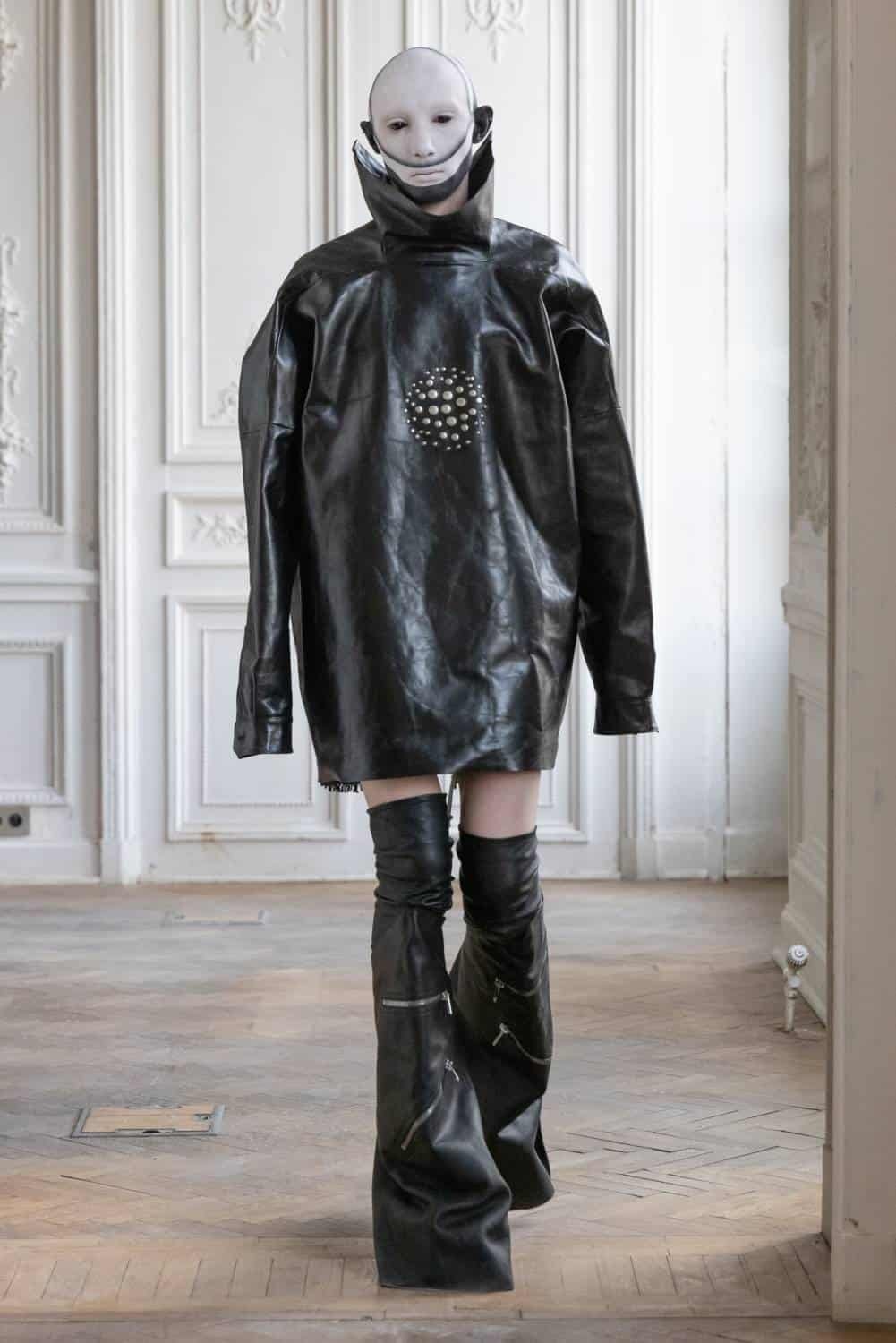
Horse leather gives boots a sharper, more aggressive presence.
Best for:
Statement pieces, structured outfits, runway-inspired looks.
Vegetable-Tanned Leather
Many uppers and linings use vegetable tanning.
- Tanned with plant extracts
- Environmentally friendlier
- Darkens naturally
- More sensitive to moisture
This is what creates the deep patina Rick fans love.
Best for:
Collectors, long-term wearers, patina lovers.
Sole Materials
Rick Owens avoids soft foam. Instead, he uses:
- Heavy rubber
- Crepe rubber
- TPU platform compounds
These create:
- Chunky silhouettes
- Architectural shapes
- Strong ground presence
They also add weight—intentionally.
Hardware & Stitching
- Industrial zippers
- Matte black or nickel hardware
- Thick nylon or waxed threads
- Exposed seams
These reinforce the “industrial luxury” identity.
Material Comparison Table
| Material | Look Over Time | Flexibility | Durability | Best For |
|---|---|---|---|---|
| Full-Grain Calf Leather | Rich creases | Medium | High | Daily wear |
| Horse Leather | Polished sheen | Low | Very High | Statement boots |
| Veg-Tanned Leather | Deep patina | Medium | Medium | Long-term collectors |
| Rubber / TPU Soles | Minimal change | Low | Very High | Structural silhouettes |
| Crepe Soles | Natural wear | High | Medium | Comfort-focused designs |
How These Materials Perform in Daily Wear
From real-world use:
- Calf leather softens within weeks
- Veg-tan darkens within months
- Soles barely compress
- Hardware stays rigid
- Each crease becomes “yours”
These boots don’t hide wear.
They record it.
Which Material Is Right for You?
Choose based on lifestyle:
- Walk daily? → Full-grain calf + rubber sole
- Want sharp structure? → Horse leather
- Love aging effects? → Vegetable-tanned leather
- Want visual weight? → TPU platform soles
Rick Owens boots aren’t about comfort first.
They’re about identity through material.
FAQ
Do Rick Owens boots require special care?
Yes. Use neutral leather cream and avoid heavy water exposure.
Why do they feel heavier than normal boots?
The soles and leathers are intentionally dense for structure.
Are these materials sustainable?
Vegetable tanning reduces chemical impact, but they remain luxury products.
Internal Reference
To see how premium materials are translated into real production and private-label footwear concepts, visit fukiapparel.