
The first mistake I ever made with a pair of Rick Owens boots was treating them like normal leather shoes.
I polished them too hard. I over-cleaned them. And within weeks, I realized something important:
Rick Owens boots are not meant to stay “perfect.”
They are meant to age with you.
From my experience working with premium footwear and materials, caring for Rick Owens boots is about guiding their aging process, not stopping it. This guide shows you exactly how to do that—without ruining their character.
Table of Contents
- Quick Answer
- Why Rick Owens Boots Need Special Care
- Daily Care Routine
- Weekly & Monthly Maintenance
- Care by Material Type
- What to Avoid
- Maintenance Comparison Table
- FAQ
- Internal Reference
Quick Answer
To maintain Rick Owens boots:
- Wipe them after each wear
- Use neutral leather cream sparingly
- Let them rest between wears
- Avoid soaking or heavy water exposure
- Embrace creases and patina
You’re preserving structure, not perfection.
Why Rick Owens Boots Need Special Care
Rick Owens boots use:
- Natural, minimally coated leather
- Heavy rubber or TPU soles
- Raw seams and exposed hardware
These materials are designed to show wear.
Unlike polished dress boots, Rick Owens footwear records your movement.
Every crease becomes part of the design.
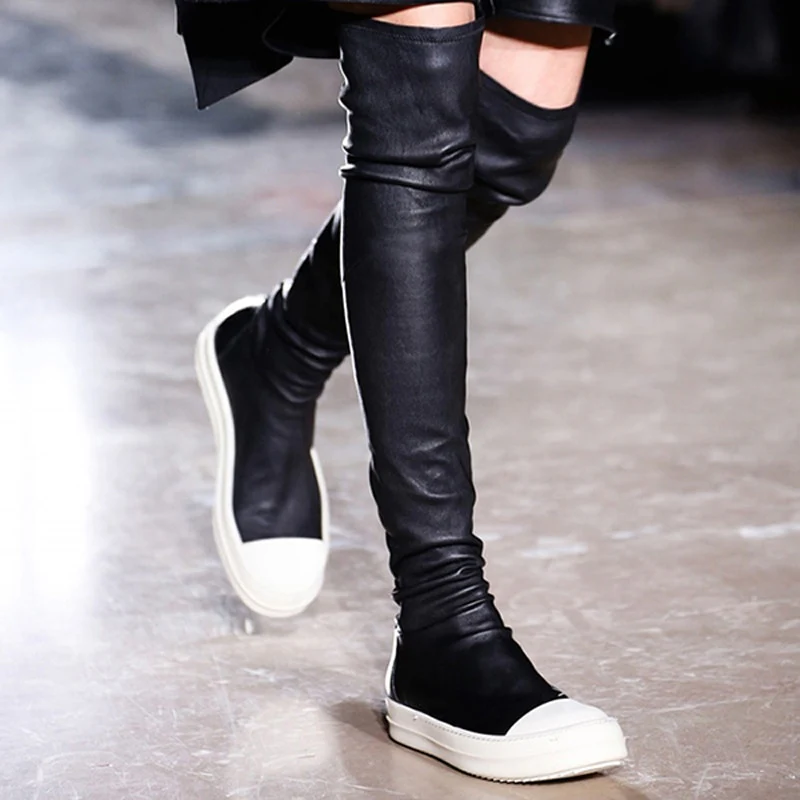
You can see how they’re intended to age on the official site:
Rick Owens
The goal is not to erase marks—it’s to keep the leather healthy while it evolves.
Daily Care Routine
After each wear:
- Remove surface dust with a soft cloth
- Let boots air-dry (never near heat)
- Insert shoe trees to maintain shape
That’s it.
Daily care is about shape and moisture control, not shine.
Weekly & Monthly Maintenance
Every 1–2 weeks:
- Light brush or wipe
- Check for dry areas
- Apply a thin layer of neutral cream if needed
Every 1–2 months:
- Deep clean with damp cloth
- Condition lightly
- Inspect soles and stitching
Rick Owens leather is dense.
Too much product will suffocate it.
Care by Material Type
Full-Grain Calf Leather
- Use neutral leather cream
- Apply with fingers or soft cloth
- Buff lightly
Best practice:
Condition after creases appear. Let the boot shape first.
Vegetable-Tanned Leather
- Avoid water
- Condition less often
- Expect darkening
Veg-tan leather is meant to change color.
That’s part of its beauty.
Suede & Nubuck
- Use a suede brush
- Never use cream
- Spot clean only
If wet:
Stuff with paper and let dry naturally.
Rubber & TPU Soles
- Wipe with damp cloth
- Avoid chemical cleaners
- Check glue edges
These soles are durable but not invincible.
What to Avoid
Never:
- Soak in water
- Use colored polish
- Apply heavy wax layers
- Dry near heaters
- Try to “flatten” creases
Creases are not damage.
They are identity.
Maintenance Comparison Table
| Material Type | Cleaning Method | Conditioning Frequency | Key Risk |
|---|---|---|---|
| Full-Grain Leather | Cloth + light brush | Monthly | Over-conditioning |
| Veg-Tan Leather | Dry cloth | Every 2–3 months | Water stains |
| Suede / Nubuck | Suede brush | None | Texture flattening |
| Rubber / TPU Soles | Damp cloth | None | Chemical erosion |
FAQ
Do Rick Owens boots need waterproof spray?
Only for suede. Leather should breathe.
Can I resole them?
Yes. Many models are built for professional resoling.
Should I polish them?
Avoid high-shine polish. Use neutral cream only.
Internal Reference
To understand how premium footwear materials are built and maintained at production level, explore fukiapparel.