
If you’ve seen a pair of heavily distressed, hand-altered denim and wondered, “Who Decides War jeans—what brand is this?”, you’re tapping into one of the most influential underground movements in modern streetwear.
From my experience working around apparel development and streetwear manufacturing, Who Decides War isn’t just a brand—it’s a philosophy turned into fabric. And its jeans are the clearest expression of that idea.
Table of Contents
- Quick Answer
- What Is Who Decides War?
- Who Founded the Brand?
- What Makes Who Decides War Jeans Different
- Why These Jeans Feel “Art, Not Product”
- Who Decides War vs Traditional Denim Brands
- Who These Jeans Are Really For
- FAQ
- Conclusion
- Internal Reference
Quick Answer
Who Decides War jeans are created by the streetwear brand Who Decides War, founded by Ev Bravado and Téla D’Amore.
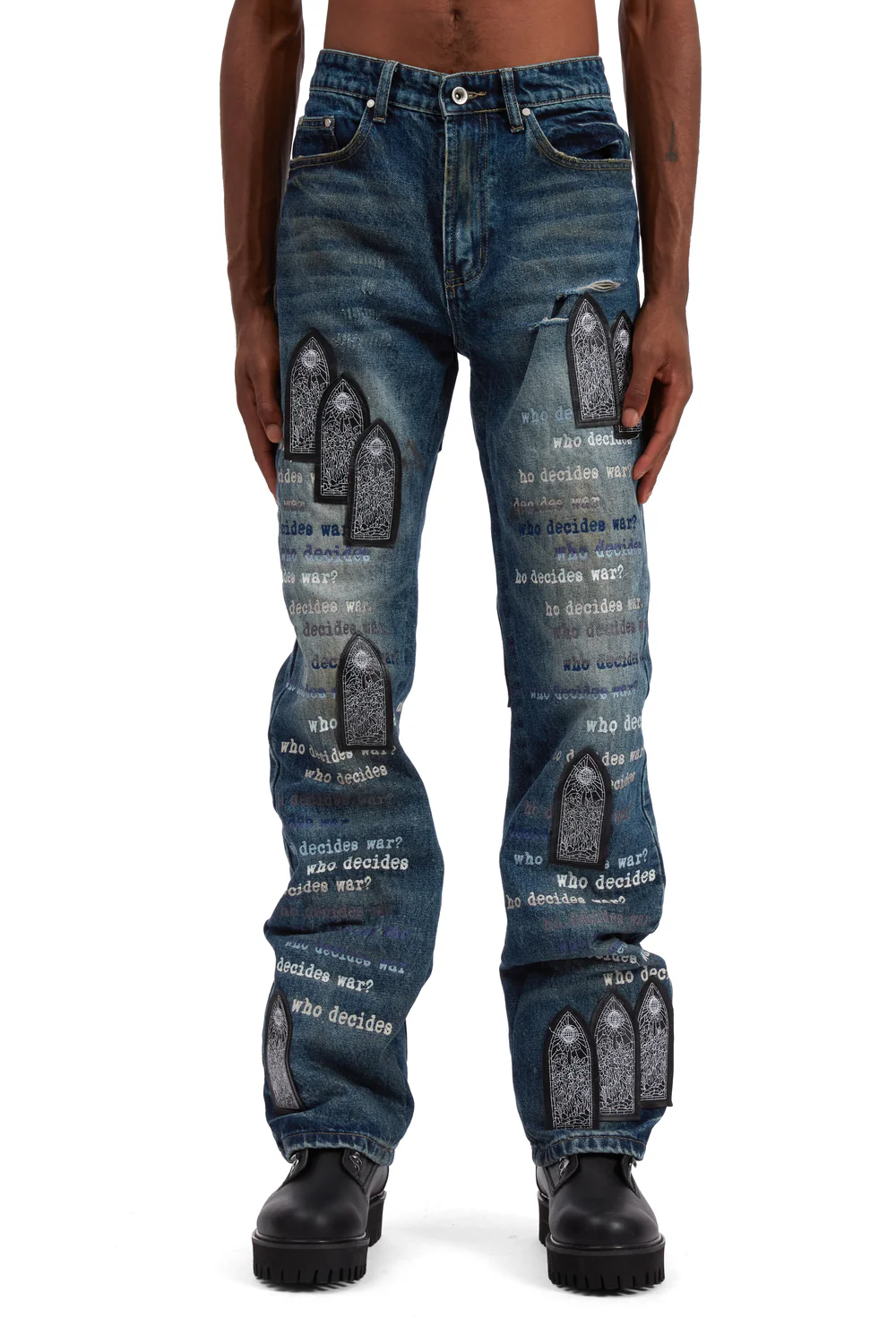
The brand is known for turning denim into wearable art—using reconstruction, distressing, and hand-applied details to tell stories about struggle, resilience, and identity.
What Is Who Decides War?
Who Decides War is a New York–based streetwear label built around one idea:
Clothing should carry meaning.
Unlike mass-market denim brands, Who Decides War focuses on:
- reconstruction
- hand distressing
- patchwork
- symbolic stitching
- limited-run production
You can see the brand’s positioning on its official site:
Who Decides War
From my perspective, this brand operates closer to an art studio than a factory.
Who Founded the Brand?
Who Decides War was founded by:
- Ev Bravado – designer and creative director
- Téla D’Amore – co-founder and brand architect
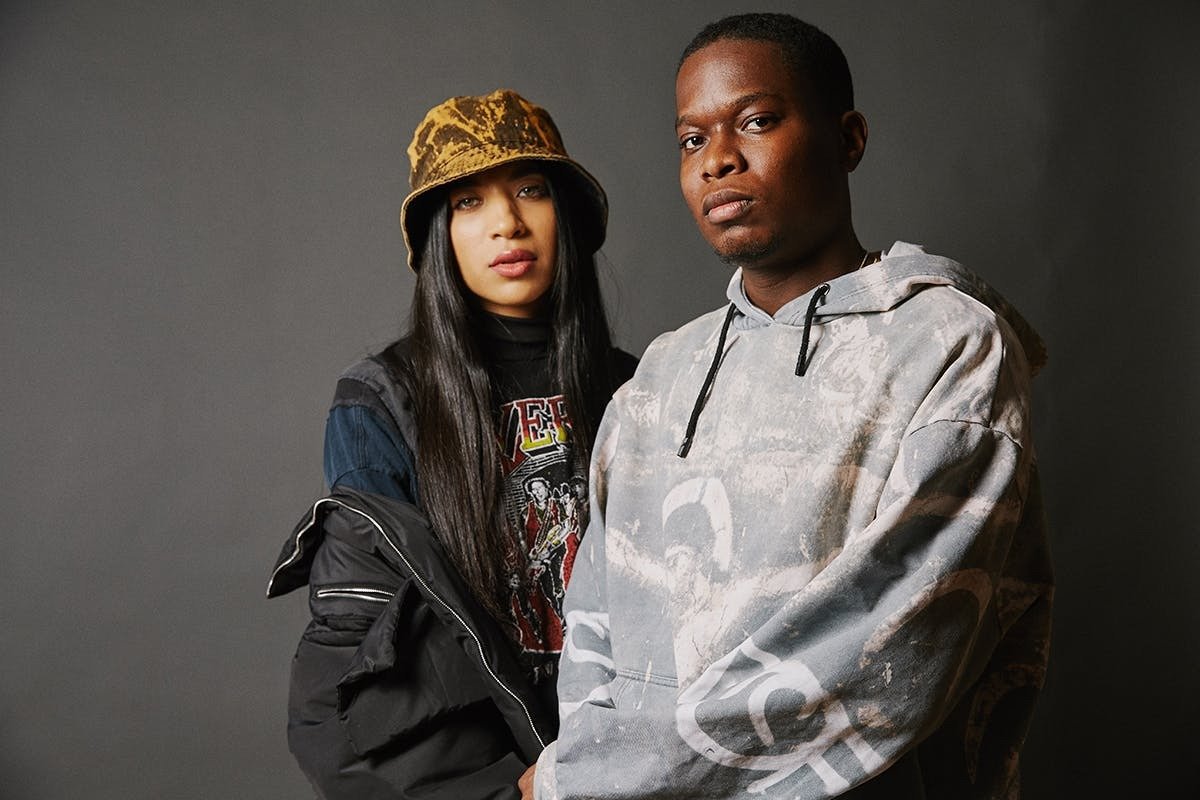
Both founders came from backgrounds in:
- art
- fashion experimentation
- underground street culture
They built the brand around emotion, narrative, and transformation—using denim as the primary canvas.
What Makes Who Decides War Jeans Different
This section explains the construction mindset.
Built, Not Just Sewn
Who Decides War jeans are often:
- cut apart and rebuilt
- layered with panels
- hand-stitched
- intentionally distressed
- treated with symbolic damage
Each piece feels worked on, not simply produced.
From a manufacturing view, these jeans:
- require manual labor
- resist automation
- cannot be truly mass-produced
That’s why they feel rare.
Why These Jeans Feel “Art, Not Product”
This section explains the emotional layer.
Denim as Storytelling
In traditional apparel, damage is a defect.
In Who Decides War, damage is the message.
Rips, burns, tears, and rebuilds represent:
- struggle
- survival
- rebirth
- personal history
From my experience, this is why fans don’t just wear these jeans—they identify with them.
Who Decides War vs Traditional Denim Brands
| Factor | Who Decides War | Traditional Denim |
|---|---|---|
| Purpose | Expression & narrative | Function & fashion |
| Production | Hand-altered | Factory-scaled |
| Quantity | Limited | Mass |
| Design goal | Emotional impact | Market appeal |
| Identity | Artist-driven | Trend-driven |
Who Decides War treats denim as a medium, not a category.
Who These Jeans Are Really For
This section helps readers self-select.
Who Decides War Jeans Fit You If You:
- value story over uniformity
- see fashion as identity
- like rare, expressive pieces
- prefer culture over convenience
They May Not Fit You If You:
- want clean, minimal basics
- need repeatable sizing consistency
- prioritize price over meaning
- prefer mass availability
From my experience, these jeans are chosen emotionally, not rationally.
FAQ
Is Who Decides War a luxury brand?
It’s better described as art-driven streetwear.
Why are Who Decides War jeans expensive?
Because they involve manual reconstruction and limited production.
Are the jeans mass-produced?
No. Many pieces are altered by hand.
Where are they sold?
Primarily through the brand’s own channels and select boutiques.
Conclusion
So, what are Who Decides War jeans?
They are denim pieces created by Ev Bravado and Téla D’Amore that turn clothing into narrative—using reconstruction and distressing to express struggle, survival, and identity.
From my perspective, these jeans aren’t designed to blend in.
They’re designed to say something.
And in streetwear, that’s power.
Internal Reference
For insight into how expressive streetwear and custom denim are developed at scale—without losing identity—visit fukiapparel.