
If you’ve ever looked at Denim Tears and thought, “Why does a hoodie or pair of jeans cost this much?”—you’re not alone.
I’ve worked with apparel brands and factories for years, and I can tell you:
Denim Tears isn’t priced like normal streetwear. It sits in a space between fashion, culture, and art. You’re not just paying for fabric—you’re paying for meaning, scarcity, and cultural weight.
This article breaks it down in plain English, so you know exactly what you’re paying for.
Table of Contents
- Quick Answer
- What Is Denim Tears?
- Why Denim Tears Costs So Much
- Price Comparison Table
- Is Denim Tears Worth It?
- FAQ
- Conclusion
- Internal Reference
Quick Answer
US Denim Tears is expensive because it combines:
- Deep cultural storytelling
- Limited-edition releases
- High-profile collaborations (Levi’s, Stüssy, Dior-level influence)
- Premium fabrics and prints
- Massive resale demand
You’re not just buying clothing—you’re buying a piece of modern cultural history.
What Is Denim Tears?
Denim Tears is founded by Tremaine Emory, a creative director known for weaving Black history into fashion.
The brand’s most iconic symbol—the cotton wreath—represents the painful legacy of slavery and labor in America. Every piece tells a story. That alone separates Denim Tears from normal streetwear.
You can explore the brand’s philosophy through coverage on fashion media like
Highsnobiety and Hypebeast.
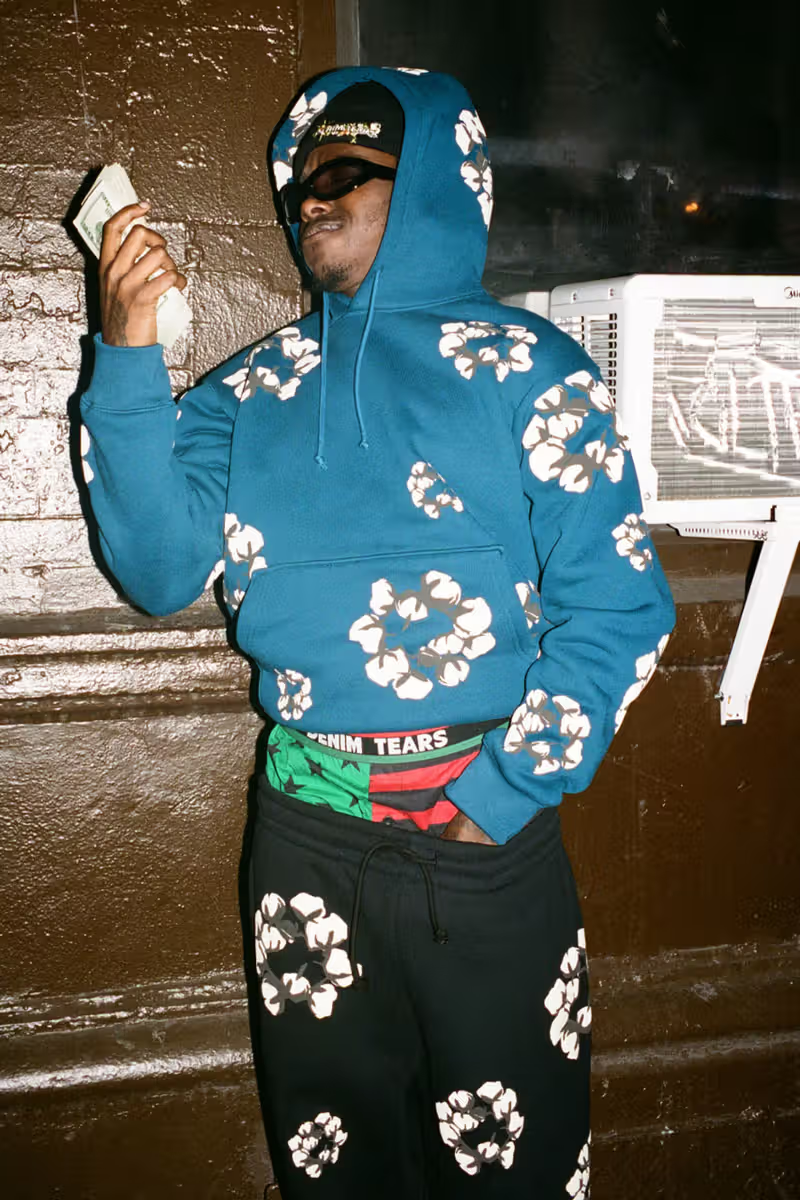
This isn’t merch. It’s narrative fashion.
Why Denim Tears Costs So Much
Cultural Narrative
Most brands sell style.
Denim Tears sells identity and history.
Each drop is designed to spark conversation—about race, heritage, and American culture. That depth adds intangible value you can’t replicate with generic prints.
Limited Drops & Scarcity
Denim Tears doesn’t mass-produce.
- Small batch releases
- No constant restocks
- Time-based drops
Scarcity drives demand. When supply is limited and meaning is strong, prices rise naturally.
Collaborations With Giants
Denim Tears has collaborated with:
- Levi’s
- Stüssy
- Converse
- Major luxury-adjacent houses

These partnerships position the brand in a premium cultural tier, not fast fashion.
Premium Materials & Production
From a manufacturing perspective, these pieces often use:
- Heavyweight denim
- Custom-printed fabrics
- Garment dyeing
- Complex placement graphics
These are not $5 blanks. They’re factory-intensive builds.
Resale Market Effect
Once something resells for 2–5× retail, the perceived value changes.
People don’t just buy Denim Tears to wear—it becomes an asset.
That feedback loop pushes retail prices higher over time.
Price Comparison Table
| Brand | Hoodie Price | Cultural Weight | Drop Model |
|---|---|---|---|
| Fast Fashion | $20–$40 | Low | Always on |
| Typical Streetwear | $60–$120 | Medium | Seasonal |
| Denim Tears | $150–$300+ | High | Limited |
Denim Tears isn’t priced against H&M—it’s priced against cultural relevance.
Is Denim Tears Worth It?
It depends on your goal:
- Want trend-driven streetwear? → It’s overpriced.
- Want fashion with meaning? → It makes sense.
- Want collectible pieces? → It’s a smart buy.
From my experience in apparel production, Denim Tears is expensive because it refuses to be ordinary. You’re paying for:
Story + Scarcity + Symbolism
FAQ
Is Denim Tears luxury?
Culturally, yes. Technically, it sits between luxury and streetwear.
Why are Denim Tears jeans so expensive?
Because of small-batch production, heavy denim, symbolic prints, and brand prestige.
Is Denim Tears handmade?
Not fully handmade, but built with premium processes and custom treatments.
Conclusion
Denim Tears is expensive because it isn’t just clothing.
It’s a wearable story about America—printed on cotton, denim, and culture.
From a manufacturer’s view, the cost reflects:
- Low-volume production
- Brand power
- Cultural gravity
You’re not buying fabric.
You’re buying a message.
Internal Reference
If you’re building a brand that blends storytelling with production reality, explore how narrative-driven apparel is developed at fukiapparel.