
The first T-shirt I ever produced in a factory wasn’t fashionable at all.
It was plain, white, and meant to be worn under something else.
That moment made me curious:
How did the most basic garment in the world become the most powerful?
Today, the T-shirt is worn by presidents, skaters, designers, and factory workers.
It carries identity, protest, culture, and brand value.
So when people ask:
“What is the history of the T-shirt?”
They’re really asking how a piece of underwear became the global uniform.
This article gives you a clear, practical timeline.
Table of Contents
- Quick Answer
- Before the T-Shirt Existed
- The Military Origin
- Hollywood Changes Everything
- The Rise of Graphic Tees
- From Uniform to Identity
- Modern T-Shirts Today
- Timeline Table
- FAQ
- Internal Reference
Quick Answer
The T-shirt began as an undergarment in the early 1900s.
It became outerwear after World War II, gained cultural power in the 1950s,
and turned into a canvas for identity in the 1970s–1990s.
Today, it is the most produced garment in the world.
For a neutral overview, see Wikipedia – T-shirt.
Before the T-Shirt Existed
Before the 20th century, men wore:
- One-piece underwear
- Buttoned undershirts
- Heavy cotton garments
They were:

- Hard to wash
- Uncomfortable
- Not meant to be seen
The idea of a simple, pull-over cotton shirt didn’t exist yet.
The Military Origin
The modern T-shirt was standardized by the U.S. Navy in the early 1900s.
Sailors needed:
- Lightweight underlayers
- Breathable cotton
- Easy-to-wash garments
So the crew-neck cotton undershirt was born.
After World War II, soldiers came home wearing them in public.
The underwear became outerwear.
Hollywood Changes Everything
In the 1950s, film changed fashion.
Actors like:
- Marlon Brando
- James Dean
Wore T-shirts on screen.
Suddenly, the T-shirt meant:
- Rebellion
- Youth
- Masculinity
- Effortless cool
It was no longer underwear.
It was attitude.
The Rise of Graphic Tees
In the 1960s–70s, screen printing became accessible.
The T-shirt turned into a message board:
- Band logos
- Political slogans
- Art prints
- Brand identity
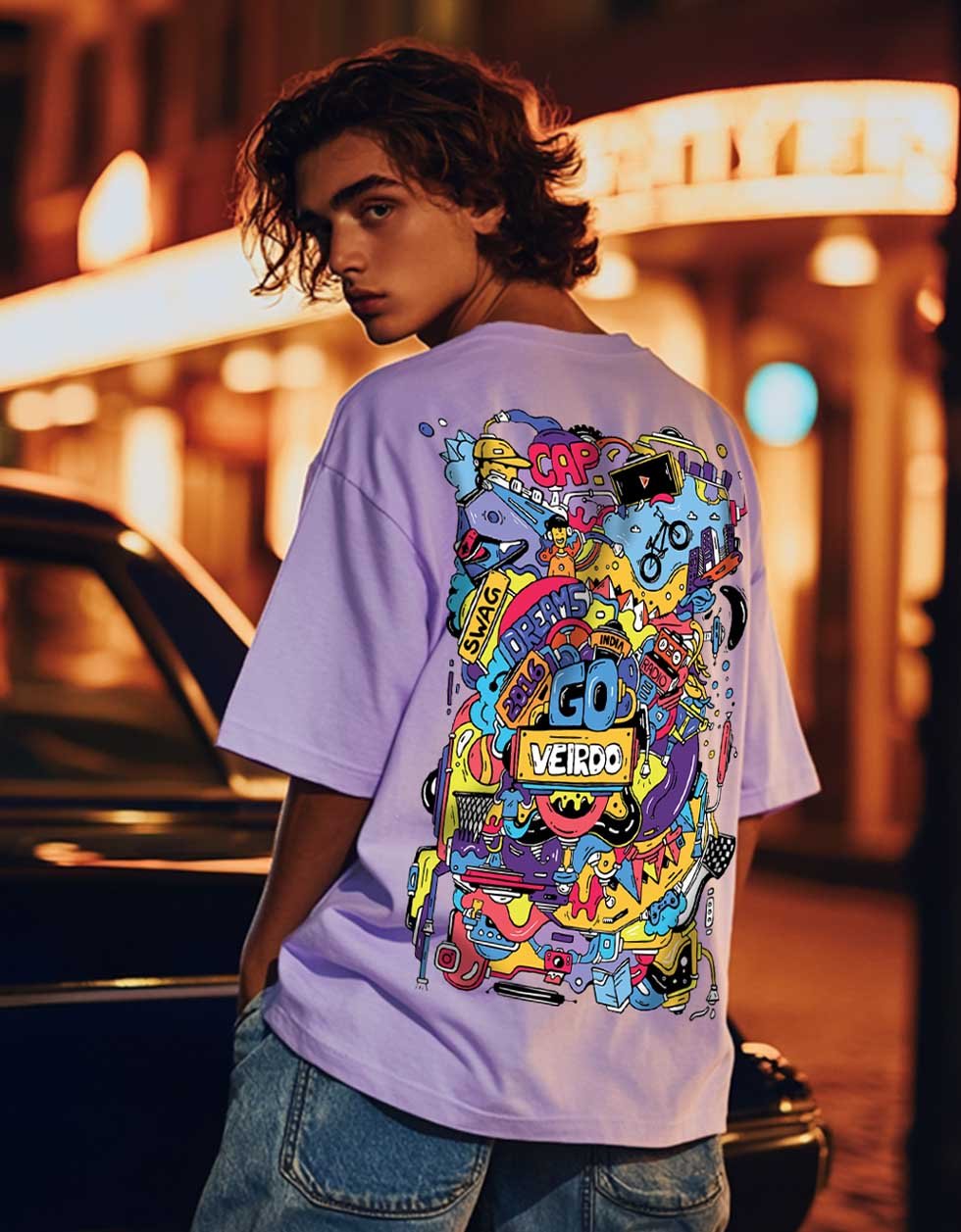
Every subculture adopted it:
- Punk
- Skate
- Hip-hop
- Surf
The T-shirt became language.
From Uniform to Identity
By the 1990s and 2000s:
- Streetwear brands built entire businesses on one tee
- Luxury houses adopted cotton basics
- Music and fashion merged
A T-shirt could say:
- Where you’re from
- What you believe
- What tribe you belong to
From a manufacturing perspective, this is revolutionary:
a low-cost garment became a high-value brand carrier.
Modern T-Shirts Today
Today, T-shirts exist in every layer of fashion:
- Fast fashion basics
- Streetwear signatures
- Luxury essentials
- Custom merch
- Private-label brands
They vary in:
- Weight
- Cut
- Fabric
- Construction
- Cultural meaning
The T-shirt is no longer simple.
It’s strategic.
You can see how modern brands build identity around it on UNIQLO, Supreme, and countless indie labels.
Timeline Table
| Era | Role of the T-Shirt | Meaning |
|---|---|---|
| 1900–1930 | Undergarment | Function |
| 1940–1950 | Casual outerwear | Practical freedom |
| 1950–1960 | Youth symbol | Rebellion |
| 1970–1990 | Graphic medium | Voice & culture |
| 2000–Today | Fashion foundation | Identity & branding |
FAQ
Who invented the T-shirt?
No single person. It evolved from military undershirts.
Why is it called a T-shirt?
Because its shape resembles the letter “T.”
Is the T-shirt still relevant?
Yes. It’s the most adaptable garment in fashion history.
Internal Reference
If you’re building a modern T-shirt brand or private-label line, understanding its cultural and production roots matters.
Explore how we translate this history into real products at fukiapparel.