
The first time I stood inside a denim mill, I expected noise and machines.
What I didn’t expect was precision. Every thread, every dye bath, every pass through a loom was controlled.
Denim looks simple.
But it’s one of the most engineered fabrics in fashion.
So when people ask:
“How is denim made?”
They’re really asking how cotton becomes the most durable, expressive fabric in the world.
This guide walks you through the full process—clearly, step by step.
Table of Contents
- Quick Answer
- Why Denim Production Is Unique
- Step-by-Step: How Denim Is Made
- Denim Production Flow Table
- What Makes Premium Denim Different?
- FAQ
- Internal Reference
Quick Answer
Denim is made by:
- Growing and harvesting cotton
- Spinning cotton into yarn
- Dyeing warp yarns with indigo
- Weaving dyed warp and white weft
- Stabilizing the fabric
- Cutting and sewing garments
- Washing and finishing the jeans
Each step shapes how denim feels, fades, and lasts.
For a neutral technical overview, see Wikipedia – Denim.
Why Denim Production Is Unique
From a manufacturing perspective, denim is special because:
- Only the warp yarns are dyed
- Indigo coats the surface, not the core
- Fading happens through wear
- Fabric and garment finishing are separate stages
That’s why denim changes over time.
Brands like Levi’s and Wrangler built their identities around this behavior.
Step-by-Step: How Denim Is Made
1. Cotton Selection
Everything starts with cotton.
- Long-staple fibers = smoother denim
- Short fibers = rougher hand-feel
- Organic vs conventional affects softness
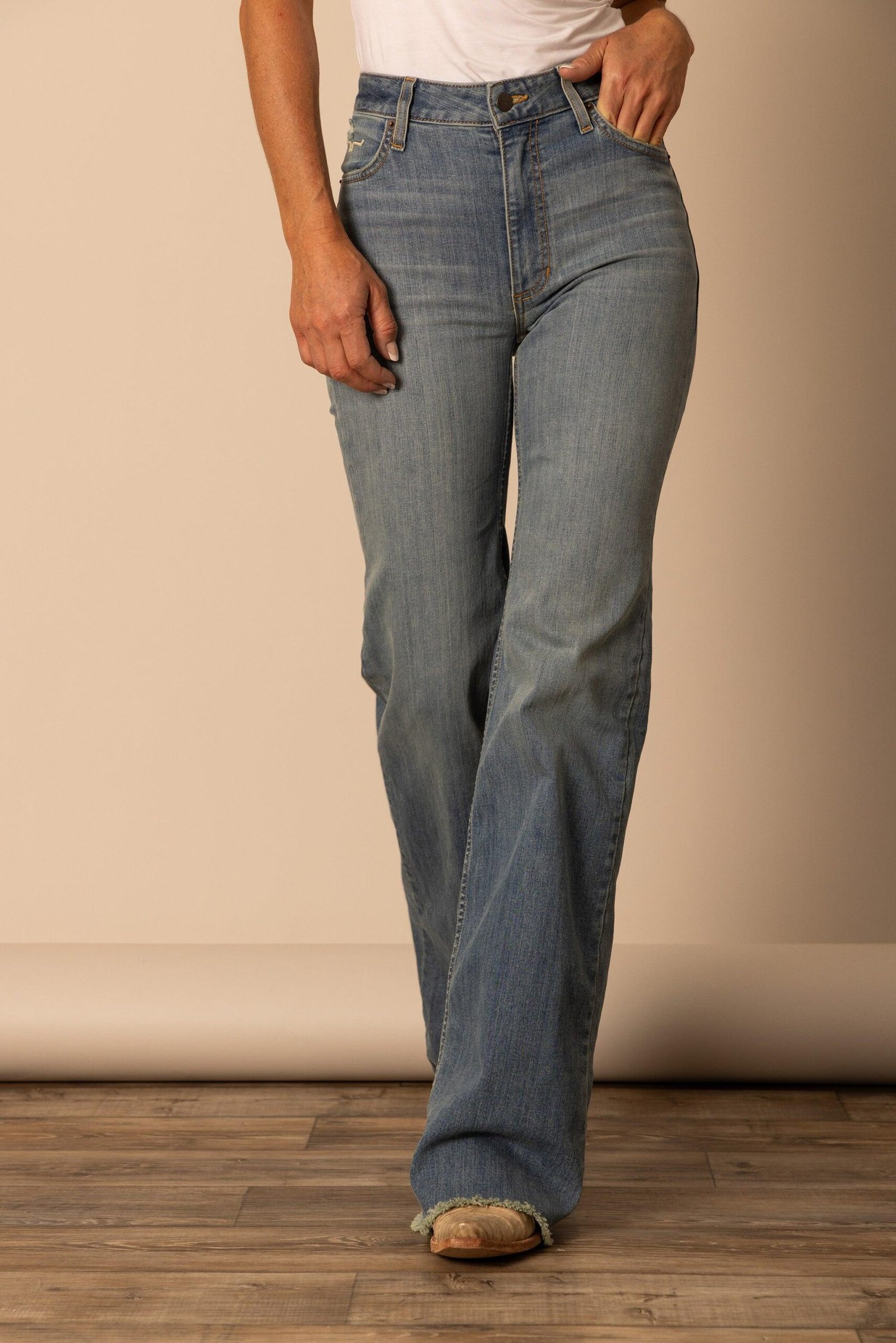
Fiber quality determines:
- Strength
- Pilling resistance
- Longevity
2. Spinning Yarn
Cotton fibers are:
- Cleaned
- Aligned
- Twisted into yarn
Denim uses:
- Strong warp yarns
- Softer weft yarns
The balance between them defines texture.
3. Indigo Dyeing
Warp yarns pass through multiple indigo baths.
- Each dip adds surface color
- Core remains white
- Oxidation fixes the dye
This creates:
- Dark surface
- Light interior
- Natural fade potential
That’s the soul of denim.
4. Weaving the Fabric
Denim uses a twill weave.
- Dyed warp yarns
- White weft yarns
- Diagonal texture
Two methods exist:
- Modern projectile looms
- Traditional shuttle looms (selvedge)
Selvedge is slower, denser, and premium.
5. Finishing & Sanforizing
Fabric is:
- Washed
- Stabilized
- Pre-shrunk
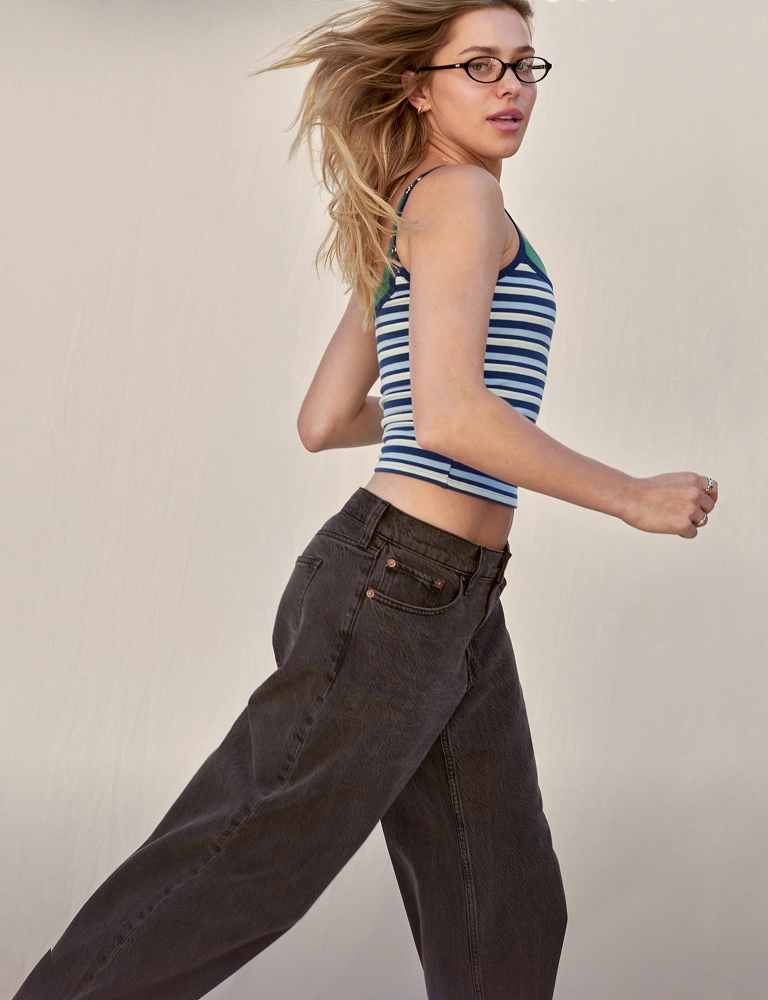
Sanforizing reduces shrinkage.
Raw denim skips this step—
that’s why it shrinks after washing.
6. Cutting & Sewing Jeans
Fabric becomes garments:
- Pattern cutting
- Panel assembly
- Chain-stitching
- Rivet placement
Construction defines durability more than fabric weight.
7. Washing & Treatments
Jeans are finished by:
- Stone washing
- Enzyme washing
- Sandblasting
- Laser fading
This controls:
- Color
- Softness
- Vintage look
Raw denim skips this stage entirely.
Denim Production Flow Table
| Stage | Purpose | Impact on Final Jeans |
|---|---|---|
| Cotton | Fiber base | Strength & softness |
| Spinning | Yarn creation | Texture & durability |
| Dyeing | Indigo layering | Fade behavior |
| Weaving | Fabric structure | Weight & drape |
| Finishing | Stability | Shrink control |
| Sewing | Garment build | Lifespan |
| Washing | Look & feel | Style & comfort |
What Makes Premium Denim Different?
Premium denim focuses on:
- Better cotton
- Slower dyeing cycles
- Dense weaving
- Precise construction
- Controlled washing
The result:
- Deeper indigo
- Cleaner fades
- Longer lifespan
That’s why high-end jeans feel different—even before you wear them.
FAQ
Why does denim fade?
Because indigo sits on the yarn surface, not inside.
Is raw denim unfinished?
Yes. It skips washing and finishing.
Does heavier denim last longer?
Not always. Construction matters more than weight.
Internal Reference
If you’re developing denim products or private-label jeans, understanding this process helps you control cost, quality, and identity.
Explore how we manage denim production from fiber to finish at fukiapparel.