
People often say “All Star” when they mean Converse Chuck Taylor All Star. With so many replicas online, the real question is:
“How can I tell if my All Star shoes are original or fake?”
I’ve worked with footwear QC and retail checks. Converse fakes follow repeatable patterns—once you know the tells, spotting a fake gets much easier.
Table of Contents
- Quick Answer
- Check the Box, Label, and SKU
- Inspect the Chuck Patch and Heel Logo
- Examine Materials and Stitching
- Sole, Foxing Tape, and Toe Cap Details
- Fit, Comfort, and Weight
- Real vs Fake: Quick Comparison Table
- Where to Buy Safely
- Common Scams to Avoid
- FAQ
- Conclusion
- Internal Reference
Quick Answer
Original All Star shoes have consistent box labels and SKUs, clean Chuck patches, neat stitching, quality rubber soles, and realistic pricing.
If two or more details look off, assume they’re fake.
Check the Box, Label, and SKU
Start with the packaging:
- The box label should match the shoe model, color, and size
- The SKU (style code) should match official Converse listings
- Barcodes should scan to the correct product
Mismatched SKUs are a major red flag.
Inspect the Chuck Patch and Heel Logo
Look closely at branding:
- Chuck patch text should be sharp and centered
- The star should be clean, not blurry
- Heel “ALL★STAR” print should be aligned and evenly inked
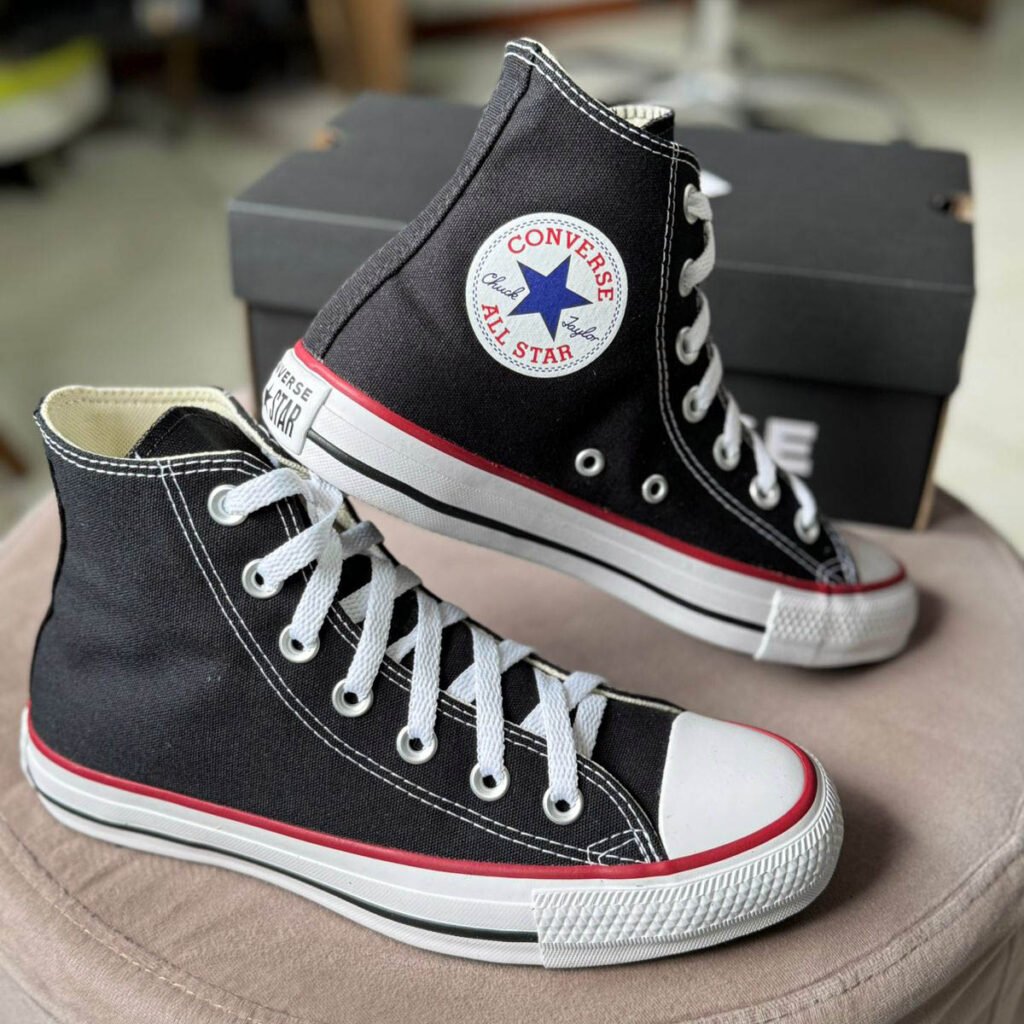
Fakes often have fuzzy edges or wrong font spacing.
Examine Materials and Stitching
Authentic pairs show:
- Even stitching with no loose threads
- Canvas that feels durable, not flimsy
- Clean glue lines
Counterfeits commonly show messy stitching and excess glue.
Sole, Foxing Tape, and Toe Cap Details
Check the rubber:
- Foxing tape should be smooth and well-adhered
- Toe cap shape should be symmetrical
- Outsole pattern should be crisp
Warped toe caps or uneven tape are common on fakes.
Fit, Comfort, and Weight
Real Converse All Stars feel:
- Consistent in sizing
- Balanced in weight
- Stable underfoot
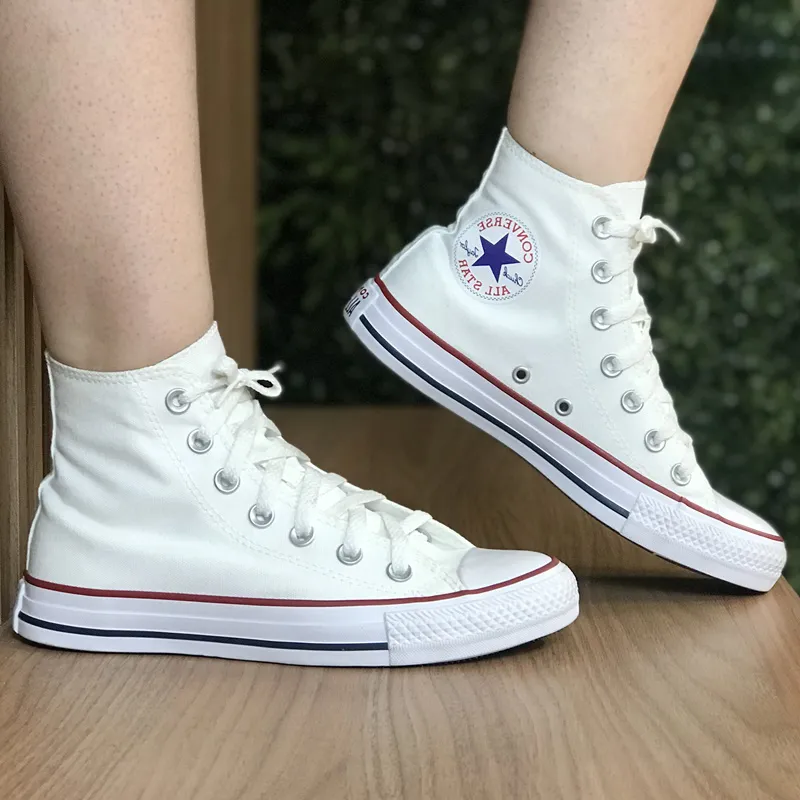
Fakes can feel unusually light or poorly cushioned.
Real vs Fake: Quick Comparison Table
| Checkpoint | Original All Star | Fake All Star |
|---|---|---|
| Box & SKU | Matches official | Mismatched |
| Chuck patch | Sharp, centered | Blurry, off |
| Stitching | Neat | Messy |
| Sole | Clean mold lines | Rough edges |
| Price | Market-typical | Too cheap |
Where to Buy Safely
Safer options include:
- Official Converse stores
- Authorized retailers
- Trusted marketplaces with buyer protection
Streetwear and sneaker coverage from Hypebeast and Highsnobiety regularly warns buyers about counterfeit risks on open marketplaces.
Common Scams to Avoid
- “Factory seconds” with no proof
- Too-good-to-be-true discounts
- Sellers refusing close-up photos
- Boxes that don’t match the pair
FAQ
Do real All Stars have QR codes?
Converse uses SKUs and packaging verification; QR codes aren’t the primary authentication method.
Can photos alone prove authenticity?
Not always. Physical inspection is more reliable.
Are resale pairs always risky?
Yes, but careful checks reduce risk.
Conclusion
So—how do you know if All Star is original?
Trust the details: SKU, branding, materials, and construction.
If the basics don’t check out, it’s not authentic.
Internal Reference
If you’re sourcing footwear or building branded shoes, understanding QC standards is what separates authentic products from cheap replicas.
Explore how footwear quality control is structured at
👉 fukiapparel
Because authenticity is built into the product,
not just printed on the logo.